
What You Need to Know About Air Conditioning and Your Commercial Flake Ice Maker
A commercial flake ice maker relies heavily on your building’s commercial air conditioning system to function efficiently. Without proper air conditioning to manage the ambient heat and humidity, even the best ice maker will suffer from production downtime, high energy bills, and premature failure.
Here’s a quick snapshot of how air conditioning impacts your ice production:
| AC Factor | Impact on Commercial Flake Ice Maker |
|---|---|
| Ambient Temperature | AC must keep room below 70°F for optimal ice production |
| Ventilation & Airflow | Proper AC airflow prevents heat buildup around the condenser |
| Humidity Control | AC dehumidification prevents ice from melting too quickly in the bin |
| Heat Load Calculation | Ice makers add up to 12,000 BTU/hr of heat that your AC must remove |
| Cooling Type | Air-cooled ice makers dump heat directly into your AC-cooled space |
Flake ice is thin, dry, and soft — roughly 1.8 to 2.2 mm thick. Because it is so delicate, maintaining a cool, air-conditioned environment is critical. If your commercial air conditioning fails or struggles to keep up, the ambient heat will cause the flake ice to melt rapidly inside the storage bin, leading to clumping and product loss.
But managing the heat load of these machines requires a properly sized air conditioning system. Choosing an AC unit without calculating the heat output of your ice maker means guessing — and guessing wrong gets expensive.
I’m Jill Frattini, Service Coordinator at Ohio AC and Cooling (the premier commercial AC and cooling specialists in Columbus, OH), and I’ve spent years coordinating commercial AC, ventilation, and cooling system installs and service calls — including air conditioning support for businesses running commercial flake ice maker equipment. I’ll walk you through how to optimize your air conditioning for peak ice-making performance.
How Air Conditioning Principles Power a Commercial Flake Ice Maker
To understand how a commercial flake ice maker works, it helps to look at your building’s air conditioning system. Both systems rely on the exact same thermodynamic principles: using a compressor, condenser, and evaporator to transfer heat. While an air conditioner removes heat from your indoor air to keep your space cool, a flake ice maker removes heat from water to freeze it into ice.
Unlike standard cubers that freeze water in batches, a commercial flaker operates on a continuous freezing cycle. This continuous heat extraction makes flakers highly efficient, but it also means they continuously dump heat into the surrounding room.
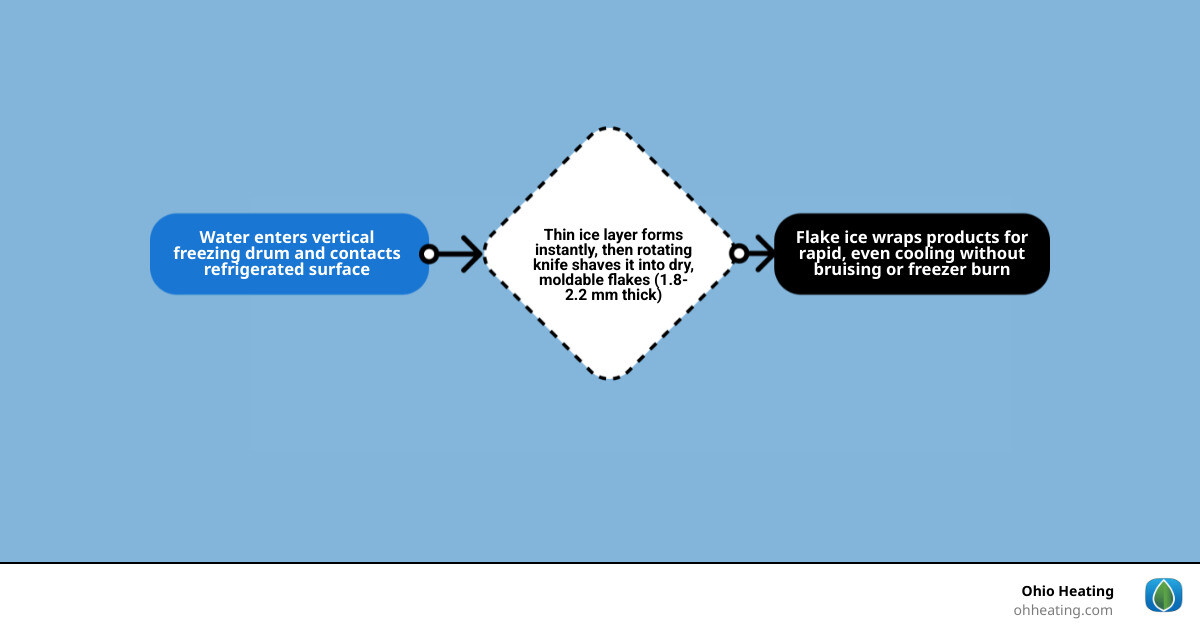
At the heart of a commercial flaker is a vertical cylindrical evaporator. Water is introduced into the cylinder, forming a thin film on the inner freezing surface. Because the evaporator is kept at sub-zero temperatures by the cooling system, the water freezes instantly. A rotating auger then scrapes the ice off the wall, pushing it upward to be broken into dry flakes.
According to technical specifications from Industrial flake ice machines: flake ice for industrial purposes, vertical drum technology is highly favored because it minimizes moving parts, reducing the risk of refrigerant leaks—a common maintenance issue shared by both ice makers and commercial air conditioning units.
Why Air Conditioning is Critical for Flake Ice Production
- Managing the Heat Load: Generating flake ice is highly efficient, but it requires significant cooling capacity. For every ton of flake ice produced, the machine rejects heat into your space. Your commercial air conditioning must be sized to handle this extra heat load to prevent the room from overheating.
- Maintaining Condenser Efficiency: Air-cooled flakers rely on the ambient air in the room to cool their condensers. If your air conditioning system isn’t keeping the room cool, the ice maker’s condenser cannot reject heat efficiently, causing its production rate to drop dramatically.
- Preventing Ice Melt: Flake ice is thin and soft (typically 1.5 to 2.0 mm thick). Without a well-functioning air conditioning system maintaining low humidity and cool ambient temperatures, the ice in your storage bin will melt rapidly, as noted in the design of the Stainless Steel 5T Flake Ice Maker Machine , Commercial Flake Ice Machine from china factories..
- Optimizing Energy Use: When your air conditioning keeps the ambient air cool, the ice maker runs shorter cycles and consumes less power, making your entire facility more energy-efficient.
Air Conditioning Considerations for Different Flake Ice Maker Configurations
Selecting the perfect commercial flake ice maker requires balancing your physical space constraints with your building’s air conditioning capacity.
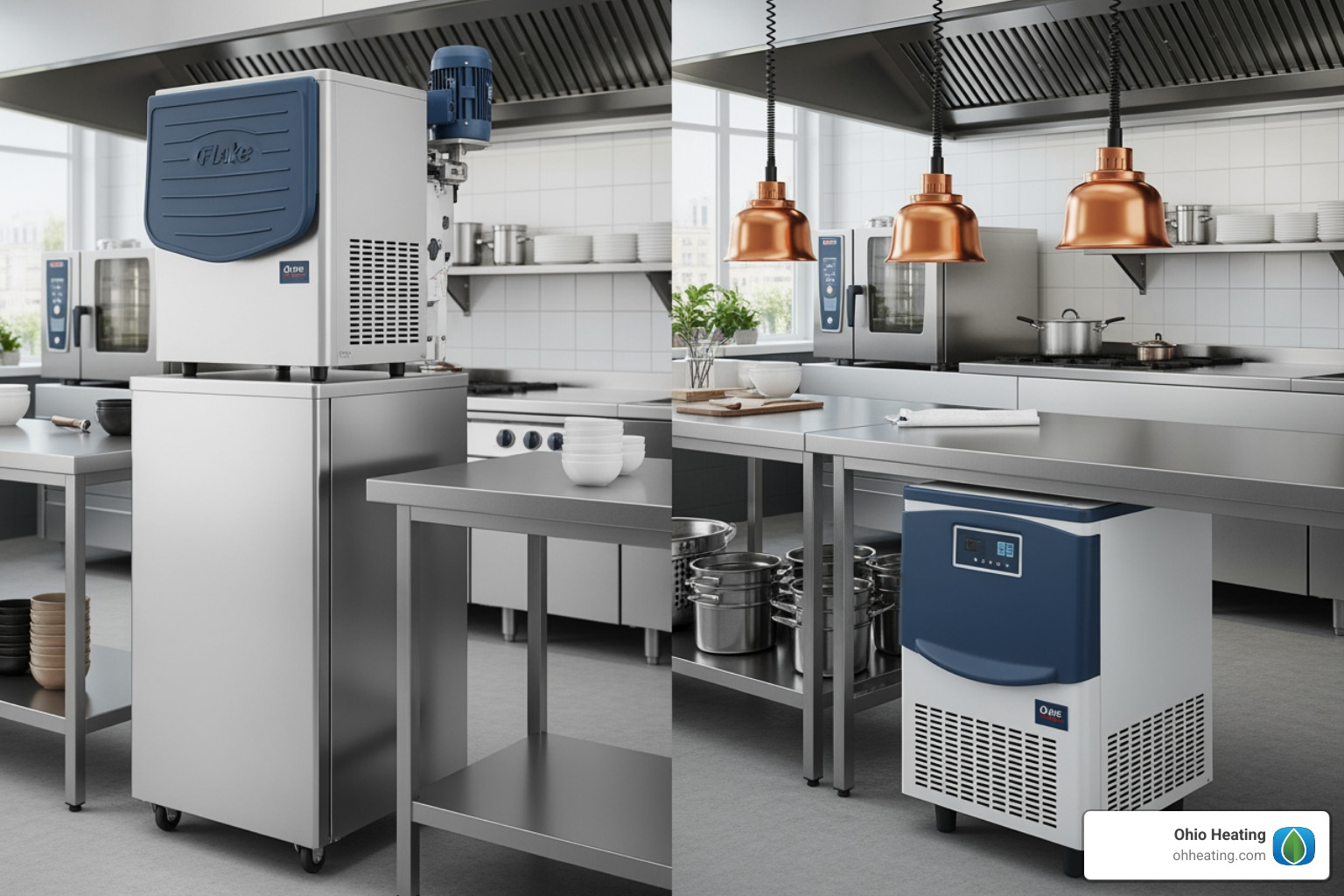
First, you must choose between two primary configurations, both of which place unique demands on your air conditioning system:
- Modular Flake Ice Makers: These high-volume units sit on top of separate storage bins. Because they produce large quantities of ice, they reject a massive amount of heat. Your commercial air conditioning must be specifically zoned and sized to handle this continuous thermal load.
- Self-Contained (Undercounter) Flake Ice Makers: These compact units fit under countertops. Because they are often installed in enclosed spaces, heat can quickly build up around them. Proper air conditioning airflow and ventilation in these tight spaces are critical to prevent the unit from overheating.
| Feature | Modular Flaker | Self-Contained / Undercounter |
|---|---|---|
| Typical Daily Capacity | 300 lbs to 2,500+ lbs | 90 lbs to 300 lbs |
| AC Heat Load Impact | High (requires dedicated AC zoning) | Moderate (requires good undercounter ventilation) |
| Best Suited For | Large supermarkets, seafood markets, hospitals, food processors | Small clinics, salad bars, cocktail lounges, laboratories |
| Footprint | Requires dedicated floor space for bin + head | Fits under standard countertops or back-bars |
Daily capacity requirements directly dictate the heat load your air conditioning must manage. For example, a small clinic might only need an undercounter Scotsman UF0915 producing 96 lbs per day, adding minimal heat to the room. Meanwhile, a high-volume seafood counter might opt for a Scotsman FME2404 producing up to 2,455 lbs per day, or a modular Hoshizaki F-2001MRJZ remote-cooled model capable of outputting 2,098 lbs of flaked ice every 24 hours. For large-scale industrial processors, Recom industrial flake ice machines can scale up to 25 tons of flake ice daily, requiring heavy-duty industrial air conditioning and ventilation systems.
Condenser Cooling Options and Air Conditioning Integration
How your ice machine cools its condenser directly impacts your building’s air conditioning system:
- Air-Cooled: These machines use ambient room air to cool their condensers, dumping all their waste heat directly into your building. This significantly increases the load on your commercial air conditioning system, requiring a robust AC setup to maintain comfortable indoor temperatures.
- Water-Cooled: These units use water instead of room air to cool the condenser, meaning they do not dump heat into your indoor space. While they don’t impact your air conditioning load, they consume a significant amount of water. Models like the water-cooled Commercial Flake Ice Machine 250 kg – Chefook are highly valued in hot kitchen environments where air-cooled models would overwhelm the existing air conditioning.
- Remote-Cooled: These systems place the condenser outside of your building (usually on the roof, next to your commercial air conditioning condensers). This completely removes the heat and fan noise from your indoor workspace, making it the most air-conditioning-friendly option for quiet environments like hospitals or high-end dining rooms.
Key Applications and Air Conditioning Requirements Across Industries
_compressed.webp?alt=media&token=763e54e9-c6fe-4e54-b61f-50b2d6f3930b "flake ice used in healthcare and seafood displays")
- Seafood Displays & Fish Markets: Flake ice keeps seafood fresh, but high ambient humidity can cause the display beds to collapse. Commercial air conditioning with precise humidity control is essential in fish markets to preserve the ice structure and keep the display looking pristine.
- Healthcare & Therapeutic Use: Hospitals and clinics use flake ice for patient care and cold packs. Because these facilities require strict indoor air quality and temperature controls, their air conditioning systems must be carefully balanced to handle the heat from ice machines without compromising sterile, climate-controlled environments.
- Food Processing (Bakeries & Charcuterie): High-speed mixing generates friction heat. While flake ice is added to regulate dough temperature, the processing rooms themselves must be heavily air-conditioned to prevent yeast from over-activating and to maintain food safety standards.
- Supermarkets & Salad Bars: Grocery stores rely on flake ice for produce and meat displays. A well-designed commercial air conditioning system prevents warm drafts from melting the displays, ensuring the ice forms a stable, long-lasting crust.
Many leading establishments rely on modular setups like the FM-300AKE(SA) Flaker, Modular – Hoshizaki UK because of its clean, grease-free carbon graphite bushings and closed water circuit. In these sensitive environments, maintaining a clean, air-conditioned space prevents airborne contaminants from entering the ice-making process.
Installation, Electrical, and Air Conditioning Requirements
Installing a commercial flake ice maker requires careful integration with your building’s electrical, plumbing, and air conditioning systems. Because these units generate significant heat, professional installation is crucial to ensure your air conditioning system can handle the load and maintain reliable cooling performance.
When preparing your site in Columbus or Central Ohio, consider these critical requirements:
- Space and Clearance for Airflow: Ensure there is adequate clearance around air-cooled units (typically at least 6 inches) to allow proper airflow. Without sufficient space, the hot air rejected by the machine will pool around it, overwhelming your local air conditioning and causing the ice maker to shut down.
- Electrical Demands: Small undercounter units run on standard 115V power, but larger modular flakers require dedicated 208-230V circuits. Your commercial AC technician can help ensure your electrical panel has the capacity for both your air conditioning units and your ice-making equipment.
- Water Supply and Filtration: A clean, cold water supply is essential. High-quality water filtration prevents scale buildup on the evaporator, which would otherwise force the compressor to work harder, generating even more waste heat for your air conditioning to remove.
- Drainage: Flake ice machines require a gravity drain line with a proper air gap to handle meltwater continuously, preventing humidity spikes that would strain your air conditioning system.
For businesses in our local area, our team at Ohio AC and Cooling provides comprehensive Ice Machine Install and Service in Columbus as part of our full suite of commercial AC and cooling services, ensuring your new system is perfectly calibrated, level, and integrated with your building’s climate control from day one.
Sourcing and Installing Your Commercial Flake Ice Maker
When you are ready to purchase, it is helpful to explore options through reputable commercial suppliers like Commercial Ice Makers | Shop Ice Machines – Restaurant Equippers or Shop Commercial Ice Machines | Ice Makers – Wasserstrom. If you are looking for specialized flaking equipment, you can also browse dedicated platforms like Flake Ice Machines, Ice Flakers, Commercial Ice Makers.
No matter where you source your machine, having a local, commercial AC and cooling specialist handle the installation is key. Proper leveling, refrigerant line charging, and air conditioning integration prevent early system strain and ensure your facility maintains a comfortable, efficient climate.
Air Conditioning Maintenance and Troubleshooting for Ice Machine Reliability
Because a flake ice machine operates continuously, its reliability is directly tied to the performance of your building’s air conditioning system. If your commercial AC is neglected, the resulting heat and humidity will cause your ice maker to work twice as hard, leading to premature component failure.
To keep your entire cooling system running smoothly, we recommend establishing a strict Ice Machine Maintenance schedule that aligns with your commercial air conditioning service:
- Deep Cleaning and Sanitizing (Every 6 Months): Run a manufacturer-approved descaling solution through the water circuit. Clean evaporators transfer heat much more efficiently, reducing the thermal load on your building’s air conditioning.
- Inspect the Auger and Bushings: Modern machines use carbon graphite bushings. Regular inspections prevent mechanical friction, which can generate excess heat and strain both the ice maker and your room’s climate control.
- Clean the Condenser Coils: Dust and grease build up on the condenser coils, choking off heat transfer. Just like with your commercial air conditioning coils, keeping these clean is essential to prevent high-limit pressure trips and keep your compressor running cool.
- Check Water Filters: Replace your water filter cartridges at least twice a year to maintain optimal water flow and cooling efficiency.
If you want to take the hassle out of scheduling, look into Fixed Fee Service Contracts: The Smart Way to Maintain Your Ice Machine. These programs ensure your commercial cooling and AC equipment receives regular checkups, keeping your energy bills low and preventing catastrophic mid-summer breakdowns.
Common Operational Challenges and AC Solutions
Even with the best maintenance, commercial cooling systems can experience hiccups. Knowing how your air conditioning impacts these issues can save you from an expensive emergency repair bill:
- Squealing or Grinding Noises: This indicates scale buildup or worn bearings. Shut the machine down immediately and call an AC and cooling specialist before the motor is destroyed.
- Soft, Wet, or Slushy Ice: If your flake ice is coming out watery, it is often due to high ambient temperatures in the room. Check if your commercial air conditioning system is cooling properly, or if a dirty AC filter is restricting airflow.
- Low Water Flow / No Ice Production: Clogged water filters or closed supply valves can trigger safety sensors. Ensure your utility room’s ventilation and AC are functioning to prevent sensor malfunctions from ambient heat.
For a deeper dive into diagnosing these issues, check out our guide on Common Ice Machine Problems Know the Signs. If you find yourself facing a sudden breakdown, don’t panic—help is close by. You can read about Don’t Lose Your Cool: Finding an Ice Machine Nearby to locate local commercial AC and cooling experts who can get your cooling system back online quickly.
Frequently Asked Questions about Air Conditioning and Flake Ice Machines
How does room temperature affect commercial flake ice production?
Room temperature has a massive impact on production. If your commercial air conditioning is set above 70°F, your flake ice maker’s capacity will drop significantly. Maintaining a cool, AC-controlled environment is the single best way to ensure your machine hits its rated daily ice output.
Why is air conditioning so important for storing flake ice?
Because flake ice is thin and soft (typically 1.8 mm to 2.2 mm thick), it is highly sensitive to ambient heat and humidity. Without proper air conditioning to dehumidify and cool the storage area, the ice will melt rapidly, clump together, and clog your dispenser.
Can my existing commercial AC handle a new flake ice maker?
It depends on your AC system’s current capacity. A commercial flake ice maker rejects a significant amount of heat into the room. Before installing one, you should have a commercial AC specialist calculate the heat load to ensure your air conditioning system can handle the extra thermal output without overheating your workspace.
Conclusion
A commercial flake ice maker is a powerful tool for your business, but its performance is entirely dependent on a reliable commercial air conditioning system. Keeping both your AC and your ice-making equipment running efficiently requires professional climate control expertise.
At Ohio AC and Cooling, we have been keeping Columbus and Central Ohio businesses cool with expert AC and cooling services since 1999. Our team of certified commercial cooling technicians is always ready to handle everything from precision AC and ice machine installations to routine preventative maintenance and fast, reliable emergency repairs.
Don’t let air conditioning issues or ice machine downtime flake out your business operations. Whether you need to optimize your building’s climate control or require immediate service, Schedule Ice Machine Repair and Maintenance with Ohio AC and Cooling today, and let us keep your business running cool!