
What Are Air Conditioning Services — and Do You Need One?
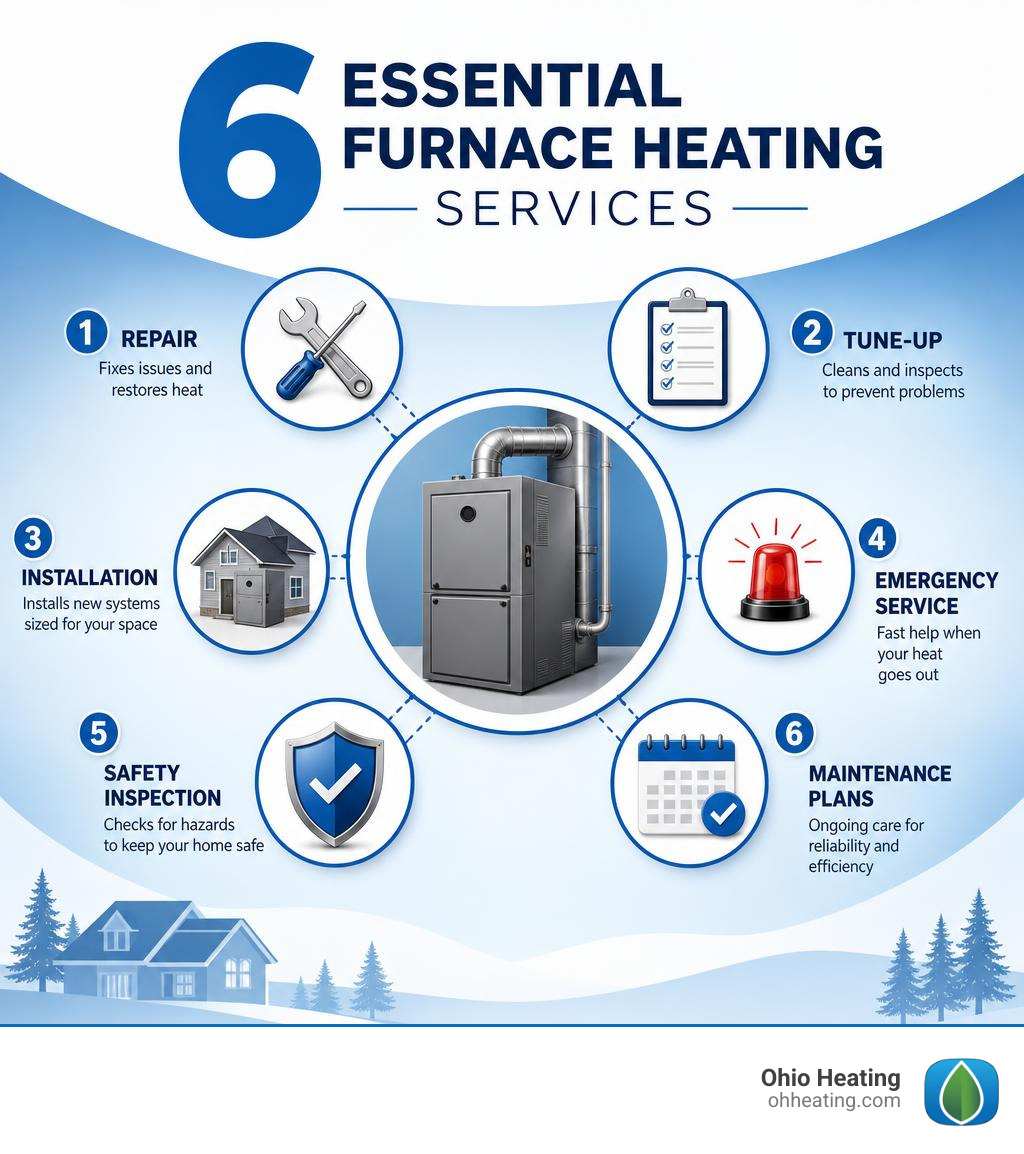
Air conditioning services cover a range of professional solutions designed to keep your home or building cool, safe, and energy-efficient. Here’s a quick overview of what’s typically included:
| Service Type | What It Does |
|---|---|
| AC Repair | Fixes breakdowns, weak cooling, strange noises, and other issues |
| Annual Tune-Up | Cleans and inspects components to prevent problems before they start |
| AC Installation | Replaces old units or installs new systems sized for your space |
| Emergency Service | Responds fast when your cooling goes out during hot weather |
| Safety Inspection | Checks electrical connections, refrigerant levels, and system controls |
| Maintenance Plans | Ongoing scheduled service to extend lifespan and lower energy bills |
Most homeowners don’t think about their air conditioning until something goes wrong — and that’s usually on the hottest day of the year. An AC that hasn’t been serviced can fail without warning, leave your home uncomfortable, and drive up energy bills quietly over time.
The good news: most AC problems are preventable. A well-maintained air conditioner can last 10 to 15 years, and regular service can cut your cooling costs by up to 30% annually.
I’m Jill Frattini, a Service Coordinator at Ohio Heating in Columbus, OH, where I’ve spent years scheduling and overseeing air conditioning services for both residential and commercial clients. In the sections below, I’ll walk you through the six key services that will keep your system running reliably all summer long.
1. Professional Air Conditioning Repair for Fast Cooling Recovery
When your air conditioner stops doing its one job, keeping you cool, professional repair is the service that gets comfort back on track. AC repair covers everything from a failed compressor to weak airflow, blower motor problems, thermostat issues, frozen evaporator coils, short cycling, and electrical faults.
For Columbus and Central Ohio homeowners, the most important thing is knowing when an AC problem is a minor inconvenience and when it needs immediate professional attention. A warm room is annoying. A system blowing hot air or leaking refrigerant is not a “wait and see” situation.
If your system is acting up, our AC Repair in Columbus team can diagnose the issue, explain your options, and help restore safe cooling without guesswork.
Common Signs Your AC Needs Professional Repair
Call for professional AC repair if you notice:
- Weak or warm air from the vents
- Warm spots or uneven cooling throughout the home
- AC turning on and off every few minutes
- Unusual banging, rattling, squealing, or grinding noises
- A musty or burning smell that does not fade quickly after startup
- Ice buildup on the outdoor unit or indoor evaporator coil
- Water leaking around the indoor or outdoor unit
- Rising energy bills with no clear explanation
- Excessive humidity, dry air, or poor indoor comfort
- Tripped breakers or repeated system shutdowns
Short cycling is especially common. It may be caused by a dirty filter, blocked airflow, thermostat problems, low refrigerant, or in more serious cases, safety controls shutting the unit down.
Strange smells also matter. A brief dusty odor during first startup can be normal. But a strong electrical smell, musty odor, or persistent burning smell means the system should be shut off and inspected.
What Homeowners Should Check Before Calling for AC Repair
Before scheduling a repair, there are a few safe checks homeowners can make. These simple steps sometimes solve the issue or help us diagnose it faster.
Check the thermostat:
- Is it set to “Cool”?
- Is the temperature set several degrees below the room temperature?
- Are the batteries dead?
- Is the schedule or programming overriding your settings?
Check the air filter:
- A clogged filter can restrict airflow and cause the coils to freeze.
- Most filters should be checked every 1 to 3 months.
- Make sure the replacement filter is installed in the correct airflow direction.
Check the power:
- Look at the circuit breaker.
- Confirm the AC outdoor disconnect switch and indoor switch are on.
- Make sure the access panel is fully closed, since many units have a safety switch.
Check vents and returns:
- Open supply vents.
- Move furniture, rugs, or curtains away from registers.
- Make sure return vents are not blocked.
Check for error codes:
- If the control board or thermostat shows an error code, write it down before resetting the system.
A good rule: do not repeatedly reset an AC that keeps shutting itself off. The system is trying to protect itself from major damage.
How Emergency AC Repairs Are Typically Handled
During hot weather, emergency AC calls are prioritized because a no-cooling situation can affect comfort, safety, and health.
Emergency service usually includes:
- Fast scheduling based on urgency
- A diagnostic visit to identify the failure
- Safety checks before the system is restarted
- Clear repair options and pricing
- Common replacement parts stocked when possible
- Temporary comfort guidance if a part must be ordered
If your cooling fails after hours, take basic steps while waiting:
- Close curtains and blinds to block sunlight
- Keep interior doors open for air circulation
- Avoid using heat-producing appliances like ovens or dryers
- Check on children, older adults, pets, and anyone with medical needs
For nearby homeowners, we also provide local repair support in communities such as Westerville, Grove City, Hilliard, Gahanna, and Worthington.
2. Annual AC Maintenance and Tune-Ups That Prevent Breakdowns
An AC tune-up is preventive care for your cooling system. Think of it like getting your car serviced before a long road trip. You might be able to skip it for a while, but eventually your system will remind you, usually at the worst possible time.
Professional maintenance helps keep your air conditioner clean, safe, efficient, and reliable. It also helps catch small problems before they become expensive repairs.
How Often to Schedule AC Maintenance
Homeowners should schedule AC maintenance at least once per year, ideally in the spring before heavy cooling use begins.
You may want more frequent checks if:
- The system is older than 10 years
- You have pets that add hair and dust to the air
- Someone in the home has allergies or respiratory concerns
- The AC runs heavily during hot weather
- The system serves a rental property or commercial space
- You have had repeated repairs in recent years
As of May 2026, annual maintenance remains one of the simplest ways to protect your AC investment. Many manufacturer warranties also expect regular professional service, so skipping maintenance can create warranty headaches later.
For simple homeowner habits between visits, see our guide: 7 AC Maintenance Tips for Columbus Homeowners.
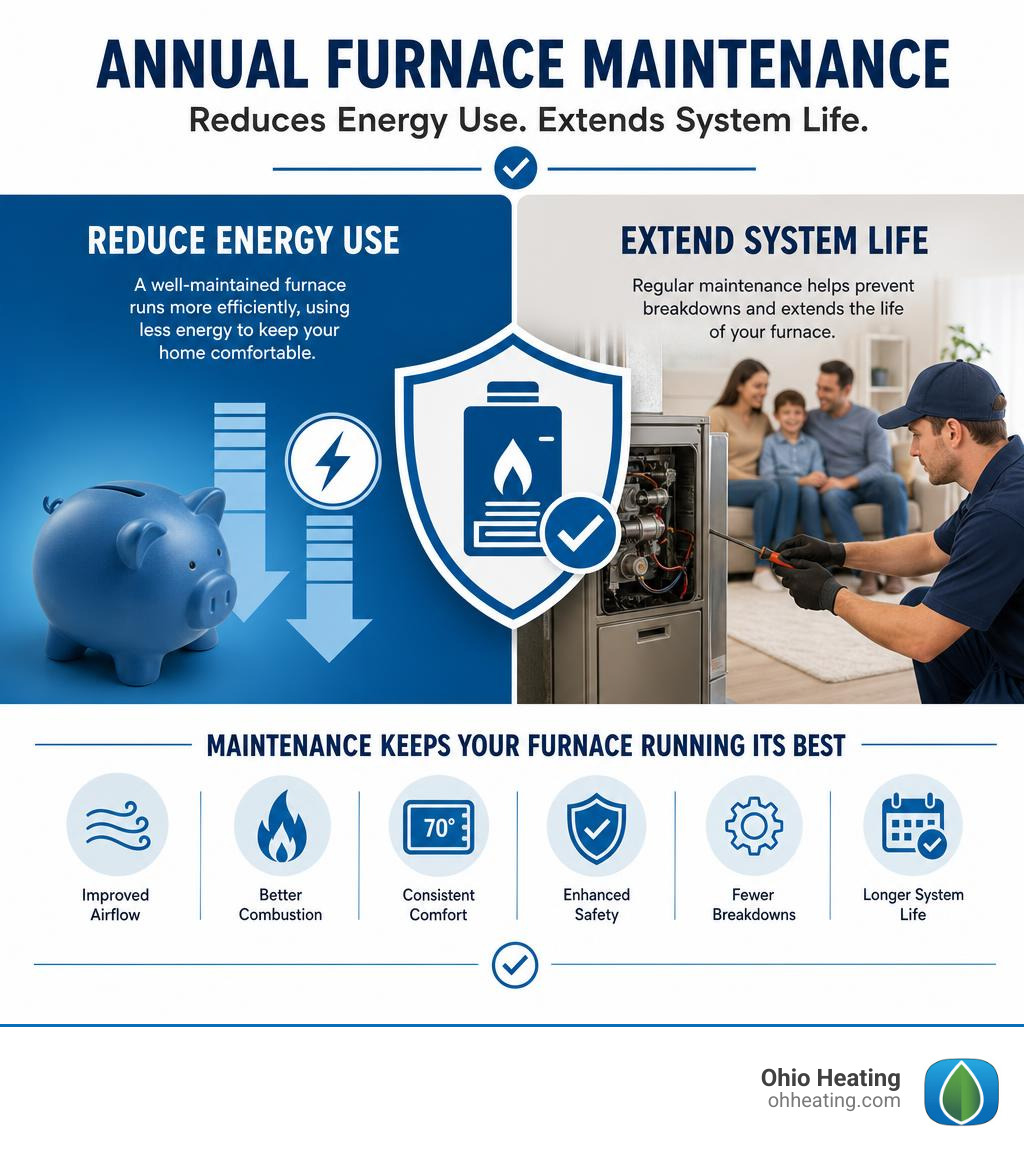
How Regular Maintenance Lowers Energy Bills
A dirty air conditioner has to work harder to move air and remove heat. That extra strain can increase utility costs and wear down components faster.
Maintenance can improve efficiency by:
- Cleaning condenser and evaporator coils
- Replacing or checking filters for proper airflow
- Testing blower and fan performance
- Tightening electrical connections
- Calibrating the thermostat
- Checking refrigerant charge levels
- Inspecting condensate drain lines
- Verifying safe startup and shutdown cycles
Research across the HVAC industry shows regular maintenance can help homeowners save up to 30% per year on energy costs. Actual savings vary by home, equipment age, insulation, thermostat habits, and utility rates, but the principle is simple: clean, properly adjusted equipment uses less energy than neglected equipment.
What’s Included in a Professional AC Tune-Up
A proper AC tune-up should include performance, cleaning, and safety checks. At a high level, a technician may inspect or test:
- Thermostat operation and calibration
- Air filter condition
- Blower motor and fan blades
- Electrical wiring, connections, and contactors
- Capacitors, relays, and control board operation
- Refrigerant levels and operating pressures
- Condenser and evaporator coils
- Condensate drain line and pump
- Safety switches and limit controls
- Temperature drop across the coils
- Compressor amp draw
The coil inspection is especially important. Dirty coils restrict heat transfer, forcing the compressor to run hotter and longer, which can lead to premature failure. That is why professional cleaning is a core part of professional AC service.
3. AC Installation and Replacement for Long-Term Comfort
Sometimes repair is the right answer. Other times, replacing the air conditioner is the smarter long-term move.
AC installation involves more than setting a new metal box outside. Proper sizing, ductwork evaluation, refrigerant line set installation, electrical connections, thermostat setup, and startup testing all matter. A high-efficiency AC installed poorly will not perform like a high-efficiency AC.
If you are planning a replacement in Central Ohio, we provide installation support in areas including Dublin, Upper Arlington, and Worthington.
When to Replace Instead of Repair
A well-maintained air conditioner can last 10 to 15 years. Once a system gets near that age, replacement becomes worth considering, especially if repairs are becoming frequent.
Consider replacement if:
- Your AC is 10 to 15 years old
- Repair costs are high compared with replacement
- The compressor fails
- Major components like the outdoor coil or control board fail
- The system still uses outdated R-22 refrigerant
- Energy bills keep rising
- The AC runs constantly but does not cool well
- Rooms are still uncomfortable after repairs
- The system was improperly sized from the beginning
One common decision tool is the “$5,000 rule.” Multiply the AC age by the repair cost. If the number is over $5,000, replacement may be the better investment.
Example:
| AC Age | Repair Cost | Age x Repair Cost | Likely Decision |
|---|---|---|---|
| 6 years | $300 | $1,800 | Repair may make sense |
| 11 years | $600 | $6,600 | Replacement may be worth considering |
| 14 years | $900 | $12,600 | Replacement is often smarter |
Another practical rule: if the repair is more than half the cost of replacement and the AC is older, replacement deserves a serious look.
How to Choose the Right AC System
Choosing the right air conditioner depends on more than brand or price. The best system for your home or business should match your comfort needs, building size, efficiency goals, and budget.
Key factors include:
- Home or building square footage
- Insulation levels
- Window quality
- Ductwork condition
- SEER2 efficiency rating
- Noise level
- Humidity and indoor air quality needs
- Thermostat and zoning options
- Warranty coverage
- Budget and financing preferences
A professional load calculation is important. Oversized air conditioners may short cycle, waste energy, and fail to dehumidify properly. Undersized units may run constantly and still fail to keep up. Bigger is not always better.
Central AC vs. Ductless Mini-Splits vs. Heat Pumps
Here are the basic differences:
| AC Type | Advantages | Considerations |
|---|---|---|
| Central AC | Even cooling through existing ducts, common in Central Ohio | Requires ductwork, outdoor and indoor units |
| Ductless Mini-Split | Zoned cooling, highly efficient, no ductwork needed | Higher initial equipment cost for multiple zones |
| Heat Pump | Highly efficient cooling, versatile system that can also provide year-round temperature control | Outdoor unit runs year-round, requires proper sizing |
For many Columbus-area homes, central air conditioning is common because ductwork is already in place. Ductless mini-splits are excellent for additions, older homes without ducts, or specific hot spots. Heat pumps offer an all-in-one cooling and heating solution.
What to Expect During AC Installation
A professional installation may include:
- Removing the old AC unit and indoor coil
- Inspecting ductwork and airflow
- Confirming proper equipment size
- Setting and leveling the new outdoor condenser
- Installing the new indoor evaporator coil
- Connecting refrigerant lines, electrical wiring, and condensate drains
- Evacuating the system and charging with refrigerant
- Installing or configuring the thermostat
- Testing system operation and airflow
- Reviewing operation and maintenance with the customer
Good installation protects comfort, efficiency, and safety. Poor installation can shorten equipment life and cause problems that look like “bad equipment” but are really setup issues.
4. AC Safety and Performance Inspection Services
Safety and performance are major reasons to schedule professional air conditioning services. While AC units do not burn fuel, they use high-voltage electricity and chemical refrigerants that require professional handling and safety checks.
Preventing electrical hazards, refrigerant leaks, and water damage from clogged condensate lines is essential for keeping your home safe and dry.
Electrical and Control Testing
A technician should check all electrical components to prevent short circuits, wiring damage, or component failures.
Important safety checks include:
- Testing contactors for pitting or wear
- Checking capacitor ratings and performance
- Inspecting electrical wiring and connections for tightness and wear
- Measuring compressor and fan motor amp draw
- Testing safety controls and pressure switches
- Verifying thermostat communication and calibration
- Checking the outdoor disconnect switch
Loose electrical connections or failing capacitors can cause the system to overheat, trip breakers, or even damage the compressor.
Refrigerant Leak and Coil Checks
Refrigerant is the lifeblood of your AC system. If there is a leak, the system will lose cooling capacity, run constantly, and potentially damage the compressor.
Signs that may point to refrigerant or coil concerns include:
- Warm air blowing from vents
- Hissing or bubbling noises near the unit
- Ice buildup on the refrigerant lines or evaporator coil
- AC running continuously without reaching the set temperature
- Rising energy bills
Homeowners should never try to add refrigerant themselves. Handling refrigerant requires EPA certification. If a leak is found, it must be professionally repaired, and the system must be recharged to exact manufacturer specifications.
Condensate Drain and Overflow Checks
Air conditioners remove a significant amount of moisture from the air as they cool. If the condensate drain line or pump fails, this water can overflow and cause serious water damage to your home.
During service, technicians may inspect:
- Condensate drain lines for clogs or algae buildup
- Condensate pump operation and safety float switches
- Drain pan condition for rust or cracks
- Evaporator coil cleanliness to prevent drainage blockages
If you notice water pooling around your indoor AC unit, shut the system off immediately and call for professional service to prevent water damage to your floors and ceilings.
5. AC Cost, Warranty, and Service Plan Guidance
Cost is one of the first questions homeowners ask, and understandably so. Nobody wakes up excited to buy a new capacitor. If you do, we admire your enthusiasm, but we also have questions.
Typical AC Repair Cost Factors
A typical AC repair often costs between $150 and $350, while minor repairs can be as low as $50 and severe issues like compressor replacement can exceed $1,500. Some service markets see common AC repairs ranging higher, especially when major parts or refrigerant are involved.
The final price depends on:
- Type of failed part
- AC age and model
- Warranty status
- Labor time
- Part and refrigerant availability
- System accessibility
- Diagnostic complexity
- Emergency or after-hours timing
Lower-cost repairs may include capacitor replacement, contactor replacement, or simple thermostat corrections. Higher-cost repairs may involve blower motors, condenser fan motors, compressor replacements, or evaporator coil repairs.
A trustworthy service provider should explain the diagnosis, show what failed when possible, and provide clear pricing before major work begins.
Warranties and Guarantees to Look For
When choosing an AC service provider, ask about:
- Manufacturer parts warranty
- Labor warranty
- Workmanship guarantee
- Installation warranty
- Satisfaction policy
- Maintenance plan benefits
- Emergency service availability
- Licensing and insurance
- Whether technicians are trained on your equipment type
Many HVAC systems include manufacturer parts warranties, and labor coverage may vary by installer, equipment, and program. In the industry, many installed systems may include 5- or 10-year labor warranty options when purchased through certified channels or warranty programs, but homeowners should always confirm the exact terms in writing.
For repairs, ask:
- Is the diagnostic fee separate?
- Are parts and labor covered?
- How long is the repair warranty?
- What happens if the same issue returns?
- Are there exclusions?
For installations, ask:
- What is covered by the manufacturer?
- What is covered by the contractor?
- Is registration required?
- Is annual maintenance required to preserve coverage?
- Are permits included where needed?
How Maintenance Plans Help Avoid Costly Problems
Maintenance plans are designed to make AC care easier and more consistent. Instead of remembering to schedule service after the first heatwave, a plan keeps tune-ups on the calendar.
Benefits may include:
- Annual scheduled maintenance
- Priority scheduling
- Fewer surprise breakdowns
- Better energy efficiency
- Longer system lifespan
- Repair discounts, depending on plan terms
- Service history records
- Better warranty support documentation
A maintenance plan is especially useful for commercial spaces, rental properties, older systems, and busy households. It is also helpful for anyone who says, “I’ll schedule that later,” and then remembers three years later when the AC starts sounding like a marching band in a closet.
6. Choosing a Local AC Service Company in Columbus
Choosing the right HVAC company matters. An air conditioner affects comfort, energy costs, indoor air quality, and safety. The company you hire should be experienced, properly insured, transparent, and familiar with Central Ohio homes and businesses.
Ohio Heating has provided residential and commercial HVAC installation, repair, and maintenance since 1999. Our focus is comfort and operational reliability, whether we are helping a homeowner avoid a no-cooling emergency or helping a business prevent costly downtime.
If you are comparing local providers, resources like Columbus HVAC service listings can help you understand the local market, but your final decision should come down to qualifications, communication, safety practices, and trust.
What to Ask Before Scheduling AC Service
Before booking service, ask:
- Are you licensed and insured?
- Do you service my AC type?
- What is included in the diagnostic visit?
- Do you provide upfront pricing?
- What safety checks are included?
- Do you offer emergency service?
- What warranties apply to repairs or installation?
- Do you offer maintenance plans?
- Can you help with replacement options if repair is not practical?
- Do you serve my area in Central Ohio?
For homeowners in specific communities, it can also help to work with a company familiar with nearby housing styles and common system setups. We provide location-specific support for communities such as Columbus, Dublin, Worthington, Upper Arlington, Westerville, Hilliard, Grove City, and Gahanna.
Why Local Experience Matters
Central Ohio weather can swing from mild to extremely hot quickly, and AC demand often spikes during heatwaves. Local experience helps with:
- Faster scheduling during high-demand periods
- Knowledge of common AC types in the area
- Familiarity with older homes and ductwork layouts
- Understanding local code requirements
- Access to common replacement parts
- Long-term service history for repeat customers
- Practical recommendations for local utility conditions
A local HVAC team can also help you decide whether your issue is truly the AC, or whether ductwork, airflow, thermostat placement, insulation, or system sizing is part of the problem.
How Commercial and Residential AC Needs Differ
Residential AC service focuses on family comfort, safety, efficiency, and long-term reliability. Commercial cooling service adds another layer: operational continuity.
For homes, common priorities include:
- Even room temperatures
- Lower utility bills
- Quiet operation
- Indoor air quality
- Reliable emergency support
For businesses, priorities may include:
- Preventing downtime
- Protecting employees and customers
- Maintaining tenant comfort
- Supporting equipment or inventory needs (like server rooms)
- Coordinating service around business hours
- Managing rooftop units, split systems, or multiple zones
Both need quality maintenance. The difference is that an AC failure at home is uncomfortable; a cooling failure at a business can interrupt revenue, productivity, and customer experience.
Frequently Asked Questions About Air Conditioning Services
How often should homeowners schedule AC maintenance?
Schedule AC maintenance once per year, preferably in the spring before the system runs heavily. Older systems, commercial systems, rental properties, and homes with pets or allergy concerns may benefit from additional filter checks and closer monitoring.
Annual service helps improve efficiency, reduce breakdown risk, support warranty documentation, and extend equipment lifespan.
What should I check before calling for AC repair?
Check the thermostat, air filter, circuit breaker, AC switch, vents, returns, batteries, and any visible error codes. Make sure the thermostat is set to cool and the temperature is below the current room temperature.
If you notice ice buildup, water leaks, unusual electrical sounds, or if your system keeps tripping the breaker, stop troubleshooting and seek professional or emergency help immediately.
What are the most common signs an AC needs repair?
The most common warning signs include:
- No cooling or weak cooling
- Uneven cooling
- Short cycling
- Loud or unusual noises
- Strange or musty odors
- Rising energy bills
- Poor airflow
- Ice buildup on coils or lines
- Water leaks around the unit
- Frequent breaker trips
- System shutdowns
An air conditioner does not need to fail completely before it needs service. Calling early can often prevent a bigger repair.
How much does AC repair usually cost?
Typical AC repair costs often fall between $150 and $350. Minor fixes may cost around $50, while major repairs like compressor replacement can exceed $1,500 depending on the part, labor, system age, warranty status, and urgency.
The most expensive repairs often involve major components such as compressors, evaporator coils, condenser fan motors, or blower motors.
When is AC replacement better than repair?
Replacement is often better when the AC is 10 to 15 years old, needs frequent repairs, uses outdated R-22 refrigerant, or requires a repair that costs a large percentage of replacement.
If repair costs exceed 50% of replacement cost, or the age multiplied by repair cost exceeds $5,000, replacement may be the more practical long-term choice.
How can AC maintenance lower energy bills?
Maintenance lowers energy use by improving airflow, cleaning coils, calibrating controls, and reducing strain on the system. Clean coils, clean filters, properly operating blowers, and correct refrigerant levels all help the AC run more efficiently.
Regular HVAC maintenance can help homeowners save up to 30% per year on energy costs, depending on equipment condition, usage habits, and home efficiency.
Conclusion
The six air conditioning services that matter most are repair, annual tune-ups, installation and replacement, safety and performance inspections, cost and warranty guidance, and ongoing maintenance planning. Together, they protect comfort, safety, efficiency, and equipment lifespan.
If your AC is noisy, unreliable, aging, or overdue for service, we can help. Ohio Heating has served Columbus and Central Ohio since 1999 with residential and commercial HVAC repair, maintenance, and installation focused on dependable comfort and fewer surprises.
Whether you need fast repair, a seasonal tune-up, or honest replacement guidance, our team is ready to keep your home or business cool, safe, and running reliably.