
Air Balance Report: Crucial HVAC Health Check 2025
Why Your HVAC System Needs a Health Checkup
An Air balance report is a detailed document proving your HVAC system delivers the right amount of air to the right places. It’s a comprehensive health checkup for your building’s heating, ventilation, and air conditioning (HVAC) that measures, documents, and verifies the system works exactly as designed.
What an Air Balance Report Tells You:
- System Performance – Compares actual airflow (measured in CFM) against design specifications
- Problem Areas – Identifies rooms with too much or too little air
- Pressure Issues – Reveals if your building has negative or positive pressure problems
- Energy Efficiency – Shows if your system is wasting energy or working too hard
- Compliance Status – Documents whether your installation meets building codes and health department requirements
People spend approximately 90% of their time indoors, yet most building owners don’t know if their HVAC system is performing as intended. An air balance report provides precise, measurable data on your system’s real-world performance.
Engineers have required these reports since the 1960s to ensure HVAC designs work correctly. Today, they are often mandatory for new commercial HVAC installations and kitchen exhaust systems, with many health departments requiring certified reports for restaurant ventilation.
As Jill Frattini, a Service Coordinator at Ohio Heating, I’ve seen how an Air balance report prevents costly callbacks, protects equipment, and ensures comfort in commercial buildings across Columbus. This guide will walk you through everything you need to know.
What is an Air Balance Report and Why is it Crucial?
An Air balance report is your HVAC system’s official report card, a detailed document proving it delivers precisely what the design promised. By recording real-world airflow measurements and comparing them to engineering plans, the report verifies that your installation works correctly. This essential documentation is one of the most critical steps in the HVAC process, yet it’s often overlooked until problems arise.
For commercial buildings, and especially kitchens, this report is absolutely required for regulatory compliance. City inspectors and health departments demand it to ensure a safe and comfortable environment for employees and customers. The report formats all airflow testing data for easy review, checking every component from air handlers to ceiling diffusers. For more information about how we help businesses maintain optimal performance, visit our Commercial HVAC Services in Columbus, OH page.
The Core Purpose: Matching Design with Reality
HVAC systems look great on paper, but an Air balance report bridges the gap between design theory and real-world performance. It answers the critical question: “Is the system delivering what we paid for?”
We measure airflow in Cubic Feet per Minute (CFM) at every supply vent, return grille, and exhaust fan. We then compare these actual CFM readings to the original design specifications. When the numbers match, the system is efficient. When they don’t, you get hot and cold spots, stuffy rooms, and high energy bills. The report verifies installation quality and catches problems early.
Why It’s Non-Negotiable for Commercial Kitchens and Buildings
For commercial kitchens, an Air balance report is non-negotiable. Health departments in Ohio and elsewhere mandate that kitchen exhaust hoods be balanced by a certified professional for safety and legal compliance.
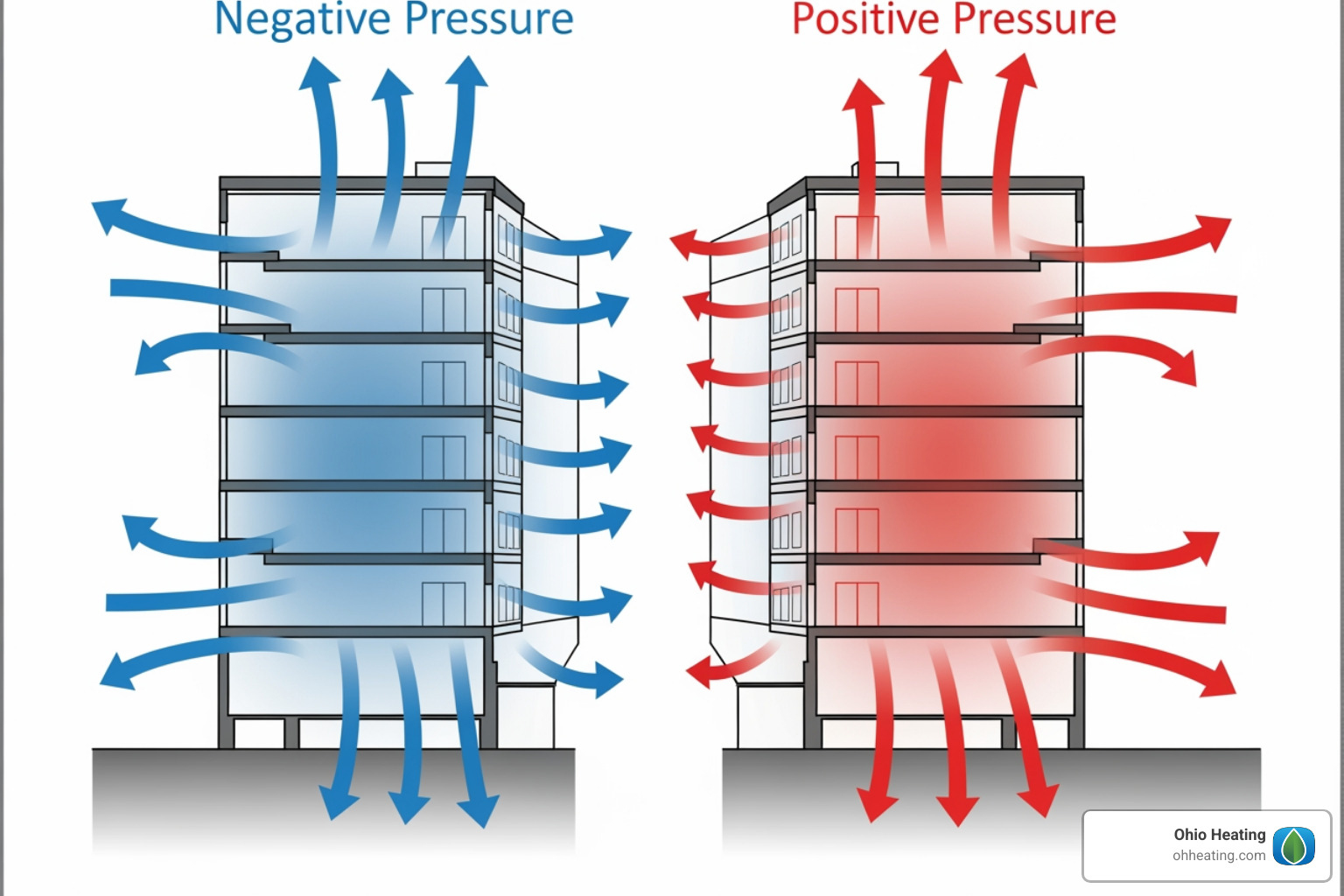
A busy kitchen exhaust hood pulls thousands of CFM of air out. Without properly balanced make-up air units (MAUs) bringing fresh air back in, the kitchen develops negative pressure. This vacuum effect can make doors difficult to open, a poor first impression for customers. Worse, it can pull outdoor dirt, fumes, or even sewer gases from floor drains into your dining area.
The opposite problem, positive pressure, occurs when too much air is pushed in. This prevents the exhaust hood from capturing smoke and grease-laden air, causing fumes to roll back into the kitchen. This makes the environment hot, smoky, and unbearable for staff.
An Air balance report ensures your MAUs and exhaust systems work in harmony, maintaining a neutral or slightly positive pressure. This balance is crucial for comfort and for controlling carbon monoxide from gas appliances by ensuring dangerous fumes are vented outside. When your air is balanced, doors open easily, the kitchen is comfortable, and everyone breathes healthier air. To learn more about creating healthier environments, check out our guide on Indoor Air Quality 101.
The Anatomy of the Report and the Balancing Process
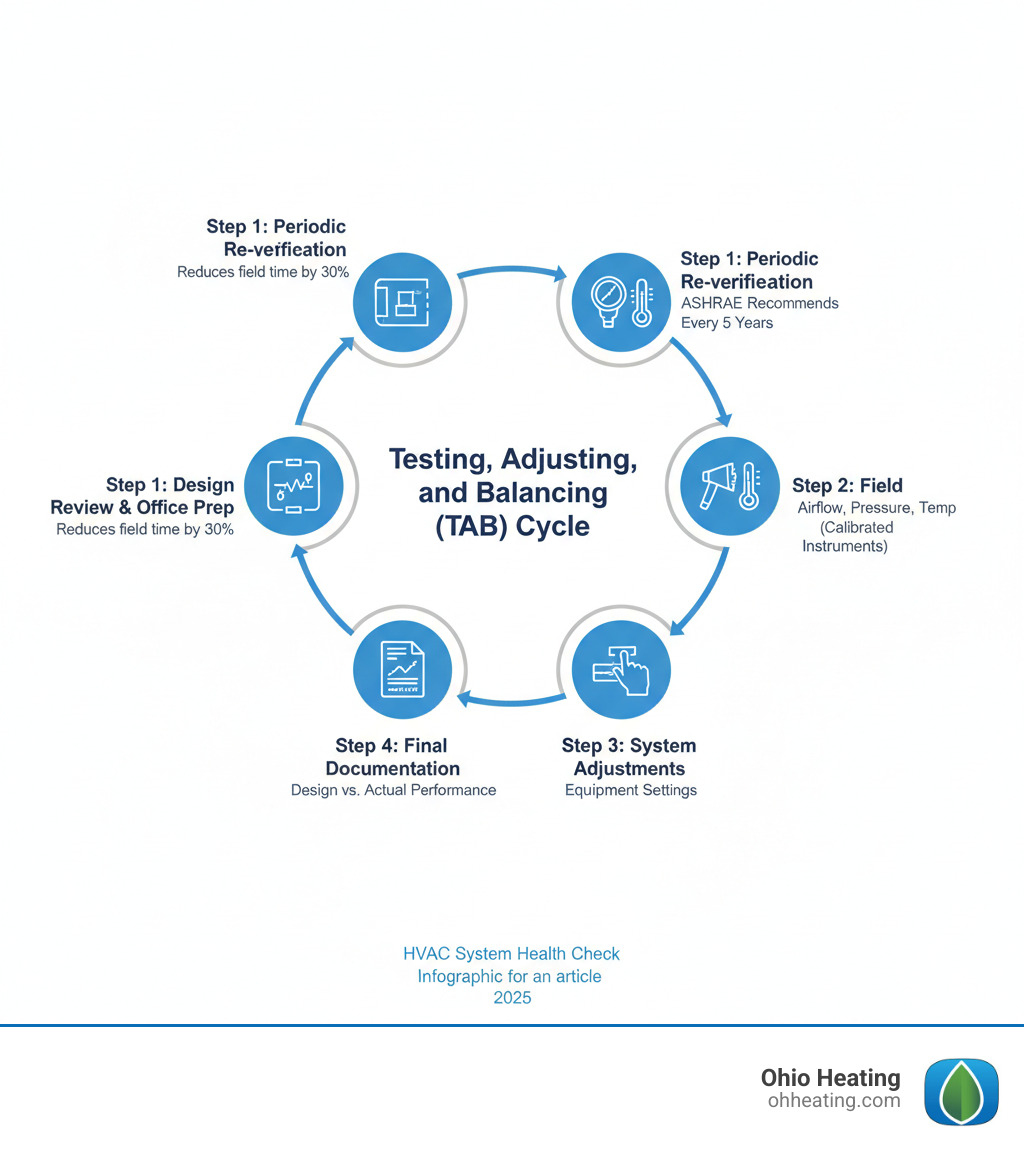
Creating an Air balance report begins long before our technicians arrive on-site. The process starts with extensive office preparation, where we study your project’s plans and specifications. Our team marks up blueprints, identifies every register and piece of equipment, and maps out the system’s airflow dynamics. This detailed prep work can cut field time by 30% or more, ensuring an efficient process.
This preparation highlights the need for technician expertise. Air balancing requires deep knowledge of airflow, system components, and engineering drawings. This combination of office prep and field experience is what produces an accurate, reliable report.
Key Components of a Professional Air Balance Report
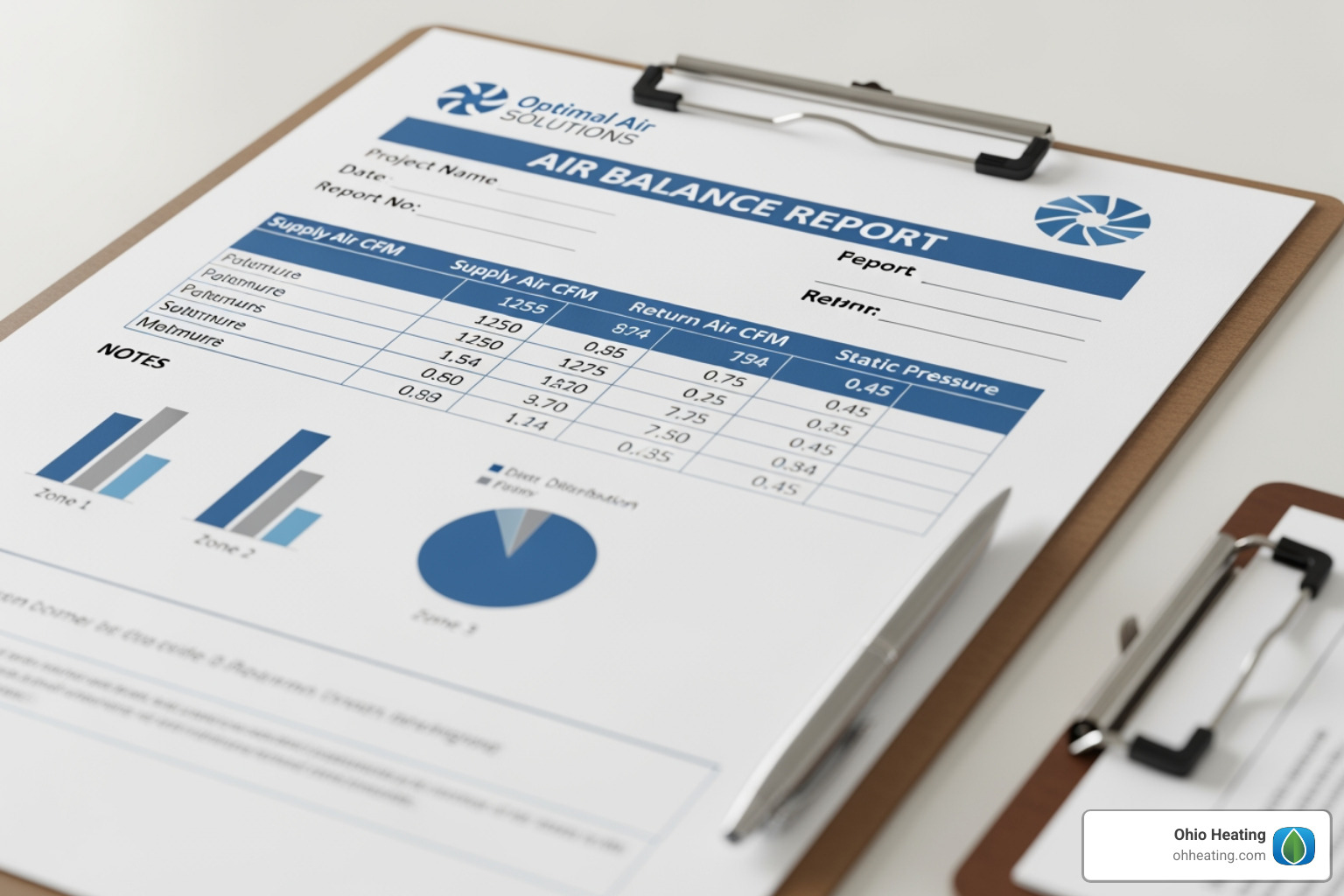
A professional Air balance report follows industry standards from organizations like The National Environmental Balancing Bureau (NEBB) and includes several key components:
- Site Information: Building address, project type, and environmental conditions.
- Equipment Data: Detailed specifications for all HVAC units, including fan and motor details, model numbers, and serial numbers.
- Airflow Readings: A comparison of design CFM vs. actual measured CFM for every supply, return, and exhaust point, including the percentage of variance.
- Pressure and Temperature: Static pressure measurements from the ductwork and temperature/humidity readings to assess comfort and efficiency.
- Technician Notes: Documentation of observations, adjustments made, and any system deficiencies found.
- Instrument Information: A list of all testing devices used, including model, serial number, and last calibration date to ensure data validity.
How Technicians Perform the Test
Our certified technicians use a methodical approach and specialized, calibrated instruments to perform the test.
- Balancing Hoods: Placed over diffusers to capture and directly measure the total CFM of airflow.
- Anemometers: Vane or hot-wire types measure air velocity, which is converted to CFM. They are highly accurate, especially for lower air speeds.
- Manometers: Measure pressure differences within ductwork and between spaces to identify blockages or imbalances.
- Temperature and Humidity Sensors: Monitor air conditions throughout the system to ensure comfort.
The process involves taking initial measurements (static balancing) and then fine-tuning the system under full operational load (dynamic balancing). We first optimize fan speeds, often with Variable Frequency Drives (VFDs), to reduce overall system pressure. Then, we make precise damper adjustments to regulate air distribution to each room. This thorough field process, guided by our office preparation, runs smoothly and saves you time and money.
Open uping the Benefits: Efficiency, Comfort, and Air Quality
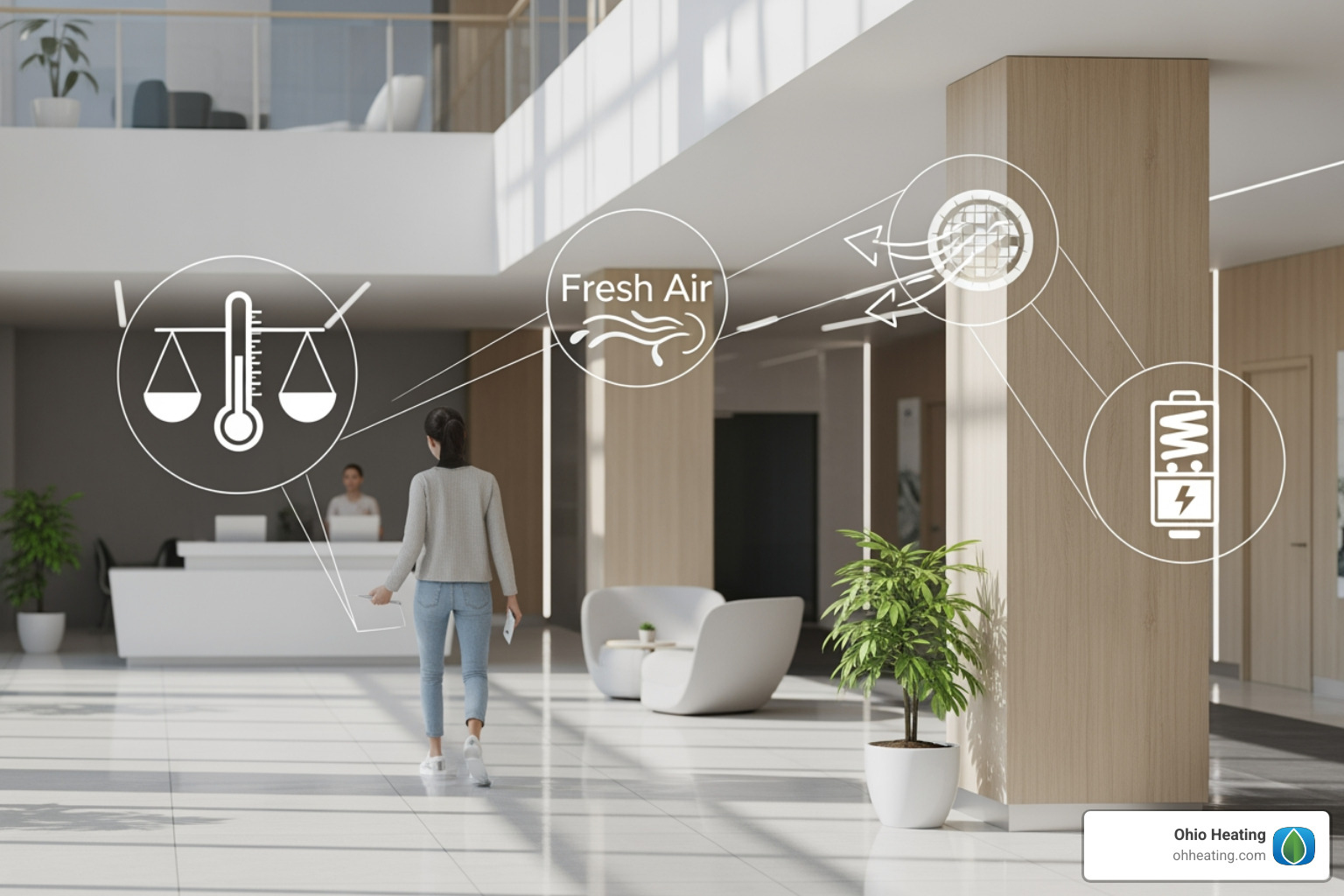
Investing in an Air balance report for your Columbus building delivers measurable improvements to your bottom line and occupant well-being. The benefits include reduced energy costs, consistent thermal comfort, and better air quality. It’s proactive maintenance that catches small issues before they become expensive emergencies. A documented report also protects contractors and designers by providing verifiable proof that the system performs to specification, preventing disputes with clear data.
Boosting Energy Efficiency and Reducing Costs
An unbalanced HVAC system works overtime, causing fans and compressors to run harder and increasing your utility bills. An Air balance report allows us to optimize fan speeds and equipment settings for peak efficiency. By reducing fan speeds with Variable Frequency Drives (VFDs), we can dramatically cut energy consumption while reducing strain on equipment. This leads to fewer breakdowns and a longer equipment lifespan.
The U.S. Department of Energy estimates that typical duct systems lose about a third of their energy. An air balance report identifies the culprits, such as leaky ducts or improperly set dampers, so we can fix them and stop energy waste. For more strategies, explore our Building and Energy Management services.
Ensuring Thermal Comfort and Superior Indoor Air Quality (IAQ)
Frustrating hot and cold spots are a clear sign of an unbalanced HVAC system. An Air balance report maps airflow to identify and eliminate these temperature inconsistencies, delivering consistent comfort that improves productivity and customer experience.
Beyond comfort, the report is vital for maintaining superior Indoor Air Quality (IAQ). The balancing process verifies proper ventilation rates, ensuring fresh air circulates while stale, polluted air is exhausted. This reduces indoor pollutants and allergens. ASHRAE Standard 62.1 recommends a TAB (Testing, Adjusting, and Balancing) audit be performed every five years, as systems naturally drift out of balance over time.
Proper airflow also prevents mold growth by controlling humidity and eliminating stagnant air. A balanced system creates a healthier environment, protecting your building and its occupants.
From Data to Diagnosis: Using the Report to Solve Problems
When your HVAC system feels off—with inconsistent temperatures or strange odors—an Air balance report becomes a powerful troubleshooting tool. It transforms from a compliance document into a diagnostic guide that can save you thousands on unnecessary repairs.
The report’s precise CFM and pressure measurements reveal hidden issues a visual inspection might miss. Instead of guessing, this data-driven approach provides a clear roadmap to the root cause of the problem, ensuring we fix the actual issue, not just the symptoms. Often, a simple adjustment identified in the report is all that’s needed, avoiding costly equipment replacement.
How an Air Balance Report Diagnoses HVAC Problems
An Air balance report diagnoses problems by comparing actual airflow measurements to the original design specifications. A significant discrepancy, like a room receiving only 150 CFM instead of the designed 250 CFM, points directly to a problem. Common issues identified include:
- Blocked or dirty filters: Clogged filters restrict airflow, and high static pressure readings in the report often pinpoint this issue before it damages equipment.
- Leaky or restricted ducts: The report shows which zones are starved for air and which get too much, indicating leaks or blockages in the ductwork.
- Incorrect fan settings: A fan running too slow or too fast can cause comfort issues and waste energy.
- Improperly adjusted dampers: Dampers that are not set correctly can throw the entire system out of balance.
This comprehensive view helps prevent common HVAC System Failures and ensures all equipment operates as intended.
The Critical Role of Building Pressure
Building pressure imbalances cause noticeable problems, and your Air balance report provides the data to fix them.
Excessive positive pressure forces too much air into a space. This can cause doors to slam shut and, in commercial kitchens, prevents exhaust hoods from capturing smoke and fumes effectively, creating an unpleasant environment.
Excessive negative pressure turns the building into a vacuum. This makes doors difficult to open and pulls in drafts, outdoor contaminants, and odors from drains. Most dangerously, it can cause a backdraft of combustion appliances, pulling carbon monoxide into occupied spaces.
The goal is to achieve neutral or slightly positive pressure. This ensures doors operate normally, exhaust systems work correctly, and indoor air stays clean. Proper balance starts with quality Ductwork Installation in Columbus, OH and requires ongoing verification through professional air balancing.
Frequently Asked Questions about Air Balancing
I’ve heard just about every question imaginable about air balancing. Let me address the most common ones.
How often should I get an air balance report?
The frequency depends on your situation:
- New Installations: An Air balance report is essential to verify the system performs as designed. It’s the final quality check on a new project.
- Major Renovations: Any significant change to your building’s layout, ductwork, or HVAC equipment requires a new report to account for altered airflow patterns.
- Ongoing Maintenance: For general guidance, ASHRAE Standard 62.1 recommends a TAB audit every five years. Buildings with critical needs, like hospitals, may require more frequent checks.
- Troubleshooting: If you experience issues like hot/cold spots, high energy bills, or poor air quality, an air balance report can provide a quick diagnosis.
Can I perform an air balance myself?
While the DIY spirit is admirable, air balancing requires professional expertise and equipment.
- Specialized Equipment: Professionals use expensive, calibrated tools like balancing hoods, anemometers, and manometers. These instruments require training to operate correctly and regular calibration to ensure accuracy.
- Technical Expertise: Certified technicians understand complex airflow dynamics and pressure relationships. They know how to interpret readings and make precise adjustments without causing new problems elsewhere in the system.
While you can perform simple DIY checks (like holding a tissue to a vent), you need a qualified professional for certified documentation that meets regulatory and design requirements.
Are air balance reports required by law?
Requirements vary by location and building type, but an Air balance report is often legally required.
- Commercial Building Permits: For new construction or major HVAC overhauls in the Columbus area, a report is typically mandatory to prove the system meets building and energy codes before an occupancy permit is issued.
- Health Code for Kitchens: Health departments in Ohio strictly require certified reports for commercial kitchen exhaust systems to ensure safety and proper ventilation. Failing to provide one can lead to failed inspections or shutdowns.
- Residential Settings: While rarely required by law for homes, a report is a valuable assurance policy that verifies proper installation and protects your investment.
Always check with your local building department or an HVAC professional to understand the specific requirements for your project.
Your Partner for a Perfectly Balanced System
An Air balance report is your assurance that your HVAC investment is working for you. This data-driven analysis provides a clear picture of your system’s real-world performance, protecting your investment and preventing costly surprises.
For any commercial facility in central Ohio, proper air balancing is the key to an efficient, comfortable, and healthy building. It ensures your HVAC system runs optimally, keeps occupants happy, and maintains excellent indoor air quality.
Since 1999, Ohio Heating has helped Columbus businesses and homeowners avoid the frustration of poorly performing HVAC systems. A balanced system prevents emergency calls, eliminates hot and cold spots, and controls energy bills. Our certified professionals understand the story the numbers tell about your building’s performance.
When you partner with Ohio Heating for expert air balance services in Columbus, Ohio, you get experienced technicians with calibrated instruments and industry best practices. We deliver documentation that meets the standards of inspectors, engineers, and health departments.
Don’t leave your HVAC system’s performance to chance. Let us provide the Air balance report that proves your system works as it should, ensuring optimal comfort, efficiency, and air quality.