
AC leaking water inside: 4 Urgent Fixes!
When Your AC Unit Leaks Water: Understanding the Problem
AC leaking water inside is a sign that something has gone wrong with your air conditioner’s drainage system. If you’re seeing puddles around your unit, here’s what you need to know right away:
Quick Diagnosis Guide:
- Clogged condensate drain line – The most common cause (algae, dirt, or debris blocking the drain)
- Frozen evaporator coil – Usually caused by a dirty air filter restricting airflow
- Low refrigerant levels – Causes coils to freeze, then leak when they thaw
- Damaged drain pan – Cracks or rust in units 12-15 years old
- Broken condensate pump – Fails to remove water from the system
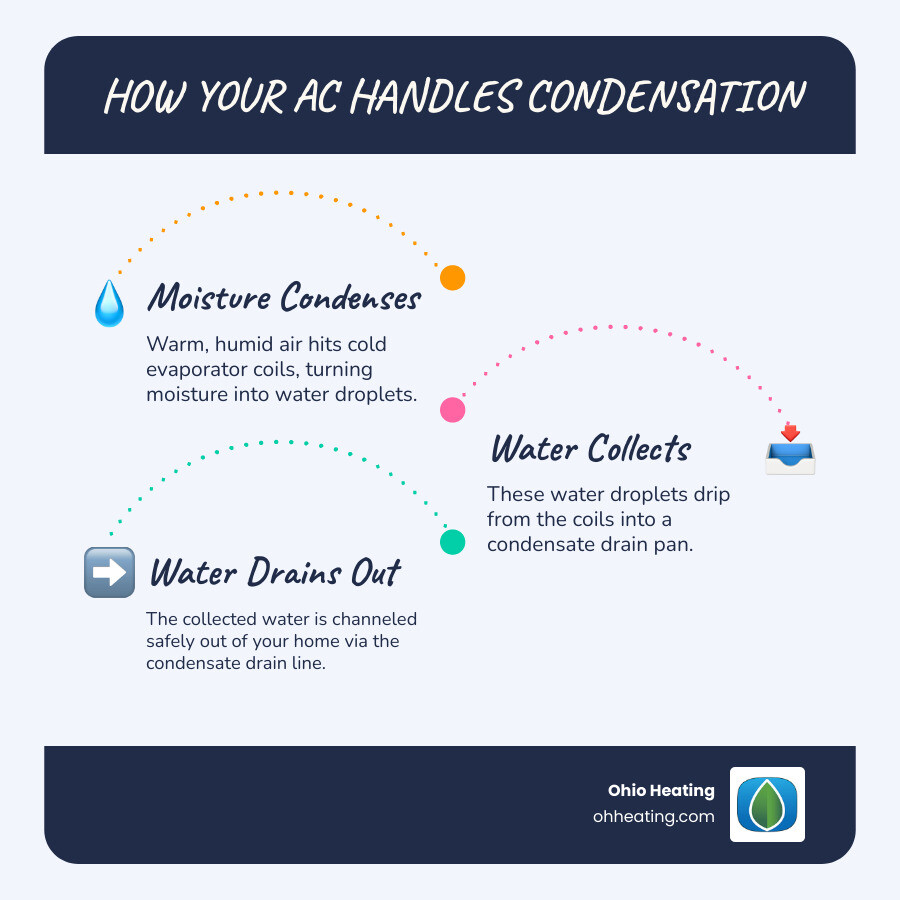
Your air conditioner naturally creates water as it cools and dehumidifies the air in your building. Warm air passes over cold evaporator coils, causing moisture to condense—just like water droplets on a cold glass. This water should drip into a drain pan and flow out through a condensate drain line. When water leaks inside instead, it means this drainage process has been interrupted.
The consequences of ignoring a leaking AC go beyond inconvenience. Water can soak through walls and ceilings, damage flooring, and create the perfect environment for mold growth. Near electrical components, standing water creates serious safety risks including short circuits and potential fires.
I’m Jill Frattini, a Service Coordinator at Ohio Heating with several years of HVAC industry experience. I’ve helped countless property managers and business owners diagnose and resolve AC leaking water inside issues before they caused major property damage or tenant complaints.
Immediate Steps for a Leaking AC
Nobody wants to find water pooling around their air conditioner on a hot summer day. But here’s the good news: taking quick action can save you from serious property damage and expensive repairs down the road.
Safety comes first, always. Before you do anything else, head to your thermostat and turn your system from “Cool” to “Off.” This stops the unit from producing more water and prevents potential electrical problems. If you’re seeing a significant leak or water near any electrical components, take it one step further and flip the breaker switch to cut power to your AC unit completely.
Not sure how to safely shut down your system? Our guide on How to Prepare for AC Emergencies: Safety Measures to Take walks you through the process step by step.

Now let’s deal with that water. Grab some towels, place a bucket under any active drips, and soak up standing water as quickly as you can. The longer water sits on your floors, walls, or ceilings, the more damage it causes. A wet/dry vacuum works great if you have one handy.
Once you’ve got the immediate mess under control and your system is safely off, take a moment to look around. Where exactly is the water coming from? Check your air filter to see if it’s dirty. Peek at the condensate drain line for any obvious blockages. Look at the drain pan underneath your indoor unit to see if it’s overflowing or damaged.
These quick checks can sometimes reveal simple fixes you can handle yourself. But even if you can’t spot the problem right away, you’ve already done the most important thing: you’ve stopped an AC leaking water inside from causing major property damage to your Columbus home or business.
Why Is My AC Leaking Water Inside? Common Causes & Fixes
When your AC starts acting like a leaky faucet, it’s usually trying to tell you something. Over our 25+ years serving Central Ohio, we’ve seen just about every reason an AC leaking water inside can happen—from simple fixes you can handle yourself to more serious issues that need professional attention.
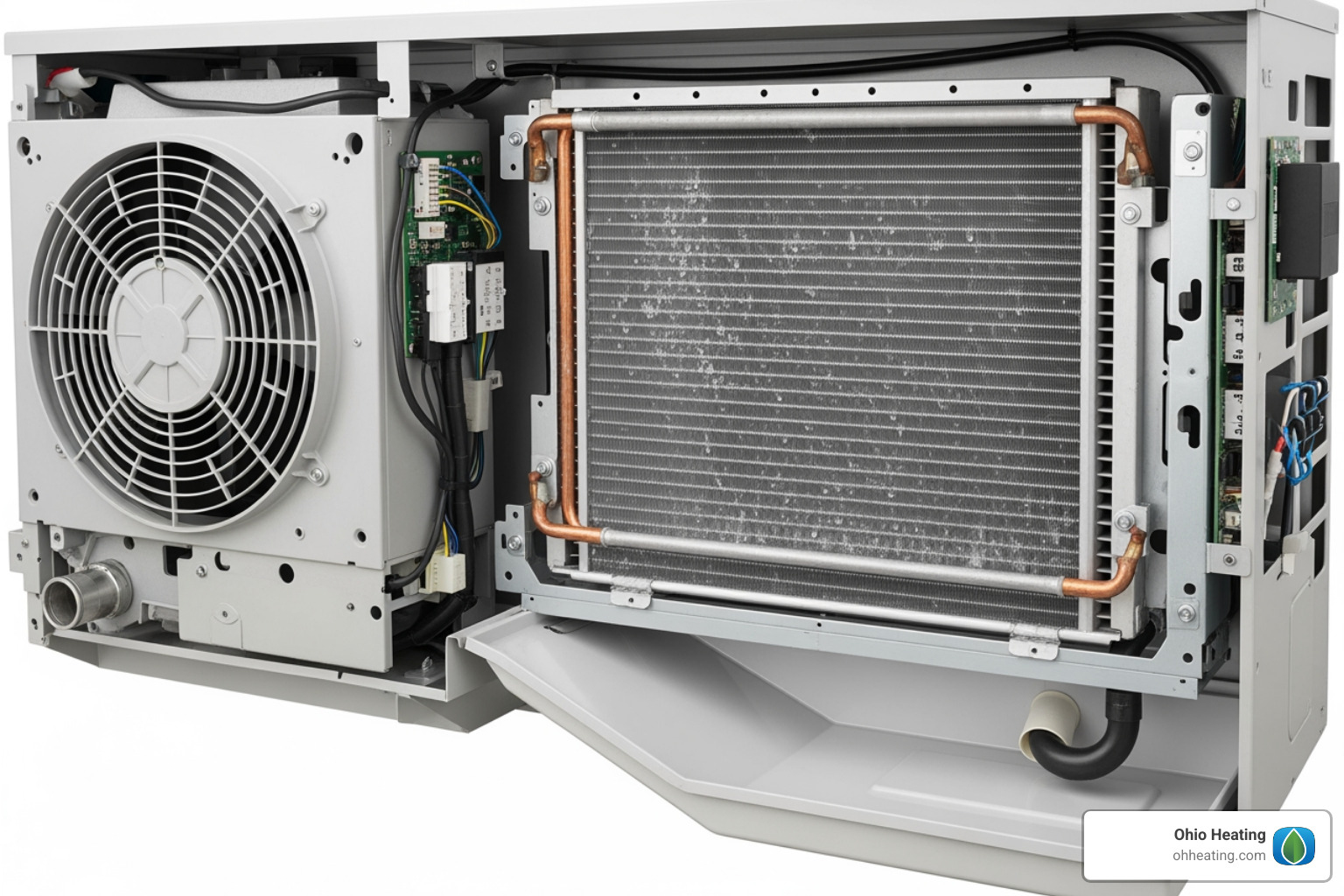
Understanding what’s happening inside your unit makes troubleshooting much easier. Your AC’s evaporator coil and condensate system work together to remove humidity from your air, and when something interrupts that process, water ends up where it shouldn’t be. Let’s walk through the most common culprits and what we can do about them.
A Clogged Condensate Drain Line: The Most Common Reason for an AC leaking water inside
Think of your condensate drain line as your AC’s personal plumbing system. It’s a simple pipe designed to carry away all that moisture your unit pulls from the air. But here’s the thing—it’s also a perfect environment for algae to throw a party.
Over time, algae, dirt, dust, and debris build up inside this line and create a blockage. When that happens, the water has nowhere to go except up and over the sides of your drain pan, often spilling right into your home. If you hear gurgling noises coming from somewhere near your AC, that’s usually the drain line struggling to push water through the clog. This is hands-down the most common reason we get calls about AC leaking water inside.
The good news? This is often something you can fix yourself. First, turn off the power to your AC at the thermostat and breaker. Then locate your condensate drain line—it’s usually a PVC pipe that exits your home near the outdoor unit or furnace. Here’s where a wet/dry vacuum becomes your best friend. Attach it to the end of the drain line (securing the connection with duct tape helps create a better seal) and let it run for a few minutes to suck out the blockage. For step-by-step instructions, this guide on how to unclog the drain line walks you through the whole process.
Want to prevent this from happening again? Pour about a third of a cup of white vinegar down the condensate line every few months. It’s a simple trick that keeps algae from setting up shop in there.
Tools you’ll need for cleaning the drain line: a wet/dry vacuum, duct tape or universal tool adapter fittings, gloves, old towels or rags, and optionally a funnel if you’re using the vinegar method.
Dirty Air Filter Leading to a Frozen Evaporator Coil
Your air filter does more than just keep dust out of your system—it’s actually critical for proper airflow. When that filter gets clogged with dirt and debris, it’s like trying to breathe through a pillow. Your AC simply can’t pull in enough air to work properly.
Here’s what happens: without sufficient airflow, your evaporator coil gets way too cold. Ice starts forming on the coils, and when that ice eventually thaws (either when the system cycles off or when you turn it off to investigate the leak), you get a flood of water that overwhelms the drain pan. The result? An AC leaking water inside your home.
The fix is refreshingly simple: check your air filter regularly—we recommend every one to three months—and replace it when it looks dirty. A clean filter not only prevents leaks but also helps your system run more efficiently, which means lower energy bills. If you’re not sure how to properly clean or replace your filter, this guide on how to properly clean an AC filter covers everything you need to know. Regular filter changes are one of the easiest ways to keep your AC running smoothly, as we discuss in our article on Strategies to Boost Efficiency Through Proper AC Maintenance.
Low Refrigerant: A Hidden Cause for an AC leaking water inside
Refrigerant isn’t something your AC “uses up” like gasoline in a car. It circulates in a closed loop, absorbing heat from inside your home and releasing it outside. So if your refrigerant level is low, it means there’s a leak somewhere in the system.
Low refrigerant causes your evaporator coil to get too cold—similar to what happens with a dirty filter—and ice forms on the coils. When that ice melts, you get water leaking into your property. You might also notice warm air blowing from your vents instead of cool air, or hear a hissing or bubbling sound coming from the refrigerant lines.
Here’s where we need to be clear: this is not a DIY repair. Refrigerant is hazardous to handle and requires specialized equipment and training to work with safely. Breathing it in or getting it on your skin can cause serious health problems. If you suspect low refrigerant, call a professional HVAC technician right away. They’ll safely detect the leak, repair it, and recharge your system with the correct amount of refrigerant.
There’s another reason not to delay: running your AC with low refrigerant can severely damage your compressor, which is the most expensive component to replace. Sometimes it means replacing the entire system. If you’re seeing these warning signs, check out our guide on Signs Your Air Conditioning Needs Repair: What to Look For to understand what else to watch for.
Damaged Components: Drain Pan & Condensate Pump
Sometimes the problem isn’t a blockage or ice—it’s that the parts designed to handle the water have simply worn out or broken.
Your drain pan sits directly under the evaporator coil to catch condensation as it drips down. In AC units that are 12 to 15 years old, these pans can crack, rust, or corrode. When that happens, water leaks right through the pan itself, often onto your furnace or into your ceiling. We’ve also seen cases where the unit or drain pan wasn’t installed level, causing water to pool on one side and overflow.
Many AC systems—especially those in basements or attics where gravity can’t do the work—use a condensate pump to move water out of your home. This pump has a float switch that detects when water levels get too high and kicks on to pump it away. When the pump malfunctions, gets clogged, or the float switch fails, water backs up and overflows.
While you might be able to patch a tiny crack in a drain pan as a temporary fix, a rusted or badly damaged pan needs to be replaced. Condensate pump problems can be tricky to diagnose—you need to check for clogs, test electrical connections, and verify the float switch is working—and usually require a professional to repair or replace the pump.
If your AC is experiencing these kinds of component failures, it might be telling you it’s nearing the end of its lifespan. When repairs start adding up, replacement often makes more financial sense. Our team at Ohio Heating can help you evaluate your options, including Air Conditioning Replacement in Westerville.
One more thing worth mentioning: here in Central Ohio, we can get some seriously humid summers. When humidity levels are extremely high, your AC produces more condensation than usual. If your system isn’t properly sized for your space, or if there are minor issues with the drain line or pan, that excess moisture can turn a small problem into a noticeable leak. It’s not a component failure exactly, but it definitely makes existing issues worse.
Dangers of an Ignored Leak and When to Call a Pro
Here’s the truth: that puddle under your AC isn’t just an inconvenience—it’s a warning sign that shouldn’t be ignored. We’ve seen too many situations where a “small” leak turned into thousands of dollars in property damage, simply because someone waited too long to address it.
Water damage is often the first casualty. That steady drip might seem harmless at first, but water is incredibly persistent. It seeps into drywall, soaks through insulation, and pools under flooring. Before you know it, you’re looking at stained ceilings, warped hardwood floors, and ruined carpets. The repair bills for this kind of damage can easily dwarf what it would have cost to fix the original AC problem.
But the problems don’t stop at visible damage. Mold and mildew thrive in damp environments, and an AC leaking water inside creates the perfect conditions for them to flourish. These fungi can spread rapidly behind walls and under floors—places you can’t even see until the problem becomes severe. For families with allergies, asthma, or young children, this is particularly concerning. Consider this: The EPA reports that Americans spend 90% of their time indoors. That means the air quality in your home directly impacts your health every single day. We’ve written extensively about this in our guide on Indoor Air Quality 101: Advanced Solutions for Healthier Homes & Businesses.
Perhaps most alarming are the electrical hazards that come with water leaks. Your AC unit contains electrical components, and water near electricity is a dangerous combination. Leaking water can cause short circuits, damage your system’s control board, or even create fire risks. We’ve responded to calls where water damage led to complete electrical failures in HVAC systems—expensive problems that could have been prevented.
Beyond the immediate risks, stagnant water becomes a breeding ground for bacteria and other microorganisms. When your HVAC system runs, it can circulate these contaminants throughout your entire home or business, compromising the air everyone breathes.
Signs You Need an Emergency HVAC Technician
We believe in empowering our customers to handle simple maintenance tasks, but there are times when DIY just isn’t enough. Knowing when to call in the professionals can save you money, protect your property, and keep everyone safe.
If you’ve already tried the basic troubleshooting steps—checking the air filter, attempting to clear the drain line—and water is still pooling around your unit, it’s time to call us. This indicates a more complex issue that requires professional diagnostic tools and expertise.
Any signs of a refrigerant leak demand immediate professional attention. Remember those hissing sounds or frozen coils we talked about earlier? Refrigerant is hazardous to handle, and attempting to fix this yourself isn’t just ineffective—it’s dangerous. This requires specialized equipment and certification to address safely.
Electrical problems are always an emergency. If you notice burning smells coming from your AC, see flickering lights when the unit runs, or find that breakers keep tripping, shut off power to the unit immediately and call for help. These symptoms suggest serious electrical issues that pose fire risks.
When your AC won’t turn on at all or is leaking while failing to cool your space effectively, you’re likely dealing with a significant system malfunction. This isn’t something that will resolve itself, and continuing to attempt operation could cause further damage to your compressor or other expensive components.
For any of these urgent situations here in Westerville or throughout the Columbus area, our team is ready to help with Emergency AC Repair in Westerville. We understand that AC emergencies don’t wait for convenient times, especially during those hot Ohio summers.
Choosing the right HVAC service matters, too. You want a team with local experience who understands the specific challenges of Central Ohio homes and businesses. We’ve outlined what to look for in our article on What to Consider When Choosing AC Repair Services.
The bottom line? Don’t gamble with your property, your health, or your safety. When an AC leaking water inside shows signs of being more than a simple fix, we’re here to help.
Frequently Asked Questions about Leaky Air Conditioners
Over our years of service in Columbus, we’ve heard just about every question imaginable about AC leaking water inside. Here are the answers to the ones that come up most often:
How can I prevent my AC from leaking in the future?
The best defense against a leaking AC is a good offense—in other words, regular maintenance. Think of it like taking your car in for oil changes; a little prevention now saves you from major headaches down the road.
Changing your air filter every 1-3 months is the single most important thing you can do. If you have pets or someone in your home has allergies, you might need to change it even more frequently. A clean filter keeps air flowing properly and prevents those frozen coils we talked about earlier.
Your condensate drain line also needs some love. We recommend pouring about a cup of distilled white vinegar down the line every few months. This simple step helps prevent algae and mold from setting up shop in there. Some folks also like to use condensate line cleaning tablets, which work great too.
But here’s the real secret: schedule an annual professional tune-up. During these visits, our technicians clean your coils, inspect the drain line, check refrigerant levels, and make sure everything’s running smoothly. We catch small problems before they turn into big, expensive ones. It’s exactly why we’re so passionate about the topic in The Importance of Regular HVAC Maintenance for Homes and Businesses.
How much does it cost to fix a leaking AC?
This is probably our most-asked question, and honestly, the answer is “it depends.” The cost varies quite a bit based on what’s actually causing your AC leaking water inside.
If you’re dealing with a clogged condensate drain line, you’re in luck—this is typically the least expensive fix, running between $75 and $250. Many handy homeowners can even tackle this one themselves with a wet/dry vacuum, which saves the labor cost entirely.
A dirty air filter that’s caused a frozen coil? The filter itself might only cost $15-30, though you might want a professional to inspect things if you’re not comfortable handling it yourself.
Replacing a damaged drain pan usually runs a few hundred dollars, depending on how easy it is to access and what type your unit uses. A malfunctioning condensate pump falls into a similar price range.
Now, if we’re talking about low refrigerant or a refrigerant leak, costs climb higher because this involves specialized equipment, leak detection, repairs, and recharging the system. And if the evaporator coil itself is damaged and needs replacing, we’re looking at $800 to $2,400 or more.
For a better sense of what repairs typically cost here in Central Ohio, check out our guide on What to Expect: Average AC Repair Prices in Columbus, Ohio.
Can I still run my AC if it’s leaking a little?
We get it—Columbus summers are brutal, and the thought of turning off your AC when it’s 90 degrees outside is not appealing. But we strongly recommend turning off the system immediately, even if the leak seems minor.
Here’s why: that “little” leak today can cause major water damage tomorrow. Water doesn’t just disappear—it soaks into drywall, carpets, and insulation, creating the perfect environment for mold growth. And mold remediation? That’s way more expensive than fixing the AC leak in the first place.
There’s also the electrical hazard to consider. Water and electricity make dangerous partners. Running a leaking unit risks short circuits, electrical fires, and damage to your system’s control board.
But perhaps most importantly, the leak itself is usually a symptom of a bigger problem—frozen coils, low refrigerant, or a clogged system. Continuing to run your AC under these conditions puts enormous strain on the compressor, which is the most expensive component to replace. We’ve seen compressors fail from running under stress, turning a $150 repair into a $2,000+ replacement.
So yes, we know it’s uncomfortable, but turning off the system and getting it fixed right away protects both your home and your wallet in the long run.
Your Partner for a Leak-Free, Cool Summer
When you find your AC leaking water inside, it’s natural to feel concerned—and you should be. These leaks aren’t just inconvenient puddles to mop up; they’re your air conditioner’s way of telling you something needs fixing. Throughout this guide, we’ve walked through the most common culprits: clogged condensate drain lines that overflow, dirty air filters that cause frozen coils, low refrigerant levels creating ice buildup, and damaged drain pans or pumps that can no longer do their job.
The good news? Many of these issues are preventable with regular attention and care. Proactive maintenance is truly the key to avoiding these problems altogether. Changing your filter every few months, keeping that condensate line clear, and scheduling annual professional tune-ups can save you from emergency calls and expensive repairs down the road.
But here’s what we want you to remember most: don’t ignore the warning signs. That small puddle today could become significant water damage, dangerous mold growth, or even electrical hazards tomorrow. We’ve seen too many situations where a minor issue became a major headache simply because it wasn’t addressed promptly.
If you’re dealing with an AC leaking water inside your home or business here in the Columbus area, you don’t have to figure it out alone. Our team at Ohio Heating has been providing expert diagnosis and repair since 1999, and we’re genuinely committed to ensuring your comfort and operational reliability. We understand how important it is to keep your space cool and dry, especially during those sweltering Ohio summers.
Whether it’s a simple drain line cleaning or a more complex repair, we’re here to help you get back to a cool, leak-free environment. For fast and reliable service, schedule your AC Repair in Westerville today. Let’s work together to keep your AC running smoothly all summer long!