
Indoor Air Balance: 5 Tips for Perfect Comfort
Why Indoor Air Balance is the Foundation of Home Comfort
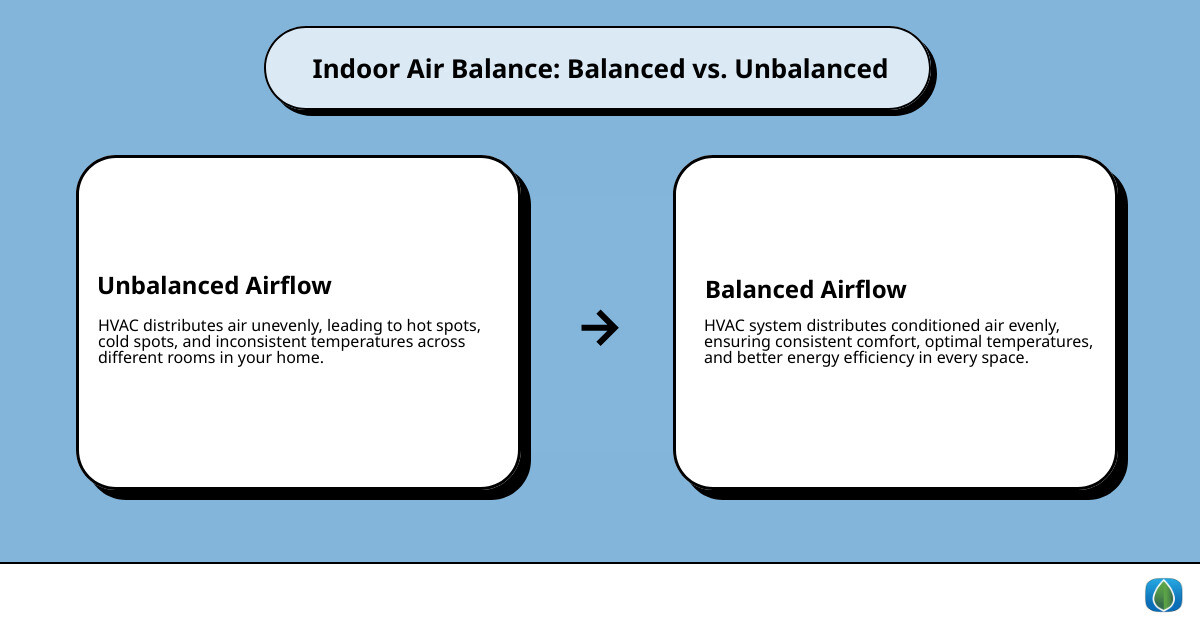
Indoor air balance is the process of ensuring that your HVAC system distributes the right amount of conditioned air to every room in your building, creating consistent temperatures and proper ventilation throughout. When your system is properly balanced, every space receives adequate heating or cooling without hot spots, cold spots, or stuffy areas.
Key aspects of indoor air balance:
- Even air distribution – Each room gets the appropriate amount of heated or cooled air based on its size and use
- Proper ventilation – Fresh air circulates effectively while stale air and pollutants are removed
- Balanced pressure – Air pressure remains neutral throughout the building, preventing drafts or stuffiness
- Optimal airflow – Supply and return vents work together to maintain comfortable conditions without overworking your equipment
You might not think much about the air flowing through your building until something goes wrong. Some rooms feel like a sauna while others are freezing. Your energy bills keep climbing even though you haven’t changed your thermostat settings. Or maybe your HVAC system runs constantly but never seems to catch up.
These problems often trace back to one overlooked issue: poor indoor air balance.
When air doesn’t distribute evenly through your ductwork, your HVAC system works harder, costs more to operate, and delivers inconsistent comfort. Air balancing ensures that every room receives the optimal amount of conditioned air to maintain comfortable temperatures and good indoor air quality. It’s not just about heating and cooling—it’s about creating a healthy, efficient environment for everyone in your building.
I’m Jill Frattini, a Service Coordinator at Ohio Heating in Columbus, where I’ve spent years helping businesses and property managers solve complex HVAC challenges, including Indoor air balance issues that affect comfort and efficiency. Through my work coordinating heating, cooling, and ventilation projects, I’ve seen how proper air balancing transforms uncomfortable spaces into productive, healthy environments.
Is Your Home’s Airflow Unbalanced? 5 Telltale Signs
Have you ever walked into a room in your Columbus home and wondered if your HVAC system was even on? Perhaps one room is perpetually chilly while another is uncomfortably warm. These are classic signs that your Indoor air balance might be off. An HVAC system that isn’t balanced has to work harder to maintain consistent temperatures, leading to a host of problems we’d all rather avoid.
We often notice something is wrong with our HVAC system when it stops providing the comfort we expect. Whether it’s a cozy home in the winter or a refreshingly cool office in the summer, consistent comfort is the goal. When your airflow is unbalanced, that comfort becomes elusive.
Symptoms of an Unbalanced System
It’s not always obvious that your airflow is out of whack. Sometimes, the signs are subtle, while other times, they hit you like a blast of unconditioned air. Here are the most common symptoms we see in homes and businesses across Central Ohio:
- Hot and Cold Spots / Inconsistent Temperatures: This is perhaps the most common complaint. If certain areas of your building feel significantly warmer or cooler than others, it’s a clear indicator of uneven airflow. You might notice good airflow in one room while there is little to no HVAC airflow in another. This inconsistency can be a real mood breaker, especially when you’re paying good money to maintain an ideal temperature.
- High Energy Bills: When your HVAC system has to work overtime to compensate for uneven heating or cooling, it consumes more energy. An unbalanced system constantly struggles to reach the thermostat’s set temperature, driving up your utility costs.
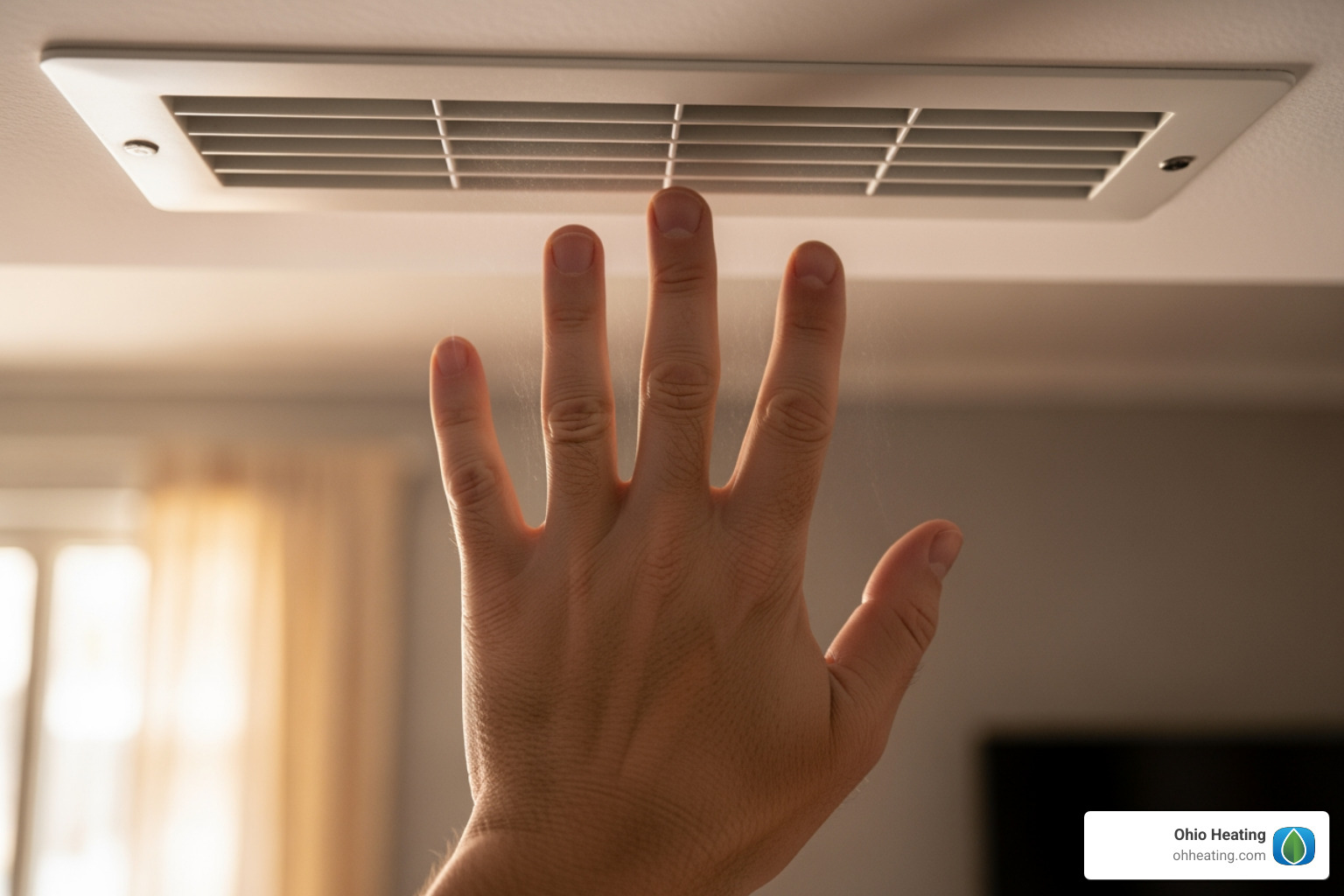
- Weak Airflow from Vents: Go ahead, place your hand over a vent. If the airflow feels weak or almost non-existent in certain rooms, it’s a strong sign that those areas aren’t getting the conditioned air they need. Conversely, some rooms might have too much airflow, making them feel drafty.
- Stuffy or Drafty Rooms: Poor Indoor air balance can lead to stale, unfiltered air in certain areas of the building, especially in spaces with poor ventilation. This can make rooms feel stuffy and uncomfortable. On the other hand, a room with too much airflow might feel excessively drafty.
- Frequent System Cycling: Is your HVAC unit turning on and off more often than usual? This “short cycling” can happen when the system struggles to properly condition the air in all areas, leading to inefficiency and increased wear and tear.
- Increased Noise Levels: An unbalanced HVAC system might produce unusual noises. This could be due to air struggling to pass through restricted ducts or the system working harder than intended, leading to a noisy and disruptive environment.
- Feeling Cold Despite High Thermostat Setting: If you feel cold, even when your thermostat is on high-temperature settings, it signals weak airflow. This often means the warm air isn’t reaching you effectively.
- Dust and Allergen Buildup: Poor air circulation contributes to a buildup of indoor pollutants, allergens, and dust. If you notice excessive dust or a worsening of allergy symptoms, it could be tied to an unbalanced system.
- Pressure Imbalances: An unbalanced system can create positive or negative pressure in different rooms. Positive pressure means too much supply air for the return flow, while negative pressure means the opposite. Both impact energy efficiency, heating/cooling consistency, and indoor air quality.
Why Systems Become Unbalanced Over Time
Even if your HVAC system was perfectly balanced when installed, things can change. We see a variety of factors that can throw your system out of whack over time:
- Aging Ductwork: Over the years, ductwork can develop small leaks and gaps, significantly altering the temperature balance in your home. These leaks can cause conditioned air to escape into unconditioned spaces like attics or crawl spaces, never reaching its intended destination.
- Home Renovations: Any changes to your home’s layout, such as adding a new room or reconfiguring existing spaces, can disrupt the original design of your HVAC system. New walls can block airflow, and new room sizes might require different air volumes.
- New HVAC Installation or Upgrades: Sometimes, a new furnace or air conditioner is installed without adequately considering its compatibility with existing ductwork. An improperly sized unit or ductwork can easily lead to imbalance.
- Blocked Vents: It sounds simple, but furniture, rugs, or even curtains can block supply or return vents, severely restricting airflow to and from a room.
- Poor Insulation: If your attic or walls aren’t properly insulated, heat can escape in winter or enter in summer, making it harder for your HVAC system to maintain consistent temperatures, regardless of airflow. For example, homes can lose up to 85% of heat through holes and gaps in the attic. Therefore, insulating your attic is also important to prevent drafts.
- Dirty Air Filters: A clogged air filter restricts the overall airflow through your system, forcing it to work harder and reducing its ability to distribute air evenly. We’ll talk more about this later!
More info about ductwork repair
How to Improve Your Indoor Air Balance: A Step-by-Step Guide
Achieving good Indoor air balance doesn’t always require a complete overhaul. Many issues can be addressed with simple adjustments, while others might require a professional touch. Let’s explore how you can take steps to improve your home’s airflow.
Simple DIY Steps for Better Indoor Air Balance
Before calling in the cavalry, there are several things you can check and adjust yourself. These simple steps can often make a noticeable difference in your home’s comfort and efficiency:
- Adjusting Vents and Registers: This is the easiest place to start. If certain rooms are too cold, try partially closing the vents in warmer rooms to redirect more air. Conversely, fully open vents in rooms that need more conditioned air. However, be cautious: completely closing too many vents can increase static pressure and strain your HVAC system.
- Cleaning Air Filters: A dirty air filter is one of the most common culprits for poor airflow. We recommend cleaning or replacing your air filters regularly. For standard one-inch filters, every 1-3 months is a good rule of thumb. If you have pets or allergies, you might need to change them more frequently. Regular filter changes can save 5-15% on energy bills.
- Checking for Blocked Vents: Take a walk around your home and ensure that no furniture, rugs, or curtains are obstructing your supply or return vents. Vents need about 18 inches of clear space to function effectively.
- Sealing Drafts Around Windows and Doors: Small leaks and gaps around windows and doors can lead to significant heat loss in winter and heat gain in summer, creating drafts and making your HVAC system work harder. Use caulk or weatherstripping to seal these gaps.
- Using Ceiling Fans Correctly: Ceiling fans can significantly improve air circulation. In summer, set them to rotate counter-clockwise to create a downdraft that provides a cooling effect. In winter, switch them to rotate clockwise at a low speed to gently push warm air down from the ceiling.
- Setting Your Fan to ‘On’: Instead of ‘Auto,’ setting your HVAC fan to ‘On’ on your thermostat will continuously circulate air throughout your home, even when the system isn’t actively heating or cooling. This helps even out temperatures and ensures your air is filtered more frequently, which is great for allergy sufferers. While it uses more electricity, it can significantly improve comfort.
Advanced Adjustments and When to Stop
While DIY steps are a great starting point, some issues require a bit more finesse or specialized tools.
- Adjusting Dampers in Ductwork: Many duct systems have manual dampers—small levers on the ductwork that can be opened or closed to restrict or increase airflow to specific branches. Adjusting these can be tricky, as it often involves a trial-and-error process and can impact overall system pressure. If you’re unsure, it’s best to consult a professional.
- Checking Blower Fan Speed: Your HVAC system’s blower fan has different speed settings. Sometimes, adjusting the fan speed can help distribute air more effectively. Lower speeds might be suitable for winter heating, while higher speeds can help with cooling and dehumidification in summer.
- Inspecting for Leaky Ducts: If you suspect duct leaks, a professional can perform a duct integrity test. Sealing leaky ducts with mastic sealant and foil tape can drastically improve efficiency and airflow.
- Upgrading to a Programmable or Smart Thermostat: While not a direct airflow adjustment, a smart thermostat can help manage temperature consistency. Some models can learn your preferences and even integrate with zoning systems for more precise control.
- Knowing Your Limits: We always encourage homeowners to tackle what they can, but recognize when a job is beyond DIY. If you’ve tried the simple steps and still have persistent issues, or if you’re dealing with complex problems like duct design flaws, it’s time to call in the experts. Attempting complex adjustments without proper knowledge can inadvertently damage your system or create new problems.
The Hidden Costs and Risks of Poor Air Balance
Ignoring poor Indoor air balance is like constantly driving with underinflated tires—you might get where you’re going, but it’s costing you more, wearing out your vehicle faster, and putting your safety at risk. The same goes for your HVAC system and your indoor environment here in Columbus, Ohio.
Impact on Energy Efficiency and Your Wallet
An unbalanced HVAC system is an inefficient one. When air doesn’t flow correctly, your system has to work harder to compensate, leading to significant energy waste.
- Wasted Energy: According to the U.S. Department of Energy, a rough estimate is that the average duct efficiency is about two-thirds. This means one-third of the energy supplied to the ducts is lost before it even gets to the living space! That’s a lot of wasted heating or cooling.
- Overworked HVAC System: When some areas aren’t getting enough conditioned air, your thermostat will keep calling for more heating or cooling. This forces your furnace or air conditioner to run longer and more frequently, essentially working overtime.
- Higher Utility Bills: All that extra work translates directly into higher energy consumption and, consequently, higher utility bills. Heating alone can account for about 42% of a utility bill.
- Strain on Components: This constant overworking puts undue stress on your HVAC system’s components, from the blower motor to the compressor. This accelerated wear and tear can lead to costly repairs and premature system failure.
- Reduced Equipment Lifespan: Because components are constantly under stress, the overall lifespan of your expensive HVAC equipment can be significantly shortened. Air balancing prevents overworking of HVAC components, thus extending equipment lifespan.
U.S. Department of Energy data on duct efficiency
How Imbalance Affects Health and Indoor Air Quality
Beyond comfort and cost, poor Indoor air balance has serious implications for the health of your building’s occupants and the overall indoor air quality (IAQ).
- Poor Ventilation and Stale Air: Air balancing plays a critical role in the ventilation of your HVAC system. Ensuring proper airflow allows for effective removal of indoor pollutants, allergens, and moisture. When air doesn’t circulate properly, certain areas can become stagnant, leading to stale, stuffy air.
- Buildup of Pollutants: Increased indoor CO2 concentrations have often been associated with decreases in ratings of air quality, increases in acute health symptoms, and reductions in aspects of human performance. Poor air balance means indoor air pollutants, bioeffluents, and other contaminants aren’t effectively removed or diluted. This can lead to a buildup of harmful substances in the air we breathe.
- Allergens and Dust: Low air circulation can cause indoor air pollutants like mold or dust particles to build up. If your system isn’t moving air efficiently, dust, pet dander, pollen, and other allergens can accumulate, leading to respiratory issues, allergies, and general discomfort for occupants.
- Mold and Moisture Issues: Improper air balance can lead to areas with higher humidity, creating ideal conditions for mold and mildew growth. Mold can cause hay fever-type symptoms, trigger asthma attacks, and damage your property. Keeping indoor humidity between 30 and 50 percent is recommended to prevent these issues.
- Increased CO2 Concentrations: When ventilation is insufficient, CO2 levels rise. While people exhale CO2 naturally, high concentrations can be associated with acute health symptoms and reductions in cognitive performance. In an office space, for example, if the equilibrium indoor CO2 concentration is 650 parts per million (ppm) above the outdoor concentration, the ventilation rate is approximately 15 cfm (7.1 L/s) per person.
More info about advanced IAQ solutions
EPA guide to improving IAQ
DIY Adjustments vs. Professional Air Balancing
We’ve discussed several DIY steps you can take to improve your Indoor air balance. While these can certainly help with minor issues, it’s crucial to understand the limitations of self-adjustment and when to call in the experts.
| DIY Checks & Adjustments | Professional TAB (Testing, Adjusting, Balancing) |
|---|---|
| Visual Inspection of vents for blockages | Airflow Hoods measure actual cubic feet per minute (CFM) from each vent |
| Filter Cleaning/Replacement | Manometers measure static pressure within ductwork to diagnose restrictions |
| Adjusting Vent Louvers (opening/closing) | Temperature Sensors at strategic points to confirm heat transfer |
| Sealing Drafts around windows/doors | System Performance Analysis (comparing actual output to design specifications) |
| Using Ceiling Fans (seasonal direction) | Duct Leakage Testing to identify and quantify air loss |
| Thermostat Fan Setting (Auto vs. On) | Expert Adjustment of dampers, fan speeds, and system controls for precise balance |
| Listening for unusual noises | Comprehensive Report detailing findings and adjustments |
The Importance of Professional Indoor Air Balance
For comprehensive and accurate Indoor air balance, especially in more complex systems or when DIY efforts fall short, professional testing, adjusting, and balancing (TAB) is essential.
- Testing, Adjusting, and Balancing (TAB): This is a systematic process performed by certified technicians. It involves using specialized equipment to measure airflow, pressure, and temperature throughout your HVAC system. The goal is to ensure your system performs according to its design specifications.
- Specialized Tools: Professionals use tools like:
- Airflow Hoods (Balometers): These devices are placed over supply and return vents to precisely measure the volume of air (in cubic feet per minute, or CFM) moving through them.
- Manometers: These instruments measure static pressure within your ductwork. High static pressure can indicate restrictions, undersized ducts, or a clogged coil, all of which impact airflow.
- Anemometers: Used to measure air velocity at grilles and within ducts.
- Temperature Probes: To verify the temperature of the conditioned air at various points in the system.
- System Performance Analysis: Our technicians don’t just measure; they analyze. They compare actual airflow readings against the original design specifications of your HVAC system. This helps us identify discrepancies and pinpoint the root cause of imbalances.
- Calibrating for Optimal Airflow: Based on their findings, professionals make precise adjustments to dampers, fan speeds, and other system controls. This meticulous process ensures that every room receives the optimal amount of conditioned air, leading to consistent comfort and maximum efficiency. Air balancing is a precise skill requiring sequential adjustments and repetitive re-testing.
More info about commercial ventilation systems
Residential vs. Commercial Building Needs
While the principles of Indoor air balance are similar, the scale and complexity of residential versus commercial buildings in Ohio necessitate different approaches.
- Complexity of Commercial HVAC: Commercial HVAC systems are typically much larger and more intricate than residential ones. They often serve multiple zones, each with unique heating and cooling demands, and may involve specialized equipment like make-up air units or variable air volume (VAV) systems.
- Larger Spaces and Multiple Zones: Imagine balancing airflow in a multi-story office building or a large retail space compared to a single-family home. Commercial buildings often have dozens or even hundreds of supply and return vents, requiring a much more detailed and systematic balancing process.
- Make-Up Air Units: Commercial buildings frequently require make-up air units to replace air exhausted by kitchens, restrooms, or industrial processes. Proper balancing ensures these units integrate seamlessly with the main HVAC system to maintain indoor air quality and pressure.
- Building Codes and Standards: Commercial buildings are subject to stricter building codes and ventilation standards (like ASHRAE 62.1) than residential properties. Professional air balancing ensures compliance with these regulations, which are often critical for occupant safety and health.
- Impact on Productivity: In commercial settings, poor Indoor air balance can lead to decreased employee productivity, customer discomfort, and even regulatory fines. Ensuring a balanced environment is not just about comfort; it’s about business continuity and operational efficiency.
For businesses and commercial properties in Columbus, a professional air balance assessment is not just recommended, it’s often a necessity to ensure optimal operation, energy efficiency, and occupant well-being.
More info about commercial HVAC services
Conclusion: Achieve Perfect Comfort and Efficiency
Achieving optimal Indoor air balance is a cornerstone of a comfortable, energy-efficient, and healthy indoor environment. It’s the secret to open uping the full potential of your HVAC system, changing those frustrating hot and cold spots into consistently pleasant areas.
Through this guide, we’ve explored what Indoor air balance truly means, the telltale signs that your system might be out of sync, and the significant costs and risks associated with neglecting it. From higher energy bills and shortened equipment life to compromised indoor air quality and occupant health, the consequences of poor air balance are far-reaching.
We’ve also highlighted the difference between simple DIY adjustments and the precision of professional testing, adjusting, and balancing (TAB). While some minor issues can be addressed with a few tweaks, a comprehensive assessment by certified technicians using specialized tools is often necessary to achieve true balance, especially in complex commercial systems.
At Ohio Heating, we’ve been helping homes and businesses in Columbus and Central Ohio achieve perfect comfort and efficiency since 1999. Our expertise ensures your HVAC system is not just running, but running optimally, delivering the right amount of conditioned air to every corner of your space.
Investing in professional air balancing means:
- Consistent Comfort: Enjoy uniform temperatures throughout your home or business, eliminating frustrating hot and cold spots.
- Lower Energy Bills: An efficiently balanced system works smarter, not harder, leading to noticeable savings on your utility costs.
- Healthier Indoor Environment: Proper airflow ensures better ventilation, reducing pollutants, allergens, and moisture that can impact health.
- Extended Equipment Lifespan: By reducing strain on your HVAC system, air balancing helps prolong the life of your equipment, saving you from premature replacement costs.
- Long-Term Savings: Beyond energy savings, you’ll benefit from fewer repairs and a more reliable system for years to come.
Don’t let an unbalanced HVAC system compromise your comfort, health, or budget. If you’re experiencing any of the signs we’ve discussed, it’s time to take action.