
Ice Machine Service and Repair: Expert 2026
Why Ice Machine Service and Repair Matter to Your Business
Ice machine service and repair is critical for businesses that rely on a steady supply of ice, like restaurants, hotels, and healthcare facilities. A machine failure isn’t just an inconvenience; it can halt operations, disappoint customers, and cause lost revenue.
Quick Answer: What You Need to Know About Ice Machine Service and Repair
- Common Problems: Leaks, strange smells, unusual noises, water flow issues, inconsistent ice production
- Maintenance Frequency: At least twice per year (semi-annually) recommended by manufacturers
- Key Services: Regular cleaning, sanitizing, water filter replacement, component inspection
- When to Call a Pro: System freezing, stuck in harvest mode, poor ice quality, any major malfunction
- Service Provider Must-Haves: 24/7 availability, factory-trained technicians, stocked parts, transparent pricing
For businesses with high ice demand, a malfunctioning machine can be catastrophic. Most common ice machine repairs stem from simple neglect, especially unchanged water filters. This can cause water valves to stick open and machines to get stuck in harvest mode without producing ice.
Poorly maintained ice machines also pose serious health risks. Bacteria, mold, and other contaminants can build up, contaminating the ice and leading to health code violations. Regular cleaning and sanitizing are essential to protect public health and your business’s reputation.
As Jill Frattini, a Service Coordinator at Ohio Heating, I’ve seen how proper ice machine service and repair can mean the difference between smooth operations and costly downtime. Throughout this guide, I’ll walk you through what you need to know to keep your ice machines running reliably.
Find more about ice machine service and repair:
Recognizing the Red Flags: When to Call for Service
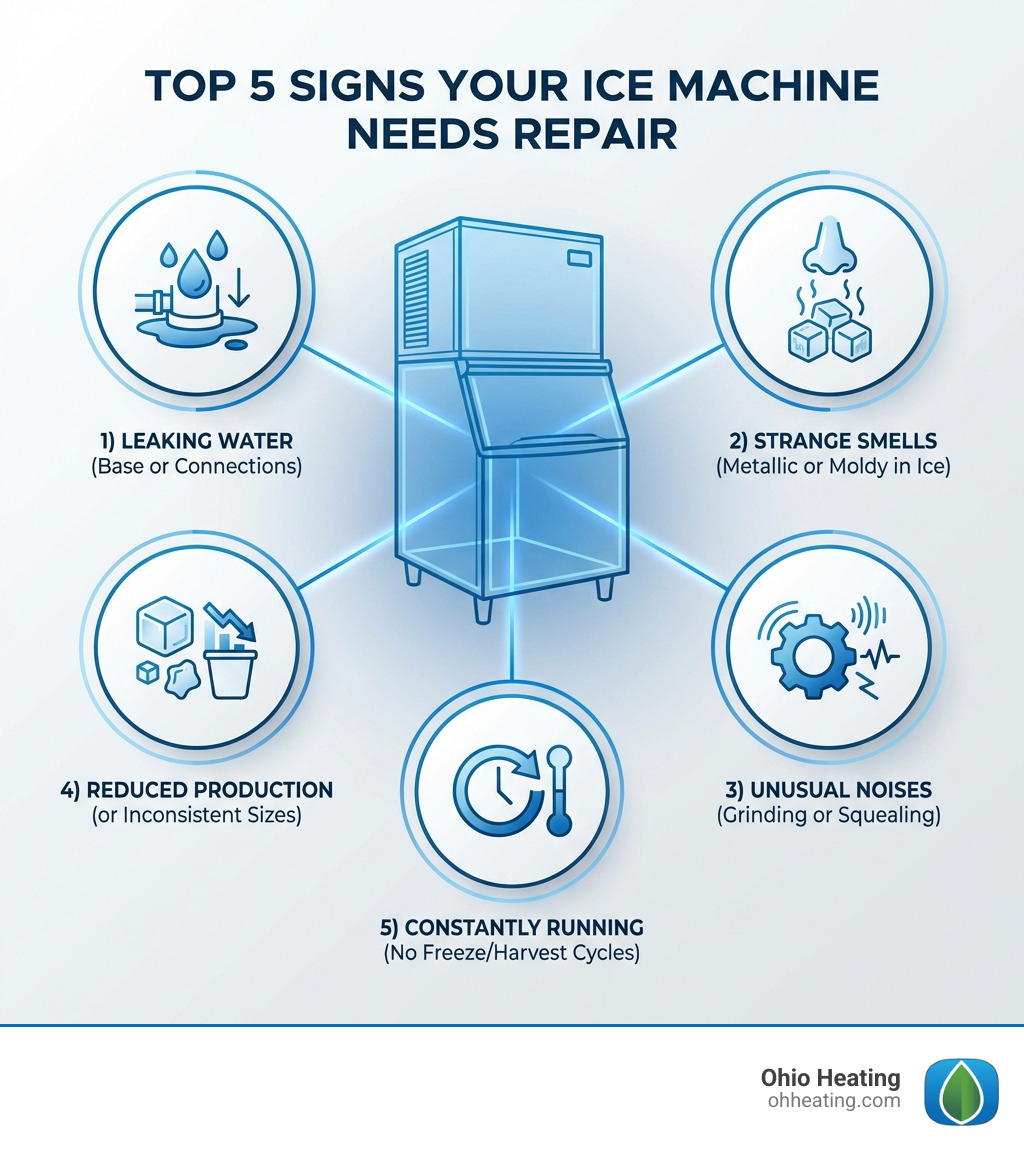
When your commercial ice machine starts acting up, it often gives hints that something is amiss. Ignoring these signs can lead to more significant problems, costly repairs, and even health risks. Paying attention can save you headaches and money in the long run.
One of the most immediate indicators is a leak. A leak, from a small puddle to a steady drip, indicates a problem like a clogged drain, faulty valve, or a crack in a component.
Then there are the strange smells. Strange smells—metallic, moldy, or burning—can transfer to the ice, affecting taste. Moldy smells suggest a need for cleaning, while burning or metallic odors could point to electrical or motor issues.
Unusual noises are another major red flag. While a low hum is normal, squealing, grinding, or clunking noises are not. These sounds often indicate problems with the fan motor, compressor, or other mechanical parts.
System freezing is a counterintuitive problem. Ice buildup in the wrong places, like on evaporator plates, can cause blockages and stop the machine’s cycle. This may be due to low refrigerant, a faulty thermostat, or a harvest mechanism issue.
Water flow issues are frequently tied to common repairs. Reduced water flow from clogged lines severely impacts ice production. This is often caused by neglected water filters, which can lead to a stuck water inlet valve or a weighed-down float valve, trapping the machine in its harvest mode.
Finally, inconsistent ice production or poor ice quality (e.g., hollow or cloudy cubes) are clear indicators that your machine needs attention. These issues can stem from improper water levels, dirty evaporator plates, or a failing compressor.
If you notice any of these signs, address them promptly to avoid a complete breakdown, more expensive repairs, and potential health code violations. For a deeper dive, explore our guide on Common Ice Machine Problems: Know the Signs.
Common Culprits: Key Components That Fail
Understanding the internal workings of your ice machine can help you describe issues more accurately to our technicians.
At the heart of many problems are water filters. Neglected filters are a top cause of repairs, as they allow sediment and scale to build up and damage other components.
One such component is the water inlet valve. This valve controls water flow, and mineral buildup can cause it to stick open, leading to overflows and cycling problems.
The float switch can become weighed down by mineral deposits, preventing it from accurately sensing water levels and disrupting the ice-making process.
The compressor is the heart of the refrigeration system. A failing compressor causes insufficient cooling and unusual noises. These repairs are often complex and expensive, underscoring the need for preventative maintenance.
Condenser coils (for air-cooled units) dissipate heat. If they become dirty, the machine can overheat, reducing ice production and increasing energy use. Water-cooled condensers can suffer from scale buildup.
Evaporator plates are where ice forms. Mineral deposits or slime on these plates can hinder ice formation and affect ice quality. Regular cleaning is vital.
Finally, bin controls (or ice level sensors) tell the machine when the bin is full. If these sensors are dirty or malfunction, the machine might overflow or stop producing ice prematurely.
Health Risks of a Poorly Maintained Machine
Beyond operational headaches, a poorly maintained ice machine poses significant health risks. Regular cleaning is crucial to prevent the spread of bacteria, mold, and lime scale.
An unsanitary machine can make people sick. Ice bins are often touched, and unwashed hands can easily introduce germs.
Without proper cleaning, the machine’s moist, cool interior becomes a breeding ground for microorganisms, including:
- Bacteria: Pathogens like E. coli or Salmonella can thrive, leading to foodborne illnesses.
- Mold: Visible as black or green spots, mold affects the taste of ice and can produce allergens.
- Slime: This biofilm is a collection of bacteria and fungi that can clog lines and contaminate ice.
- Lime scale: Mineral deposits provide a surface where bacteria and mold can grow.
These contaminants affect ice taste and can lead to health code violations. A failed inspection can result in fines, closures, and reputational damage. For businesses in Columbus and Central Ohio, ensuring your ice is clean and safe is fundamental to maintaining a sterling reputation.
The Power of Prevention: Maintenance and Longevity
Prevention is the best medicine for your commercial ice machine. Consistent care extends its lifespan, maintains peak performance, and saves you from unexpected expenses.
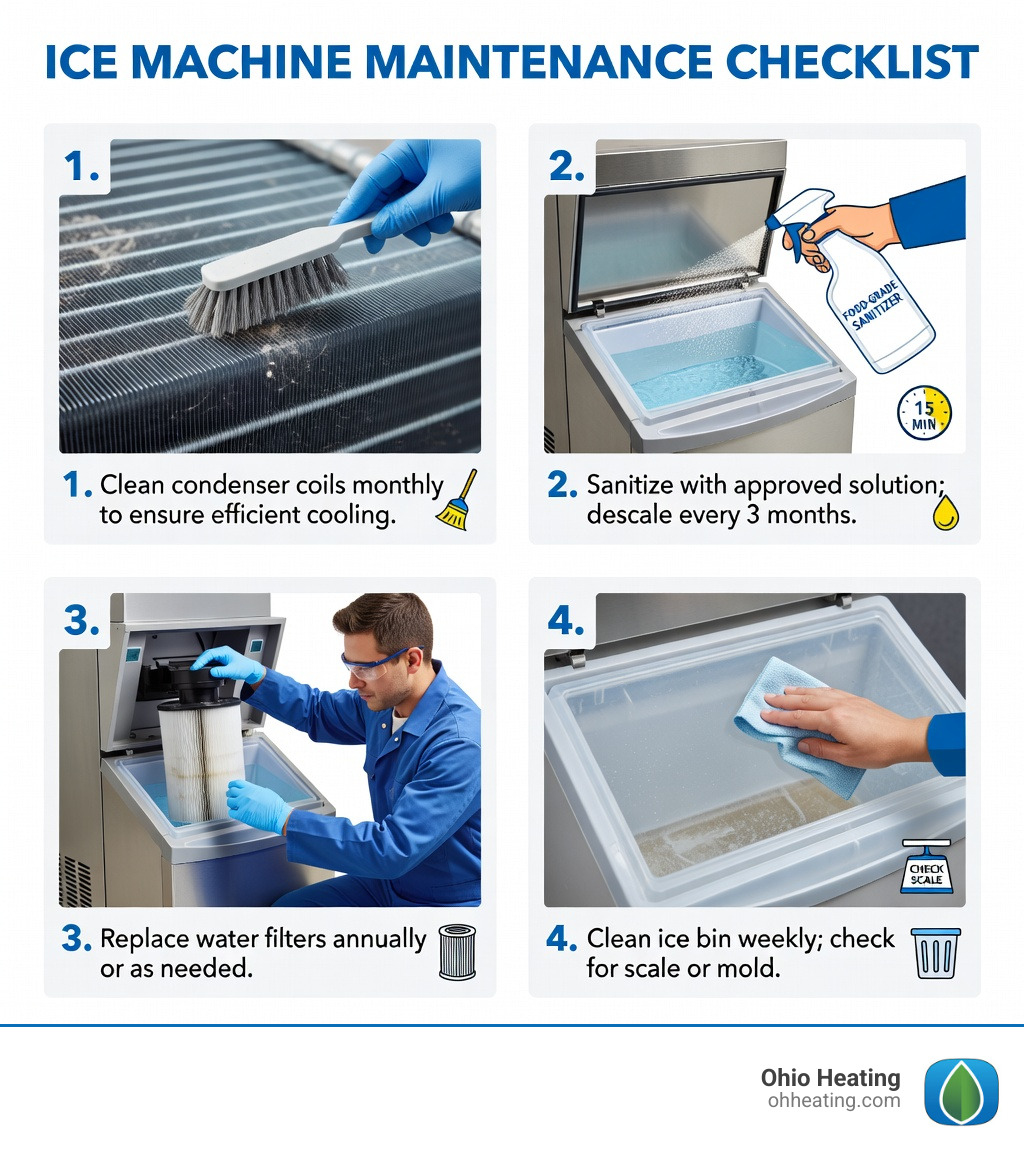
A proactive approach to ice machine service and repair is key. This means a regular schedule for cleaning (to remove mineral scale) and sanitizing (to eliminate bacteria and mold).
Effective water filtration is a cornerstone of prevention. Quality filters remove impurities, reducing the scale and sediment buildup that leads to breakdowns. Neglected filters are a primary cause of common repairs.
Many modern ice machines have built-in cleaning cycles, but these are not a substitute for thorough manual cleaning and sanitizing by a professional.
Ambient temperature is also a factor. Machines in excessively hot or cold environments work harder, consume more energy, and may have a shorter lifespan. Proper ventilation is key.
Finally, professional installation is crucial. Improper setup can lead to reduced capacity, component failure, and voided warranties. Experts ensure correct leveling, connections, and ventilation. For comprehensive details, explore More about ice machine installation.
How Often Should You Service Your Ice Machine?
This is a critical question for the health of your machine and your customers.
Manufacturer recommendations are the gold standard. They universally recommend semi-annual maintenance. Your machine should be professionally cleaned, sanitized, and inspected at least twice a year to ensure optimal performance, prevent buildup, and improve efficiency.
However, this is a minimum. More frequent ice machine service and repair may be needed due to:
- Water quality impact: Hard water causes mineral buildup to occur more rapidly, requiring more frequent cleaning.
- High-yeast environments: Bakeries or breweries have airborne yeast that can accelerate microbial growth, requiring more frequent sanitization.
- High-volume usage: Machines under constant use experience more wear and tear, warranting more frequent checks.
Regular service keeps your machine running efficiently and addresses problems before they escalate. It’s an investment in system efficiency and longevity. For a detailed look at manufacturer guidelines, you can View an official maintenance manual.
Benefits of a Regular Maintenance Plan
A regular maintenance plan is a smart business decision that provides tangible benefits.
First, it leads to fewer breakdowns. Catching small issues early prevents unexpected and catastrophic downtime, ensuring more reliable operations.
You’ll also get better tasting ice. Regular cleaning prevents the buildup of mold and minerals that cause off-flavors. Your customers will notice the difference.
Crucially, maintenance ensures reduced bacteria. This protects customers from health risks and keeps your business compliant with health codes.
For new machines, regular maintenance ensures warranty compliance. Many manufacturers require it to keep your warranty valid, saving you from paying for repairs that should be covered.
Finally, regular service leads to improved cube production and long-term cost savings. A clean machine uses less energy, produces ice more consistently, and lasts longer, preventing expensive emergency repairs.
The Ins and Outs of Professional Ice Machine Service and Repair
Commercial ice machines produce various ice types for different business needs. Understanding these types and their service nuances highlights the value of a professional technician.
In commercial ice, we encounter several common types:
- Full-Cube Machines: Produce large, slow-melting cubes ideal for bars and restaurants.
- Half-Cube Machines: Smaller cubes often used for soft drinks.
- Flake Ice Machines: Soft, malleable ice perfect for produce displays, healthcare, and blended drinks.
- Nugget Ice Machines: “Chewable ice” popular in healthcare and quick-service restaurants.
Machines also vary in configuration. Compact undercounter units suit smaller operations, while larger modular units sit on a storage bin for high-demand businesses. Each type has unique installation and maintenance needs. For insights, refer to Identifying Ice Machine Repair Challenges in Columbus.
What to Look for in a Commercial Service Provider
Choosing the right provider for ice machine service and repair in Ohio is paramount. It’s not just about a quick fix but ensuring reliable, long-term performance.
Here’s what to look for:
- 24/7 Emergency Service: Breakdowns happen anytime. A reliable provider offers 24/7 emergency service to minimize downtime when you need help fast.
- Factory-Trained Technicians: Technicians should be factory-trained and certified. This ensures they have the expertise to correctly diagnose and repair all models, including handling warranty work.
- Parts Availability: A good provider stocks common parts or has quick access to a large inventory to minimize downtime. Fast parts availability is critical for timely repairs.
- Service Area: Ensure the provider covers your specific location within Ohio.
- Transparent Pricing: Expect clear, upfront pricing. A reputable technician will explain the required repairs and costs before starting work.
- Warranties on Repairs: A confident provider stands behind their work with a warranty on repairs, giving you peace of mind.
Finding authorized service technicians is a good start, and resources like this one can help.
Leasing vs. Purchasing: A Financial Breakdown
Deciding to lease or purchase an ice machine is a major financial decision. The best choice depends on your budget, operational needs, and long-term service strategy.
Here’s a breakdown:
| Feature | Leasing an Ice Machine | Purchasing an Ice Machine |
|---|---|---|
| Upfront Cost | Typically very low or none. You avoid a large initial capital expenditure, freeing up funds for other business needs. | High initial investment. Requires significant capital outlay or securing financing. |
| Monthly Payments | Predictable, fixed monthly payments. This simplifies budgeting and financial planning, as you know exactly what you’ll pay for the duration of the lease. | No monthly payment for the machine itself after purchase (unless financed). However, you must budget for unpredictable repair and maintenance costs. |
| Maintenance & Repairs | Often included in the lease agreement. A comprehensive lease can cover installation, biannual cleaning, all parts, and emergency service. This takes the hassle out of ownership and removes the burden of unexpected repair bills. | Entirely your responsibility. You must budget for all routine maintenance, cleaning, and any unexpected repairs. This can lead to significant, unplanned expenses. |
| Responsibility | The leasing company is typically responsible for the machine’s performance and upkeep. If it breaks down, they handle the ice machine service and repair. | You are fully responsible for the machine’s operation and maintenance. |
| Technology Upgrades | Easier to upgrade to newer, more energy-efficient models at the end of a lease term, keeping your equipment modern without a new purchase. | You own the asset, but it may become technologically outdated. Upgrading requires selling the old unit and purchasing a new one. |
| Long-Term Cost | Can be higher over the very long term compared to a well-maintained purchased unit, but offers cost predictability and risk reduction. | Potentially lower if the machine is durable and maintenance is managed effectively. However, major repairs can quickly offset these savings. |
| Tax Implications | Lease payments may be tax-deductible as an operating expense. (Consult with a tax professional). | Depreciation can be claimed as a tax deduction. (Consult with a tax professional). |
| Ownership | You do not own the machine. | You own the machine, which can be listed as an asset. |
For many Ohio businesses, leasing is attractive. It offers predictable costs and a hassle-free experience, ensuring a consistent ice supply without the large upfront investment and maintenance burden.
Frequently Asked Questions about Ice Machine Repair
We understand that when your ice machine falters, you’ll have questions. Here are some of the most common inquiries we receive regarding ice machine service and repair.
What are the most common commercial ice machine problems?
The most common problems stem from neglected maintenance, especially unchanged water filters. This causes mineral (lime scale) and sediment buildup, leading to:
- Water valves sticking open: Deposits prevent the water inlet valve from closing, causing overflows.
- Machines getting stuck in harvest mode: Obstructed sensors can prevent the machine from releasing ice or starting a new cycle.
- Clogged lines: Sediment can block water lines and reduce ice production.
- Poor ice quality: Dirty components lead to cloudy, misshapen, or slow-to-produce ice.
- Strange odors/tastes: Mold, bacteria, and mineral buildup contaminate the ice.
These issues are largely preventable with a consistent maintenance schedule.
How much does ice machine repair cost?
Repair costs for ice machine service and repair vary significantly based on several factors:
- Complexity of the problem: A simple cleaning is far less expensive than replacing a major component like a compressor.
- Parts needed: Costs range from inexpensive filters to costly specialized components.
- Labor rates: These vary by region and technician expertise. Emergency calls typically incur higher rates.
Minor repairs might cost a few hundred dollars, while major component replacements can run into the thousands. The best way to control costs is with regular preventative maintenance, which catches small issues before they become expensive failures.
Can I perform repairs on my own ice machine?
While your staff can handle basic cleaning, most ice machine service and repair should be left to a professional. Here’s why:
- Complexity: Ice machines are complex refrigeration systems with high-pressure refrigerants and intricate electrical parts.
- Safety risks: Working with electricity and refrigerants without proper training is extremely dangerous.
- Voiding warranties: DIY repairs can void your machine’s warranty, leaving you responsible for future costs.
- More damage: An improper repair can easily cause more damage, turning a minor issue into a major one.
- Specialized tools: Professionals use specialized tools for accurate diagnosis and repair.
For equipment integrity, staff safety, and operational reliability in Ohio, we strongly recommend calling a qualified professional for any significant repairs.
Your Partner in Commercial Refrigeration
Since 1999, Ohio Heating has served the commercial refrigeration needs of businesses in Columbus, Central Ohio, and the wider Ohio region. Our commitment is to ensure your operational reliability and prevent costly downtime. We know your ice machine is vital to your daily operations and customer satisfaction.
Our factory-trained technicians handle all your ice machine service and repair needs, from routine maintenance to emergencies. We offer transparent pricing, efficient service, and a proactive approach to keep your equipment running smoothly.
Here are the key takeaways to ensure your ice machine remains a reliable asset:
- Regular maintenance is non-negotiable: Stick to semi-annual service to prevent breakdowns, ensure hygiene, and extend your machine’s life.
- Know the warning signs: Pay attention to leaks, strange smells, noises, and changes in ice production. Early detection saves time and money.
- Choose a qualified provider: Opt for a service provider with 24/7 availability, factory-trained technicians, and transparent pricing.
Don’t let a malfunctioning ice machine put a chill on your business. For expert Commercial Ice Machine Sales and Repairs, contact us today! We’re here to keep your ice flowing and your business thriving.