
HVAC filter replacement service: Pro Tips 2025
Why Regular Filter Changes are Non-Negotiable for Your Home and Health
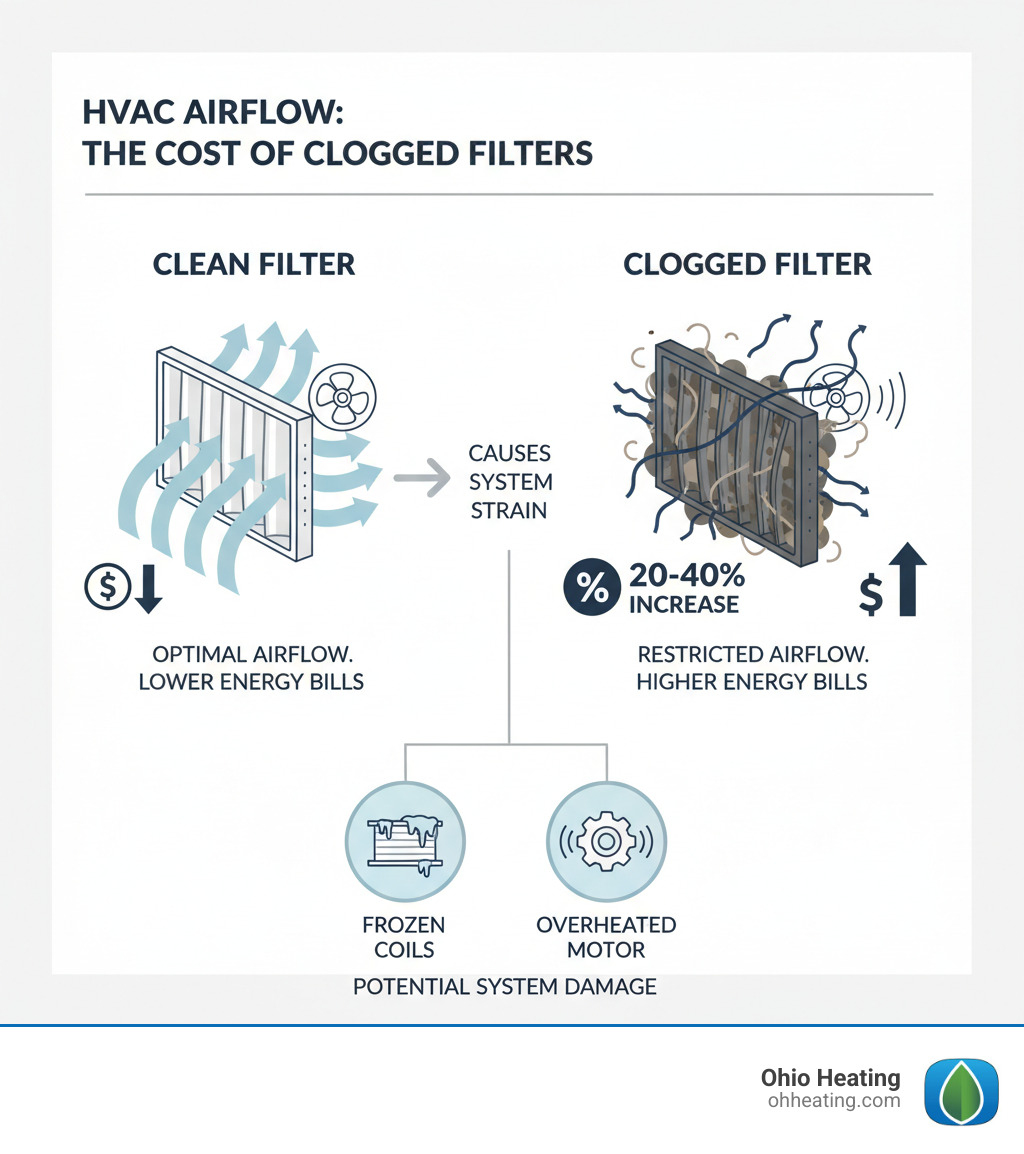
Your HVAC filter is the first line of defense against dust, allergens, and airborne contaminants. When it clogs, your system works harder, restricting airflow and forcing it to consume more energy. This leads to higher utility bills, increased wear on equipment, and potentially costly repairs. An HVAC filter replacement service ensures this critical component is always working for you, not against you.
Professional services include a system evaluation, expert filter selection, professional installation, and maintenance documentation for warranty purposes. This is especially critical for businesses and property managers who need to ensure consistent air quality, prevent system downtime, and maintain warranty compliance across multiple units.
The Health Impact of a Dirty Filter
We spend most of our time indoors, where well-insulated buildings can trap pollutants. In fact, the EPA reports that indoor air can be more polluted than the air outside. A clogged HVAC filter loses its ability to trap dust, allergens, and pet dander, recirculating them throughout your space instead.
Poor indoor air quality is linked to flu-like symptoms, itchy eyes, and respiratory issues, and can worsen allergies and asthma. For sensitive individuals, it can trigger chronic fatigue and migraines. A damp, clogged filter can also become a breeding ground for mold and bacteria, further compromising the air you breathe. For Columbus residents, this is especially important during the high pollen counts of spring and fall.
To learn more about how we can help you improve the air quality in your home or business, visit our Indoor Air Quality page.
How a Clean Filter Saves You Money
Think of a dirty filter as a clogged artery for your HVAC system. It restricts airflow, forcing the system to work harder and consume more energy to heat or cool your space. If you’ve noticed a spike in your monthly energy bills, a dirty filter is a likely culprit. Regular replacement allows air to flow freely, reducing energy consumption.
Beyond energy costs, a clean filter reduces strain on your system’s components. This added stress can lead to premature breakdowns and a shortened lifespan for your equipment. Regular filter replacement is a small, inexpensive task that prevents costly repairs, lowers energy bills, and extends the life of your HVAC system.
Should your furnace ever need professional attention, we offer reliable Furnace Repair Services to get your system back in top shape.
A Guide to HVAC Filter Types and MERV Ratings
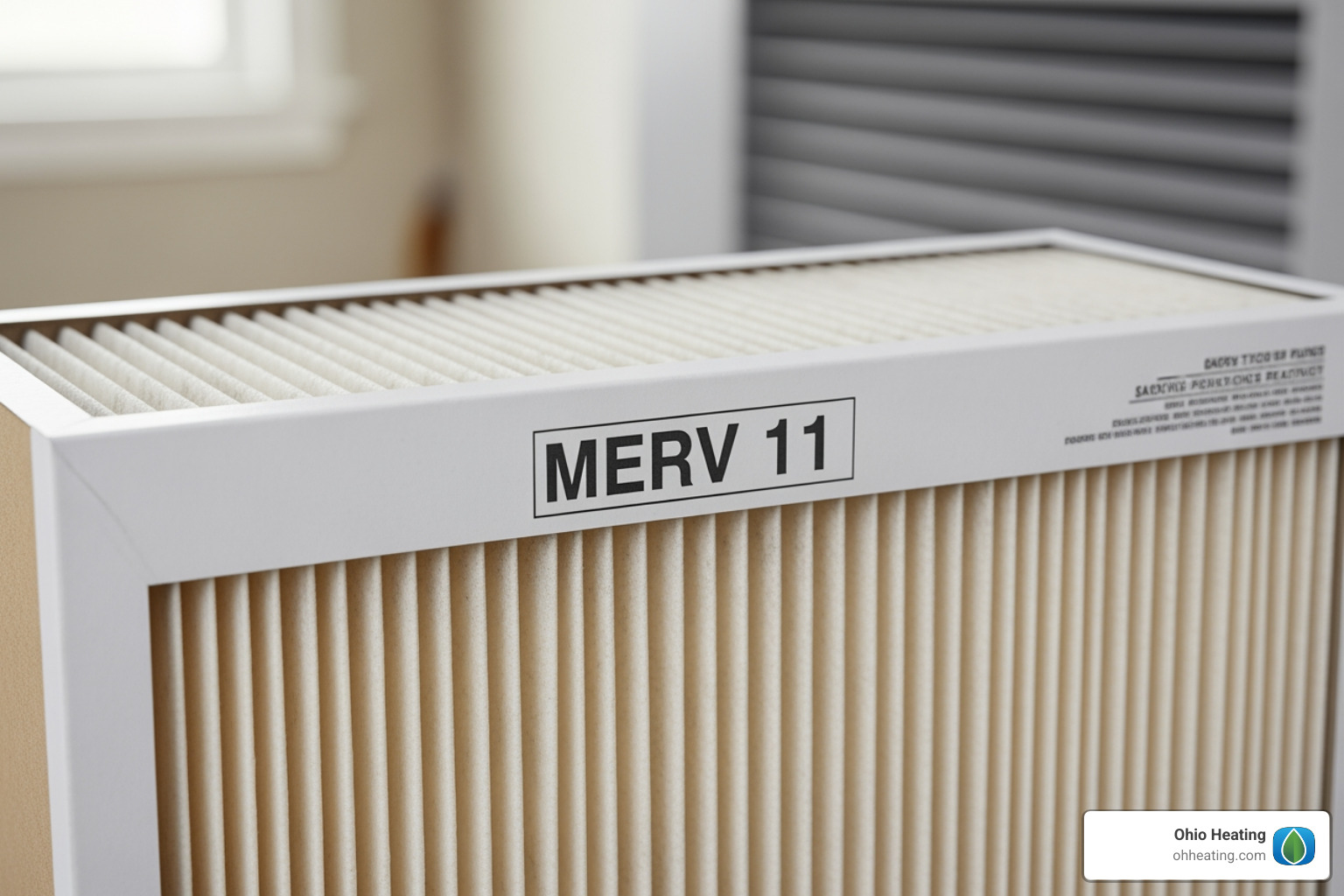
Choosing the right HVAC filter can feel overwhelming, but it boils down to two key factors: the filter type and its MERV rating. These determine how effectively it cleans your air and how it impacts your HVAC system’s performance.
What is a MERV Rating and Why Does it Matter?
MERV stands for Minimum Efficiency Reporting Value. It’s a scale from 1 to 20 that rates a filter’s ability to capture airborne particles—the higher the number, the smaller the particles it can trap.
For most homes, a MERV 8-12 filter is the ideal choice. It effectively captures common irritants like pollen, dust, and pet dander without overly restricting airflow. If you have significant allergies or asthma, a MERV 13-16 filter can trap smaller particles like bacteria.
However, higher isn’t always better. HEPA filters (MERV 17-20) create so much airflow resistance that most residential systems can’t handle them. Using a filter with too high a MERV rating can strain your system, leading to higher energy bills and potential damage. An HVAC filter replacement service can help you find the highest-rated filter your system can safely support.
Comparing Common HVAC Filter Types
Beyond MERV ratings, the filter’s material and construction are also important. Here are the most common options:
- Fiberglass filters (MERV 1-4): These are inexpensive and provide excellent airflow but only trap large debris. They protect your HVAC unit but do little to improve air quality.
- Pleated filters (MERV 8-12): The most common residential choice, these filters have a large surface area to trap smaller particles like pollen and pet dander. They offer a great balance of filtration, affordability, and system compatibility.
- HEPA filters (MERV 17-20): The gold standard, capturing 99.97% of tiny particles. They are typically used in hospitals or specialized whole-house air purification systems, as they severely restrict airflow in standard HVAC units.
- Carbon filters: These are designed to absorb odors and volatile organic compounds (VOCs) from smoke, pets, or cooking. They are often combined with pleated filters to tackle both particles and smells.
- Electrostatic filters (MERV 1-10): A reusable option that uses static electricity to attract particles. They are eco-friendly but require regular washing to remain effective.
| Filter Type | Pros | Cons | MERV Range | Best Use Cases |
|---|---|---|---|---|
| Fiberglass | Inexpensive, excellent airflow, basic system protection | Low filtration efficiency, only traps large particles, frequent replacement needed | 1-4 | Basic system protection, vacation homes, temporary use |
| Pleated | Better filtration, captures smaller particles like dust and pollen, affordable | Slightly more airflow restriction than fiberglass | 8-12 | Most residential homes, general air quality improvement, mild allergies |
| HEPA | Highest filtration efficiency (99.97% of particles), captures bacteria and viruses | Expensive, significantly restricts airflow, often requires specialized systems | 17-20 | Medical facilities, severe allergies/asthma (as part of whole-house system), specific health concerns |
| Carbon | Excellent odor absorption (smoke, cooking smells, pet odors, VOCs) | Poor particle filtration alone, often combined with other layers, can be expensive | Varies | Homes with pets, smokers, cooking odors, chemical sensitivities |
| Electrostatic | Reusable and washable, uses static charge to attract particles | Requires regular cleaning, can be less effective than pleated for very small particles | 1-10 | Environmentally conscious homeowners, general dust and allergen reduction |
The right filter depends on your air quality goals and your HVAC system’s capabilities. When in doubt, a professional can help you make the best choice.
The DIY vs. Professional HVAC Filter Replacement Service Dilemma
Should you change your own HVAC filter or hire a professional? The answer depends on your system, your comfort level, and your schedule. Both DIY and professional service have their place.
Can I Replace My HVAC Filter Myself?
For many homeowners, DIY filter replacement is a manageable task. If your filter is easy to access, follow these steps:
- Locate the filter: It’s usually in the return air duct or in a slot on the furnace/air handler.
- Check the size: The dimensions (e.g., 20x25x1) are printed on the filter’s frame. Buy an exact match.
- Install correctly: Note the airflow arrow on the new filter’s frame. It must point toward the furnace or air handler.
Common mistakes include using the wrong size, choosing a MERV rating that’s too high for the system, or installing the filter backward. If you’re confident in these steps and your filter is easy to reach, DIY can be a good option.
For more helpful tips on keeping your system running smoothly, visit our HVAC Tips page.
What’s Included in a Professional HVAC Filter Replacement Service?
A professional service is more than just a simple swap. At Ohio Heating, our HVAC filter replacement service is a comprehensive check-up for your system. We start with a system evaluation to assess airflow and overall condition. We then ensure correct filter selection, matching the MERV rating and type to your specific needs, like pets or allergies.
During the professional installation, we ensure correct placement and handle debris containment and old filter disposal. We also vacuum return air grills and perform a post-install check to verify performance. Finally, we provide detailed service records for your warranty and compliance needs, which is invaluable for commercial properties.
When to Call a Professional for an HVAC Filter Replacement Service
Some situations make professional service the clear choice:
- Hard-to-reach units: If your filter is in an attic or crawl space, let a technician handle it safely.
- Commercial properties: Consistent air quality and maintenance documentation are essential for businesses.
- Unsure of filter specifications: If you don’t know the right size or MERV rating, a professional can remove the guesswork.
- System performance issues: If you notice reduced airflow or strange noises, a technician can diagnose whether the filter is the cause or a symptom of a larger problem.
- Comprehensive maintenance: Including filter changes in a regular HVAC Maintenance plan is the easiest way to ensure it’s done correctly and on time, while also catching other potential issues early.
Tailoring Your Filter Strategy: Advanced Systems and Local Factors
An effective air filtration strategy considers your specific HVAC system, your lifestyle, and even local environmental factors. A one-size-fits-all approach rarely delivers the best results.
Upgrading to a Whole-House Air Filtration System
A standard 1-inch filter is just the baseline. For superior air cleaning, a whole-house air filtration system is a significant upgrade. These systems integrate directly with your HVAC unit to treat all the air circulating through your home. They often use high-efficiency or even HEPA filters (MERV 17-20) that can capture up to 99.97% of microscopic particles like bacteria and viruses.
An upgrade makes sense if a household member suffers from severe allergies or asthma, or if you live near a source of outdoor pollutants. For those who prioritize the cleanest possible indoor air, the health benefits and peace of mind are well worth the investment. Explore your options on our Residential HVAC Services page.
How Local Climate and Lifestyle Affect Your Filter Choices
Living in Columbus means your filter works hard. During spring and fall allergy seasons, high pollen counts can clog a standard filter in as little as 30 days. In humid summers, a clean filter is crucial for proper dehumidification, helping prevent mold growth.
Your lifestyle also dictates your replacement schedule:
- Pets: Pet dander is a common allergen. Change your filter every 30-60 days.
- Smokers: Smoke particles quickly degrade air quality. Change filters frequently and consider a carbon filter to absorb odors.
- High Usage: During extreme heat or cold when your system runs constantly, check your filter monthly.
The 90-day rule is just a guideline. Your replacement frequency should reflect your actual living situation.
Are Filter Subscription Services Worth It?
Remembering to change a filter is easy to forget. Filter subscription services offer a convenient solution by automatically delivering new filters to your door on a set schedule. This eliminates guesswork and serves as a built-in reminder.
While convenient, you pay a premium for the service. At Ohio Heating, we offer a more comprehensive solution. We integrate filter checks and replacements into our HVAC maintenance plans. This ensures your filter is changed on schedule by a professional who can also inspect your system and recommend the best filter type for your needs, whether you’re dealing with Ohio’s pollen or pet dander. It’s a hassle-free way to ensure your HVAC filter replacement service is handled correctly every time.
Frequently Asked Questions About HVAC Filter Replacement
You’ve got questions about HVAC filter replacement service, and we’ve got answers. Here are the most common concerns we hear from Columbus residents.
How often should I replace my HVAC filter?
The 90-day rule is just a starting point. Your schedule depends on your environment:
- General Guideline: Every 90 days for a standard 1-inch pleated filter.
- Pets or Allergies: Every 30-60 days to control dander and allergens.
- Peak Seasons: Monthly during Ohio’s high-pollen seasons (spring/fall) and periods of heavy AC or furnace use (summer/winter).
- Thicker Filters: 4-5 inch media filters can often last 6-12 months.
What are the signs my HVAC filter needs to be replaced?
Your system will give you clues. Look for these signs:
- Visible Dirt: The filter is gray, dusty, or matted with hair.
- Reduced Airflow: Air from your vents feels weaker than usual.
- Increased Energy Bills: A sudden, unexplained spike in costs.
- Constant Operation: Your system runs continuously but struggles to reach the set temperature.
- More Dust: You notice dust accumulating on furniture more quickly.
Can a dirty filter damage my AC or furnace?
Yes, absolutely. A clogged filter restricts airflow, which puts severe stress on your system and can lead to expensive damage:
- Furnace Overheating: Restricted airflow can cause the heat exchanger to overheat and crack, a serious safety hazard.
- Frozen AC Coils: In an air conditioner, poor airflow can cause the evaporator coil to freeze, preventing it from cooling and straining the compressor.
- Blower Motor Failure: The motor works harder to pull air through a clog, leading to overheating and burnout.
Regular filter changes are one of the cheapest and most effective ways to prevent premature system failure and costly emergency repairs. If you suspect your system is already having issues, our AC Repair Services can diagnose and fix the problem.
Ensure Peak Performance with Professional HVAC Care
Your HVAC system is a major investment in your property’s comfort and health. Proper maintenance is not just a recommendation—it’s essential for system longevity, cost savings, and a healthier indoor environment.
A timely HVAC filter replacement service can prevent thousands of dollars in future repairs, keep energy bills low, and ensure the air you breathe is clean. It’s one of the highest-return investments you can make in your system.
At Ohio Heating, we’ve provided Columbus and Central Ohio with expert HVAC care since 1999. Our team brings professional expertise to every job, ensuring your system is in capable hands and giving you complete peace of mind. We’re here to help you create a comfortable, efficient, and healthy space.
Ready to give your HVAC system the care it deserves? Schedule your HVAC maintenance plan today and let our professionals keep your system running smoothly year-round.