
Is It Time for a New Boiler? Understanding the Costs and Benefits
Understanding What You’ll Pay for a New Boiler
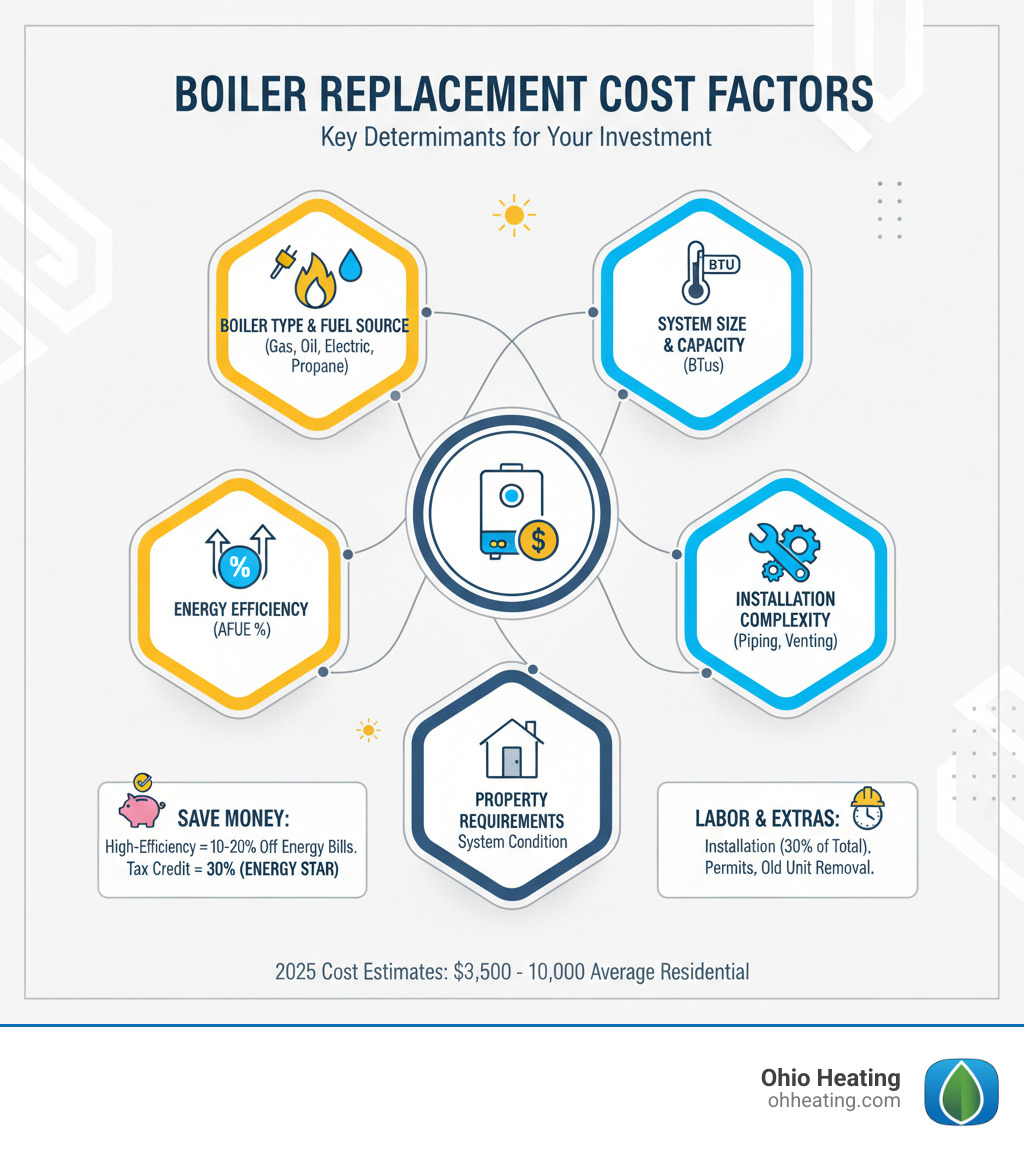
Boiler replacement cost typically ranges from $3,500 to $10,000 for most properties, with the national average around $5,900. Your final investment depends on several factors that can shift this estimate.
Quick Cost Overview:
- Standard-Efficiency Boilers (80-89% AFUE): $2,200 – $7,000
- High-Efficiency Boilers (90%+ AFUE): $4,000 – $11,000
- Labor Costs: Typically 30% of the total project cost
- Additional Work: Permits ($50-$300), old unit removal ($200-$500), system upgrades (varies)
Key Factors That Determine Your Final Price:
- Boiler type and fuel source (gas, oil, electric)
- System size and capacity (BTUs)
- Energy efficiency (AFUE rating)
- Installation complexity and accessibility
- Your property’s current system condition
As one HVAC professional noted, “the MOST important day of a boiler’s life is the day it’s installed.” This highlights why the full scope of replacement costs matters, not just the equipment price. For any property, a professionally installed boiler is crucial for comfort, asset protection, and avoiding costly failures during extreme weather.
The good news is that high-efficiency models can save you 10-20% on energy bills. Plus, federal tax credits currently cover 30% of project costs (up to $600) for ENERGY STAR certified boilers with 95%+ AFUE ratings.
Comprehensive Breakdown of Your Boiler Replacement Cost
When budgeting for a new boiler, the boiler replacement cost includes more than just the unit itself. You’re also paying for expert labor, removal of the old system, permits, and any necessary upgrades to ensure safe and efficient operation.
Understanding the Average Boiler Replacement Cost
In Central Ohio, the average boiler replacement cost is around $5,878, with most homeowners paying between $3,304 and $8,468. Complex projects or premium systems can exceed $12,500.
This wide range is largely due to efficiency. Standard-efficiency boilers (80-89% AFUE) typically cost $2,200 to $7,000, while high-efficiency models (90%+ AFUE) run $4,000 to $10,000 including installation. While more expensive upfront, these units significantly lower monthly heating bills.
Labor accounts for about 30% of the total cost, with qualified HVAC installers charging $100 to $250 per hour. Proper installation is critical for a boiler’s 15- to 20-year lifespan and prevents premature failure.
Key Factors That Influence the Final Price
Several elements determine your specific boiler replacement cost:
- Boiler Size and Capacity: Measured in BTUs, this is a primary cost driver. A 2,000-square-foot home typically needs a 60,000 to 90,000 BTU boiler. Larger homes require more powerful, expensive units.
- Climate Zone: Colder climates like Ohio require more robust systems (40-60 BTUs per square foot) to handle harsh winters, which increases equipment cost.
- Installation Complexity: A straightforward replacement is most affordable. Relocating the unit, running new pipes, or modifying venting systems increases labor hours and costs.
- Accessibility: Installing a boiler in a spacious basement is easier and cheaper than in a cramped crawlspace, which requires more time and effort.
For more insights specific to our local area, check out our guide on Boiler Installation Insights for Columbus Homeowners.
Additional Factors Affecting Your Boiler Replacement Cost
Be aware of other potential expenses that can arise during your project:
- Piping Repairs: Fixing corroded or leaking pipes can cost $150 to $850.
- Radiator Upgrades: Replacing individual home radiators runs $250 to $500 each.
- Gas Line Modifications: A new gas line installation averages $550 but can range from $120 to $1,350.
- Venting Modifications: High-efficiency boilers may need new PVC venting or a chimney liner, which can cost $1,500 to $4,000.
- Electrical Upgrades: Rewiring work costs around $1,500, while a new circuit breaker box is about $1,150.
- Asbestos Removal: If found, professional removal is required and costs $1,150 to $3,000.
- Old Boiler Removal: Hauling away the old unit typically adds $200 to $500.
- Permits and Inspections: Required for safety and code compliance, these add $50 to $300 to your total.
If you’re experiencing issues that might lead to these additional costs, our article on Urgent Boiler Repair: 5 Critical Signs You Can’t Ignore can help you identify problems early.
How Boiler Type and Specifications Impact Price
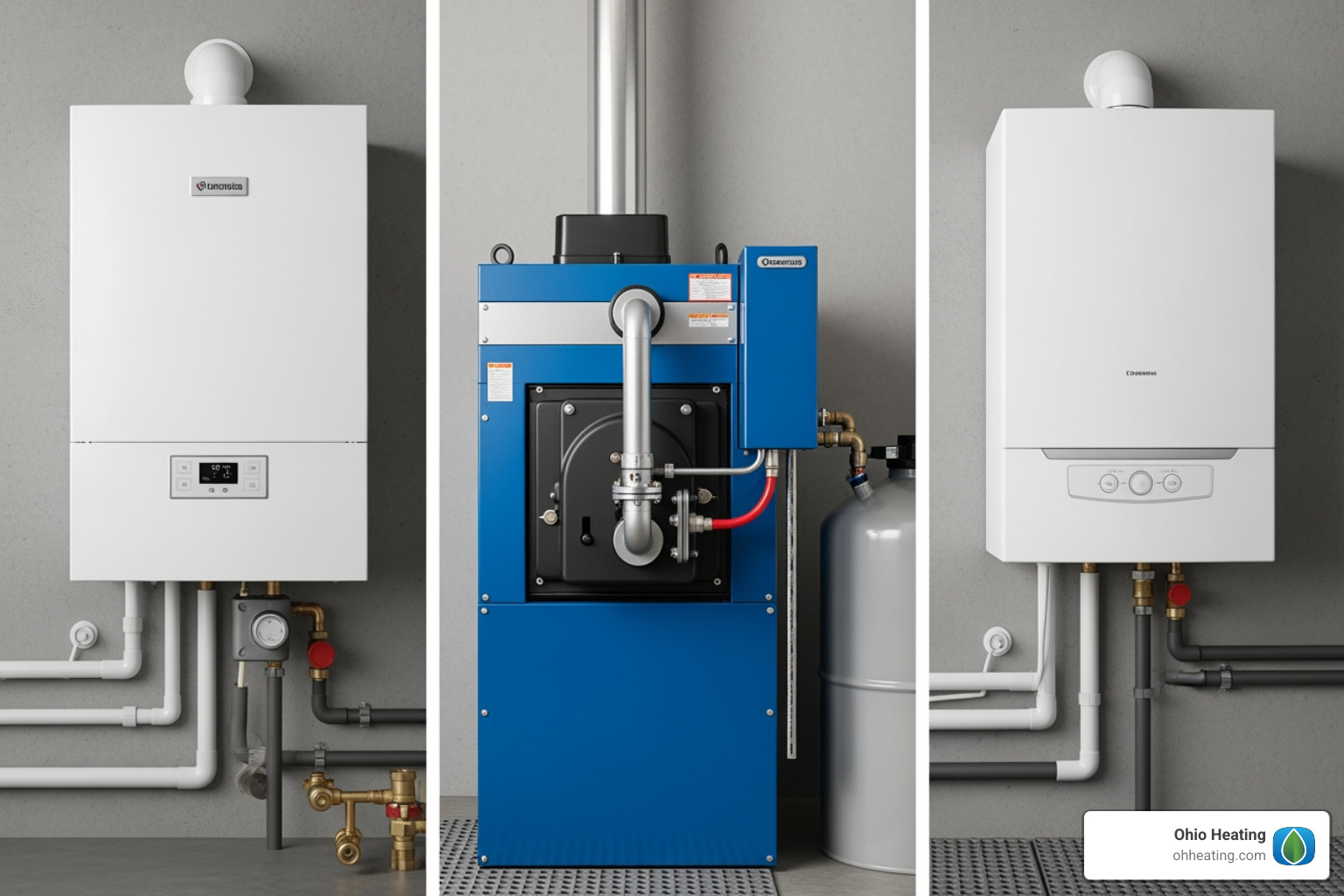
The fuel source, size, and efficiency of your new boiler are the three biggest factors determining your boiler replacement cost and ongoing energy bills. Choosing the right specifications is crucial for long-term savings and comfort.
Cost Differences by Boiler Fuel Type
The fuel your boiler uses affects both installation and operating costs. Here’s a breakdown of common options in Central Ohio:
- Natural Gas Boilers: The most popular choice, with installation costs from $4,000 to $9,000. They offer an excellent balance of affordability and efficiency, provided your property has a gas line.
- Oil Boilers: Installed for $4,800 to $9,000, they are a powerful option for properties without natural gas access. They require an on-site storage tank and more frequent maintenance.
- Propane Boilers: Installation ranges from $2,800 to $7,500. Like oil, they are good for areas without natural gas but require a storage tank. Propane burns cleaner than oil, but fuel costs can be higher than natural gas.
- Electric Boilers: With the lowest upfront cost ($1,800 to $8,000), these are simple, quiet, and require no venting. However, high electricity prices make them the most expensive to operate for whole-home heating.
- Wood Boilers: Costing $7,000 to $16,000 to install, these can have very low operating costs if you have access to cheap firewood. However, they are labor-intensive and require significant space.
For more information about residential heating options, check out our page on Residential Boilers.
The Role of Boiler Size and Capacity (BTUs)
BTU (British Thermal Unit) measures a boiler’s heating power. Most homes need 25 to 50 BTUs per square foot. In Ohio’s cold climate, we often recommend the higher end of that range. For example, a 2,000-square-foot home might need a 60,000 to 90,000 BTU boiler.
However, a professional Manual J load calculation is required by energy codes to determine the precise size. This assessment considers your home’s insulation, windows, ceiling height, and other factors. Proper sizing is critical:
- An undersized boiler will struggle to heat your home, run constantly, and wear out prematurely.
- An oversized boiler will “short cycle” (turn on and off frequently), which wastes energy and causes excessive wear on components.
Energy Efficiency (AFUE) and Long-Term Savings
AFUE (Annual Fuel Utilization Efficiency) tells you what percentage of fuel is converted into heat. A higher AFUE means lower energy bills. The U.S. Department of Energy explains what AFUE means for your bills.
- Standard-efficiency boilers (80-89% AFUE) cost less upfront ($2,200 to $7,000) but more to operate.
- High-efficiency boilers (90-98% AFUE) cost more initially ($4,000 to $10,000 installed) but can save you 10% to 20% on annual heating costs. Over the boiler’s lifespan, these savings often outweigh the higher initial price.
Federal tax credits currently cover 30% of project costs (up to $600) for ENERGY STAR certified boilers with 95%+ AFUE ratings, making high-efficiency models even more affordable.
If you’re wondering whether your current boiler is wasting money, our article on Signs Your Boiler Is Running Inefficiently can help you spot the warning signs.
Is It Time to Replace Your Boiler?
Facing a boiler replacement cost is never ideal, but sometimes replacing an old unit is a smarter financial move than continuing with expensive repairs. Knowing when to make that call is key.
Lifespan and Telltale Signs of a Failing Boiler
A well-maintained boiler typically lasts 15 to 20 years. As they age, their efficiency drops, costing you more each month. Beyond age, watch for these warning signs:
- Frequent Breakdowns: If repairs are becoming common, it’s a sign the unit is failing. A good rule of thumb: if your boiler’s age multiplied by the latest repair cost exceeds $5,000, replacement is usually the better option.
- Rising Energy Bills: An unexplained increase in your heating costs often points to declining efficiency.
- Leaks or Corrosion: Visible rust or leaks indicate internal component failure and compromise the unit’s structural integrity. These problems only get worse.
- Strange Noises: Banging, gurgling, or whistling sounds often signal major internal wear.
- Inconsistent Heating: Cold spots and uneven temperatures mean your boiler can no longer meet your property’s demands.
Regular maintenance is the best way to catch these issues early. For local service, explore our Boiler Repair and Maintenance in Columbus options.
The Benefits of a New Boiler Installation
While the initial boiler replacement cost is significant, a new unit provides long-term value:
- Improved Energy Efficiency: Modern high-efficiency boilers can cut your energy bills by 10% to 20%, saving you money every month for the next 15-20 years.
- Increased Home Comfort: New boilers deliver consistent, reliable heat, eliminating cold spots and providing peace of mind during Ohio’s winters.
- Improved Reliability: A new system means fewer emergency calls and less worry about unexpected breakdowns.
- Increased Home Value: A new, high-efficiency boiler is an attractive feature for potential buyers and can increase your home’s value by approximately 4%.
- Better for the Environment: Modern boilers burn fuel more cleanly and produce fewer greenhouse gas emissions.
We’re proud to serve communities throughout Central Ohio. If you’re in the Westerville area, learn more about our Boiler Installation and Replacement in Westerville, Ohio services.
Budgeting and Saving on Your Boiler Replacement
The boiler replacement cost is a significant expense, but with smart planning, you can make the investment more manageable without sacrificing quality.
How to Save Money on Your New Boiler
Here are some proven strategies for saving money on your boiler replacement:
- Get Multiple Quotes: Aim for at least three detailed estimates from reputable contractors. Compare not just the final price, but also what’s included, such as old unit removal, permits, and warranties.
- Think Long-Term with Efficiency: A high-efficiency boiler costs more upfront but pays for itself over time through lower energy bills. If you plan to stay in your property, the long-term savings are often worth the initial investment.
- Time Your Installation: Schedule your replacement during the spring or fall. Demand is lower during these off-peak seasons, and contractors may offer more competitive pricing.
- Prioritize Maintenance: The best way to save on replacement is to prolong the life of your current unit. Regular professional maintenance keeps your boiler running efficiently for longer. We offer services like Boiler Repair and Maintenance in Dublin, Ohio to help protect your investment.
Rebates, Tax Credits, and Financing
You don’t have to cover the entire boiler replacement cost on your own. Several programs can help make the upgrade more affordable:
- Federal Tax Credits: Installing an ENERGY STAR certified gas boiler with at least 95% AFUE can make you eligible for a tax credit of 30% of your project costs, up to $600.
- Utility and Manufacturer Rebates: Many Ohio utility companies offer rebates for high-efficiency systems. Use the ENERGY STAR rebate finder to see what’s available in your area. Boiler manufacturers also offer promotional rebates, often during the spring and fall.
- Financing Options: To make the cost more manageable, financing allows you to spread the expense into affordable monthly payments. We can discuss various options that fit your budget.
Frequently Asked Questions about Boiler Replacement
Here are answers to some of the most common questions we hear from property owners in Central Ohio about boiler replacement cost and the installation process.
How long does a boiler last?
A well-maintained boiler typically lasts 15 to 20 years. Some older cast iron models may last longer, but their efficiency drops significantly with age. Lifespan depends on maintenance history, water quality, and the quality of the original installation.
How long does the boiler replacement process take?
A straightforward, like-for-like replacement can often be completed in 4 to 8 hours. More complex jobs, such as switching fuel types, relocating the unit, or making significant piping and venting upgrades, can take 2 to 3 days. We will always provide a clear timeline before work begins.
Does replacing a boiler increase my home’s value?
Yes. A new, high-efficiency boiler is a strong selling point for potential buyers. It signals lower future maintenance costs, improved energy efficiency, and reliable heating. Research suggests a new boiler can increase a home’s value by about 4%, particularly in climates like Ohio’s where a dependable heating system is essential.
Get a Professional Boiler Replacement Estimate
We’ve covered how the typical boiler replacement cost ranges from $3,500 to $10,000 and explored the factors that influence your final price. While replacing a boiler is a significant investment, it pays you back through lower energy bills, improved comfort and reliability, and increased property value.
Remember the expert advice: “the MOST important day of a boiler’s life is the day it’s installed.” Professional installation is essential for ensuring your new boiler operates efficiently and lasts its full 15- to 20-year lifespan. An improper installation can lead to breakdowns and a shortened lifespan, costing you more in the long run.
That’s where Ohio Heating comes in. Serving Columbus and Central Ohio since 1999, we have the expertise to handle any residential or commercial boiler replacement. We provide a thorough assessment, accurate load calculations, and a detailed, transparent estimate with no hidden fees. Our focus is on ensuring your comfort and operational reliability, preventing the crises that come with equipment failure during an Ohio winter.
Ready to discuss your options? Our team is here to help you find the right solution for your property. Contact us for expert boiler sales and service today, and let’s bring efficient, dependable heat back to your property.