
Clear the Air: Simple Steps for Better Indoor Air Quality
Why Indoor Air Quality Matters More Than You Think
Indoor air quality affects your health more than you might realize. Here’s what you need to know:
- We spend 90% of our time indoors, where air can be 2-5 times more polluted than outdoor air
- Poor IAQ causes headaches, fatigue, and respiratory issues
- Long-term exposure increases risks of heart disease, cancer, and cognitive problems
- Three key solutions: Control pollution sources, improve ventilation, and use proper air filtration
- Vulnerable groups (children, elderly, those with health conditions) face higher risks
Most of us don’t think twice about the air we breathe inside our homes and offices. We assume it’s clean. We assume it’s safe. But the truth is surprising—and a bit unsettling.
The air inside your building can contain invisible pollutants from cleaning supplies, furniture, HVAC systems, and even outdoor sources that seep indoors. These pollutants accumulate because most buildings don’t exchange air with the outdoors frequently enough.
The good news? Improving your indoor air quality doesn’t require expensive renovations or complicated systems. Simple, practical steps can make a dramatic difference in the air you and your occupants breathe every day.
I’m Jill Frattini, a Service Coordinator at Ohio Heating with years of experience in the HVAC industry, where I’ve helped countless property managers and business owners understand how their heating and cooling systems directly impact Indoor air quality. Through proper system maintenance and strategic upgrades, I’ve seen how better IAQ protects both people and property.
Indoor air quality vocabulary:
Understanding Indoor Air Quality: The Invisible Threat in Your Home
Indoor air quality (IAQ) refers to the air quality within and around buildings, especially as it relates to the health and comfort of occupants. Why is this so crucial? Because, as we noted, we spend a staggering 90% of our lives indoors, whether at home, at work, or in school. This means the air inside our buildings has a profound and continuous impact on our well-being.
The connection between the air we breathe indoors and our health is undeniable. Poor IAQ can trigger a host of symptoms and contribute to serious long-term illnesses. Certain populations are particularly vulnerable to these risks. Children, older adults, and individuals with pre-existing health conditions often face higher levels of indoor pollutants and are more susceptible to their harmful effects. This is why understanding and improving IAQ is not just a comfort issue, but a critical public health concern.
Immediate Health Effects of Poor IAQ
Sometimes, the effects of poor indoor air quality are immediately noticeable. You might walk into a room and feel a sudden onset of symptoms, often dismissed as allergies or a common cold. These immediate reactions can include:
- Headaches
- Dizziness
- Fatigue
- Irritation of the eyes, nose, and throat
- Worsening of existing conditions like asthma or allergies
A phenomenon known as “sick building syndrome” can occur when building occupants experience these symptoms, which seem linked to time spent in a particular building but without a specific illness or cause being identified. Often, these symptoms diminish or disappear shortly after leaving the building. A scientific review of sick building syndrome highlights how widespread and impactful these immediate effects can be, affecting comfort, concentration, and overall well-being.
Long-Term Health Risks
While immediate symptoms are a clear warning sign, the long-term effects of chronic exposure to indoor air pollutants are even more concerning. Over time, repeated exposure can lead to severe, debilitating, and even fatal health conditions. These include:
- Various respiratory diseases
- Heart disease
- Cognitive deficits, impacting focus and mental performance
- Different types of cancer
Research shows that indoor exposures to air pollutants… have been associated with impaired health and performance in children and adults. This means that the quality of the air in our homes, schools, and workplaces isn’t just about feeling good today, but about protecting our health for years to come. For instance, studies indicate that household air pollution exposure during pregnancy can significantly affect lung development prenatally, potentially increasing the risk of respiratory problems in infants.
Identifying the Sources: What Pollutes Your Indoor Air?
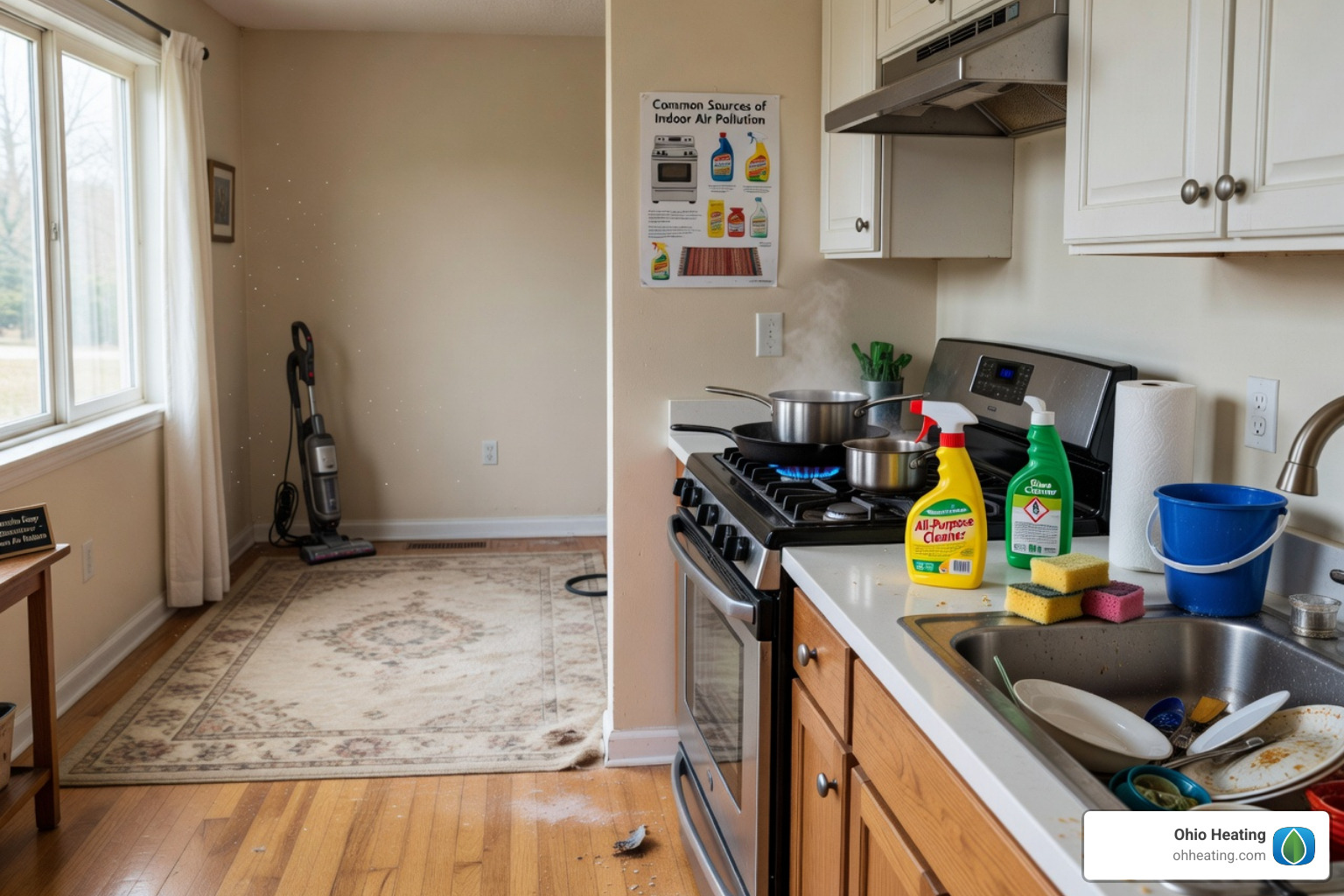
So, where do these invisible threats come from? Our indoor environments are complex ecosystems, and many factors contribute to poor IAQ. Pollutants can be generated indoors, seep in from outdoors, or be a result of the building’s structure itself. We can generally categorize them into biological contaminants, chemical pollutants, and combustion byproducts.
Biological Contaminants
Biological contaminants are living organisms or their byproducts that thrive in our indoor spaces. They are often linked to moisture and can wreak havoc on our respiratory systems.
- Mold and mildew: These fungi flourish in damp conditions. If building materials stay wet for more than 24-48 hours, mold can easily take hold. Facts about mold and dampness emphasize that moisture control is key to preventing its growth.
- Dust mites: Microscopic creatures that feed on dead skin cells and thrive in warm, humid environments, especially in bedding and carpets.
- Pet dander: Tiny flakes of skin shed by animals, a common allergen.
- Pollen: Carried indoors from outside, especially during peak seasons.
- Bacteria and viruses: Spread through human activity, especially in poorly ventilated spaces.
Common signs of mold growth include:
- A distinct, musty odor, even if you can’t see the mold.
- Visible patches of black, green, white, or orange growth on surfaces.
- Water stains or discoloration on walls, ceilings, or floors, indicating a moisture problem.
- Peeling paint or wallpaper.
Chemical Pollutants: VOCs, Smoke, and More
Our homes and offices are filled with products that release chemicals into the air.
- Volatile Organic Compounds (VOCs): These are gases emitted from various solids or liquids. Common sources include paints, varnishes, cleaning supplies, air fresheners, building materials, and even new furniture. VOC concentrations can be 2 to 5 times higher indoors than outdoors.
- Formaldehyde: A common VOC found in pressed wood products (like particleboard, plywood, and fiberboard), glues, adhesives, paints, and some fabrics. Too much exposure to formaldehyde can cause respiratory issues, including bronchitis.
- Asbestos: A fibrous material once widely used in building materials like insulation, roofing shingles, and siding. When disturbed, asbestos fibers can be released into the air. Asbestos is a known human carcinogen and can cause serious lung diseases.
- Secondhand and thirdhand smoke: Secondhand smoke refers to the smoke exhaled by a smoker and from the burning end of a cigarette. Anyone exposed has higher risk of developing health concerns, including certain types of cancer. Thirdhand smoke consists of the residues from tobacco smoke that linger on surfaces like clothes, furniture, and carpets long after a cigarette has been extinguished, posing ongoing health risks.
Combustion Pollutants and Radon
Many common household appliances produce pollutants when they burn fuel.
- Carbon Monoxide (CO): This is an odorless and toxic gas produced by the incomplete burning of fuels. It’s found in fumes from cars, trucks, small engines, stoves, lanterns, grills, fireplaces, and furnaces. Because carbon monoxide is an odorless and toxic gas, it’s incredibly dangerous and undetectable without a CO detector.
- Nitrogen Dioxide (NO2): Another byproduct of combustion, primarily from unvented gas stoves, heaters, and fireplaces. It can irritate the respiratory tract.
- Radon: A naturally occurring radioactive gas that results from the breakdown of uranium in soil and rock. It seeps up through cracks in foundations and enters homes. Radon is the leading cause of lung cancer among non-smokers and the second leading cause overall, responsible for about 21,000 U.S. deaths from lung cancer annually according to EPA estimates. The EPA recommends fixing homes with radon levels at or above 4 pCi/L.
Your Action Plan for Better Indoor Air Quality
The good news is that we’re not powerless against these invisible threats. Improving indoor air quality primarily involves three main strategies: controlling pollutants at their source, improving ventilation, and using effective air cleaning and filtration.
Step 1: Control Pollutants at the Source
This is often the most effective and cost-efficient way to improve IAQ. If you can stop pollutants from entering your air in the first place, you’re ahead of the game!
- Choose low-VOC products: When buying paints, cleaning supplies, furnishings, or building materials, look for options labeled “low-VOC” or “no-VOC.” This significantly reduces the chemical off-gassing into your home.
- Use exhaust fans when cooking: Gas stoves and even electric cooking can release particulate matter and other pollutants. Always use your kitchen exhaust fan, vented to the outside, to remove these contaminants.
- Avoid smoking indoors: The best way to prevent secondhand and thirdhand smoke exposure is to prohibit smoking inside your home entirely.
- Maintain appliances: Regularly inspect and maintain fuel-burning appliances like furnaces, water heaters, and gas stoves to ensure they are operating efficiently and not leaking harmful gases. Consider installing a carbon monoxide detector for safety.
- Clean regularly: Dusting with a damp cloth and vacuuming with a HEPA-filter vacuum can significantly reduce dust mites, pet dander, and other particulates. Removing shoes at the door can prevent outdoor pollutants from being tracked in. For tips on choosing safer cleaning products, check out these videos about choosing safer cleaning products.
- Control humidity: We aim for indoor relative humidity levels between 30-50%. This range discourages mold growth, dust mites, and even pests like spiders and centipedes that thrive in humidity above 70%. If your home in Columbus, Ohio struggles with humidity, consider a Whole House Dehumidifier. If the dry winter air leaves you with static shocks and dry skin, a Whole House Humidifier can make a world of difference.
Step 2: Improve Your Home’s Ventilation
Ventilation is about bringing in fresh outdoor air and exhausting stale indoor air.
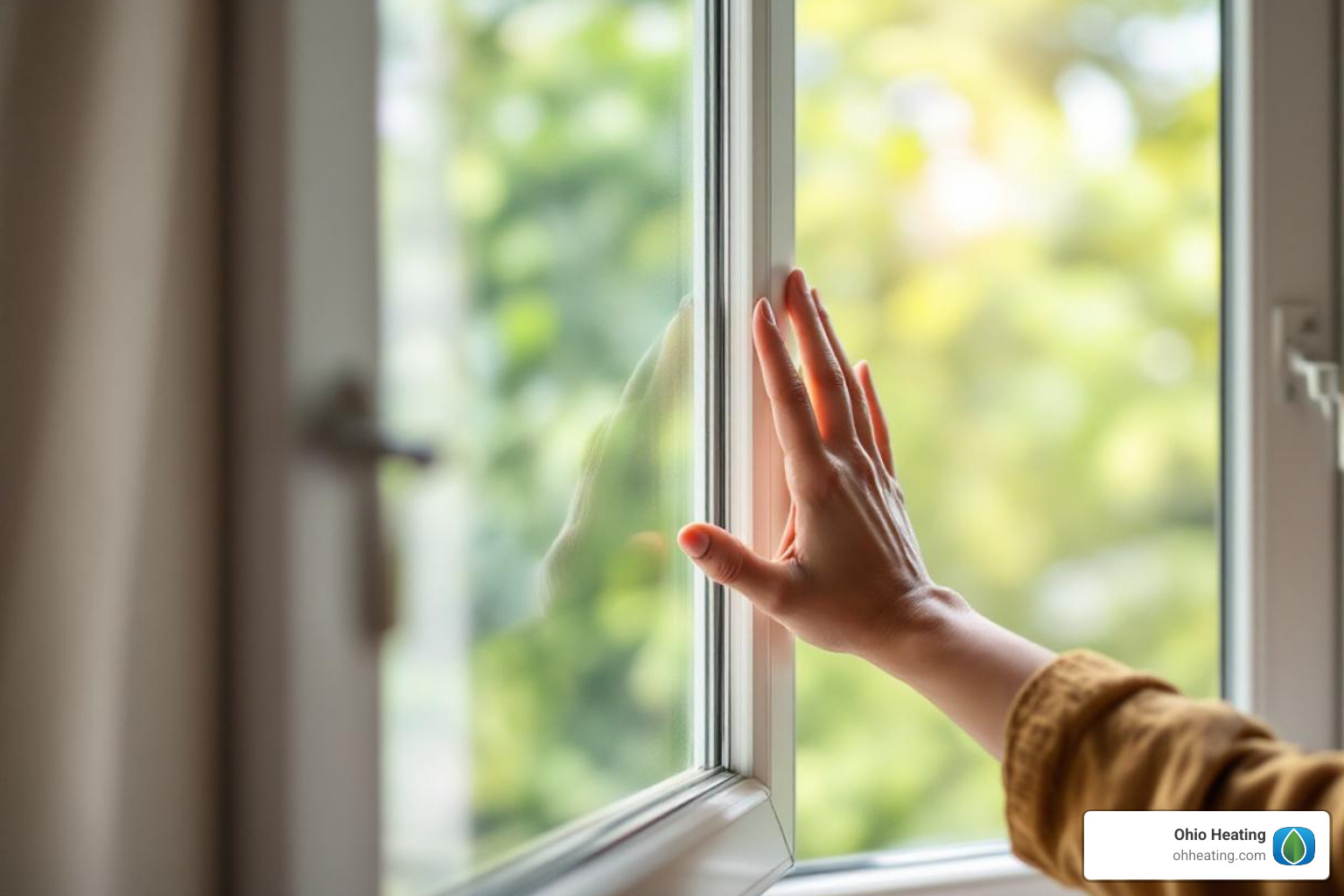
- Natural ventilation: When outdoor air quality permits, simply opening windows and doors can dramatically improve airflow and dilute indoor pollutants. This is a great, free way to air out your home.
- Mechanical ventilation: Most residential HVAC systems are designed for heating and cooling, not necessarily for bringing in fresh outdoor air. However, modern systems and advanced home designs can incorporate mechanical ventilation solutions like whole-house ventilators or energy-efficient heat recovery ventilators (HRVs). These systems actively bring in fresh air while exhausting stale air, often recovering energy in the process. For more detailed information, the CDC provides more info about building ventilation.
- Air balance: For optimal system performance and consistent indoor air quality throughout your home or business, proper air balancing is essential. This ensures that air is distributed evenly and efficiently. For comprehensive HVAC solutions that impact your IAQ, you can learn about our air balance services.
Step 3: Use Air Cleaners and Filtration
While source control and ventilation are primary, air cleaners and filtration can provide an extra layer of protection.
- HVAC filters: The filter in your furnace or air conditioner is your first line of defense. Standard 1-inch filters, common since the 1950s, primarily catch larger particles. Upgrading to a 4-inch media filter can significantly improve filtration, capturing much smaller particles like pet dander, mold spores, and fine dust. These often have higher MERV (Minimum Efficiency Reporting Value) ratings, indicating better particle capture efficiency. We offer a variety of Whole House Air Cleaners for our Central Ohio customers.
- HEPA filters: High-Efficiency Particulate Air (HEPA) filters are the gold standard, designed to capture 99.97% of particles as small as 0.3 microns, including bacteria and viruses. Many high-quality media filters can achieve near-HEPA levels.
- Portable air cleaners: For specific rooms or areas with persistent issues, portable air cleaners can be a good supplement. Look for models with HEPA filters and activated carbon for gas removal. The American Academy of Allergy, Asthma & Immunology provides guidance on appropriate and effective air cleaning and air filtration.
Here’s a quick comparison of common air filter types:
| Filter Type | MERV Rating (Approx.) | Effectiveness | Pros | Cons |
|---|---|---|---|---|
| 1-inch Fiberglass | 1-4 | Basic filtration, catches large particles | Inexpensive, widely available | Poor at capturing small particles, frequent replacement |
| 1-inch Pleated | 6-9 | Better than fiberglass, catches common allergens | Good balance of cost and performance | Can restrict airflow if too dense, less efficient for very small particles |
| 4-inch Media Filter | 11-16 | Captures small particles (0.3 microns) like pet dander, mold spores, fine dust | Excellent filtration, longer lifespan than 1-inch filters | Requires larger filter slot, higher initial cost |
| HEPA Filter (True) | 17-20 | Captures 99.97% of particles 0.3 microns, including bacteria and viruses | Best filtration for health concerns | High cost, can significantly restrict airflow if not designed for system |
| Electronic Filter | Varies | High efficiency, removes very small particles | Reusable collection plates | Can produce ozone, requires frequent cleaning, higher initial cost |
| UV Lamp | N/A | Kills mold, bacteria, viruses on coils/air stream | Germicidal, reduces biological growth | Does not filter particles, requires bulb replacement |
IAQ Beyond the Home: Schools, Workplaces, and Climate
While we often focus on our homes, indoor air quality is a pervasive public health issue that extends to all shared indoor spaces. In places like schools and workplaces, where many people gather for extended periods, the impact of poor IAQ can be amplified, affecting productivity, learning, and overall community health. Globally, indoor air pollution, particularly from cookstoves, is responsible for millions of premature deaths annually.
Improving Indoor Air Quality in Schools and Workplaces
In our schools and offices across Central Ohio, the stakes for good IAQ are high.
- Productivity and Cognitive Function: Studies have shown that air quality within an office can affect employees’ cognitive function, impacting response times, ability to focus, and overall productivity. Poor IAQ can lead to increased sick days and decreased performance.
- Asthma in Schools: Children are particularly vulnerable. Research found that airborne mouse allergens in inner-city schools are linked to increased symptoms and decreased lung function in asthmatic children. Beyond allergens, poor ventilation and chemical pollutants in schools can worsen asthma and allergies, leading to missed school days.
- EPA Tools for Schools: The Environmental Protection Agency (EPA) offers valuable resources for school staff, such as the IAQ Tools for Schools program, to help create healthier indoor environments. These resources guide schools in implementing management plans for better IAQ.
Key actions for schools and workplaces include:
- Ensuring proper ventilation and HVAC system maintenance.
- Using low-VOC and unscented cleaning products.
- Avoiding strong scents or essential oil diffusers.
- Implementing pest management strategies.
- Regular cleaning to reduce allergens and dust.
The Link Between Outdoor Air, Climate Change, and Indoor Air
The air inside our buildings isn’t entirely separate from the air outside. Outdoor air pollution can significantly impact indoor air quality as it infiltrates through windows, doors, and ventilation systems.
- Wildfire smoke: While Columbus, Ohio may not be prone to wildfires, smoke from distant fires can travel long distances, leading to hazy skies and poor outdoor air quality. This smoke, containing fine particulate matter, can easily enter homes and worsen IAQ.
- Ozone: Ground-level ozone, a major component of smog, forms when pollutants react in sunlight. While primarily an outdoor pollutant, it can seep indoors and react with indoor chemicals, creating new harmful byproducts.
- Pollen seasons: Climate change is leading to longer and more intense pollen seasons, meaning more allergens are infiltrating our homes and affecting allergy sufferers.
- Climate Change Impact: The overall impact of climate change on indoor air quality is complex. Rising temperatures can lead to increased use of air conditioning, which can reduce ventilation if not properly managed. More frequent extreme weather events can cause moisture intrusion and mold growth.
- Energy efficiency vs. ventilation: Modern, energy-efficient buildings are often tightly sealed to prevent heat loss, which is great for utility bills. However, without adequate mechanical ventilation, these tight seals can trap pollutants indoors, leading to higher concentrations and a greater need for robust filtration systems.
IAQ Standards and Monitoring
While there isn’t one universal standard for indoor air quality, various organizations provide guidelines and recommendations.
- WHO guidelines: The World Health Organization (WHO) provides global guidelines for several key indoor air pollutants, offering a benchmark for healthy indoor environments. You can find comprehensive information in the WHO global air quality guidelines.
- EPA recommendations: In the United States, the EPA offers extensive guidance and programs to help individuals and institutions understand and improve IAQ.
- Monitoring devices: For those who want to keep a closer eye on their indoor environment, monitoring devices are becoming increasingly accessible.
- CO2 monitors: While carbon dioxide isn’t directly toxic at typical indoor levels, high CO2 concentrations can indicate inadequate ventilation. If levels are consistently high, it suggests your space isn’t getting enough fresh air.
- Particulate matter sensors: These devices can detect fine particulate matter (PM2.5), which is a key component of smoke and other airborne pollutants.
- Low-cost sensors: Researchers are actively developing low-cost, portable sensors for detecting indoor pollutants, making real-time monitoring more widespread and empowering individuals with data about their air.
Frequently Asked Questions about Indoor Air Quality
How can I test my indoor air quality?
Testing your indoor air quality can range from simple DIY kits to professional assessments.
- DIY Test Kits: You can purchase kits for specific pollutants like radon. The EPA recommends testing your home for radon, especially if you live in an area with known radon risk, like parts of Ohio.
- Radon Tests: These are crucial, as radon is invisible and odorless. If levels are at or above 4 pCi/L, mitigation is recommended.
- Mold Testing: While visual inspection and smell are often the first indicators, if you suspect hidden mold or have unexplained symptoms, professional mold testing can identify species and concentrations.
- Professional IAQ Assessments: For a comprehensive understanding, an IAQ professional can conduct a thorough inspection, identifying potential sources and testing for a wide range of pollutants.
- Smart Sensors: For real-time monitoring, smart sensors can track levels of PM2.5, VOCs, and CO2, giving you continuous data on your home’s air quality.
Are air purifiers really effective at improving IAQ?
Yes, air purifiers can be very effective, but their effectiveness depends on a few factors:
- Type of Purifier: HEPA filters are excellent for capturing airborne particles like dust, pollen, pet dander, and mold spores. Activated carbon filters are designed to remove gases, odors, and VOCs. Some advanced purifiers, like the Reme Halo, use UV light and charged particles to neutralize odors, capture dust, and even kill viruses, with some models claiming 99.9% effectiveness against COVID-19.
- Sizing: The purifier must be appropriately sized for the room it’s in to effectively clean the air.
- Supplement, not replacement: Air purifiers are a valuable supplement to source control and ventilation, not a replacement. They work best when pollutant sources are minimized and fresh air is regularly introduced.
What is the ideal humidity level for a home?
Maintaining the right humidity level is vital for good indoor air quality and comfort.
- Ideal Range: The ideal indoor relative humidity level for most homes is between 30-50%.
- Too High: Humidity levels above 50-60% create an environment where mold, dust mites, and bacteria thrive. It also attracts pests like spiders, centipedes, and silverfish, which love spaces with more than 70% humidity. High humidity can also make your home feel muggy and uncomfortable.
- Too Low: Humidity levels below 30% can lead to dry skin, irritated respiratory passages, static electricity, and even damage to wooden furniture and floors.
- Monitoring and Control: A simple hygrometer can help you monitor humidity. If you frequently find your home outside this ideal range, consider investing in a whole-house humidifier for dry winters or a whole-house dehumidifier for humid summers, especially here in Central Ohio.
Conclusion
Breathing clean air is not a luxury; it’s a fundamental necessity for our health, comfort, and productivity. As we’ve explored, indoor air quality is a complex but manageable aspect of our daily lives, particularly given how much time we spend indoors. The invisible threats lurking in our homes, schools, and workplaces—from biological contaminants like mold and dust mites to chemical pollutants like VOCs and dangerous gases like carbon monoxide and radon—can have significant immediate and long-term health consequences.
The good news is that powerful solutions are within our reach. By consistently practicing source control, ensuring adequate ventilation, and utilizing effective air cleaning and filtration systems, we can dramatically improve the air we breathe. These aren’t just abstract concepts; they are actionable steps that make a tangible difference.
At Ohio Heating, we are deeply committed to ensuring your home and business environments in Columbus and Central Ohio are not just comfortable, but genuinely healthy. We understand the critical role your HVAC system plays in maintaining optimal indoor air quality. From advanced air filtration and purification systems to expert ventilation and air balancing services, our team is here to help you clear the air and breathe easier.
Don’t let invisible pollutants compromise your health or comfort. Take control of your indoor air today. Contact us for professional indoor air quality solutions and let us help you create a healthier, cleaner indoor environment.