
Ignite the Heat: Your Guide to Relighting a Furnace Pilot
Why Your Furnace Pilot Light Matters for Reliable Heat
A furnace pilot light is a small, continuously burning flame in older gas furnaces that ignites the main burners to produce heat. If your home is cold and you suspect the pilot light is out, this guide will help.
Quick Answer: How to Relight Your Furnace Pilot Light
- Check for a gas smell. If you smell gas, leave immediately and call your gas company.
- Turn the gas control knob to “OFF” and wait 5-10 minutes for gas to clear.
- Switch the knob to the “PILOT” setting and press the reset button.
- Use a long lighter to ignite the flame while holding the button.
- Hold the button for 30-60 seconds after the flame ignites, then release and turn the knob to “ON.”
If the pilot light won’t stay lit, you may have a faulty component that requires professional service.
When the heat is on but your house is cold, a pilot light issue is a common culprit, especially in older gas furnaces. For property managers and homeowners in Columbus, a non-functioning furnace is a major disruption. The good news is that relighting a pilot light is often a simple DIY fix. The key is knowing when it’s safe to do it yourself and when to call a professional.
Pilot lights are typically found in furnaces made before 2010 and consume gas continuously. In contrast, modern systems use more efficient electronic ignition. As a Service Coordinator at Ohio Heating, I’ve helped countless Columbus-area clients troubleshoot furnace pilot light issues. This guide will walk you through everything you need to know to safely restore your heat.
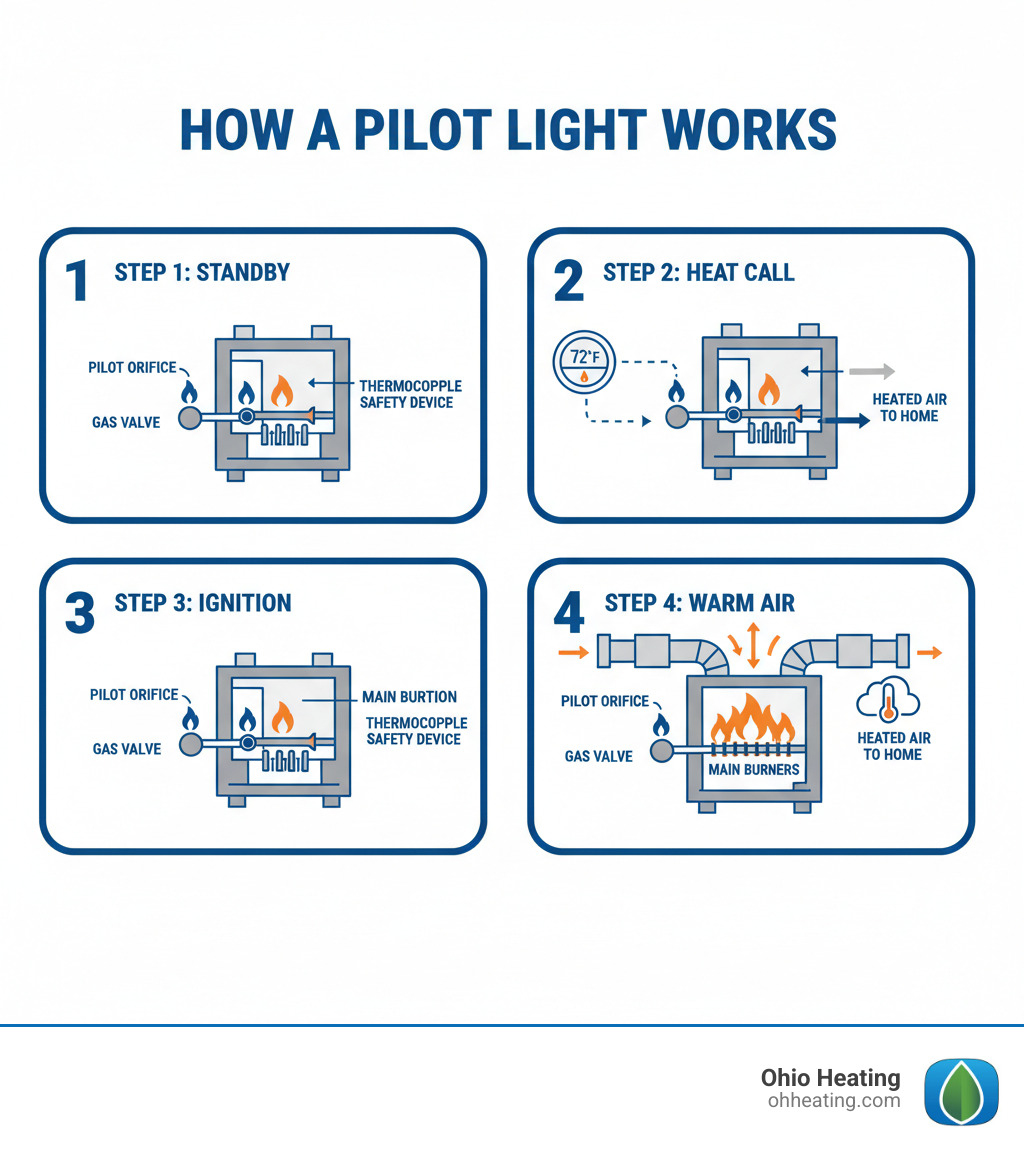
What is a Furnace Pilot Light and How Does It Work?
A furnace pilot light is a small, blue flame that burns continuously inside older gas furnaces. Its sole purpose is to ignite the main burners when the thermostat calls for heat. When natural gas flows to the burners, the pilot light ignites it, creating the large flame that warms your home.
This standing pilot light is common in gas furnaces built before 2010. While reliable, this technology has been largely replaced by modern electronic ignition systems, which are more energy-efficient. Electronic systems use a hot surface igniter or an electric spark to light the gas only when needed, eliminating the constant gas consumption of a standing pilot.
| Feature | Standing Pilot Light | Electronic Ignition System |
|---|---|---|
| Efficiency | Lower (burns gas continuously) | Higher (only uses energy when heating) |
| How it Works | Small, constant flame ignites main burner | Electric spark or hot element ignites main burner directly or a temporary pilot flame |
| Gas Usage | Continuous, even when not heating | On-demand, only during heating cycles |
| Safety | Relies on thermocouple for gas shut-off if flame dies | Multiple safety sensors, no constant open flame |
| Maintenance | Can get dirty, prone to going out | More complex components, generally more reliable ignition |
| Common in | Older furnaces (pre-2010, some up to 30 years old) | Modern furnaces (post-2010) |
A standing pilot light burns gas 24/7, even in the summer, which reduces the furnace’s overall efficiency. Older furnaces with pilot lights typically operate at 50-70% efficiency. In contrast, modern furnaces with electronic ignition are significantly more efficient because they only use gas during a heating cycle.
While standing pilot lights are becoming less common in Central Ohio, many are still in service. If your older furnace works well, there’s no urgent need to replace it. For more information on different heating systems, the Department of Energy offers a guide on furnaces and boilers.
Common Reasons Your Furnace Pilot Light Goes Out
When your furnace blows cold air, an extinguished furnace pilot light is a frequent cause. Understanding why the flame goes out can help you determine if it’s a simple fix or a job for a professional.
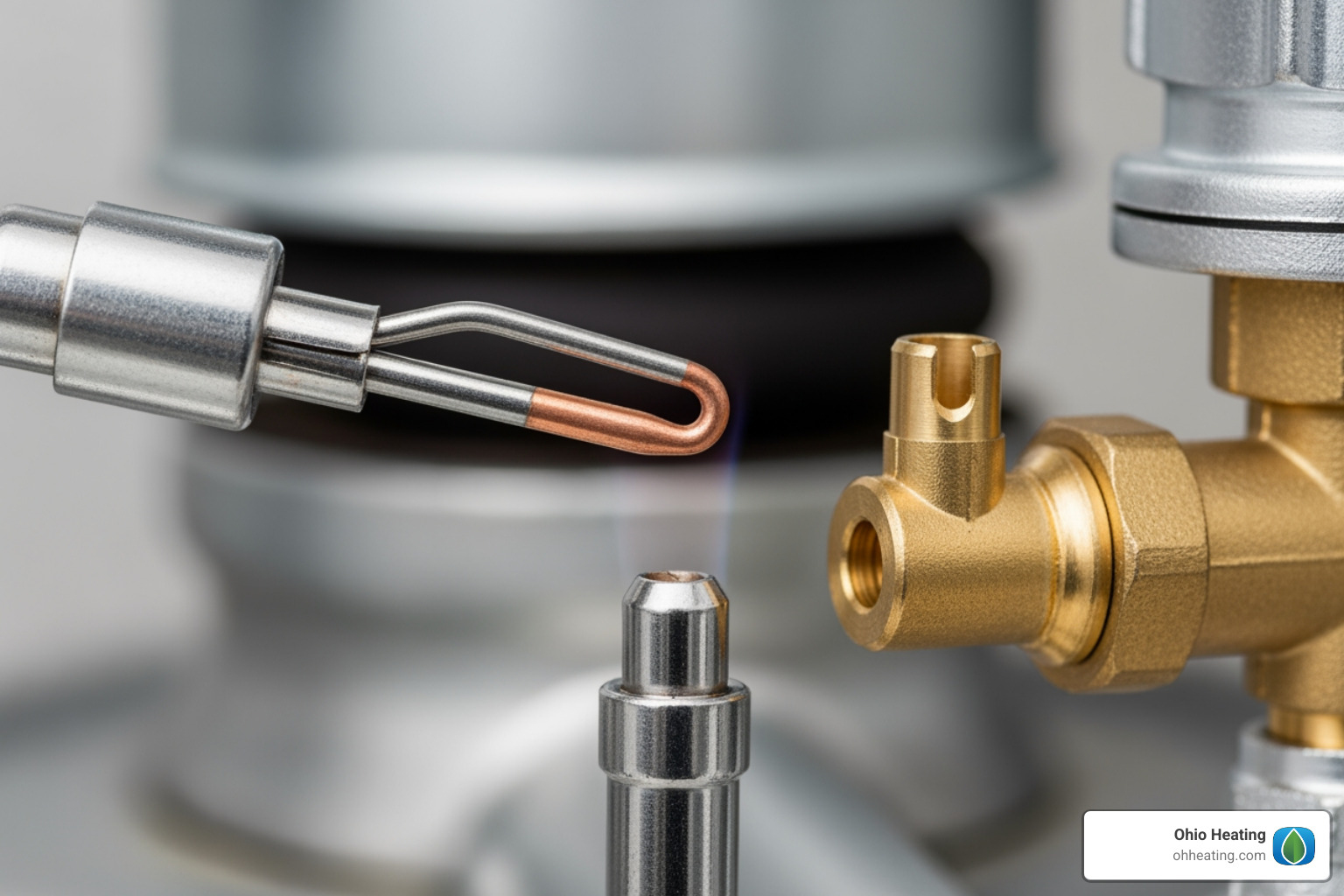
A faulty thermocouple: This is the most common culprit. The thermocouple is a safety device that senses the pilot flame and keeps the gas valve open. If the flame goes out, it shuts off the gas. When a thermocouple is dirty, bent, or worn out, it fails to detect the flame and shuts the gas off, even if the pilot is lit. This causes the flame to extinguish as soon as you release the reset button.
Strong drafts: A strong draft from an open window, leaky ductwork, or a damaged chimney can blow out the pilot light. While a rare occurrence is normal, frequent outages suggest a larger ventilation problem that needs professional diagnosis.
A dirty pilot orifice: The pilot orifice is a tiny opening that supplies gas to the flame. If it becomes clogged with dust or debris, the flame will be weak, flickering, or yellow instead of a steady blue. A weak flame may not be hot enough to activate the thermocouple or can be easily extinguished by a minor draft.
Gas supply problems: An interruption in your natural gas service or an issue with the furnace’s gas valve can cause the pilot to go out. The gas pressure might be too low (it should be around 3.5 inches of water column), or the main gas valve to the furnace may have been accidentally turned off.
A cracked heat exchanger: In rare cases, a damaged heat exchanger can alter airflow inside the furnace, creating drafts that extinguish the pilot. This is a serious safety hazard, as it can leak carbon monoxide into your home and requires immediate professional attention.
Observing the flame’s behavior provides clues: a pilot that won’t stay lit often points to a thermocouple issue, while a weak or yellow flame suggests a dirty orifice.
How to Safely Relight Your Furnace: A Step-by-Step Guide
Relighting a furnace pilot light is often a simple process, but since it involves natural gas, safety is the top priority. If you feel uncomfortable at any point, stop and call a professional.
Safety First: Critical Precautions
- Smell for gas. Natural gas has a distinct rotten-egg odor. If you smell gas, do not attempt to relight the pilot. Evacuate your home immediately and call your gas company and 911 from a safe location. Do not use phones or light switches inside. For more details, see these home natural gas safety tips.
- Turn off the power. If you don’t smell gas, turn off the power to your furnace at the main electrical panel and the switch near the unit.
- Ensure ventilation. Open a nearby window to allow for fresh air circulation.
- Use a long lighter. Always use a long-stemmed lighter or long matches to keep your hands away from the burner area.
- Check your manual. Your furnace’s instruction manual will have specific directions for your model.
Step 1: Locate the Pilot Assembly and Visually Confirm
Remove the furnace access panel to find the pilot assembly, which is usually near the bottom. You will see a gas control knob with “ON,” “OFF,” and “PILOT” settings. The assembly consists of a small gas tube (the pilot orifice) and a copper rod next to it (the thermocouple). Visually confirm that the pilot flame is out. If a flame is present, the pilot light is not your issue, and you should call a professional.
Step 2: Turn Off the Gas and Wait
Turn the gas control knob to the “OFF” position. This is a critical safety step that stops all gas flow. Wait 5 to 10 minutes to allow any residual gas in the chamber to dissipate completely. Do not skip this waiting period.
Step 3: Relight the Furnace Pilot Light
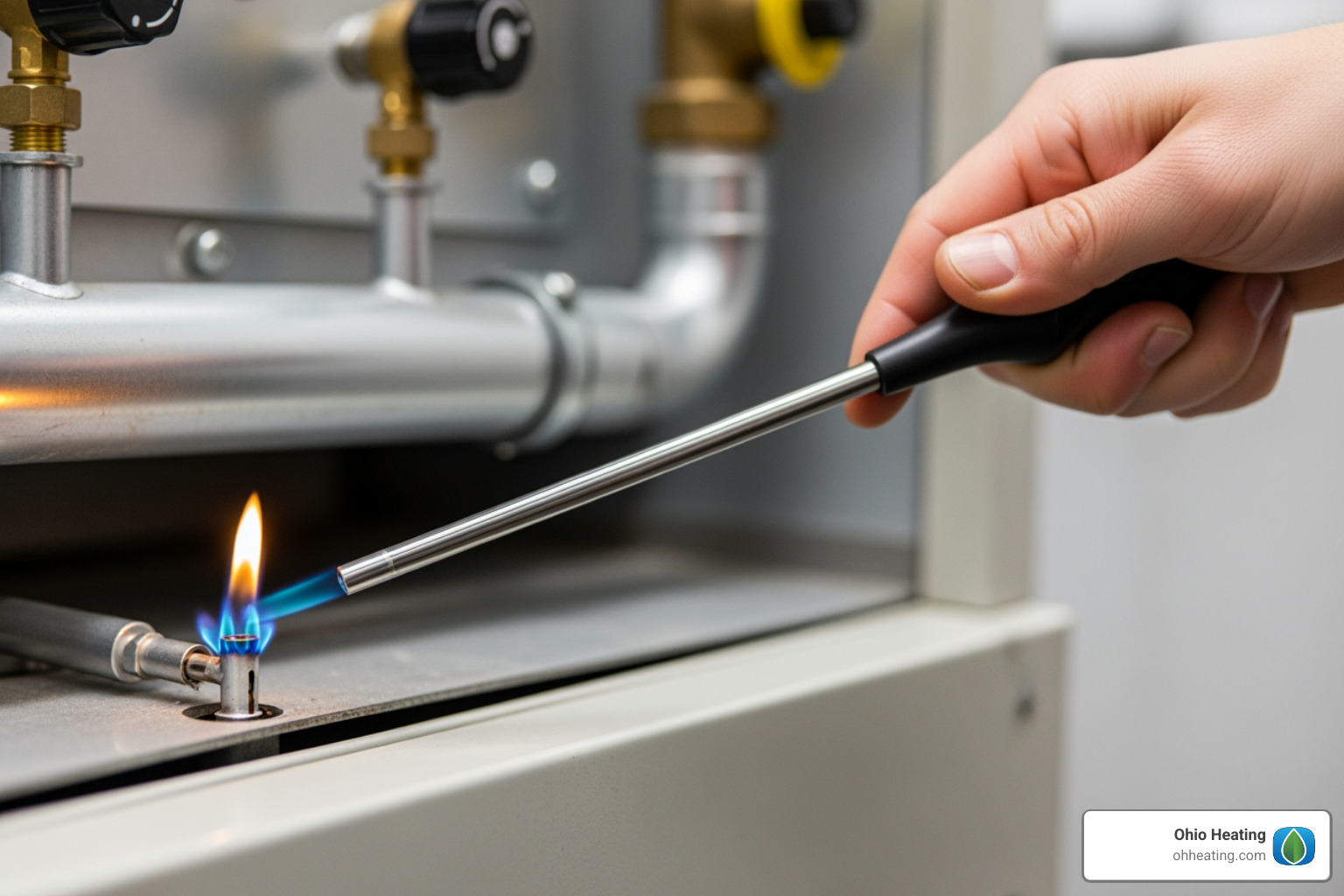
After waiting, turn the gas control knob to the “PILOT” setting. Press and hold the reset button (or the knob itself, on some models) to manually allow gas to flow to the pilot. While holding the button, bring the flame from your long lighter to the pilot orifice. The pilot should ignite with a small blue flame.
Step 4: Confirm the Flame and Restart Your Furnace
Continue to hold the reset button for 30 to 60 seconds after the pilot ignites. This allows the thermocouple to heat up and signal the gas valve to stay open. After 60 seconds, slowly release the button. The pilot flame should remain lit.
If the flame goes out, repeat the process, holding the button for up to 90 seconds. If it still won’t stay lit after several attempts, you likely have a faulty component, and it’s time to call Ohio Heating.
Once the pilot is burning steadily, turn the gas control knob to the “ON” position. Replace the access panel, then restore power to the furnace at the breaker and the switch. Finally, set your thermostat to call for heat. You should hear the main burners ignite and feel warm air from your vents shortly.
Troubleshooting: What to Do if the Pilot Won’t Stay Lit
If your furnace pilot light goes out immediately after you release the reset button, or if the flame looks weak or the wrong color, it indicates an underlying problem that needs attention.
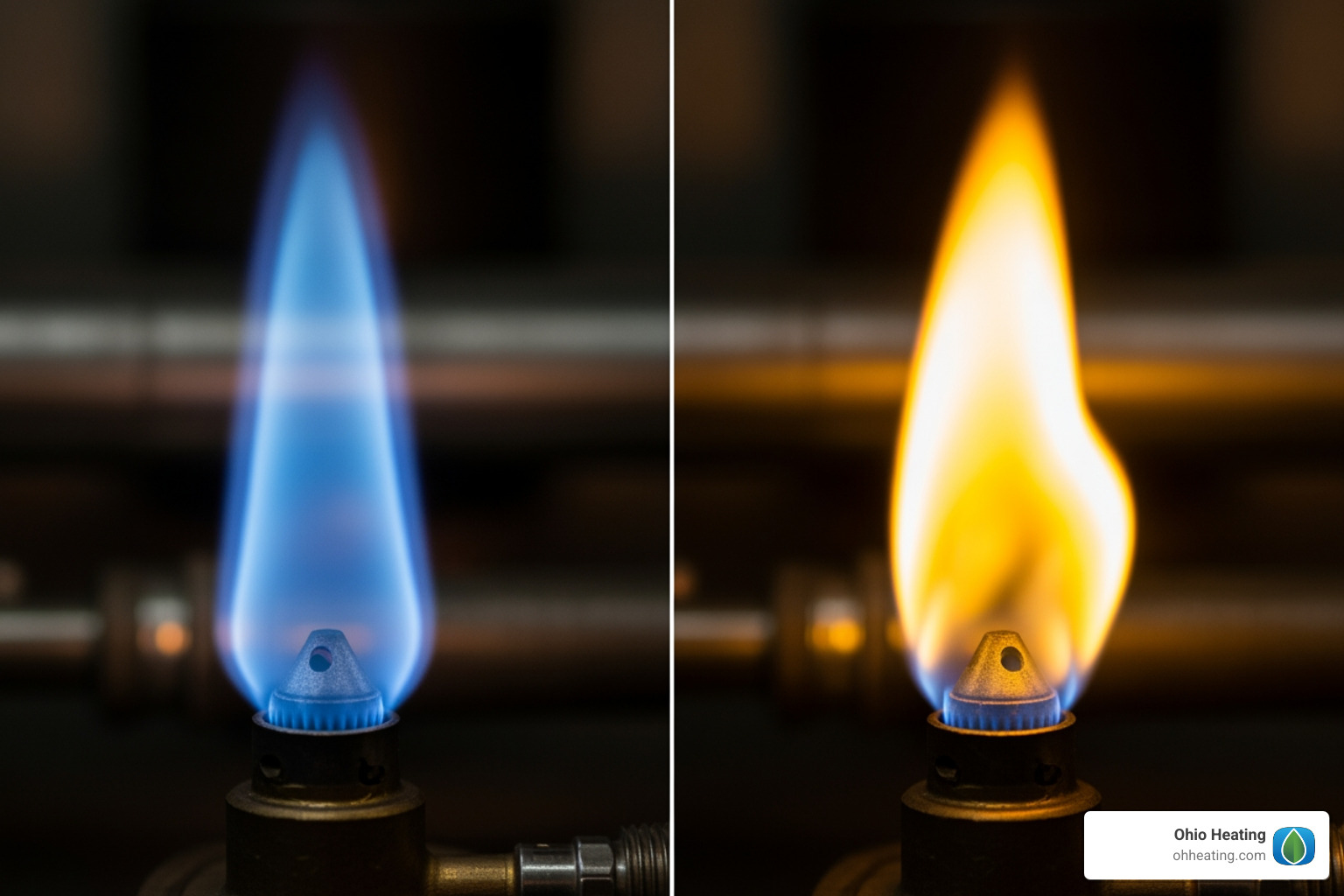
A healthy furnace pilot light should be a strong, steady blue flame about half an inch to an inch tall. A weak, flickering, yellow, or orange flame signals a problem. A yellow or orange color indicates incomplete gas combustion, which can produce dangerous carbon monoxide and requires immediate professional service.
Signs of a Faulty Thermocouple
The most common reason a pilot light won’t stay lit is a faulty thermocouple. If the pilot ignites but goes out as soon as you release the reset button, the thermocouple is likely the issue. This safety device shuts off the gas supply if it doesn’t sense a flame. A thermocouple can fail if it’s dirty, bent out of position, or simply worn out.
While the part is inexpensive, replacing it requires precise positioning. An improper installation won’t solve the problem, so this repair is best left to a professional. For help with a finicky pilot light, our team at Ohio Heating offers expert furnace repair in Columbus.
Other Potential Issues That Require a Pro
If the thermocouple isn’t the problem, other issues may be at play:
- Clogged Pilot Orifice: Debris can block the tiny orifice that supplies gas to the pilot, resulting in a weak flame that can’t heat the thermocouple properly. Cleaning this delicate component requires special tools.
- Faulty Gas Valve: A failing gas valve may not provide consistent pressure to the pilot, causing it to sputter or go out. Gas valve issues should always be handled by a certified technician.
- Persistent Drafts: If the pilot repeatedly blows out, you may have a ventilation issue, such as a damaged flue or improper venting, that requires an HVAC expert to diagnose.
- Cracked Heat Exchanger: This is a serious safety hazard that can affect airflow and, more importantly, leak carbon monoxide into your home. If you suspect a cracked heat exchanger, shut down the furnace and call a professional immediately.
When your furnace pilot light won’t stay lit or the flame looks wrong, it’s time to call for professional help. We provide furnace repair services in Dublin, Ohio and can get your heat running safely again.
When to Call a Professional HVAC Technician
While relighting a furnace pilot light is a manageable DIY task, some situations require a professional. Your safety is the priority when working with gas appliances.
Call a professional technician if you encounter any of the following:
- You smell gas. Evacuate your home immediately and call your gas company and 911 from a safe location.
- The pilot light repeatedly goes out. This indicates an underlying problem, such as a faulty thermocouple or a draft issue, that relighting won’t solve.
- The pilot flame is yellow or orange. A yellow, orange, or flickering flame suggests incomplete combustion, which can produce deadly carbon monoxide.
- Your furnace is over 15 years old. Frequent pilot light issues on an older unit may signal that it’s nearing the end of its lifespan and may be more costly to repair than replace.
- You feel uncomfortable with the process. If you are not confident in performing the steps, it is always safer to call a professional.
For expert assistance, our team provides comprehensive furnace repair in Upper Arlington and the surrounding Columbus area.
Potential Repair Costs and Carbon Monoxide Safety
Repair costs for pilot light issues can vary. Here are some typical estimates in Central Ohio:
- Thermocouple Replacement: $100-$250
- Gas Valve Replacement: $350+
- Pilot Assembly Cleaning: Often included in a standard service call
- Heat Exchanger Repair: Can cost thousands; furnace replacement is often more economical.
Carbon monoxide (CO) is a serious risk associated with malfunctioning furnaces. This odorless, colorless gas can be lethal. A yellow or orange pilot flame is a warning sign of incomplete combustion and potential CO production.
Every home must have working carbon monoxide detectors. Install them on each level of your home, especially near sleeping areas, and test them regularly. If your CO detector ever alarms, evacuate immediately and call 911. The CDC offers detailed guidelines for CO detectors. Regular furnace maintenance is the best way to ensure safe operation and prevent CO leaks.
Preventing Pilot Light Problems with Regular Maintenance
Preventing a furnace pilot light from going out is better than fixing it in the cold. Regular maintenance is the best way to ensure your furnace runs reliably all winter.
DIY Maintenance Tasks
- Change your air filter regularly. A clogged filter restricts airflow, which can strain your furnace and even create drafts that extinguish the pilot light. Replace your filter every 1-3 months.
- Keep the furnace area clear. Maintain at least three feet of clear space around your furnace. Clutter can be a fire hazard and contribute dust that clogs the pilot orifice.
- Gently clean the pilot assembly. If you are comfortable, use a can of compressed air to carefully remove dust from around the pilot orifice and thermocouple. Be gentle to avoid damaging these delicate components.
Why Professional Tune-Ups Matter
An annual professional furnace tune-up, ideally in the fall, is crucial for preventing problems. During a service visit, a technician will perform a comprehensive check that goes beyond what a homeowner can do.
This includes:
- Thoroughly cleaning the pilot assembly and orifice.
- Inspecting the thermocouple for wear and proper positioning.
- Checking gas pressure to ensure a stable flame.
- Identifying potential draft sources.
- Inspecting the flue, ventilation, and all safety controls.
An annual tune-up is a cost-effective investment that improves efficiency, lowers utility bills, and extends the life of your furnace, helping you avoid expensive emergency repairs. For a complete pre-winter checklist, see our comprehensive fall heating system maintenance guide for Columbus, Ohio residences.
Frequently Asked Questions about Your Furnace Pilot Light
Here are answers to some of the most common questions we receive at Ohio Heating about furnace pilot lights.
What color should my pilot light be?
A healthy furnace pilot light should be a strong, steady blue flame. This indicates clean, efficient combustion. If your flame is yellow, orange, or flickering, it signals a problem. A yellow or orange flame can mean the pilot orifice is dirty or the air-fuel mixture is wrong, which can create dangerous carbon monoxide. A flickering flame may indicate a draft or a clog. If your flame is not a steady blue, call a professional for an inspection.
How is a pilot light different from an electronic ignition?
A standing furnace pilot light is a constant flame in older furnaces that is always ready to ignite the main burners. Its main drawback is that it consumes gas continuously, reducing efficiency. Modern electronic ignition systems are more efficient because they only create a spark or heat an element to light the gas when the thermostat calls for heat. This on-demand system saves energy and eliminates the risk of a pilot flame being blown out.
Can I convert my pilot light furnace to electronic ignition?
While technically possible, converting an older furnace with a furnace pilot light to electronic ignition is rarely cost-effective. The process is complex and expensive, involving a new gas valve, control board, and wiring. If your furnace is over 15 years old, investing that money in a new, high-efficiency furnace is a much smarter long-term decision. A new unit offers superior efficiency, reliability, and modern safety features. If you’re considering an upgrade, we can discuss options for furnace installation and replacement in New Albany, Ohio and throughout Central Ohio.
Stay Warm and Safe with Expert Furnace Care
Understanding your furnace pilot light empowers you to handle a common heating issue. You now know how to identify the problem, safely relight the pilot, and recognize when it’s time to call a professional.
While relighting a pilot is a manageable DIY task, safety must always come first. Never hesitate to call for help if you smell gas, if the pilot won’t stay lit, or if the flame is yellow or orange. Trusting a professional is the smartest choice when you’re unsure.
Since 1999, Ohio Heating has provided reliable heating services to homes and businesses throughout the Columbus area. We know how critical a working furnace is during Ohio winters. Whether you need a simple repair, a comprehensive maintenance check, or advice on a new, high-efficiency system, our expert team is ready to ensure your heating system operates safely and efficiently.
Don’t let a furnace issue leave you in the cold. Contact us today to schedule your service and keep your property warm and comfortable all winter long.