
Revive Your HVAC: The Ultimate Blower Motor Replacement Handbook
The Heart of Your HVAC System
Blower motor replacement is a critical HVAC repair that restores proper airflow and temperature control. When your blower motor fails, it affects your entire heating and cooling system, causing discomfort and potentially damaging other components.
Quick Answer: What You Need to Know About Blower Motor Replacement
- Typical Cost: $300-$900 for professional replacement (parts + labor)
- Time Required: 1.5-3 hours for a trained technician
- Average Lifespan: 10-20 years with proper maintenance
- Common Symptoms: No airflow, weak airflow, unusual noises, high energy bills
- Motor Types: PSC (single-speed) or ECM (variable-speed, more efficient)
- Professional Service Recommended: Due to electrical complexity and safety concerns
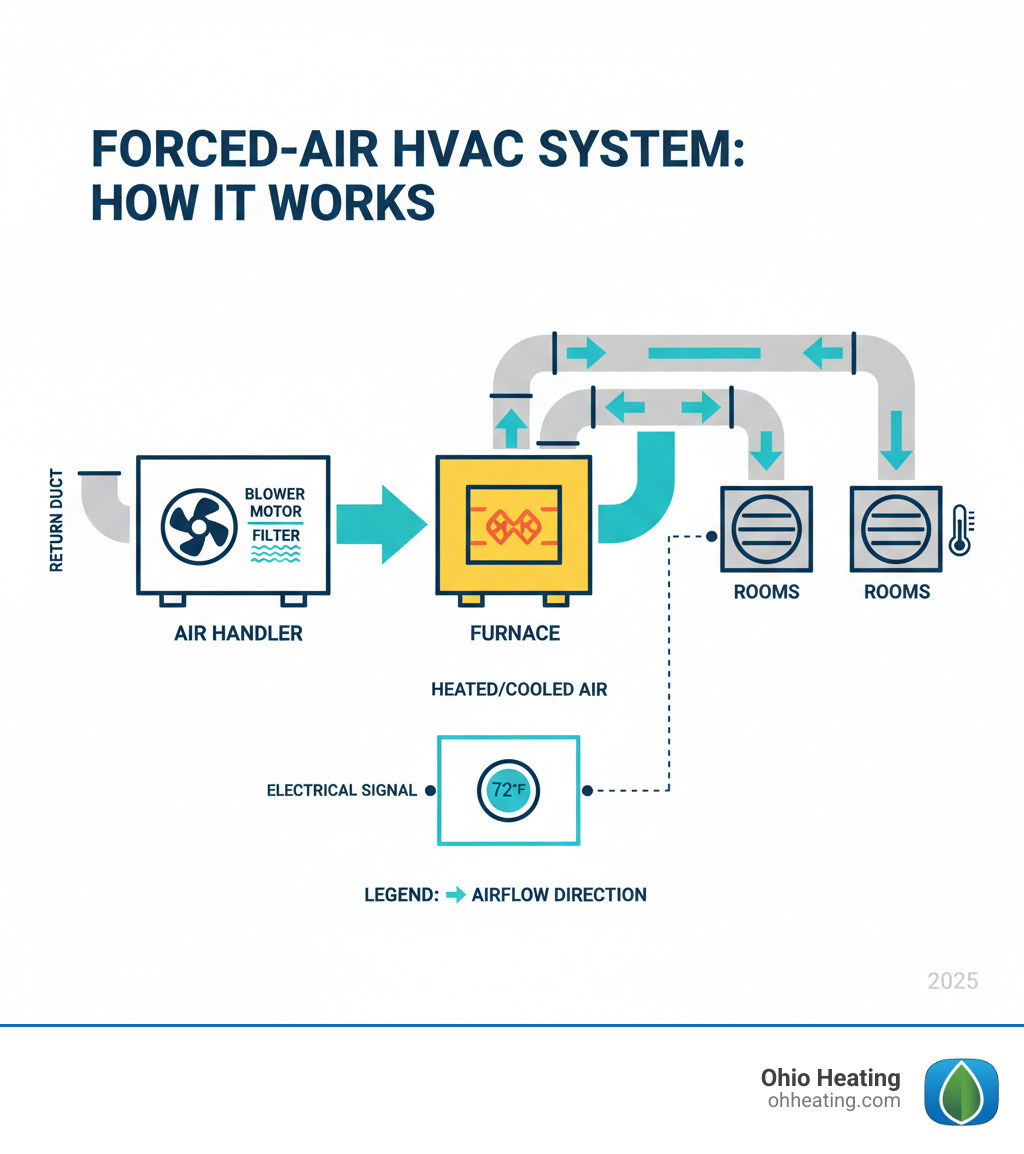
Your HVAC system’s blower motor pushes heated or cooled air through your ductwork. Without it, a functioning furnace or air conditioner can’t deliver comfortable air. For property managers, a failing motor leads to tenant complaints, disruptions, and emergency repair costs.
The blower motor sits inside your air handler unit and works year-round, distributing warm air in winter and cool air in summer. It also aids in dehumidification and air filtration. When the motor fails, you’ll notice poor heating/cooling, strange noises, or unresponsive controls. Blower motors last 10-20 years, but dirty filters or electrical issues can shorten their lifespan.
I’m Jill Frattini, a Service Coordinator at Ohio Heating in Columbus, OH. I’ve spent years coordinating HVAC repairs, including blower motor replacements, and have seen how vital a functioning motor is for comfortable, efficient buildings.
Is Your Blower Motor Failing? Key Symptoms to Watch For
When your HVAC’s blower motor has a problem, it often provides clear warning signs. Catching these symptoms early prevents a total system breakdown and damage to other expensive HVAC components. Addressing a struggling motor promptly can save you from an emergency repair on the hottest or coldest day of the year.
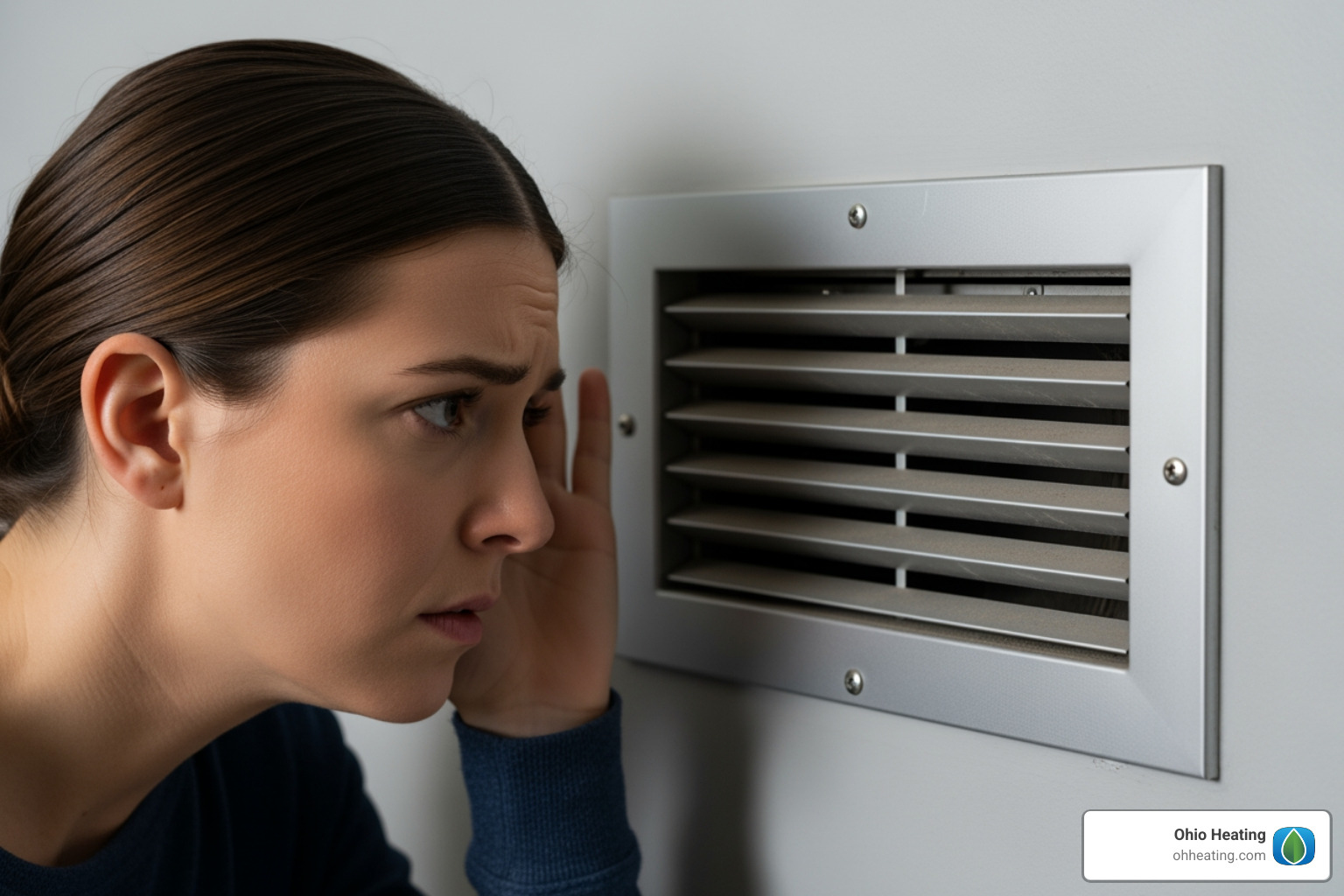
Common signs of a failing blower motor include no or weak airflow from your vents, unusual grinding or squealing noises, unexpected spikes in your energy bills, or a burning smell. These symptoms require a professional diagnosis. For more HVAC warning signs, see our guide on 7 Crucial Signs Your HVAC System Needs Immediate Repair.
No or Weak Airflow From Vents
The most obvious sign of a failing motor is weak or no airflow from your vents. This leads to inconsistent temperatures, as the motor can’t push air effectively through the ductwork. The fan may run slowly, struggle to reach high speeds, or cycle on and off. In severe cases, the AC or furnace runs, but no air moves, indicating total motor failure.
Before assuming you need blower motor replacement, check your air filter. A clogged filter can block airflow and mimic motor failure. If a new filter doesn’t help, the motor is the likely culprit.
Unusual Noises During Operation
Loud or jarring noises from your HVAC system often signal a problem with the blower motor.
- Grinding noises usually indicate worn-out motor bearings. As lubrication fails, metal parts grind together, leading to eventual seizure.
- Squealing or screeching can also point to bearing issues or a worn belt in older systems. These noises mean the motor is under stress.
- Rattling or banging can mean debris is in the housing, the blower wheel is loose, or the motor mount has failed. These sounds require immediate attention to prevent more damage.
Unexpected Spikes in Energy Bills
A failing blower motor struggles to work, drawing more electricity and increasing your energy bills. This inefficiency means the motor consumes more power for worse performance, forcing your HVAC system to run longer cycles. If your energy bills are rising without a clear reason, a failing blower motor could be the cause.
Addressing a failing motor restores comfort and saves energy. If you have unexplained high energy bills, contact Ohio Heating for a diagnosis. Learn more about our comprehensive HVAC Repair Services for properties throughout Central Ohio.
The Blower Motor Replacement Process: A Comprehensive Guide
When a blower motor fails, replacement is necessary. While DIY tutorials exist, this is a complex task involving high-voltage electricity and intricate mechanics. At Ohio Heating, we’ve seen DIY attempts lead to more damage, safety hazards, and voided warranties. HVAC systems require specialized knowledge and tools, which is why our certified technicians are trained to handle these repairs safely and efficiently.
Tools and Safety First
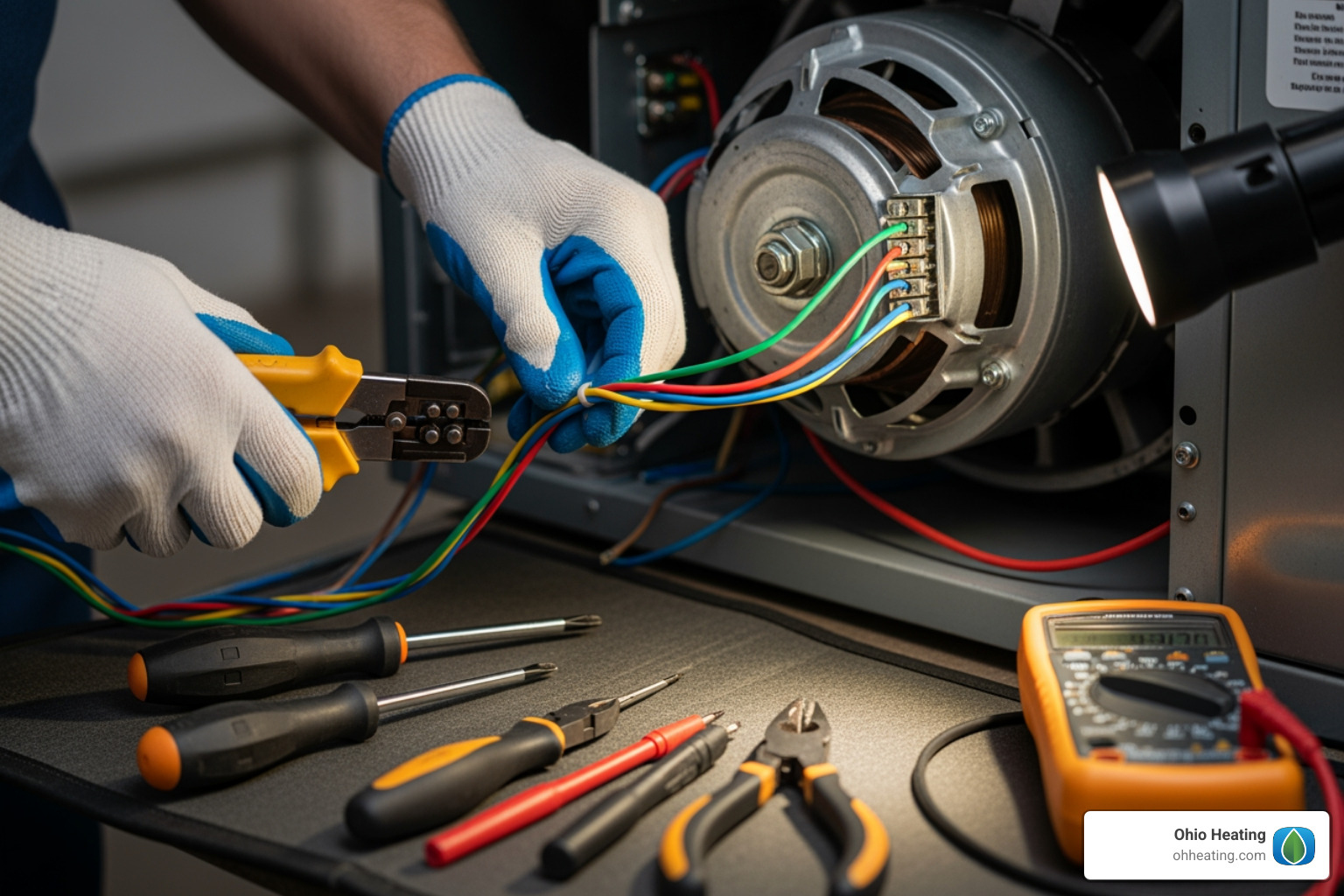
Safety is our first priority. Before any work begins, our technicians shut off power at the main circuit breaker to eliminate the risk of electrical shock. They arrive with specialized tools, including:
- Precision screwdriver sets
- Socket and wrench sets
- Multimeters to test electrical connections
- Wire strippers and pliers
- Work gloves and safety glasses
The need for this professional equipment shows this is not a job for guesswork.
What to Expect During Professional Blower Motor Replacement
When you schedule a replacement with Ohio Heating, our technicians follow a methodical process to ensure an accurate repair.
- Inspection and Diagnosis: The visit begins with a thorough diagnosis. A lack of airflow could be caused by a faulty capacitor, fuse, or thermostat. Our technicians use diagnostic tools to pinpoint the exact problem, potentially saving you hundreds by avoiding an unnecessary motor replacement.
- Access and Disconnection: Once confirmed, the technician accesses the blower assembly inside the air handler. They carefully disconnect the wiring, documenting the connections to ensure proper reassembly.
- Removal and Replacement: The technician removes the mounting hardware and extracts the motor assembly. The new motor is secured, and the blower wheel is transferred over or replaced if it shows signs of wear or damage.
- Reconnection and Testing: The wiring is reconnected according to manufacturer specifications. Finally, the technician restores power and tests the new motor at all speeds, checking for proper airflow and sound. Once everything is working correctly, they reassemble the unit.
The process usually takes 1.5 to 3 hours. Learn more about How Our Technicians Replace a Blower Motor.
Why Trust a Professional for Your Blower Motor Replacement
While DIY repairs can be appealing, blower motor replacement requires professional expertise for safety and system longevity.
- Electrical Risks: The high-voltage electricity in HVAC systems can be fatal. Our trained technicians know how to handle these systems safely.
- System Complexity: Modern HVAC systems are complex. Using the wrong motor can reduce efficiency and damage your system. Our technicians ensure the correct motor is installed.
- Accurate Diagnosis: Professional diagnosis prevents costly guesswork. Many homeowners mistakenly replace a motor when the real issue is a less expensive part, like a capacitor.
- Warranty Protection: A DIY repair can void your manufacturer’s warranty. Professional installation by our certified technicians keeps your warranty intact.
Since 1999, Ohio Heating has provided expert furnace repair, including blower motor diagnosis and replacement, in the Columbus area. Learn more about our Furnace Repair Services in Columbus, OH.
Choosing and Budgeting for Your New Blower Motor
Choosing a new blower motor is a key decision that impacts your comfort, energy bills, and HVAC system lifespan. Here’s what you need to know to make the best choice for your Columbus property.
Blower Motor Types: Single-Speed vs. Variable-Speed (ECM)
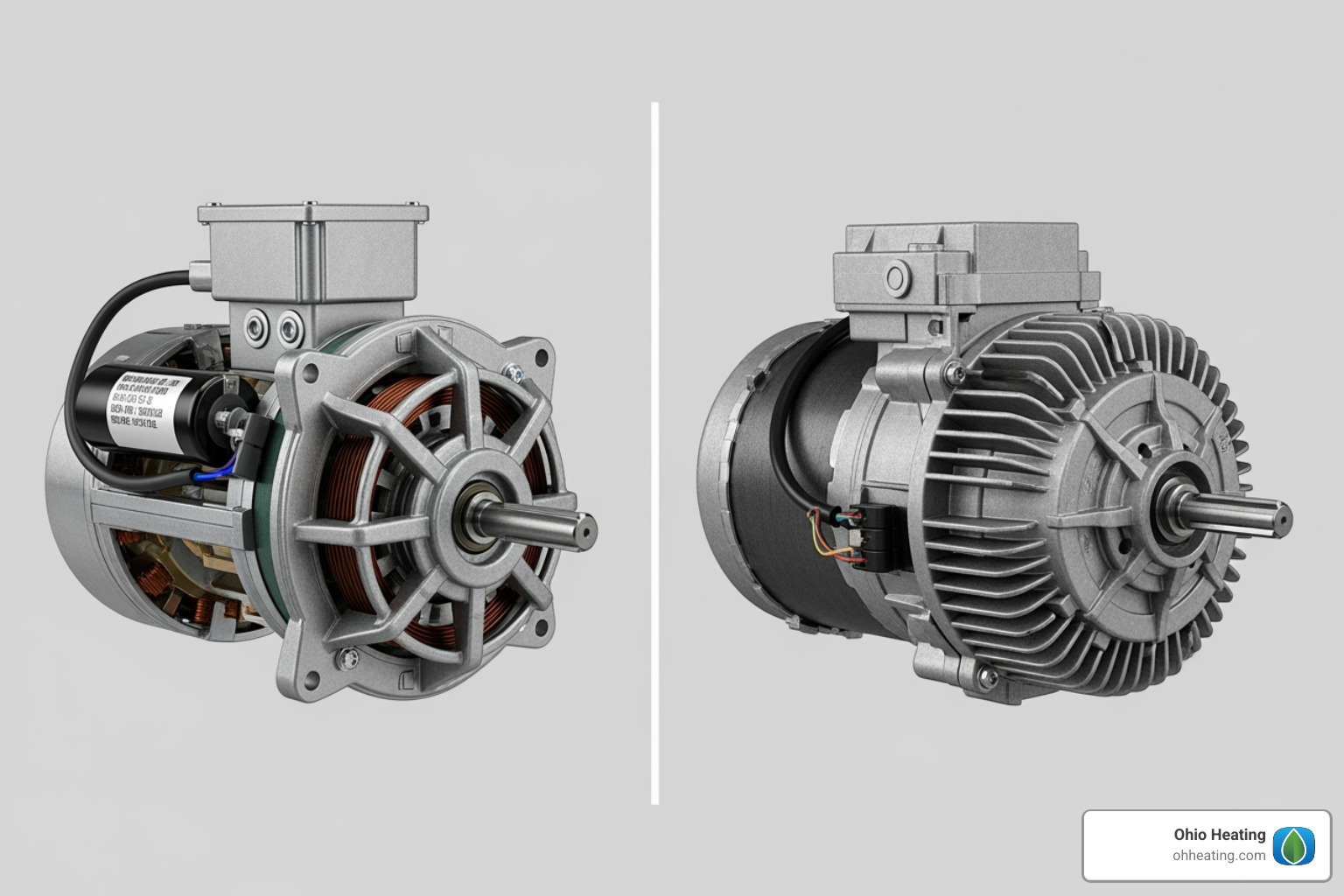
The two main types of blower motors are Permanent Split-Capacitor (PSC) and Electronically Commutated Motors (ECM), or variable-speed motors. Understanding their differences is key to choosing the right one.
- PSC motors are traditional, single-speed models that run at full power. They are less expensive upfront but use more energy, are noisier, and can cause uneven temperatures. Due to 2019 DOE regulations on furnace fans, new furnaces are no longer made with PSC motors.
- ECM (variable-speed) motors are the modern standard. They adjust their speed based on your system’s needs for precise airflow. ECM motors are far more energy-efficient, leading to lower utility bills. They also provide better comfort, improve air quality, and operate much more quietly. While they have a higher upfront cost, the long-term savings and comfort often justify the investment.
Our technicians can assess your system’s compatibility and help you decide if upgrading to an ECM motor is the right choice.
Understanding Blower Motor Replacement Costs
In Central Ohio, professional blower motor replacement typically costs between $300 and $900, including parts and labor. Several factors influence the final price:
- Motor Type: A PSC motor part costs $100-$300, while an ECM motor can be $300-$800+.
- Labor Costs: Labor is typically $150-$250. Accessibility of the motor can affect the time and cost.
- Additional Parts: Components like the blower wheel or capacitor may also need replacement, adding to the cost but preventing future breakdowns.
- Warranty: If your system is under warranty, the motor part may be covered. Always check your warranty.
We provide transparent quotes detailing all costs. For more on our pricing, see our Heating System Repair Services page.
Blower Motor vs. Blower Motor Resistor: What’s the Difference?
Clients often ask about the difference between a blower motor and a blower motor resistor. They work together but have distinct functions and failure symptoms.
- The blower motor is the mechanical part that spins the fan to push air. A failed motor results in no/weak airflow or loud grinding/squealing noises.
- The blower motor resistor is an electrical component that controls the motor’s speed. A bad resistor usually means the fan only works on certain speeds (often only high).
Our technicians test both components to find the exact problem. A correct diagnosis saves you money, as a resistor is a much cheaper fix than a motor.
Frequently Asked Questions about Blower Motors
Here are answers to the three most common questions we get about blower motors at Ohio Heating.
How long does an HVAC blower motor last?
An HVAC blower motor typically lasts 10 to 20 years. The actual lifespan depends heavily on usage and maintenance. Constant use, especially in Ohio’s varied climate, puts more strain on the motor.
Regular maintenance is crucial. Clogged filters force the motor to work harder, causing damage. Clean filters and annual tune-ups can significantly extend the motor’s life. During annual maintenance, our technicians check for early signs of wear, like noise or vibration, allowing for a planned blower motor replacement. To keep your system in top shape, schedule a Heating System Tune-Up and Maintenance in Columbus, OH.
Is it worth replacing just the blower motor?
Yes, it is almost always worth replacing just the blower motor, especially if the rest of your furnace or air handler is in good condition. A blower motor replacement costs $300-$900, while a new furnace can cost $2,000-$6,000+. If your furnace is under 15 years old and well-maintained, replacing only the motor is a cost-effective way to get more years of service.
However, if your furnace is nearly 20 years old and requires frequent repairs, a full replacement might be more financially sensible. A new system offers better efficiency, comfort, and a full warranty. Our technicians provide all the information you need to decide. If you’re considering a new system, learn more about Furnace Installation and Replacement in Columbus, OH.
How often should a blower motor be inspected?
Your blower motor should be inspected at least once a year during regular HVAC maintenance. Ideally, it should be checked twice a year during fall and spring tune-ups.
During an inspection, our technicians perform a thorough evaluation, checking for wear, corrosion, and loose wiring. We also clean the blower wheel, as dust buildup can cause imbalance, noise, and strain on the motor. We lubricate bearings, test electrical connections, and measure the motor’s amperage draw. Regular inspections prevent major emergencies, extend your motor’s life, and keep energy bills down.
Conclusion: Restore Your Home’s Comfort and Efficiency
The blower motor is an essential, hardworking part of your HVAC system, keeping your Columbus, OH property comfortable year-round. When it works, you don’t notice it; when it fails, everyone does.
Weak airflow, strange noises, or high energy bills are signs your blower motor needs help. A blower motor replacement can restore your system to peak performance and comfort. A new motor provides consistent temperatures, lower energy bills (especially with an ECM motor), and quieter operation. It also reduces stress on your entire HVAC system, extending its lifespan.
Since 1999, Ohio Heating’s certified technicians have provided safe and efficient blower motor replacements in the Columbus area. We understand that HVAC downtime disrupts business and causes discomfort, so we focus on reliable solutions that prevent costly emergencies and protect your operational reliability.
Don’t let a struggling blower motor drive up your energy bills or leave you uncomfortable. For expert diagnostics and professional blower motor replacement in the Columbus, OH area, trust the certified technicians at Ohio Heating. Contact Us today to schedule service and get your comfort back on track!