
AC blowing warm air: Fix It Fast in 2025!
Why Your AC Blowing Warm Air Matters
When your AC blowing warm air instead of cool, it’s more than just uncomfortable—it can signal serious system problems. For property managers and business owners in Ohio, it’s a crisis that affects tenant satisfaction, employee productivity, and your bottom line. Here’s a quick look at the most common causes:
Quick Answer: Top Causes of Warm Air from Your AC
- Dirty air filter – Restricts airflow and strains the system
- Thermostat issues – Wrong settings or dead batteries
- Refrigerant leak – Low coolant prevents proper cooling
- Frozen evaporator coils – Usually from poor airflow or low refrigerant
- Tripped circuit breaker – Cuts power to the outdoor unit
- Clogged outdoor unit – Debris blocks heat release
- Leaky ductwork – Loses 20-30% of cooled air
- Faulty compressor – The “heart” of your AC fails
The good news is that many of these issues are simple to fix yourself, while others require professional help. Knowing the difference can save you time and money.
I’m Jill Frattini, Service Coordinator at Ohio Heating, and I’ve spent years helping Columbus property owners troubleshoot AC issues. My role involves coordinating repairs for commercial and residential HVAC systems, so I know what works. Let’s walk through the most common reasons your AC is blowing warm air and what you can do about them.
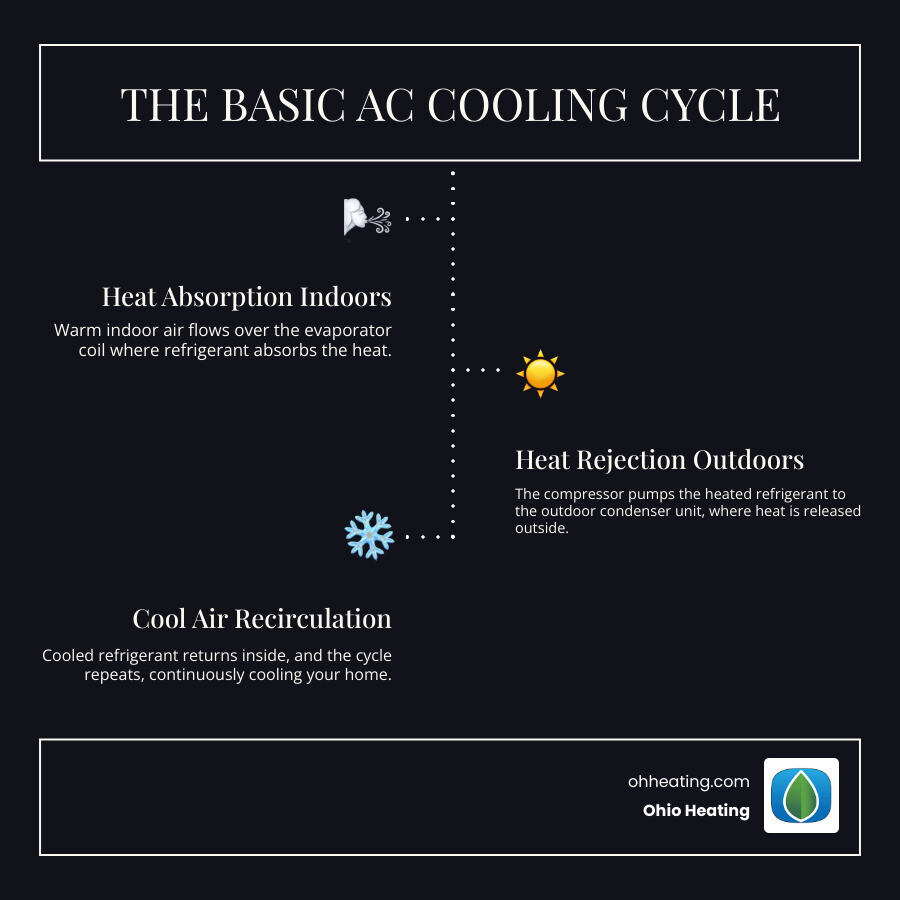
Why Is My AC Blowing Warm Air? Common Culprits Explained
When your AC blowing warm air, the problem usually falls into one of four categories: airflow issues, refrigerant problems, power loss, or component failure. Let’s break down the most common culprits.
Dirty Air Filters and Blocked Vents
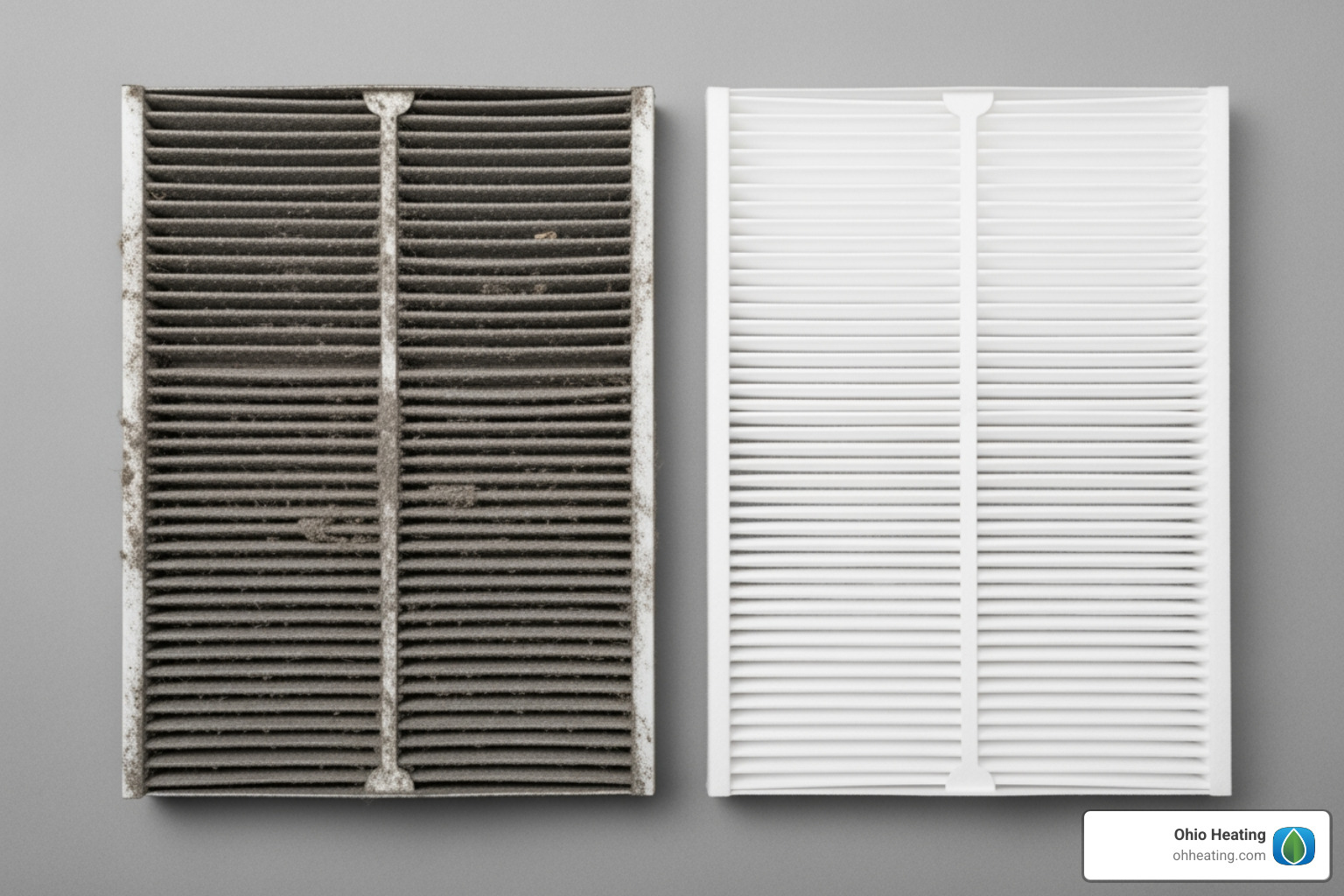
A clogged air filter is the number one reason we get calls about an AC blowing warm air. Your filter traps dust and debris, but when it gets too dirty, it severely restricts airflow. The Washington Post recommends regularly changing your air conditioner’s filter for a reason—it’s critical for efficiency.
Without proper airflow, your system works overtime, driving up energy bills and straining components, which can lead to expensive repairs. Blocked return and supply vents cause the same problem. Ensure furniture, curtains, or other items aren’t obstructing your vents. A quick test: if a tissue held near a return vent isn’t pulled toward it, you have an airflow problem.
Refrigerant Leaks and Low Levels
Refrigerant is the chemical that absorbs heat from your building and moves it outside. Without enough of it, the cooling process can’t happen. Importantly, refrigerant doesn’t get “used up.” Your AC is a closed-loop system, so if levels are low, you have a leak.
Signs of a leak include a hissing or bubbling sound near your AC unit or ice forming on the refrigerant lines. If your AC blowing warm air is accompanied by these symptoms, a leak is the likely cause. This is not a DIY fix. Refrigerants are regulated chemicals, and handling them requires specialized equipment to find the leak, repair it, and recharge the system. Ignoring a leak can destroy your compressor, turning a manageable repair into a major replacement. If you suspect a leak, check our guide on Signs Your Air Conditioning Needs Repair: What to Look For and call a professional.
Frozen Evaporator Coils
It sounds counterintuitive, but frozen evaporator coils are a common cause of an AC blowing warm air. The evaporator coil is inside your indoor unit, and it’s where heat is absorbed. When this coil is covered in ice, it can no longer absorb heat, and your AC just circulates warm air.
Frozen coils are typically caused by two things: restricted airflow (from a dirty filter or blocked vents) or low refrigerant levels. If you find frozen coils, turn off your AC immediately and let the ice thaw completely, which can take several hours. You can run the fan (without cooling) to speed it up. After it thaws, replace the air filter and clear all vents. If the coils freeze again, you have a deeper problem that needs a professional diagnosis. Running an AC with frozen coils can cause serious damage. For more tips, see our guide on How to Repair an Air Conditioner That’s Not Working.
Leaky Ducts and Clogged Drains
Sometimes the problem isn’t the AC unit itself, but the ductwork. According to ENERGY STAR®, a typical home loses 20-30% of conditioned air through leaky ducts. This means nearly a third of the cool air you’re paying for might be cooling your attic or crawlspace instead of your rooms. These leaks also pull hot, unconditioned air into your system, resulting in your AC blowing warm air. Sealing and insulating ducts can significantly improve comfort, energy bills, and your overall Indoor Air Quality.
Another culprit is the condensate drain line. Your AC removes humidity from the air, and this water flows outside through a drain line. If this line gets clogged with algae or debris, water backs up and triggers a safety switch that shuts down the cooling cycle to prevent water damage. You might notice water pooling near your indoor unit or a musty smell.
Your First Troubleshooting Steps: Simple DIY Fixes
Before calling for a service visit, there are several simple checks you can perform yourself. A quick five-minute fix can often solve the problem and save you the cost of a service call.

Thermostat Mistakes Causing Your AC to Blow Warm Air
An incorrect thermostat setting is a surprisingly common reason for an AC blowing warm air. Start by checking these settings:
- Mode: Is it set to ‘COOL’? If it’s on ‘HEAT’ or ‘FAN ONLY’, it won’t cool the air.
- Fan Setting: Is the fan set to ‘AUTO’? If it’s set to ‘ON’, the fan will run continuously, blowing uncooled air between cooling cycles. ‘AUTO’ ensures the fan only runs when the AC is actively cooling.
- Temperature: Is the set temperature lower than the current room temperature? Your AC won’t turn on if the room is already cooler than your target setting.
- Batteries: If the screen is dim or blank, try replacing the batteries.
For more advanced climate control options, our Thermostats services can help you upgrade to a more reliable system.
Checking the Circuit Breaker and Power Switches
Your AC can’t cool without power. If your AC blowing warm air, the outdoor unit may have lost power. First, locate your electrical panel and find the breaker for your AC or HVAC system. If it has tripped (in the middle or ‘OFF’ position), reset it by pushing it firmly to ‘OFF’ and then back to ‘ON’. If you have an older fuse box, check for a blown fuse and replace it with one of the exact same amperage.
Next, check for the emergency shut-off switch. This is usually in a small weatherproof box on the wall near your outdoor unit and can be accidentally switched off.
Caution: If the breaker trips again immediately after you reset it, do not keep flipping it. This indicates a serious electrical problem that could damage your system or create a fire hazard. At this point, you need to call a professional.
Cleaning the Outdoor Condenser Unit
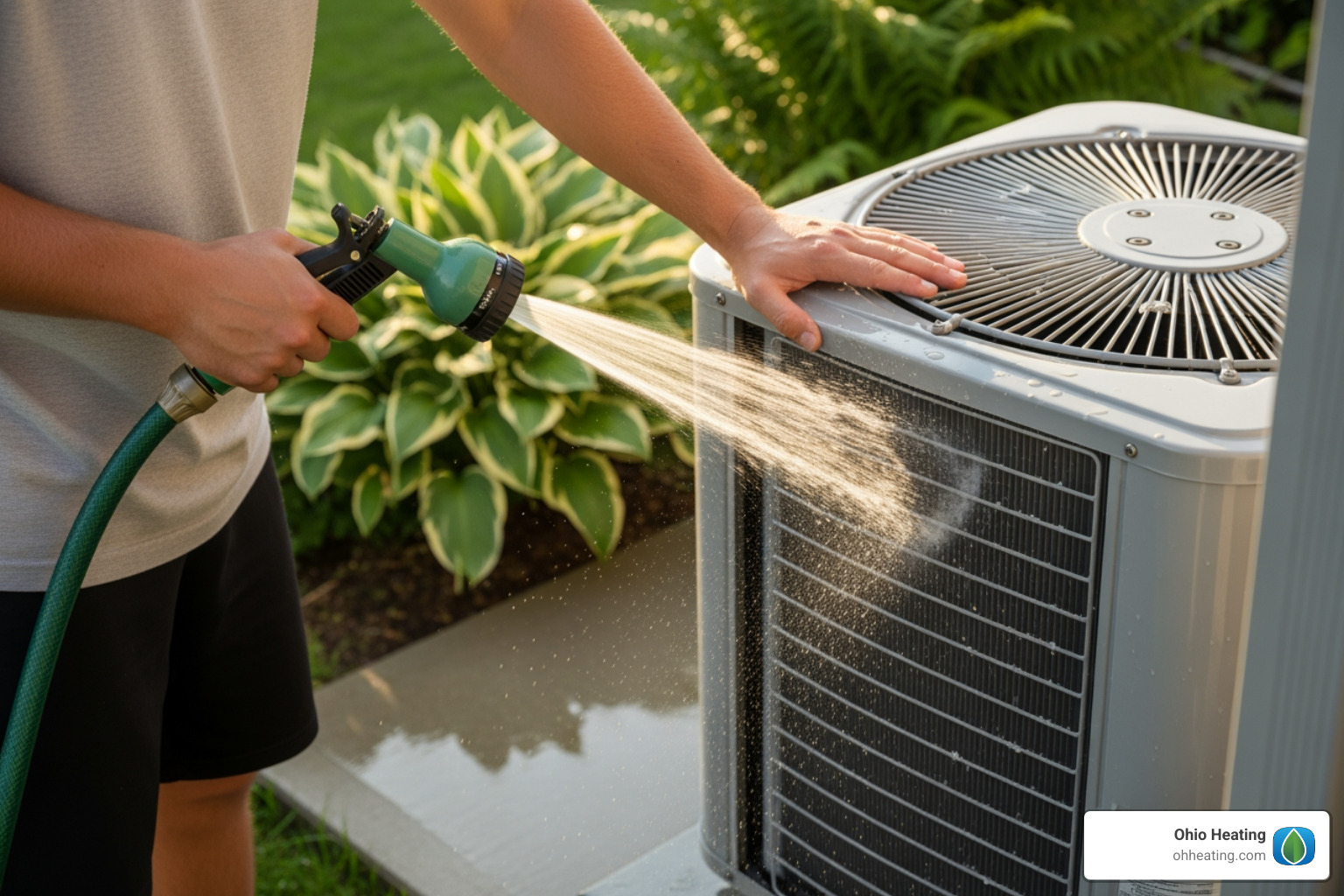
Your outdoor unit releases heat from your home, but it can’t do its job if it’s clogged with grass clippings, leaves, and other debris. This is a common cause of an AC blowing warm air.
Cleaning it is a simple DIY task:
- Turn off all power to the unit at both the circuit breaker and the outdoor shut-off switch. This is a critical safety step.
- Remove large debris like leaves and twigs from the top and sides of the unit by hand.
- Gently rinse the fins with a regular garden hose. Do not use a high-pressure washer, as it can damage the delicate aluminum fins. The goal is to wash away dirt, not blast the unit.
- Ensure proper clearance. Trim back any bushes or plants to provide at least two feet of clear space around the unit for adequate airflow.
This simple cleaning can significantly improve your AC’s performance and efficiency.
When to Call a Professional: Signs of a Deeper Problem
If you’ve tried the basic DIY fixes and your AC blowing warm air persists, it’s time to call a professional. Some problems require specialized tools, technical expertise, and pose safety risks if handled improperly. Knowing when to stop is a smart decision that can prevent more expensive damage. When choosing AC repair services, you need a team that can diagnose complex issues correctly. Sometimes, the better financial choice is to repair or replace your air conditioning unit, especially with older systems.
Signs of a Malfunctioning Compressor
The compressor is the heart of your AC system, pumping refrigerant to move heat outside. If it fails, the cooling process stops. An AC blowing warm air combined with strange noises from the outdoor unit often signals compressor trouble. Listen for:
- Loud grinding or banging: Suggests internal mechanical failure.
- Persistent clicking or chattering: Could be an electrical issue with the compressor.
- Humming without the fan spinning: The compressor may be seized or have a faulty start component.
Compressor problems are not a DIY fix. They require certified technicians with diagnostic equipment. Attempting a repair yourself is dangerous and will likely void your warranty. Our guide on What Weird Noises From Your AC Unit Could Mean for Repairs can help you identify the issue before you call.
Addressing an AC Blowing Warm Air Caused by Refrigerant Leaks
As mentioned earlier, low refrigerant means you have a leak. This is strictly a job for professionals. Refrigerants are regulated by the EPA, and handling them requires certification. A proper repair involves three steps only a certified technician can perform:
- Leak Detection: Using electronic sensors or other tools to pinpoint the source of the leak.
- Repair: Sealing the leak, which may involve brazing or replacing a part.
- Recharging: Refilling the system with the precise type and amount of refrigerant.
Just adding more refrigerant is a temporary, wasteful fix. Continuing to run a system with low refrigerant can destroy the compressor, turning a moderate repair into a major expense, often costing $400 or more. For urgent situations, we offer Emergency Air Conditioning Repair in Central Ohio.
Persistent Electrical Failures
A breaker that trips repeatedly is a clear sign of a serious electrical problem. If you notice burnt wires, a burning smell, or breakers that won’t stay reset, you need immediate professional help. These issues can cause your AC blowing warm air and pose a significant fire risk.
Components like capacitors (which help motors start) and contactors (heavy-duty switches) can fail, preventing your unit from running. Diagnosing these issues requires multimeters and other testing equipment, and working with electrical components can be fatal. Capacitors can hold a dangerous charge even when the power is off. This is not an area for experimentation. Our Electrical Services and Repair team is trained to handle these problems safely for both residential and commercial properties.
Prevention and The Bigger Picture
Proactive care is the best way to prevent your AC blowing warm air. Regular maintenance protects your investment, keeps energy bills down, and ensures your system is reliable when you need it most. As we explain in The Importance of Regular HVAC Maintenance for Homes and Businesses, simple preventive steps can save you from major headaches later.
How Regular Maintenance Prevents Warm Air Issues
Industry experts estimate that up to 70% of AC breakdowns could be prevented with regular maintenance. An annual tune-up is like an oil change for your car—it catches small problems before they become expensive disasters. During a maintenance visit on a well-maintained AC unit, a technician will:
- Clean coils for efficient heat transfer.
- Flush the drain line to prevent backups.
- Check electrical connections to find failing parts.
- Verify refrigerant levels to catch early signs of leaks.
These checks directly address the most common causes of an AC blowing warm air. A maintenance visit, typically costing $100-$200 in Central Ohio, is a small price compared to a major repair. It also extends your system’s lifespan, can reduce energy use by up to 15%, and keeps your manufacturer’s warranty valid. Our AC Maintenance Plan: The Ultimate Guide details what we check and why it’s important.
Home vs. Car AC: Are the Problems Different?
While both home and car AC systems cool air, their design and the problems they face are quite different. A car’s AC deals with constant vibration, which can cause leaks, and its condenser is exposed to road debris. Home AC systems, on the other hand, are stationary but are more severely affected by issues like a dirty air filter, which can completely stop the cooling process. While some principles overlap, troubleshooting and repairing your home’s AC blowing warm air requires a certified HVAC specialist, not an auto mechanic.
Frequently Asked Questions about ACs Blowing Warm Air
Should I turn my AC off if it’s blowing warm air?
Yes. Continuing to run a malfunctioning AC can cause more damage, especially to the compressor, which is one of the most expensive parts to replace. When your AC blowing warm air, it’s a sign something is wrong. Turning it off prevents further strain, saves energy, and allows you to safely check for simple issues like a tripped breaker or dirty filter. If the problem isn’t a simple fix, keep the system off until a professional can diagnose it.
How much does it cost to fix an AC blowing hot air?
The cost varies widely depending on the problem. A DIY fix like changing an air filter or resetting a breaker costs little to nothing. A professional service call for a simple issue might just be a standard diagnostic fee. However, more complex repairs are more expensive:
- Refrigerant leak repairs can range from a few hundred to over a thousand dollars.
- Replacing faulty capacitors or contactors typically costs a few hundred dollars.
- Compressor replacement is a major expense, often costing several thousand dollars. For older systems, it may be more cost-effective to replace the entire unit.
For more specific pricing in our area, see our guide on What to Expect: Average AC Repair Prices in Columbus, Ohio.
Why did my AC suddenly start blowing warm air?
A sudden shift from cool to warm air usually points to an abrupt failure. The most common causes include:
- A tripped circuit breaker or a flipped emergency shut-off switch, which instantly cuts power to the outdoor unit.
- A failed compressor, which stops the cooling process immediately.
- A thermostat malfunction, such as dead batteries or an electrical fault, that stops it from communicating with the AC system.
- A clogged condensate drain line triggering a safety switch that shuts down the cooling cycle to prevent water damage.
Get Your Cool Air Back for Good
When your AC blowing warm air, it’s a signal that your system needs attention. We’ve covered simple DIY fixes like checking the thermostat and filter, as well as complex issues like refrigerant leaks and compressor failure that require a professional. Many of these problems start small, which is why regular maintenance is so crucial for preventing inconvenient and costly breakdowns.
If you’ve tried the DIY steps and are still getting warm air, it’s time to call the experts. At Ohio Heating, we’ve been ensuring comfort and operational reliability for homes and businesses in Columbus and Central Ohio since 1999. We diagnose and fix AC issues correctly and efficiently to prevent downtime and restore your comfort.
When your AC blowing warm air on a hot Ohio day, you need fast, reliable help. Our team is ready to restore your cool air and peace of mind. Don’t wait for the problem to get worse.
Contact us today to speak with our team, or Schedule your AC repair today and experience the expertise Ohio Heating has provided for over two decades. Let’s get your cool air back for good.