
AC refrigerant leak fix: 2025 Guide
Introduction: The Lifeblood of Your AC
AC refrigerant leak fix requires professional diagnosis and repair because refrigerant doesn’t simply run out—if your system is low, you have a leak. Here’s what you need to know:
Quick Answer: How to Fix an AC Refrigerant Leak
- Identify the leak – Look for signs like warm air, ice buildup, or hissing sounds
- Call a licensed HVAC technician – DIY repairs are dangerous and illegal without EPA certification
- Professional detection – Technicians use electronic detectors, UV dye, or pressure tests
- Repair or replace – Small leaks can be patched ($200-$1,600), but major component damage may require replacement ($3,800-$16,100)
- Recharge the system – After repairs, proper refrigerant levels must be restored
- Consider unit age – If your system is 15-20 years old and uses R-22 (Freon), replacement is often more cost-effective
Why This Matters
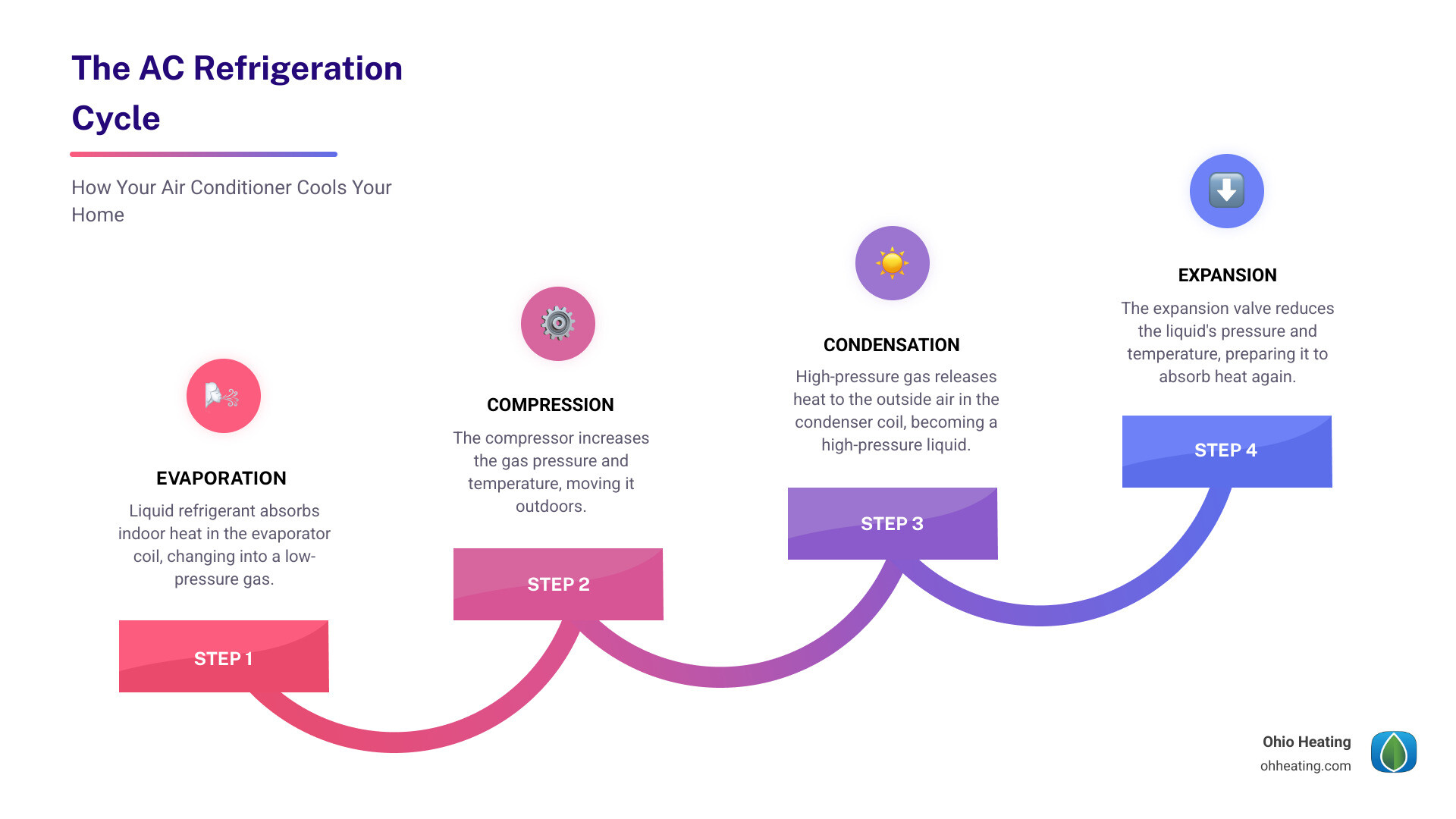
Your air conditioning system relies on refrigerant as its lifeblood. This chemical circulates through a closed-loop system, absorbing heat from inside your building and releasing it outside. Unlike fuel in a car, refrigerant should never run out—it simply changes from liquid to gas and back again in an endless cycle.
When refrigerant levels drop, it always means one thing: you have a leak.
Running an AC with low refrigerant doesn’t just leave you sweating. It forces your system to work harder, spiking your energy bills by 20% or more. The compressor can overheat and fail completely, turning a $500 repair into a $5,000 replacement. And if your system uses older R-22 refrigerant (Freon), that leak is releasing chemicals that damage the ozone layer.
For property managers and business owners, a refrigerant leak isn’t just uncomfortable—it’s a threat to tenant satisfaction, equipment longevity, and your bottom line.
About Your Guide
I’m Jill Frattini, a Service Coordinator at Ohio Heating with years of experience helping property owners steer complex HVAC issues, including every aspect of AC refrigerant leak fix from diagnosis to long-term prevention. My role coordinating between technical teams and clients has shown me exactly what building owners need to know to make smart repair decisions.
Identifying a Refrigerant Leak: Signs, Causes, and Consequences
When your AC system starts acting up, a refrigerant leak is often the silent culprit. It’s not always as dramatic as a geyser of green fluid, but the signs are usually clear once you know what to look for. Ignoring these signals can lead to more than just discomfort; it can cause significant damage to your system and your wallet.
A refrigerant leak can manifest through several indicators:
- Poor cooling performance: This is often the first thing people notice. Your AC unit might be running constantly, but the air coming from the vents isn’t as cold as it should be, or some rooms feel much warmer than others. It’s like your AC is trying its best, but it’s just not getting the job done.
- Hissing or bubbling sounds: These auditory clues can be a direct sign of refrigerant escaping. A hissing sound typically indicates a gas leak, while bubbling might suggest a leak where refrigerant is mixing with moisture or oil.
- Increased humidity: Your AC system isn’t just for cooling; it also dehumidifies your indoor air. If you notice your home or business feeling clammy or sticky, even with the AC on, it could be a sign that low refrigerant levels are compromising its ability to remove moisture.
- Higher energy bills: When your AC unit has less refrigerant, it has to work much harder and run longer cycles to try and reach your desired temperature. This extra effort translates directly into higher electricity consumption and, you guessed it, higher utility bills.
- Oily residue: Refrigerant contains a small amount of oil that helps lubricate the compressor. When refrigerant leaks, this oil often escapes with it, leaving behind greasy or oily spots on your refrigerant lines, coils, or around other AC components. This is a tell-tale sign of a leak.
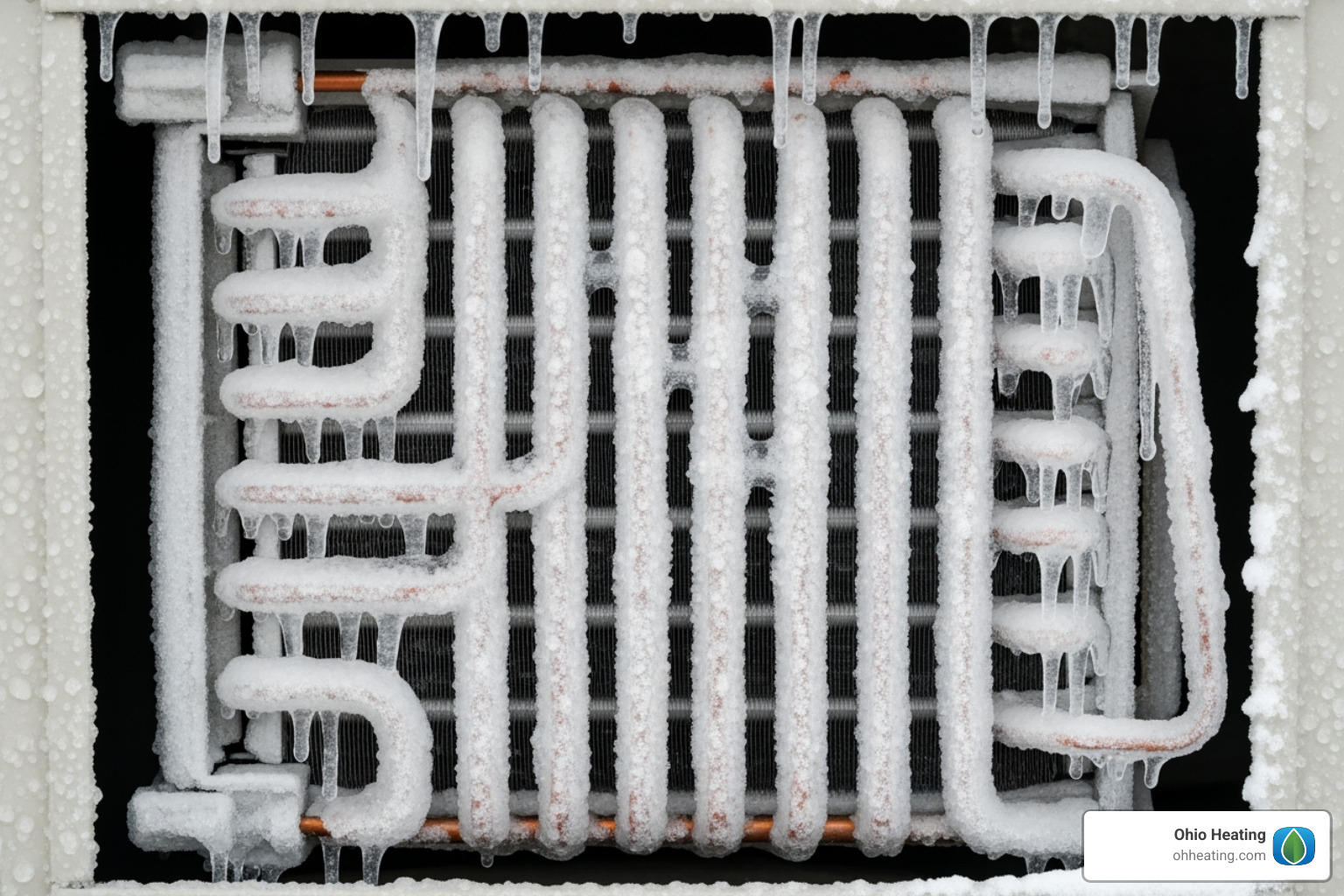
- Ice on evaporator coils: This might seem counterintuitive – ice when you want cooling? But a common symptom of low refrigerant is the evaporator coil freezing over. Without enough refrigerant to absorb heat, the coil gets too cold, causing moisture in the air to freeze on its surface.
Ignoring these signs and continuing to run an AC unit with a refrigerant leak can have severe consequences. It can lead to the compressor overheating and failing, which is usually the most expensive component to replace. It also means your system is wasting energy and potentially releasing harmful refrigerants into the atmosphere. For more on unusual AC noises, check out our guide on What Weird Noises From Your AC Unit Could Mean for Repairs.
Common Signs Your AC is Leaking Refrigerant
Let’s summarize the common symptoms that scream “refrigerant leak!”
- AC not blowing cold air: The most obvious sign. If your AC is running but the air isn’t chilly, something’s definitely off.
- Ice on evaporator coils: This is a big red flag. If you see ice forming on the indoor unit’s coils, turn off your AC immediately to prevent further damage.
- Longer cooling cycles: Your AC runs and runs, struggling to cool your space, leading to extended operational times.
- Unexplained high utility bills: As the system works harder to compensate for lost refrigerant, your energy consumption goes up.
- Sweetish smell: Some refrigerants, particularly older Freon (R-22), can emit a faint, sweet odor, sometimes described as similar to nail polish remover.
- Oil spots: Look for greasy patches on the refrigerant lines or around the AC unit, which indicate oil escaping with the refrigerant.
For a broader understanding of AC issues, our article Signs Your Air Conditioning Needs Repair: What to Look For provides additional insights.
Primary Causes of Refrigerant Leaks
So, why do these leaks happen in the first place? It’s not always about an old unit; sometimes, even newer systems can develop issues. Here are the primary causes we often see:
- Vibrations and wear: Over time, the constant vibration of your AC unit can cause connections to loosen, and the metal tubing to wear thin, especially at joints. This leads to tiny cracks or holes where refrigerant can escape.
- Corrosion on coils: Both evaporator and condenser coils are susceptible to corrosion. A common culprit is formicary corrosion, which creates tiny pinholes in copper tubing. This is often caused by airborne contaminants, moisture, and even household cleaning products.
- Punctures or damage: Accidents happen. Physical damage from falling branches, lawnmowers, or even inquisitive pets can puncture refrigerant lines or coils. A frozen evaporator coil can also cause stress on the system, leading to leaks.
- Factory defects: While less common, manufacturing flaws or weak points in components can lead to leaks, sometimes even in relatively new units.
- Improper installation: If refrigerant lines aren’t properly connected, flared, or tightened during installation, leaks can develop over time. This highlights the importance of choosing a qualified, experienced HVAC professional from the start.
How to Find a Leak: DIY vs. Professional Detection
Once you suspect a refrigerant leak, the next step is to find it. While there are some simple methods you can try at home, pinpointing the exact source often requires professional tools and expertise.
Simple Home Detection Methods
For the curious homeowner, a few basic checks can sometimes reveal larger, more obvious leaks:
- Visual inspection for oil: As mentioned, refrigerant oil often accompanies leaks. Carefully inspect all visible refrigerant lines, coils, and connections for any greasy or oily residue. This is a strong indicator of a leak point.
- Listening for hissing: With your AC unit running, listen closely around the outdoor condenser and the indoor evaporator unit. A distinct hissing sound can pinpoint a larger leak where refrigerant gas is escaping.
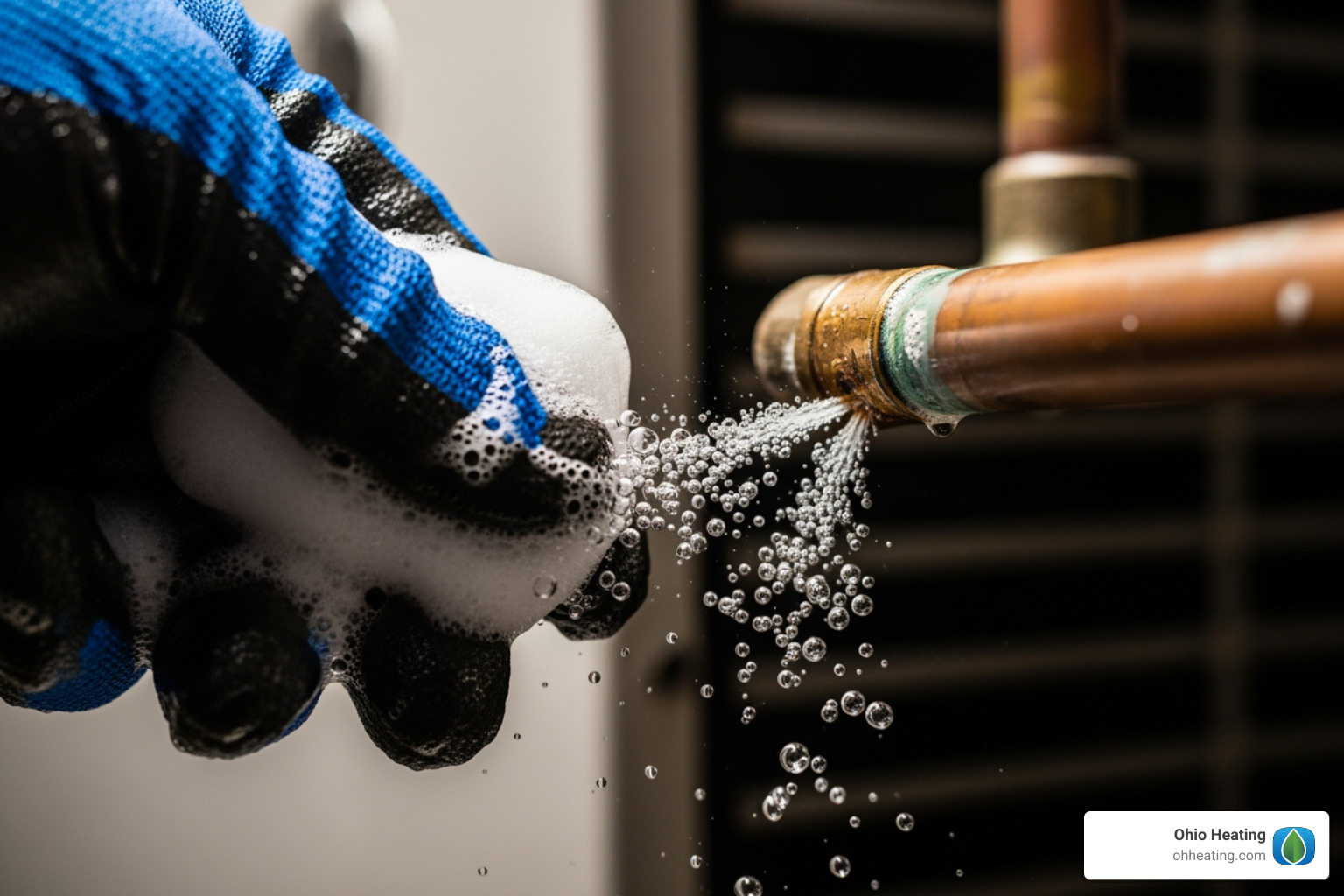
- Soapy water bubble method: For a visual confirmation, mix a solution of dish soap and water (about 0.5 teaspoon of dish soap per liter of water works well). Turn off your AC unit, then spray or brush this solution onto suspected leak areas, such as joints, connections, and coil surfaces. If bubbles form, you’ve found a leak! This method is effective for larger leaks but may miss smaller, more subtle ones.
While these DIY methods can be helpful, they are often limited. Small leaks, leaks inside walls, or those in less accessible areas will likely remain undetected without specialized equipment. For more critical signs that your HVAC system needs immediate attention, refer to 7 Crucial Signs Your HVAC System Needs Immediate Repair.
The Risks of a DIY AC Refrigerant Leak Fix
We understand the urge to save money and tackle problems yourself. However, when it comes to an AC refrigerant leak fix, DIY can be incredibly risky and, in many cases, outright dangerous or illegal.
- Handling refrigerants is dangerous: Refrigerants are not benign substances. They are under high pressure and, if mishandled, can cause severe chemical burns (frostbite) if they come into contact with skin or eyes.
- Health risks: Inhaling refrigerants can be hazardous, causing dizziness, nausea, breathing difficulties, and even cardiac arrest in extreme cases. Sniffing Freon, for example, can lead to severe health complications, including death. This is definitely not a substance you want to be experimenting with.
- Potential for further system damage: Without the right tools and knowledge, attempting a DIY fix can easily lead to more extensive damage to your AC system. Overcharging or undercharging, using the wrong type of refrigerant, or improper repairs can destroy your compressor or other vital components, turning a relatively simple leak repair into a costly system replacement.
- EPA regulations: The Environmental Protection Agency (EPA) strictly regulates refrigerants, particularly the older R-22 (Freon). Only EPA-certified technicians are legally allowed to purchase, handle, and dispose of refrigerants. Releasing refrigerants into the atmosphere is illegal and harmful to the environment.
- Voiding warranty: Most AC manufacturers’ warranties explicitly state that any repairs or alterations performed by an unlicensed individual will void the warranty. This means if you try a DIY fix, you could be on the hook for future professional repairs that would have otherwise been covered.
For these reasons, we strongly advise against attempting a DIY AC refrigerant leak fix. It’s a job best left to the experts.
The Professional AC Refrigerant Leak Fix: Repair or Replace?
When you call in the professionals at Ohio Heating, we follow a thorough process to accurately diagnose and resolve your refrigerant leak, ensuring the safety of your home or business in Columbus, Central Ohio, or anywhere in Ohio.
Our professional repair process typically involves:
- System isolation: The first step is to safely isolate the AC system and recover any remaining refrigerant to prevent environmental release.
- Leak detection: Using specialized tools, we pinpoint the exact location of the leak.
- Repair: Depending on the leak’s nature, we’ll either patch, braze, weld, or replace the faulty component.
- Testing: After the repair, we rigorously test the system to ensure the leak is completely sealed.
- Recharging: Finally, we recharge the system with the correct type and amount of refrigerant to restore optimal performance.
The cost of an AC refrigerant leak fix can vary significantly. Simple repairs like patching a small leak or replacing a Schrader valve might range from $200 to $1,600. However, if the leak is in a major component like the evaporator coil, the replacement cost for just that part can be between $1,000 and $2,000. For a complete system replacement, you’re looking at a range of $3,800 to $16,100. To get a better idea of local costs, see our guide on What to Expect: Average AC Repair Prices in Columbus, Ohio.
Professional Methods for an AC Refrigerant Leak Fix
Our certified technicians employ several advanced methods to accurately detect and repair refrigerant leaks:
- Electronic leak detection: This is one of the most common and effective methods. A technician uses a handheld electronic “sniffer” that can detect minute traces of refrigerant gas escaping from the system, often pinpointing leaks that are invisible to the naked eye.
- Nitrogen pressure testing: After evacuating the system, we can pressurize it with nitrogen (an inert gas). By monitoring the pressure gauge over time, we can determine if there’s a leak and, if so, its size. We can also use this pressure to help find the leak by listening for escaping gas or using a bubble test.
- UV dye analysis: A special fluorescent dye can be injected into the AC system along with the refrigerant. The AC is then run for a period to allow the dye to circulate. Later, using a UV (black) light, the technician can scan the system components. The dye will glow brightly at the leak point, making it easy to spot, even in hard-to-reach areas.
- Brazing or welding lines: For small leaks in copper lines or joints, our technicians can often braze or weld the affected area, creating a strong, permanent seal.
- Evaporator coil replacement: If the evaporator coil (the indoor coil that gets cold) is heavily corroded or has multiple leaks, repair is often not feasible or cost-effective. In such cases, replacing the entire evaporator coil, which can cost between $1,000 and $2,000, becomes the more reliable long-term solution. Our team handles all aspects of Air Conditioner Repairs and Sales in the Columbus area.
Deciding Between Repair and Replacement
The “repair or replace” dilemma is a common one, especially when facing an AC refrigerant leak fix. The decision depends on several factors:
| Factor | Repair | Replace |
|---|---|---|
| Unit Age | Generally viable for units less than 10 years old. | More cost-effective for units 10+ years old, especially those over 15-20 years. |
| Refrigerant Type | Possible if using R-410A. For R-22, costs are high, and supply is limited. | Recommended for R-22 units due to phase-out, higher efficiency, and environmental benefits of R-410A. |
| Cost of Repair | If repair cost is less than 50% of a new unit’s cost, and the unit is relatively new. | If repair cost exceeds 50% of a new unit’s cost, or if repairs are frequent. |
| Frequency of Repairs | For a first or second minor repair. | For units requiring frequent repairs, indicating systemic issues. |
| Energy Efficiency | Maintains current efficiency (which might be lower for older units). | Significantly improves energy efficiency, leading to long-term savings. |
| Warranty | Repair might be covered if unit is still under warranty. | New unit comes with a fresh warranty, providing peace of mind. |
| Environmental Impact | Minimal if leak is sealed and R-410A is used. R-22 leaks are harmful. | New units use eco-friendly R-410A, reducing environmental footprint. |
- Age of unit: AC units typically wear out after 15-20 years. If your system is approaching or past this age, especially if it’s an older R-22 unit, a major leak repair might be throwing good money after bad.
- Refrigerant type (R-22 vs. R-410A): This is a huge factor. As we’ll discuss, R-22 (Freon) is being phased out, making it increasingly expensive and difficult to obtain. If your older R-22 unit has a significant leak, replacement with a new R-410A system is often the most practical and financially sound decision.
- Cost of repair vs. new unit: Compare the estimated repair cost to the cost of a new, energy-efficient unit. If the repair is a substantial percentage of a new system, replacement might be more cost-effective in the long run.
- Frequency of past repairs: Has your unit been a constant source of headaches and repair bills? If so, a new leak might be the final straw, signaling it’s time for a fresh start.
We can provide you with a detailed assessment and transparent recommendations to help you make the best decision for your Columbus-area home or business. Learn more about replacement options at AC Replacement in Hilliard.
Understanding Refrigerants and Preventing Future Leaks
Refrigerants are critical to your AC’s operation, but they also carry environmental implications. Understanding the types of refrigerants and how to prevent leaks is crucial for both your comfort and the planet.
Environmental Implications of Refrigerant Leaks
Refrigerant leaks are not just a nuisance for your comfort and budget; they also pose a significant threat to the environment. Older refrigerants, particularly R-22 (often known as Freon), are potent ozone-depleting substances. When released into the atmosphere, they contribute to the depletion of the Earth’s protective ozone layer, which shields us from harmful ultraviolet (UV) radiation. Even newer refrigerants like R-410A, while not ozone-depleting, are potent greenhouse gases if released, contributing to climate change. This is why the proper handling, recovery, and disposal of refrigerants are so heavily regulated. For a deeper dive into how HVAC systems work, you can visit HVAC systems.
Freon (R-22) vs. Modern Refrigerants (R-410A)
The world of refrigerants has undergone a significant change due to environmental concerns:
- R-22 (Freon) phase-out explained: For over 40 years, R-22 was the dominant refrigerant. However, due to its ozone-depleting potential, its production and import were phased out under the Montreal Protocol. In the United States, new AC units stopped using R-22 in 2010, and its production was officially banned in 2020. This means that R-22 is now only available from existing stockpiles or reclaimed sources.
- High cost of R-22: Because of the diminishing supply and high demand for older units, the cost of R-22 has skyrocketed. For homeowners with older systems, recharging an R-22 unit after an AC refrigerant leak fix can be incredibly expensive, making replacement a more attractive option.
- R-410A as eco-friendly alternative: Modern AC systems (manufactured since 2010) use refrigerants like R-410A (often branded as Puron). R-410A does not contain chlorine, so it doesn’t contribute to ozone depletion. It’s also more energy-efficient, meaning newer units running R-410A are often quieter and can cool your space more effectively while using less electricity.
- Incompatibility between systems: R-22 and R-410A systems are not interchangeable. You cannot simply put R-410A into an R-22 unit, or vice versa. They operate at different pressures and require different components. If your older R-22 unit experiences a major leak, replacing it with a new R-410A system is often the most sensible long-term solution.
Best Practices for Preventing Refrigerant Leaks
An ounce of prevention is worth a pound of cure, especially when it comes to an AC refrigerant leak fix. Here’s how you can minimize the risk of leaks and keep your system running smoothly:
- Schedule annual tune-ups: This is perhaps the most important preventative measure. During a professional AC tune-up, our technicians will inspect your system for potential issues, clean coils, check refrigerant levels, and look for early signs of wear or corrosion that could lead to leaks. Regular maintenance can catch small problems before they become big, expensive ones.
- Keep outdoor unit clean: The outdoor condenser unit can accumulate dirt, leaves, grass clippings, and other debris. This can hinder its operation and even contribute to corrosion. Ensure the area around your outdoor unit is clear, with at least two feet of clearance for proper airflow.
- Change air filters regularly: Clogged air filters restrict airflow, forcing your AC to work harder. This can lead to issues like frozen evaporator coils, which put stress on the system and can cause leaks. We recommend changing your air filter every 30 to 90 days, or more frequently if you have pets or allergies.
- Ensure proper installation: Many leaks can be traced back to faulty connections or poor workmanship during the initial installation. Choosing a reputable, licensed HVAC contractor like Ohio Heating for your AC installation ensures that the job is done right, minimizing the risk of future leaks.
Regular maintenance is key to preventing major breakdowns and extending the life of your AC system. Learn more about its importance at The Importance of Regular HVAC Maintenance for Homes and Businesses and specifically about AC Maintenance in Dublin.
Frequently Asked Questions about AC Refrigerant Leaks
We hear a lot of questions about refrigerant leaks. Here are some of the most common ones:
Can I just add more refrigerant to my AC unit?
No! This is a common misconception and a costly mistake. Refrigerant is not “consumed” by your AC system like gasoline in a car. If your AC is low on refrigerant, it means there’s a leak somewhere in the closed system. Simply adding more refrigerant without fixing the leak is akin to refilling a leaky bucket—it will just escape again, costing you money and releasing harmful chemicals into the environment. A proper AC refrigerant leak fix always involves finding and repairing the leak before recharging the system.
How long does it take to fix a refrigerant leak?
The time required for an AC refrigerant leak fix can vary widely. A simple repair, like tightening a loose connection or patching a small, accessible leak with brazing, might only take a few hours. However, if the leak is difficult to locate, requires extensive diagnostics (like UV dye circulation), or necessitates replacing a major component like an evaporator coil, the process can take much longer—sometimes a full day or even require ordering parts, extending the repair over several days.
Is a refrigerant leak dangerous to my health?
Yes, absolutely. Refrigerants are chemicals that can be hazardous if inhaled or if they come into contact with your skin or eyes. Inhaling refrigerant can cause dizziness, headaches, nausea, and shortness of breath. In poorly ventilated areas, a large leak can displace oxygen, leading to asphyxiation. Contact with liquid refrigerant can cause severe frostbite. This is why only certified professionals with proper safety equipment should ever handle refrigerants. Never attempt to sniff or directly interact with leaking refrigerant.
Stay Cool and Confident with Professional AC Repair
An AC refrigerant leak fix is not just about restoring comfort; it’s about safeguarding your investment, protecting the environment, and ensuring the health and safety of everyone in your home or business. Refrigerant leaks are serious, and timely action is crucial to prevent further system damage and avoid higher energy costs.
At Ohio Heating, we understand the unique challenges that property owners in Columbus, Central Ohio, and throughout Ohio face when their AC systems falter. Our team of certified, experienced technicians is equipped with the latest tools and expertise to accurately detect, repair, and prevent refrigerant leaks, ensuring your comfort and operational reliability. We’ve been dedicated to serving our community since 1999, providing expert commercial and residential HVAC installation, repair, and maintenance.
Don’t let a refrigerant leak leave you sweating. For a lasting solution and peace of mind, trust certified experts to handle your Air Conditioning Repair in Westerville. We’re here to help you stay cool and confident, no matter how hot it gets.