
New AC unit cost 2025: Avoid $30k Shock
Why New AC Unit Costs Vary So Much (And What You Should Actually Pay)
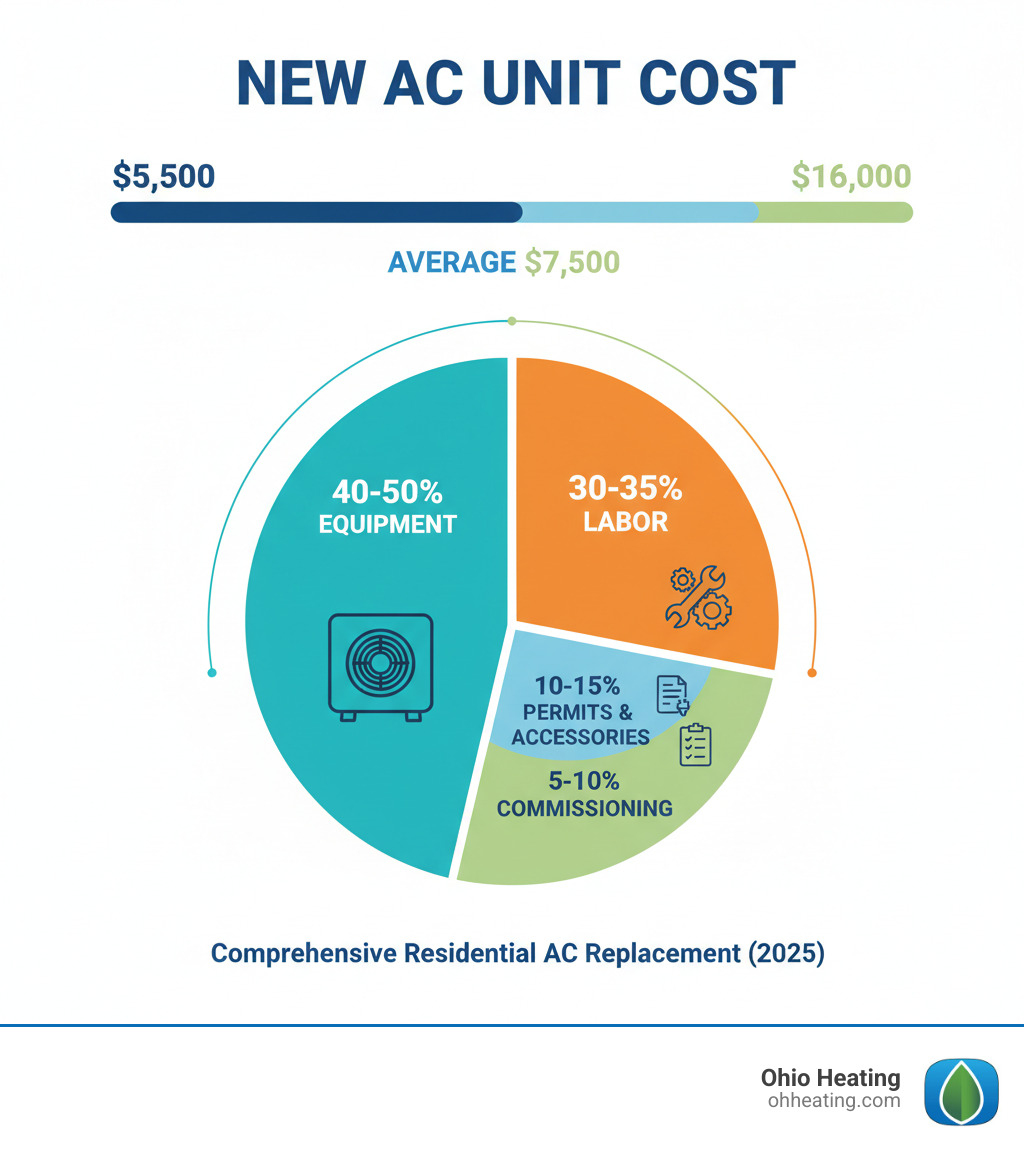
The new AC unit cost for a complete installation typically ranges from $5,500 to $16,000, with an average around $7,500. Quotes can vary from $3,300 to over $20,000 based on system type, efficiency, and complexity.
Quick Cost Breakdown:
- Entry-Level System: $5,500 – $8,800 (single-stage, 14-16 SEER2)
- Mid-Range System: $6,700 – $10,800 (two-stage, 16-18 SEER2)
- High-End System: $8,300 – $16,000+ (variable-speed, 20+ SEER2)
- Equipment Only: 40-50% of total cost
- Installation Labor: 30-35% of total cost
- Permits & Extras: 10-20% of total cost
A shockingly high quote of $30,000 isn’t necessarily a rip-off; it likely includes a premium system, major ductwork, multiple zones, or a full HVAC replacement with a new furnace.
The wide price variation confuses many homeowners. Why does one contractor quote $8,000 and another $15,000 for what seems like the same job?
This guide breaks down every factor driving your final bill, helping you distinguish necessary costs from optional upgrades. You’ll learn to compare quotes accurately and ensure you’re paying a fair price.
What is the Average New AC Unit Cost in 2025?
For homeowners in Columbus and Central Ohio, understanding the average new AC unit cost is key to getting a fair deal. While national averages suggest around $5,750 for a 3-ton system, a full replacement including labor, permits, and potential ductwork modifications brings the realistic range to $5,500 to $16,000.
This wide spread is due to variables like system efficiency, home layout, and ductwork condition. For local specifics, see our Air Conditioning Installation Costs Columbus Ohio Insights article. Understanding these factors helps you make smart investment decisions.
Central AC Cost by Tiers
AC systems come in tiers, much like cars.
- Entry-level systems ($5,500 – $8,800 installed): Feature single-stage compressors and 14-16 SEER2 ratings. They are dependable and budget-friendly, ideal for short-term needs.
- Mid-range systems ($6,700 – $10,800 installed): Offer two-stage compressors and 16-18 SEER2 ratings. They provide better temperature consistency, humidity control, and efficiency—a good balance of cost and performance.
- High-end systems ($8,300 – $16,000+ installed): Deliver premium comfort with variable-speed compressors and 20+ SEER2 ratings. They offer the quietest operation, precise temperature control, and maximum energy savings, making them a great long-term investment.
Cost Differences Between AC Unit Types
Central air isn’t the only choice. Other systems may better suit your home’s layout and needs.
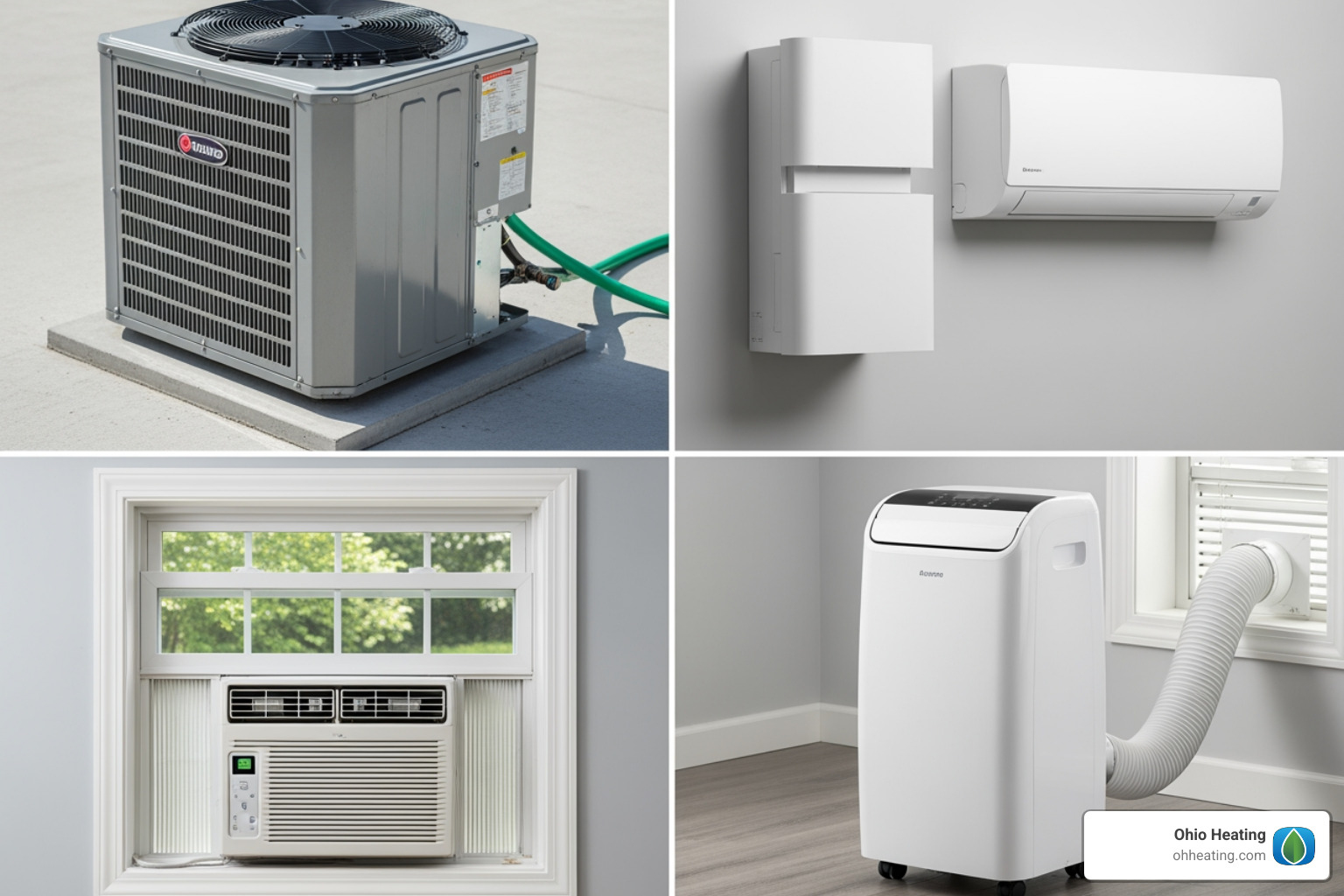
- Central Air Systems ($5,500 – $16,000 installed): Use ductwork to cool the entire home quietly and effectively. Requires well-maintained ducts to be efficient.
- Ductless Mini-Splits ($1,900 – $16,100 installed): Ideal for homes without ducts or for zoning specific rooms. Highly efficient (16-30+ SEER) but involve visible indoor units.
- Heat Pumps ($4,200 – $15,000+ installed): Provide both heating and cooling in one efficient system (14-20+ SEER). Modern units work well in Ohio winters, though backup heat may be needed in extreme cold.
- Window/Portable Units ($100 – $1,000): Budget options for single rooms but are noisy, inefficient, and not a whole-home solution.
For help choosing the right system, explore our Residential HVAC services.
Decoding the Price Tag: 7 Factors That Drive Your Final Bill
Your new AC unit cost is more than just the equipment’s sticker price; it’s an investment in long-term comfort and efficiency. Understanding these key factors will help you make an informed decision for your Central Ohio home. Learn more about the benefits in our article on Why Energy Efficient HVAC Systems Matter.
1. AC Size (Tonnage) & Proper Sizing
Proper AC sizing, measured in tons (1 ton = 12,000 BTUs), is critical. Bigger isn’t better.
- An oversized unit short-cycles, turning on and off too quickly. This fails to dehumidify the air, causes uneven temperatures, and increases wear and tear.
- An undersized unit runs constantly without reaching the desired temperature, wasting energy and causing discomfort.
To get it right, a contractor must perform a Manual J load calculation.
This analysis considers your home’s unique features like climate zone, square footage, insulation, windows, and orientation to determine the perfect size for optimal comfort and efficiency. Learn more about the Manual J load calculation page.
2. Energy Efficiency (SEER2 Rating)
A unit’s efficiency is measured by its SEER2 (Seasonal Energy Efficiency Ratio 2) rating. A higher SEER2 means lower electricity use and smaller utility bills. While higher-SEER2 units have a greater initial new AC unit cost, the long-term energy savings often make them a smart investment in Ohio’s warm summers. The minimum rating for our region is 13.4 SEER2, but choosing a high-efficiency unit (16+ SEER2) can significantly reduce energy costs. For more details, read our guide to Discover Energy Efficient AC Options for Columbus Homeowners and review the national Explaining Central Air Conditioner & Heat Pump Standards.
3. Compressor Technology
The compressor type is key to performance and price.
- Single-Stage: The most basic option, operating at 100% capacity (all or nothing). This can lead to temperature swings and less efficiency.
- Two-Stage: A step up, with a high and low setting (e.g., 100% and 70%). It runs longer at the lower speed, improving temperature consistency, humidity control, and efficiency.
- Variable-Speed: The most advanced and expensive option. It adjusts its speed precisely (from 25% to 100%) to match cooling demand, offering the best comfort, humidity control, and energy savings.
Your choice depends on your budget and comfort priorities.
4. Refrigerant Type
The refrigerant type affects cost and future serviceability. The old standard, R-22 (Freon), has been phased out due to environmental concerns and is now expensive and scarce. The current standard is R-410A. However, starting in 2025, new regulations will mandate even more environmentally friendly refrigerants like R-454B. Choosing a system with a newer refrigerant may have a slightly higher upfront cost but ensures long-term availability for service and parts, making it a future-proof investment.
Beyond the Sticker Price: Additional Factors in Your New AC Unit Cost
The equipment price is only part of the total new AC unit cost. Installation complexities, system upgrades, and optional features can add thousands to the final bill. Understanding these factors helps you budget accurately and make value-driven choices. For comprehensive support, explore our HVAC services.
Should I Replace My Furnace with My AC?
Replacing your furnace and AC together often makes financial sense. Your AC and furnace share a blower motor, and a new, high-efficiency AC needs a compatible furnace to perform optimally. If your furnace is over 10-15 years old, its blower motor may not support a new AC, leading to poor performance and higher energy bills.
Since furnaces last 15-20 years, replacing an aging one with your new AC avoids a separate, costly installation down the road. A combined installation typically saves 15-25% on labor and ensures your entire system runs at peak efficiency. Our experts in Furnace and Heating Equipment Sales and Services can help you determine the best approach for your home.
Optional Features That Add Value
Modern features increase your new AC unit cost but are valuable investments in comfort, health, and efficiency.
- Smart Thermostats: Learn your schedule and allow remote control via your phone, saving energy and money over time. We provide expert Thermostat Installation and Repair in Dublin Ohio.
- Whole-Home Air Purifiers: Integrate with your ductwork to remove allergens and pollutants, improving indoor air quality, which is especially beneficial for those with allergies or asthma in Ohio.
- Dehumidifiers: Crucial for muggy Central Ohio summers, they provide precise humidity control, making your home feel cooler at higher thermostat settings and saving energy.
- Zoning Systems: Allow independent temperature control for different areas of your home, solving issues like a hot upstairs. A two-zone system adds about $1,700-$2,000 to your cost, but the added comfort and savings are often worth it.
The DIY Trap: Why Professional Installation is Crucial
While DIY savings are tempting, installing a central AC is a complex and dangerous job best left to professionals.
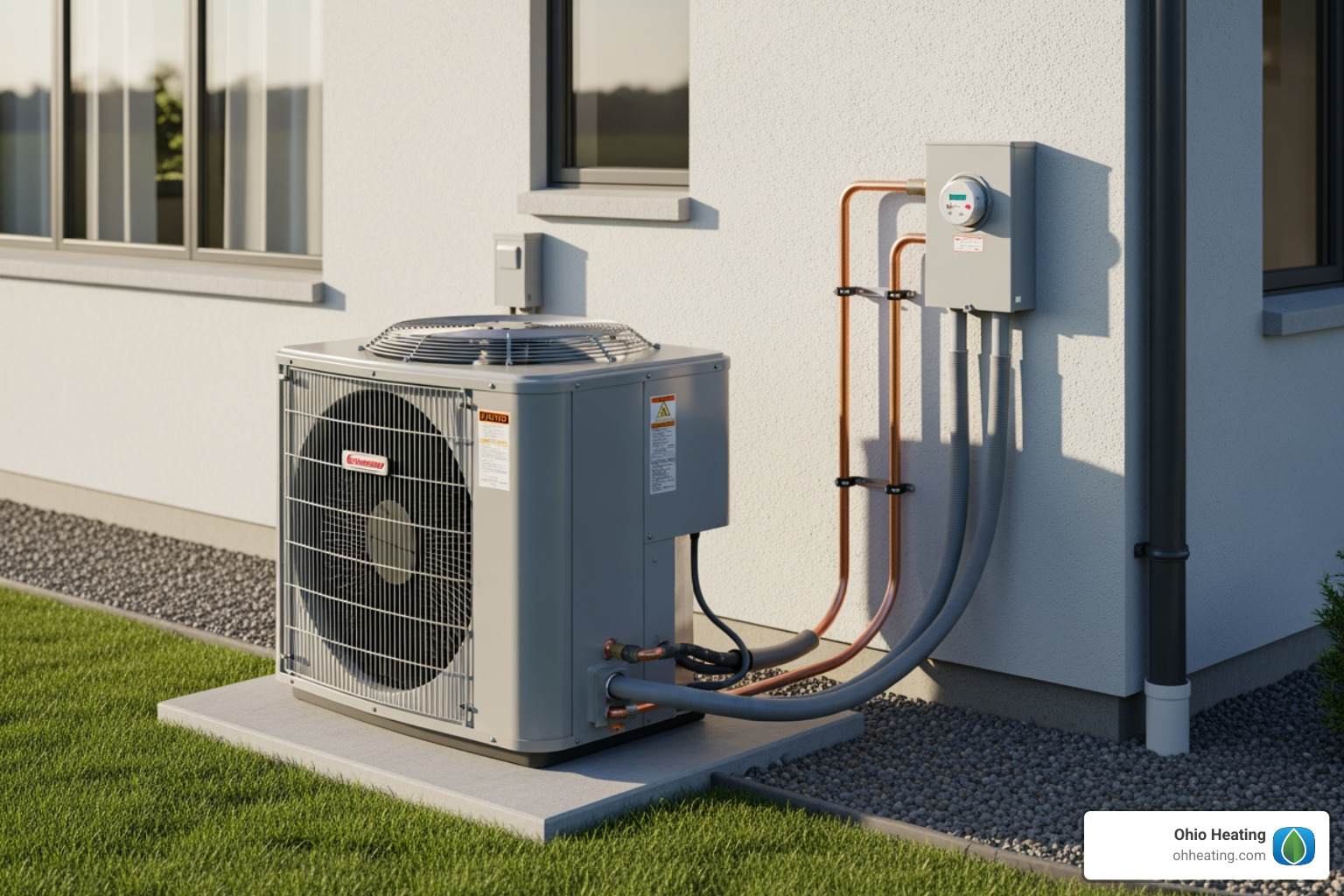
- It’s Illegal: Handling refrigerant requires EPA certification. As the EPA states, this is not a DIY job, and violations can lead to fines of up to $37,500 per day.
- Voids Your Warranty: Manufacturers require professional installation by a licensed contractor to validate the warranty. A DIY install means you pay for all future repairs out-of-pocket.
- It’s Dangerous: You’re dealing with high-voltage electricity, pressurized refrigerant lines, and heavy equipment. Professionals are trained to handle these risks safely.
- Poor Performance: Professional installation ensures proper system sizing, refrigerant charging, and airflow balancing. A DIY job often results in an inefficient system that costs more to run and fails prematurely.
Fixing a botched DIY installation almost always costs more than hiring a professional from the start. Since 1999, we’ve seen it all in Columbus. Trust a licensed pro to do it right.
Smart Savings: How to Reduce Your New AC Unit Cost
A new AC is a major investment, but there are smart ways to manage the cost without sacrificing quality. By timing your purchase, using financial incentives, and protecting your investment, you can make it more affordable. For local repair cost context, see What to Expect Average AC Repair Prices in Columbus Ohio.
When to Repair vs. When to Replace Your AC
Deciding whether to repair or replace can be tough. Here are some guidelines:
- The 50% Rule: If a repair costs 50% or more than a new system, replacement is usually the smarter financial choice.
- Age: If your AC is over 10-15 years old (nearing its 15-20 year lifespan) and needs a major repair, replacement is often better than investing in an aging, inefficient unit.
- Frequent Breakdowns: Constant repair calls are a clear sign your system is failing.
- Rising Energy Bills: If your bills are climbing without increased usage, your old unit is losing efficiency.
- Uneven Cooling: Hot and cold spots can indicate a failing or improperly sized system.
For a detailed analysis, read our guide on whether to Find Out Whether to Repair or Replace Your Air Conditioning Unit.
Tax Credits, Rebates, and Financing
Financial incentives can significantly lower your new AC unit cost.
- Federal Tax Credits: You may qualify for a tax credit of up to 30% of the project cost (up to $600 for ACs, $2,000 for heat pumps) for installing high-efficiency equipment.
- Utility Rebates: Local utilities like AEP Ohio often offer rebates for energy-efficient upgrades, saving you hundreds.
- State & Local Incentives: Use the DSIRE database to find all available rebates and incentives in Ohio.
- Manufacturer Rebates: Look for seasonal promotions, especially when purchasing a complete system.
- Financing: We offer flexible financing options to spread the cost over time with manageable monthly payments.
Combining these can make a new system much more affordable.
The Long-Term Savings of Regular Maintenance
Regular maintenance is the best way to protect your new AC. A well-maintained unit can last its full 15-20 years, while a neglected one may fail in 10. Professional tune-ups improve efficiency, lower energy bills, and prevent costly breakdowns by catching small issues early. As the Department of Energy confirms, the importance of AC maintenance is critical for efficiency and lifespan.
Furthermore, most manufacturer warranties require annual professional maintenance to remain valid. Between visits, you can help by changing your air filter every 1-3 months and keeping the outdoor unit clear of debris. For expert care, explore our AC Maintenance in Dublin services to keep your system running strong.
Frequently Asked Questions about New AC Unit Costs
How long does a new central AC unit last?
A well-maintained central AC unit typically lasts 15 to 20 years. Key factors influencing its lifespan include the quality of the initial installation, regular professional maintenance, the climate, and the quality of the unit itself. Most systems come with a 5 to 12-year manufacturer warranty. To maximize your unit’s lifespan and get the most from your new AC unit cost, schedule annual tune-ups.
How much does a new AC for a 2,000 sq. ft. house cost?
For a typical 2,000 sq. ft. house in Central Ohio, which usually requires a 3-ton AC unit, the new AC unit cost for a complete installation ranges from $4,200 to $8,000, with an average around $5,750. The final price depends on the system’s efficiency (SEER2 rating), brand, any necessary ductwork or electrical modifications, and optional features like smart thermostats. Because every home is different, a professional evaluation and a Manual J load calculation are essential for an accurate quote and a properly sized system.
Does the time of year affect AC installation costs?
Yes, timing your installation can significantly reduce your new AC unit cost.
- Peak Season (Summer): High demand during June, July, and August means longer wait times and higher prices.
- Off-Season (Fall and Spring): HVAC contractors are less busy from September to November and March to May. During this time, you can often find better scheduling flexibility and discounts of 10% to 15% on equipment and labor.
If your current AC is old but still functional, planning a replacement for the fall or spring is a smart financial move that can save you hundreds or even thousands of dollars.
Conclusion
Understanding new AC unit cost empowers you to make a smart purchase. The lowest quote isn’t always the best value. An improperly sized or poorly installed unit leads to high energy bills and frequent repairs. A properly installed, high-efficiency system is a long-term investment in comfort and savings.
The biggest mistake is cutting corners on installation. Professional work ensures efficiency, warranty coverage, and performance. At Ohio Heating, we’ve provided transparent pricing and expert installations in Columbus and Central Ohio since 1999. We don’t just sell systems; we provide the right solution for your home and budget, ensuring comfort and reliability.
Ready for an accurate, no-surprise quote? Contact us today for a comprehensive estimate on your new AC system!