
Building Air Balance: Boost Comfort, Save 30%!
Why Your Building Needs Proper HVAC System Performance
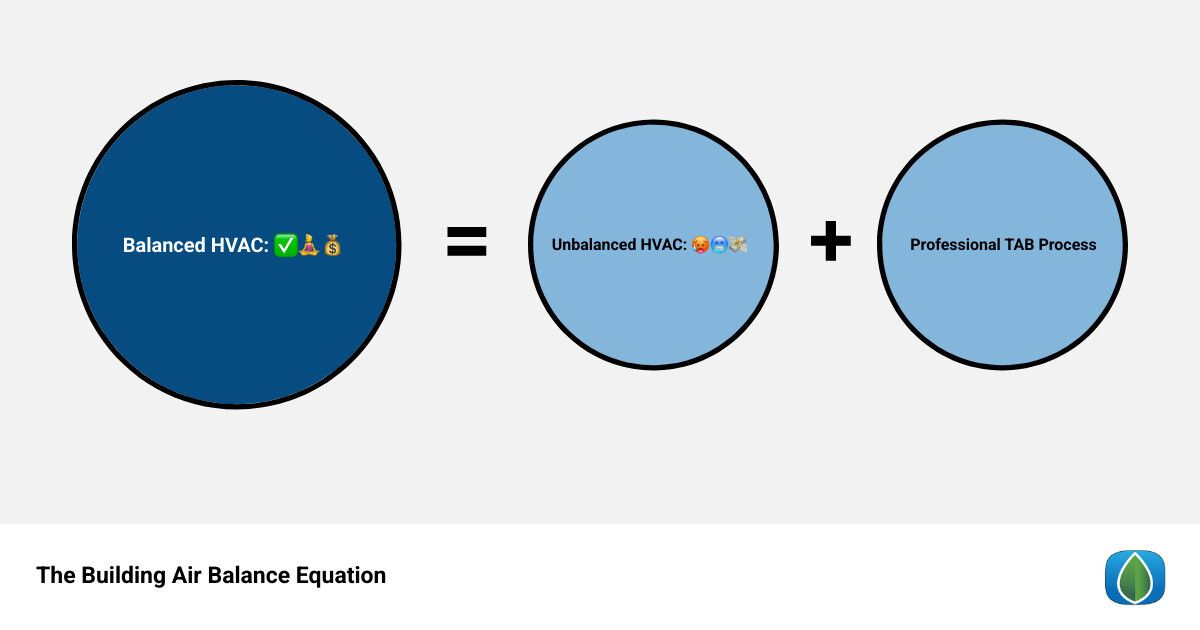
Building air balance is the process of testing, adjusting, and balancing (TAB) your HVAC system to ensure conditioned air is evenly distributed throughout your facility. Without it, you’ll likely experience uncomfortable hot and cold spots, wasted energy, and higher utility bills.
Quick Answer: What is Building Air Balance?
- Purpose: Ensures consistent temperatures, optimal energy efficiency, and healthy indoor air quality.
- Process: Dampers, vents, fans, and ductwork are adjusted to match engineering specifications.
- Result: Uniform comfort, lower energy costs, and extended equipment lifespan.
Common Signs Your Building Needs Air Balancing:
- Some rooms are too hot while others are too cold
- Energy bills are higher than expected
- Doors are hard to open or close (pressure imbalance)
- Stuffy air or persistent odors
- HVAC system runs constantly but never achieves comfort
If you’ve ever needed a sweater in one office and a fan in the conference room, you’ve experienced an unbalanced HVAC system. According to industry research, commercial buildings waste as much as 30% of the energy they consume due to improperly balanced systems. Systems operating outside their design range can see efficiency losses of up to 20%.
Air balancing protects your investment by creating a healthier, more efficient environment. When airflow is properly distributed, your HVAC system works less to achieve better results, leading to lower energy bills, fewer repairs, and happier occupants.
I’m Jill Frattini, a Service Coordinator at Ohio Heating in Columbus, OH. I help property managers and business owners optimize their HVAC systems by coordinating the technical teams who perform these critical adjustments, ensuring every building operates at peak performance.
What is Building Air Balance and Why is it Essential?
Think of your HVAC system as an orchestra. When every part plays in harmony, you get comfort. When it’s out of tune, you get chaos. The same is true when your HVAC system isn’t properly balanced.
Building air balance is the process of ensuring every room gets the right amount of heated or cooled air. In the industry, we call this Testing, Adjusting, and Balancing (TAB). Our technicians use precise measurements and adjustments to make your system deliver air exactly as the engineers designed it to.
We analyze every part of your system affecting airflow: ductwork, dampers (which control airflow volume), and vents. Proper coordination improves system performance and prevents issues like negative or positive pressure, both of which waste energy and reduce comfort.
The Core Principle: Distributing Conditioned Air
At its heart, building air balance is about getting the right amount of conditioned air to every space. Central units produce the air, fans and blowers push it, and ducts carry it to each room.
Our technicians measure airflow in Cubic Feet per Minute (CFM) at each vent, comparing the actual flow to the engineering plans. For example, if a conference room needs 250 CFM but only gets 180 CFM, we can fix it. We adjust dampers—adjustable gates inside your ductwork—to increase airflow to that room while potentially reducing it to an over-supplied area. This careful matching of airflow to room needs prevents the frustrating hot and cold spots that make some offices feel like saunas while others feel like freezers.
Why an Unbalanced System is a Problem
An unbalanced HVAC system creates problems that affect your bottom line and building occupants. When air isn’t distributed properly, your system essentially fights itself.
Some rooms get too much air while others get too little, wasting energy as the HVAC unit works harder to satisfy thermostats in underserved areas. This strain causes overworked equipment—fans, compressors, and motors—to wear out faster, leading to more frequent breakdowns and higher repair bills.
Poor ventilation is another serious concern. Rooms without adequate airflow develop stagnant air where pollutants, dust, and allergens can build up, deteriorating air quality. This is especially problematic in commercial buildings where you are responsible for the health and comfort of many people.
Finally, inconsistent temperatures lead to constant occupant complaints and “thermostat wars” that only worsen the problem. For commercial buildings in Columbus and Central Ohio, these issues add up to higher energy bills, lower productivity, and premature equipment failure—all of which are preventable with proper building air balance.
The Tangible Benefits of Proper Air Balancing
Investing in proper building air balance open ups a cascade of benefits for your building’s performance, from cost savings to occupant well-being. It’s like a tune-up for your facility’s most critical system.
Slashing Energy Costs and Boosting Efficiency
A balanced HVAC system delivers the right amount of conditioned air to each space without overworking itself. Fans and compressors operate at optimal speeds, using only the energy required. The U.S. Department of Energy has found that commercial buildings waste as much as 30% of the energy they consume due to inefficiencies like unbalanced HVAC systems. Furthermore, ASHRAE research shows that systems operating outside their design range can see efficiency losses of up to 20%.
For a typical commercial building in Columbus, this translates to thousands of dollars in unnecessary utility costs each year. Our Building and Energy Management services can help you identify even more opportunities for savings.
Enhancing Occupant Comfort and Indoor Air Quality (IAQ)
Building air balance directly impacts the people in your building. When air is distributed evenly, everyone experiences a consistent, comfortable temperature, eliminating “thermostat wars” and stuffy conference rooms.
Beyond temperature, proper balancing ensures fresh air circulates throughout your building, removing stale air, odors, and airborne contaminants. This improves indoor air quality (IAQ) by reducing allergens and controlling humidity. The EPA has documented that poor IAQ can reduce student performance by as much as 15%, with similar productivity losses in offices. Healthier, more comfortable employees mean fewer sick days and better morale.
Extending HVAC Equipment Lifespan and Reducing Noise
An unbalanced system puts excessive strain on your HVAC equipment, causing it to wear out faster. When properly balanced, every component operates within its intended design parameters. Fans, compressors, and motors last longer and require fewer repairs.
In Columbus buildings, we’ve seen balanced systems outlast their unbalanced counterparts by years, saving owners significant money on repair costs and operational disruptions. A welcome bonus is a quieter environment. Whistling vents, rattling ducts, and roaring fans often disappear once a system is balanced, creating a more professional atmosphere.
If you’re dealing with equipment issues or want to prevent them, our Commercial HVAC Repair & Replacement team can assess your system and recommend the best path forward.
The Professional Air Balancing Process: A Step-by-Step Overview
Optimal building air balance requires certified technicians with specialized training and sophisticated diagnostic equipment. At Ohio Heating, our technicians use precision instruments like capture hoods, manometers, and anemometers to measure and adjust airflow with data-driven accuracy, bringing your system to its peak performance.
Key Steps in the Building Air Balance Process
The process follows a methodical sequence:
- Review Design Plans: We start with your building’s original blueprints and engineering specifications to understand the intended airflow for each room.
- Measure Initial Airflow: Our technicians measure the actual airflow and pressure at every register, grille, and diffuser, identifying discrepancies between the design and current performance.
- Adjust Dampers and Valves: Using the data collected, we methodically adjust dampers throughout the ductwork to correct airflow, ensuring each zone receives its designed volume.
- Calibrate Fans and Blowers: If necessary, we adjust fan speeds and motor settings to ensure the air handling units are moving the correct total volume of air efficiently.
- Final Testing and Verification: We remeasure every zone to confirm that the adjustments have achieved the desired results and that the system is delivering uniform comfort and efficiency.
The Final Report: Documenting Your System’s Health
Upon completion, you receive a detailed report documenting our findings and corrections. This valuable document includes:
- Before-and-after readings for every register, showing exactly where problems were and how we fixed them.
- Deficiency reporting that identifies issues like leaky ductwork or malfunctioning components, along with recommendations for repair.
- Proof of performance that your system meets design specifications, which is useful for certifications and warranty claims.
- A baseline for future maintenance, making it easier to spot and address future issues before they become major problems.
Maintaining Balance: Common Issues and Long-Term Strategies
Building air balance is not a one-time fix. Like any high-performance system, your HVAC needs ongoing attention to maintain peak efficiency. Even a perfectly balanced system will drift over time as the building and its components change. Proactive maintenance is essential to prevent this.
Common Causes of HVAC System Imbalance Over Time
Several factors can throw a system out of balance, often developing long after the initial installation:
- Building Renovations: Changing layouts by adding or removing walls alters the airflow dynamics your system was designed for, requiring rebalancing.
- Duct Leaks: Over time, duct connections can loosen or seals can fail, allowing conditioned air to escape into unconditioned spaces, wasting energy.
- Dirty Filters: Clogged filters are a common culprit, restricting airflow and forcing the entire system to work harder for poor results. This is easily preventable with regular changes.
- Aging Equipment and Faulty Controls: As components like fans and dampers age, they lose efficiency. Malfunctioning thermostats or sensors can also send incorrect signals, disrupting balance.
- Occupancy Changes: A storage room converted into a server room or a conference room used more frequently will have different heating and cooling needs that require system adjustments.
For help addressing these challenges, explore our comprehensive Commercial HVAC Services.
The Importance of Regular Building Air Balance Maintenance
Regular air balance maintenance is an ongoing process of optimization. It allows technicians to catch small problems, like a drifting damper, before they lead to major comfort complaints and high energy bills. Your building is constantly evolving due to seasonal shifts, minor renovations, and changes in occupancy. Ongoing optimization adapts your system’s balance to these real-world conditions.
This proactive approach protects your long-term energy savings, extends equipment lifespan by reducing strain, and ensures occupants remain comfortable and productive. We recommend incorporating air balance checks into your regular preventative maintenance schedule.
For more advice on keeping your system in top shape, check out our guide on 10 Easy Commercial HVAC Maintenance Strategies to Boost System Durability. Your future self—and your utility bills—will thank you.
Frequently Asked Questions about Air Balancing
Here are answers to the most common questions we hear from building owners and facility managers in Columbus, OH, about building air balance.
How do I know if my building’s HVAC system is unbalanced?
Your building will show clear signs when its air balance is off. Look for these red flags:
- Uneven Temperatures: Some areas are too hot while others are too cold.
- Airflow Issues: Rooms feel drafty or stuffy and stagnant.
- Strange Noises: Vents are whistling, hissing, or making loud rushing sounds.
- Rising Energy Bills: Utility costs climb without a clear explanation.
- Pressure Imbalances: Doors are suddenly hard to open or close.
If you notice these issues, your building is likely due for a professional air balance assessment.
Can I perform air balancing myself?
While the DIY temptation is understandable, air balancing a commercial HVAC system is a technical process that should be left to professionals. Here’s why:
- Specialized Equipment: It requires expensive tools like capture hoods and manometers that need trained operators.
- Technical Expertise: Technicians must understand complex HVAC dynamics, where one adjustment can affect the entire system.
- Certification: Many projects require certified contractors to ensure unbiased reporting and code compliance.
- Significant Risks: Improper adjustments can worsen problems, damage equipment, increase energy bills, and compromise indoor air quality.
For commercial systems, professional service is essential for safety, efficiency, and performance.
How often should a commercial building’s air be balanced?
The ideal frequency depends on your building, but air balancing is crucial at several key times:
- After New Construction: To verify the system performs as designed from day one.
- Following Major Renovations: To adapt the system to new layouts or equipment.
- When Issues Arise: If you notice comfort or energy problems, don’t wait for a scheduled service.
- As Preventative Maintenance: We recommend a professional assessment every three to five years. This proactive approach catches system drift before it becomes a major problem, ensuring your system adapts to wear and tear and changes in building use.
Conclusion
Those frustrating hot and cold spots, stuffy rooms, and climbing energy bills are not just inconveniences—they are symptoms of an unbalanced HVAC system, and they are completely fixable.
Proper building air balance transforms your commercial property’s performance. It’s the difference between an HVAC system that fights itself and one that works in harmony. A balanced system can cut energy waste by up to 30%, extend equipment life, and create a healthy, comfortable environment for everyone.
At Ohio Heating, we’ve seen the results firsthand: happy tenants, controlled utility bills, and reliable facility operations. This is what happens when air flows exactly where it should, in the right amounts.
Your building is a major investment. Don’t let an unbalanced system drain it through wasted energy and lost productivity. Since 1999, we’ve helped Columbus, OH property owners achieve the comfort and efficiency they deserve, preventing costly downtime and disruptions.
Ready to make your HVAC system work for you? For a professional assessment of your property, explore our Air Balance in Columbus, Ohio services. We’ll help you create the comfortable, efficient environment your building was designed to provide.