
Commercial Air Balancing: Crucial for 2026 Performance
Why Commercial Air Balancing Matters for Your Building
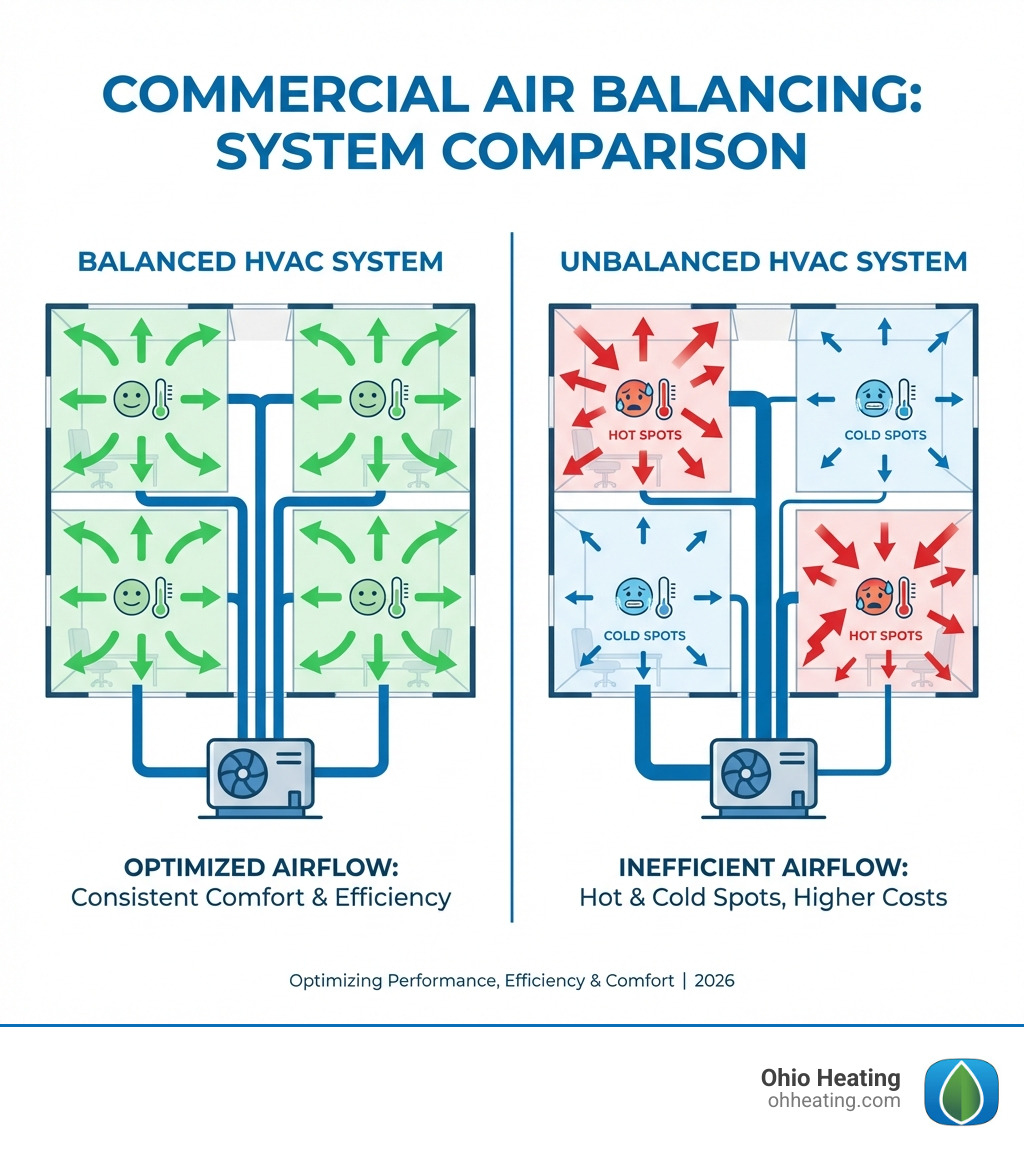
Have you ever walked into a commercial building where one office feels like a sauna while the conference room is freezing? That’s an unbalanced HVAC system. When heating and cooling systems aren’t properly balanced, they work harder, drive up energy costs, and wear out equipment faster.
Commercial air balancing is the process of testing, adjusting, and optimizing your HVAC system to ensure every space in your building receives the right amount of conditioned air. Think of it like tuning a musical instrument. A balanced system distributes conditioned air evenly, ensuring consistent comfort while using the least amount of energy.
The stakes are high for property managers. An unbalanced system means uncomfortable tenants, higher operating costs, and thousands in wasted energy. In critical facilities like healthcare settings, proper air balancing is a matter of safety and compliance.
I’m Jill Frattini, a Service Coordinator at Ohio Heating in Columbus, where I’ve spent years helping commercial clients optimize their HVAC systems through proper commercial air balancing and maintenance. I’ve seen how this service can transform a building’s performance and cut operating costs dramatically.
Commercial air balancing terminology:
What is Commercial Air Balancing and Why is it Crucial?
At its core, commercial air balancing is a specialized process of testing, adjusting, and balancing (TAB) your HVAC system to ensure it operates exactly as designed. The goal is to regulate airflow and temperature across your entire building, making sure every space receives the correct amount of conditioned air. This isn’t just about comfort; it’s about system optimization.
An evenly distributed airflow is paramount for several reasons:
- Consistent Temperatures: Air balancing ensures uniform heating and cooling, eliminating the hot and cold spots that plague many commercial properties.
- Optimal Ventilation: Proper airflow circulates fresh air effectively and removes stale, potentially contaminated air, which is crucial for indoor air quality.
- System Longevity: When your HVAC system doesn’t have to overcompensate, its components experience less strain, leading to a longer lifespan and fewer breakdowns.
In a commercial setting in Columbus, the precise distribution of air is a necessity. It directly impacts occupant comfort, energy consumption, and the health of everyone inside. As experts in commercial air balancing, we understand the intricate dance between airflow, pressure, and temperature that leads to a perfectly optimized system.
Is Your Building’s Airflow Off-Balance? Signs and Risks
Imagine your commercial building as a living organism. When its circulatory system—your HVAC—is out of whack, the symptoms are usually clear. In Central Ohio, we often see businesses struggling with high energy bills, occupant discomfort, and a system that seems to be working overtime. These are red flags that your building needs a commercial air balancing service.
Common Symptoms of an Unbalanced HVAC System
How do you know if your building’s HVAC system is struggling? The signs are noticeable once you know what to look for:
- Temperature Fluctuations: The most common complaint is inconsistent temperature, with some areas being too warm while others are too cold.
- Unexplained Utility Bill Increases: If energy bills are climbing without a clear reason, your HVAC system is likely working harder than it needs to, driving up costs.
- Poor Indoor Air Quality (IAQ): Stuffy air, persistent odors, or an increase in dust can point to poor ventilation, allowing contaminants to build up.
- Humidity and Moisture Issues: Excessive condensation or mold growth often stems from inadequate airflow, which prevents proper moisture removal.
- Drafts or Stagnant Air: Some areas may feel overly drafty, while others feel stuffy and stagnant due to uneven air distribution.
- Noisy Operation or Frequent Cycling: Unusual noises like whistling or rattling, or a system that turns on and off too frequently (short-cycling), can indicate it’s struggling to move air effectively.
These symptoms signal deeper problems that affect your building’s efficiency and occupant well-being. For more insights, check out our guide on Common Issues Causing Commercial HVAC System Failures.
The Consequences of Neglecting Air Balancing
Ignoring the signs of an unbalanced HVAC system can lead to a cascade of negative consequences for your property.
- Premature Equipment Failure: An unbalanced system puts constant strain on fans, blowers, and motors, causing them to wear out faster. This leads to costly repairs and early system replacements.
- Increased Operational Costs: A system that works harder consumes more energy, leading to inflated utility bills. Businesses can waste thousands annually on energy simply because their system isn’t optimized.
- Health and Safety Risks: Poor ventilation compromises indoor air quality by allowing pollutants, allergens, and moisture to accumulate. This can cause respiratory issues and discomfort. In specialized environments like healthcare facilities, improper balance can create serious safety hazards.
- Reduced Productivity and Comfort: Uncomfortable employees and customers are less productive and more likely to complain, which can impact morale and your business’s reputation.
The long-term risks are substantial, affecting everything from your building’s structural integrity to its market value. That’s why we emphasize addressing air balancing proactively. For more on the independence and quality of professional services, you can watch this video: AABC – Independence Matters.
The Professional Commercial Air Balancing Process
Performing commercial air balancing is a precise, multi-step process for certified professionals. At Ohio Heating, our approach is methodical, ensuring every aspect of your system is optimized for peak performance.
Step 1: Testing and System Analysis
The first phase is understanding your system’s current state and comparing it to its original design.
- Reviewing Design Documents: We examine blueprints and specifications to understand the intended airflow rates (CFM), pressure levels, and temperature zones.
- Inspecting the System: Our technicians visually inspect ductwork for damage, leaks, or blockages. We also check dampers, vents, and air filters.
- Taking Initial Measurements: Using specialized tools, we measure initial airflow, static pressure, and temperature readings throughout the building to identify problem areas and establish a performance baseline.
This analysis gives us a clear picture of your system’s performance and pinpoints areas needing adjustment.
Step 2: Adjusting and Balancing
Once we’ve completed the analysis, the “balancing act” begins. This involves making precise adjustments to bring performance in line with design specifications.
Common adjustments include:
- Adjusting Dampers: We regulate airflow by carefully adjusting dampers in the ductwork to increase or decrease air volume to specific zones.
- Calibrating Fans and Blowers: We adjust fan speeds to ensure they move the correct volume of air, sometimes fine-tuning variable speed drives (VFDs) to match the building’s load and optimize energy use.
- Addressing Leaks and Obstructions: If we find duct leaks, we seal them to prevent wasted conditioned air. We also ensure filters are clean, as dirty filters severely restrict airflow.
- Verifying Controls: We check that your building’s control system (BMS) is communicating properly with HVAC components.
The goal is to achieve proportional balancing, where the total return air volume equals the total supply, and each zone receives its design airflow. Learn more about our comprehensive Commercial HVAC Services.
Step 3: Verification and Reporting
The final stage confirms the results and provides you with clear documentation of your system’s optimized performance.
- Final Measurements: We take a new set of airflow, pressure, and temperature measurements to confirm that adjustments have achieved the desired results.
- Comparison and Documentation: We compare the final measurements against the original design specifications and document all final operating conditions.
- Detailed Balance Report: We compile a comprehensive report summarizing your HVAC system’s performance. It includes before-and-after data, a list of any outstanding issues, and recommendations for maintenance.
- Deficiency List: If we find issues that require more than balancing to fix (like damaged components or undersized ducts), we document them in a deficiency report with actionable insights.
This thorough reporting provides peace of mind and a baseline for future maintenance. We adhere to stringent industry standards, ensuring our reports are accurate and comprehensive. For an example of detailed procedures, refer to the AABC Test and Balance Procedures.
The Tangible Benefits of a Balanced System
Investing in commercial air balancing for your Columbus business isn’t just about fixing problems; it’s about open uping tangible benefits that impact your operational efficiency, occupant satisfaction, and bottom line.
Boost Energy Efficiency and Lower Operating Costs
A professionally balanced HVAC system dramatically improves energy efficiency. When your system isn’t fighting itself to maintain temperatures, it uses less energy. This leads directly to lower monthly utility bills and optimized performance, ensuring your system delivers the right amount of heating or cooling without waste. Investing in air balancing is a cost-effective choice that improves efficiency and contributes to your business’s sustainability goals.
Explore more ways to Boost Commercial AC Efficiency with Smart Energy Solutions and learn about our Building and Energy Management services.
Improve Occupant Comfort and Indoor Air Quality
A balanced system significantly improves the environment inside your commercial space.
- Consistent Comfort: Say goodbye to notorious hot and cold spots. Air balancing ensures every room maintains a consistent, comfortable temperature and eliminates uncomfortable drafts.
- Healthier Air: Proper balancing ensures adequate ventilation, which is vital for excellent indoor air quality. It helps circulate fresh air while facilitating the removal of stale air, pollutants, allergens, and excess moisture. This reduces the risk of respiratory issues and helps control humidity, preventing conditions that favor mold growth.
Improved comfort and air quality translate to higher productivity, fewer sick days, and a more positive experience for your employees and customers.
Extend the Lifespan of Your HVAC Equipment
Commercial air balancing protects your significant HVAC investment by extending its operational life. A balanced system doesn’t have to overcompensate, which reduces strain on critical components like compressors, fans, and motors. This prevents premature wear and tear, leading to fewer unexpected breakdowns and costly emergency repairs. By ensuring your equipment operates within its optimal parameters, you maximize its lifespan and your return on investment.
Maintaining Balance: Long-Term System Health
The benefits of commercial air balancing aren’t a one-time fix; they’re an ongoing commitment to your building’s optimal performance. Over time, an HVAC system can fall out of balance due to building modifications, tenant changes, system aging, or lack of maintenance. A proactive approach is key to ensuring consistent comfort and efficiency for your Columbus property.
How to Ensure Your System Stays Balanced
Maintaining a balanced commercial HVAC system requires a strategic, long-term approach.
- Scheduled Maintenance: Regular, comprehensive HVAC maintenance is the cornerstone of a balanced system. During these visits, technicians can identify potential issues before they become significant problems.
- Periodic Re-balancing: Your system will benefit from periodic re-balancing, especially after major renovations or changes in occupancy. Consider it a tune-up to reaffirm optimal airflow.
- Monitoring Performance: Pay attention to new hot or cold spots or unexpected rises in energy bills. A Building Management System (BMS) can provide invaluable data for continuous monitoring.
- Keeping Records: Maintain detailed records of all HVAC services, including air balancing reports, to help technicians quickly diagnose future issues.
- Regular Filter Changes: This simple but critical step ensures unobstructed airflow, prevents dirty air, reduces allergens, and minimizes wear on your system.
For more information on keeping your system in top shape, explore our Commercial HVAC Maintenance Services.
The Long-Term Value of Professional Commercial Air Balancing
When it comes to commercial air balancing, the expertise of certified professionals is invaluable. It’s about applying scientific principles and specialized tools to achieve precision.
- Certified Technicians: Our team consists of highly trained professionals. When selecting a company, look for certifications from reputable organizations like the National Environmental Balancing Bureau (NEBB), the Associated Air Balance Council (AABC), or the Test and Balance Bureau (TABB), which guarantee a commitment to industry best practices.
- Specialized Tools: Professional air balancing relies on advanced instrumentation to ensure accuracy. We use tools such as:
- Anemometers to measure air velocity and volume.
- Manometers to measure static pressure and identify obstructions.
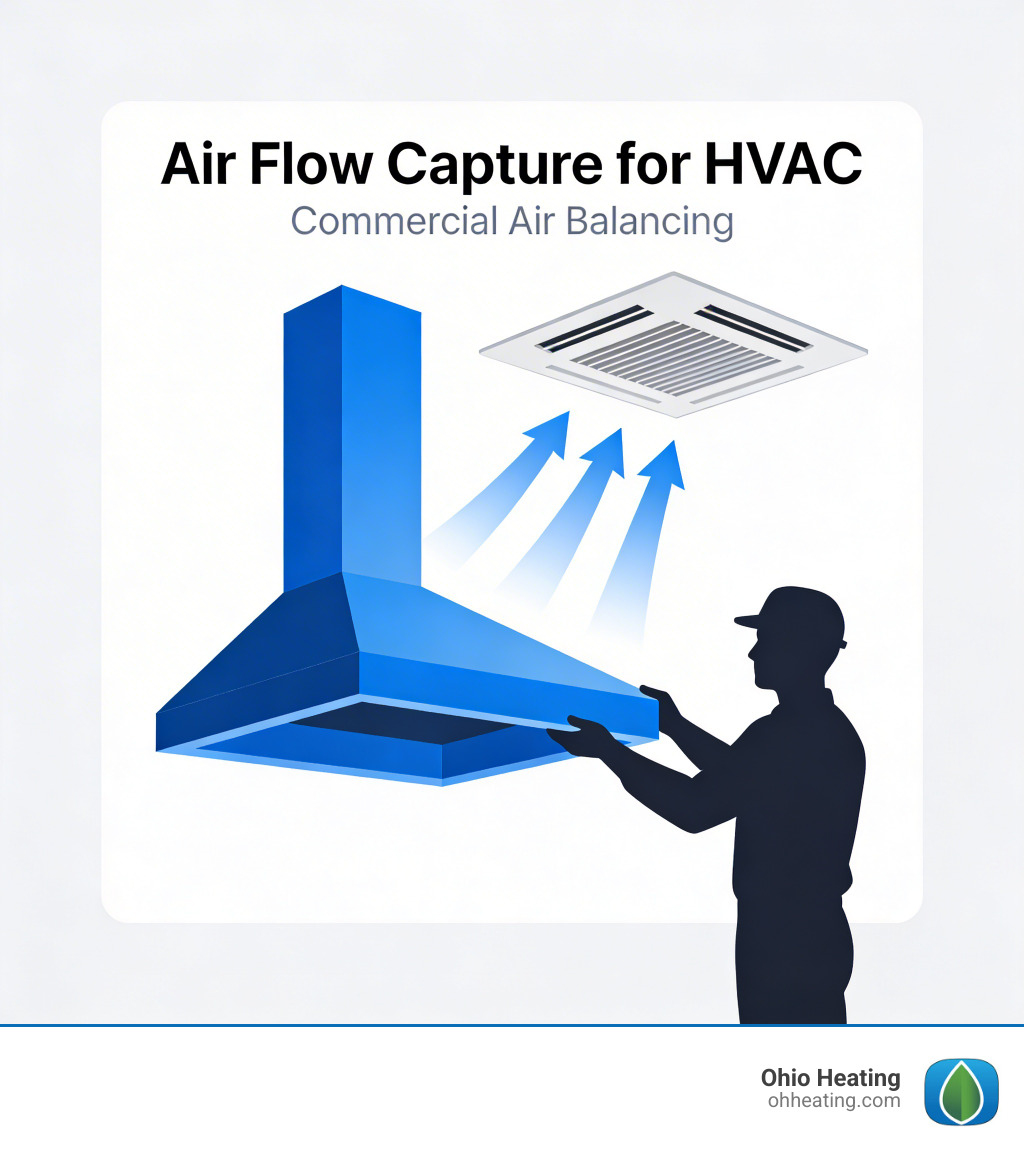
- Flow Hoods to directly measure airflow (CFM) at registers.
- Thermal Imaging Cameras to visualize temperature inconsistencies.
- Adherence to Industry Standards: Professionals follow established guidelines from organizations like ASHRAE (American Society of Heating, Refrigerating and Air-Conditioning Engineers) to ensure your system meets specific performance criteria.
- Accurate Reporting: A detailed technical report provides a complete record of your system’s performance, operating conditions, and recommendations, which is invaluable for ongoing facility management.
Hiring certified professionals, like our team at Ohio Heating, ensures your commercial air balancing is performed accurately and to the highest industry standards, delivering lasting value.
Conclusion
In the competitive commercial landscape of Columbus, Ohio, optimizing every aspect of your building’s operation is essential. Commercial air balancing stands out as a critical service that delivers profound benefits. From ensuring consistent comfort for your occupants to significantly reducing your energy bills and extending the life of your valuable HVAC equipment, the advantages are clear.
We’ve seen how an unbalanced system can lead to uncomfortable hot and cold spots, skyrocketing energy costs, and premature equipment failure. But we’ve also witnessed the transformative power of a properly balanced system: a healthier indoor environment, a more productive workforce, and substantial long-term savings.
Think of it as a proactive investment in your building’s health and your business’s financial well-being. By choosing certified professionals for your commercial air balancing needs, you’re not just getting a service; you’re gaining peace of mind, backed by expertise and precision.
At Ohio Heating, we’re committed to ensuring your commercial property operates at its peak performance. For expert Air Balance in Columbus, Ohio, contact our team today. We’re here to help you achieve optimal comfort and operational reliability.