
Commercial HVAC system upgrades: Ultimate 2025 Guide
Why Commercial HVAC System Upgrades Matter for Your Business
Commercial HVAC system upgrades are strategic investments that boost energy efficiency, cut operational costs, and prevent downtime. For property managers and business owners, upgrading aging systems can:
- Reduce energy costs by up to 30% with high-efficiency equipment
- Extend system lifespan with modern components
- Improve indoor air quality for healthier, more productive occupants
- Prevent disruptive emergency breakdowns
- Qualify for tax credits and rebates like those in the Inflation Reduction Act
- Lower greenhouse gas emissions by 25-50%
A comfortable work environment is crucial for productivity, customer satisfaction, and protecting assets. Yet many facility managers wait for a complete HVAC system failure. This reactive approach leads to emergency repairs, rushed decisions, and costly disruptions.
Instead of waiting for a breakdown, you can strategically plan an upgrade to minimize disruption and maximize your return on investment. Modern HVAC technology is far more efficient and reliable than systems from just 10-15 years ago.
This guide covers everything you need to know about commercial HVAC system upgrades, from warning signs and new technologies to costs and incentives. Whether you manage an office, retail space, or industrial facility in the Columbus area, you’ll find actionable information to make the right decision.
Is It Time for an Upgrade? Key Signs Your Commercial HVAC System is Failing
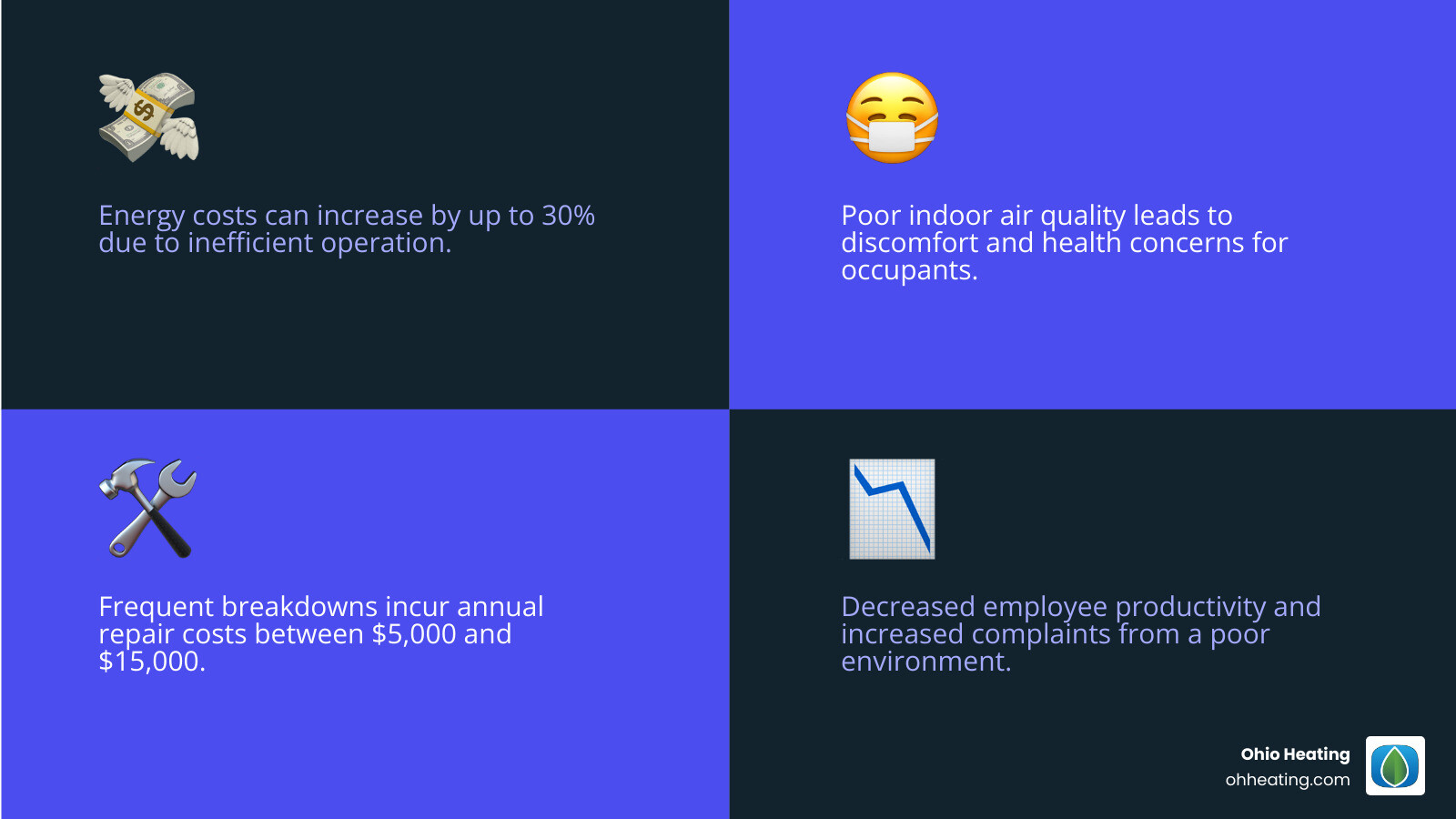
No business owner wants to face a complete HVAC system failure, which can halt operations and deter customers. Fortunately, your system usually provides warning signs before it breaks down. Recognizing these indicators early can save you significant headaches and money.
Here are the key signs that commercial HVAC system upgrades might be due:
- System Age: Most commercial systems last 15 to 25 years. If your system is over 15 years old, its efficiency is declining, making it a candidate for an upgrade evaluation.
- Rising Utility Bills: A steady increase in energy costs, despite stable rates, means your system is working harder and losing efficiency.
- Frequent Breakdowns and Costly Repairs: Constant repair calls are a red flag. The combined costs of repairs and business disruptions often justify an upgrade.
- Inconsistent Temperatures (Hot and Cold Spots): Hot and cold spots indicate your system can no longer distribute conditioned air effectively, causing discomfort for occupants.
- Poor Indoor Air Quality (IAQ): Stuffy air or occupant complaints about allergies and respiratory issues suggest your system isn’t filtering or ventilating properly, affecting health and productivity.
- Strange Noises or Odors: Grinding, banging, or foul smells coming from your vents are clear signals of mechanical problems.
- Outdated Refrigerants: Systems using phased-out refrigerants like R-22 are expensive and difficult to service. An upgrade moves you to modern, eco-friendly alternatives.
- Employee and Customer Complaints: Consistent complaints from staff or customers are direct feedback that your HVAC system is failing.
Recognizing these signs early allows you to make proactive decisions about commercial HVAC system upgrades, preventing a crisis and ensuring the comfort and efficiency of your facility in Central Ohio.
The Strategic Payoff: Unpacking the Benefits of a Modern HVAC System
Upgrading your HVAC system is more than a fix for current problems; it’s a strategic investment in your business’s long-term success. The benefits go far beyond just keeping people comfortable.
Energy efficiency is the most immediate benefit. Modern systems can cut heating and cooling costs by up to 30% compared to older units. These savings, which can range from thousands to over $100,000 annually depending on facility size, can lead to a payback period as short as two years.
Improved comfort has a profound impact. Consistent temperatures eliminate hot and cold spots, improving employee focus, customer experience, and overall morale.
Better indoor air quality is another key benefit. Modern systems use advanced filtration and ventilation technologies to remove pollutants and bring in fresh air efficiently. This leads to fewer sick days and healthier, more productive occupants, as highlighted in the EPA’s guide on Energy Savings Plus Health.
A high-performance, efficient HVAC system increases property value. It’s a key selling point for potential buyers and tenants, signaling lower operating costs and less required investment.
Upgrading can reduce your carbon footprint by 25-50%, helping you meet sustainability goals and improve your brand’s reputation.
Finally, modern systems offer improved reliability and less downtime. Smart diagnostics prevent major issues, eliminating the stress and cost of emergency repairs. At Ohio Heating, we’ve seen how new systems provide peace of mind for Columbus businesses.
When you view commercial HVAC system upgrades this way, it’s clear they are an investment in lower costs, happier occupants, a healthier environment, and a more valuable, sustainable facility.
Retrofit vs. Replace: Making the Right Call for Your Facility
When your HVAC system ages, you must decide whether to retrofit or replace it. The right choice for your commercial HVAC system upgrades depends on your system’s condition, budget, and long-term goals.
What is an HVAC Retrofit?
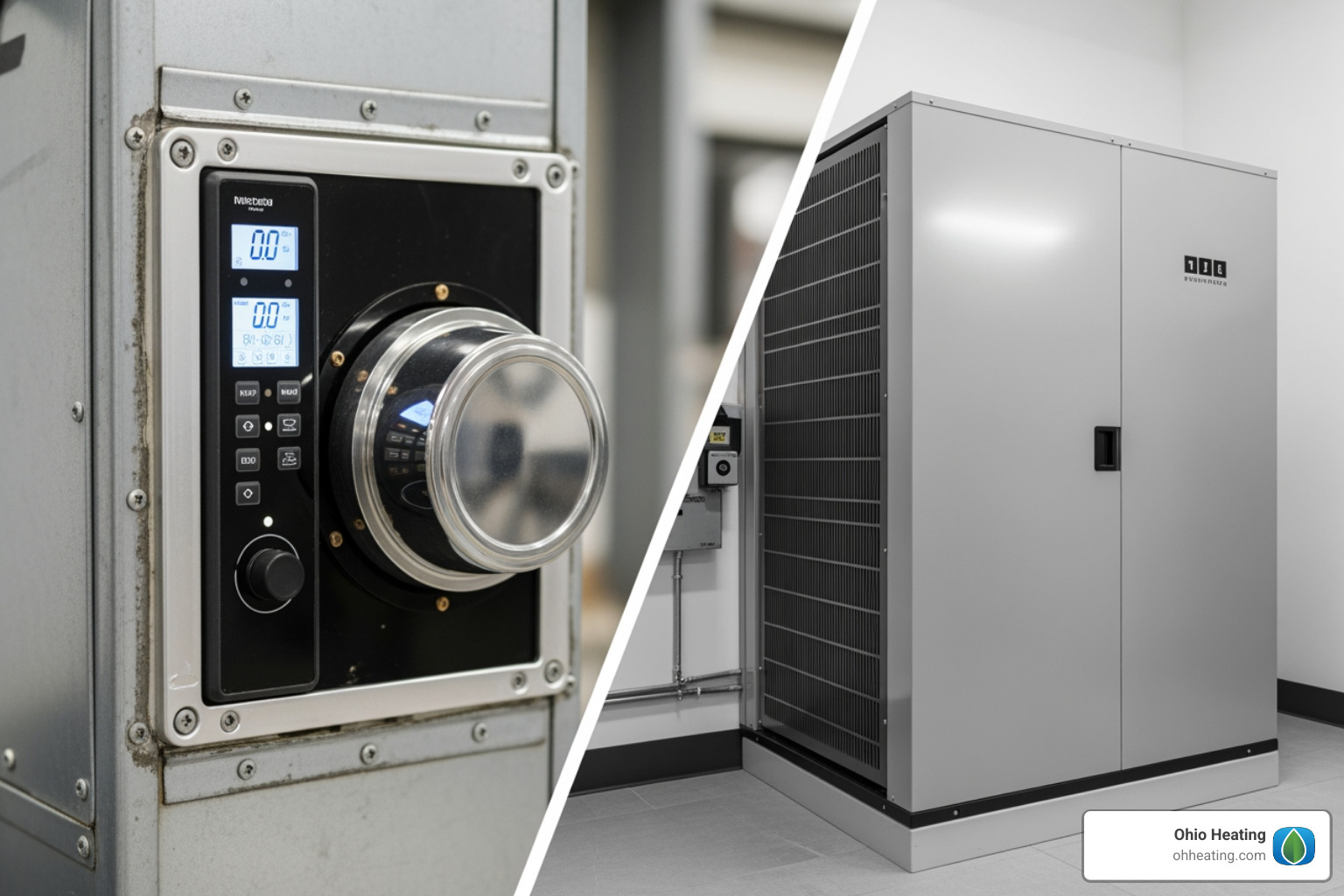
A retrofit involves upgrading specific components of your existing system—like fans, controls, or ventilators—to improve performance and efficiency. This approach can extend your system’s lifespan without a full replacement. For more details, see the HVAC Retrofit guide from energy.gov.
When Does Retrofitting Make Sense?
A retrofit is often the best choice when:
- The core system (ductwork, framework) is in good condition.
- Budget constraints make a full replacement difficult.
- You need to target specific inefficiencies, like outdated fans or poor airflow.
- You want to extend the system’s life for a few more years while planning a future replacement.
When is it Time for a Full Replacement?
A full replacement is the smarter investment when:
- Your system is near or past its 15-25 year lifespan.
- Frequent, costly breakdowns are disrupting your business.
- The system is incompatible with modern controls and automation.
- Evolving energy codes or refrigerant regulations require it.
- Your business needs have changed significantly since the original installation.
At Ohio Heating, we help our Columbus-area clients weigh these factors. We’ll assess your existing system, calculate potential energy savings, and consider your long-term goals to help you make the right choice for your facility.
| Feature | Retrofit | Full Replacement |
|---|---|---|
| Upfront Cost | Lower | Higher |
| Installation Time | Shorter, less disruptive | Longer, more disruptive |
| Lifespan Extension | Several years (component-dependent) | 15-25 years (for the entire new system) |
| Energy Efficiency Gains | Significant (for targeted components) | Maximum (for the entire new, high-efficiency system) |
| Warranty | On new components only | Full system warranty |
Exploring Modern Commercial HVAC System Upgrades and Technologies
Modern HVAC technology has advanced significantly, offering transformative improvements over systems from just a decade ago. When considering commercial HVAC system upgrades, it’s helpful to explore what’s now possible.
High-efficiency units use variable-speed components and advanced designs to cut energy use. We focus on SEER2 and EER2 ratings, which reflect real-world performance and predict significant utility bill savings.
Variable Refrigerant Flow (VRF) systems are ideal for buildings with diverse needs, as they can heat and cool different zones simultaneously. This technology provides precise temperature control and immediate comfort improvements.
Geothermal heat pumps use the Earth’s stable underground temperature for highly efficient heating and cooling. While the initial cost is higher, the long-term energy savings are substantial, making them a great choice for sustainable, cost-conscious businesses.
Energy Recovery Ventilation (ERV) systems pre-condition incoming fresh air using energy from the exhaust air, saving energy in both hot and cold weather. Demand-Controlled Ventilation (DCV) uses sensors to adjust ventilation based on occupancy, preventing energy waste. Both improve air quality without a major energy penalty.
Other advanced technologies include chiller plant optimization for large facilities, radiant heating and cooling for draft-free comfort, desiccant dehumidification for managing humidity in Ohio’s summers, and solar-powered HVAC for ultimate sustainability. For more technical details, the Advanced Energy Retrofit Guide from NREL is a comprehensive resource.
The Role of Smart Controls in Commercial HVAC System Upgrades
Even the best equipment needs intelligent controls to reach its potential. Smart controls are the brains behind modern commercial HVAC system upgrades.
A Building Automation System (BAS) is a central hub for managing your building’s HVAC, lighting, and other systems. It allows for remote optimization and provides alerts to prevent problems, streamlining facility management.
Smart thermostats, occupancy sensors, and CO2 sensors work together to condition spaces based on actual need, not guesswork. This is the core of Demand-Controlled Ventilation and prevents the waste of conditioning empty rooms.
Remote monitoring and predictive maintenance allow us to track performance in real-time, identifying potential issues before they cause a breakdown. This proactive approach prevents emergency calls and costly downtime.
Properly implemented smart controls can achieve energy savings of 20-50 percent while improving comfort. The performance data they generate also allows for continuous fine-tuning and optimization.
How to Choose the Right HVAC Upgrade Solution for Your Building
Choosing the right HVAC upgrade can feel overwhelming. The best solution depends on several factors unique to your building and business.
- Building Size and Type: A small retail space has different needs than a large office building or healthcare facility.
- Occupancy Patterns: A 9-to-5 office requires a different approach than a 24/7 manufacturing plant. Technologies like VRF and DCV are valuable for spaces with varied use.
- Business Operations: A quiet law office has different needs than a fitness center requiring robust ventilation.
- Ohio’s Climate: Our hot summers and cold winters make technologies like geothermal heat pumps and ERVs particularly effective.
- Budget and Long-Term Goals: Your financial plans and long-term ownership goals will shape the best investment strategy.
The most important step is a professional assessment. Our team at Ohio Heating conducts thorough evaluations of your existing system, building, and operational needs. We analyze the data and ask the right questions to recommend the solution that delivers the best value and performance for your facility.
Budgeting for Your Upgrade: Costs, Savings, and Incentives
Understanding the financial side of commercial HVAC system upgrades is a top priority for any business. While there is an upfront investment, the long-term savings often make it one of the smartest financial moves for your facility.
What Drives the Cost of Your Upgrade?
The total cost depends on several key factors:
- Building Size and Complexity: Larger, more complex buildings require more equipment and labor.
- System Condition: Older, failing systems require more extensive work than newer ones needing simple efficiency boosts.
- Technology Choice: Costs vary from basic high-efficiency units to advanced VRF or geothermal systems.
- Labor and Code Compliance: Skilled labor and adherence to energy codes are crucial investments for long-term performance.
What Should You Expect to Spend?
While costs vary, here are some general ranges for the Columbus area:
- Component Retrofits: $1,000 – $5,000
- Small Commercial System Replacement: $5,000 – $15,000
- Large Facility System Replacement: $15,000 – $30,000+
- Smart Controls/Sensors: Additional $1,000 – $5,000+
While these are significant investments, the return on investment is compelling.
The Real Payoff: Long-Term Savings That Add Up Fast
The operational savings from modern systems are remarkable, with commercial HVAC system upgrades often paying for themselves in as little as two years from energy savings alone. Real-world examples show what’s possible:
- A multifamily building saved $46,000 annually.
- A hospital cut energy use by 25%, saving over $200,000 per year.
- An office building saved over $100,000 annually with a 30% energy cost reduction.
These are typical results. For smaller commercial buildings in Columbus, annual savings often land around $2,000, while larger facilities can save $10,000 to $100,000 or more. Most of our clients see a full payback within 2 to 5 years and enjoy savings for the entire 15 to 25-year lifespan of the new system.
Leveraging Tax Credits and Rebates for Commercial HVAC System Upgrades
You don’t have to cover the full cost of your commercial HVAC system upgrades. Federal, state, and local incentive programs can significantly reduce your net investment.
The Inflation Reduction Act (IRA) of 2022 offers substantial incentives. The Commercial Buildings Energy-Efficiency Tax Deduction (179D) provides significant tax deductions for installing qualifying energy-efficient systems.
Choosing ENERGY STAR certified systems is often a requirement for these programs and helps ensure superior energy performance. Additionally, Ohio and local utility companies offer rebates for installing efficient equipment. These programs change, so it’s important to check for current availability.
Many programs base eligibility on Consortium for Energy Efficiency (CEE) tiers, requiring equipment to meet specific efficiency standards. We have helped countless Columbus businesses steer these programs to maximize their savings and ensure their commercial HVAC system upgrades deliver the best possible return on investment.
Frequently Asked Questions about Commercial HVAC Upgrades
Investing in commercial HVAC system upgrades raises many questions. Here are straightforward answers to the ones we hear most often from businesses in Columbus and Central Ohio.
How long does a commercial HVAC upgrade take?
The timeline depends on the project’s scope. A simple component retrofit may take a few days, while a full system replacement for a large building could take several weeks. Factors like building size, project complexity, and equipment lead times influence the schedule. Our priority is always to minimizing disruption to your business operations. We achieve this through careful planning, phased installations, and scheduling work during off-hours. We provide a clear timeline upfront and maintain communication throughout the project.
What is the typical lifespan of a new commercial HVAC system?
A new, high-quality commercial HVAC system has a typical lifespan of 15 to 25 years. However, achieving this depends entirely on regular, professional maintenance. Just like a car, your HVAC system needs routine care to maintain efficiency and reliability. Well-maintained systems can last for decades, while neglected ones fail prematurely. Investing in a maintenance plan is the best way to protect your investment and avoid unexpected breakdowns.
Can an HVAC upgrade improve my building’s sustainability rating?
Yes, absolutely. Commercial HVAC system upgrades are one of the most effective ways to boost your building’s sustainability. A high-efficiency upgrade can reduce your greenhouse gas (GHG) emissions by as much as 25%, with deeper improvements leading to reductions of up to 50%. This directly improves sustainability ratings like your ENERGY STAR score. For those pursuing LEED certification, HVAC upgrades contribute to multiple required credits. Beyond certifications, a greener building improves your brand’s reputation with employees, customers, and the community.
Your Partner in Performance and Efficiency
As this guide has shown, commercial HVAC system upgrades are a strategic investment in your facility’s future. It’s about more than just new equipment; it’s about changing your daily operations for the better.
Since 1999, Ohio Heating has guided businesses across Central Ohio through these critical decisions. We’ve seen how the right upgrade slashes energy bills, prevents breakdowns, and creates a more productive and comfortable environment.
An efficient HVAC system is the backbone of your operation, ensuring employee productivity, customer comfort, and predictable costs. It provides the peace of mind that comes from knowing your business won’t be shut down by a sudden system failure.
That’s the operational reliability we deliver. We don’t just install equipment; we design solutions that fit your facility’s unique needs, budget, and long-term goals.
Future-proofing your facility means selecting technologies that will serve you for the next 15 to 25 years. The long-term value of a well-planned upgrade includes not just energy savings, but also fewer repairs, less downtime, better air quality, and increased property value.
Waiting for a complete system failure is the most expensive approach. Emergency replacements lead to rushed decisions and premium prices for whatever equipment is available. We’d rather help you plan strategically.
Let us assess your current system and create a roadmap that fits your timeline and budget. Our team understands Ohio’s climate challenges and knows the local incentive programs that can reduce your costs. We are committed to expert consultation and minimizing disruption to your business.
Don’t wait for your HVAC system to make the decision for you. Learn more about our commercial HVAC services and let’s start a conversation about how commercial HVAC system upgrades can improve your facility’s performance, efficiency, and reliability.