
HVAC preventative maintenance plan: Save Big 2025
Why Your HVAC System Deserves More Than Just Emergency Calls
Your HVAC system works tirelessly behind the scenes until, suddenly, it doesn’t. A breakdown on a sweltering summer day or a frigid winter night can disrupt your business, frustrate customers, and lead to costly emergency repairs. The key to avoiding these crises is proactive care.
An HVAC preventative maintenance plan is a service agreement for regular, professional inspections and tune-ups. It’s designed to keep your system running efficiently and reliably, preventing problems before they start. Think of it as an oil change for your building’s most critical system—a small investment that prevents major headaches.
Key benefits include:
- Lower Energy Bills: Reduce energy costs by up to 30%.
- Fewer Breakdowns: Prevent up to 95% of costly system failures.
- Longer Equipment Life: Extend your system’s lifespan to 20+ years.
- Improved Air Quality: Keep your indoor air clean and healthy.
- Warranty Protection: Ensure your manufacturer’s warranty remains valid.
Why a Maintenance Plan is a Non-Negotiable Business Asset
For businesses in Columbus and Central Ohio, maintaining a comfortable and productive environment is paramount. An HVAC preventative maintenance plan isn’t just a good idea; it’s a business asset that directly protects your bottom line and operational efficiency.
Here’s why a proactive approach is essential:
-
Lower Utility Bills: HVAC systems are major energy consumers. Regular maintenance ensures peak efficiency, potentially slashing your energy bills by up to 30%. Even clean filters alone can lower energy use by 15%. Learn more about why energy efficient HVAC systems matter.
-
Improved Indoor Air Quality (IAQ): Your HVAC system circulates the air everyone breathes. Without proper care, it can harbor dust, allergens, and mold. Since indoor air can be 2 to 5 times more polluted than outdoor air, regular maintenance is crucial for a healthy workplace. Our Indoor Air Quality 101 guide has more details.
-
Extended Equipment Lifespan: A commercial HVAC system is a major investment. While neglected systems may fail in 10 years, well-maintained systems can last over 20 years. Routine tune-ups protect your investment by reducing wear and tear.
-
Fewer Breakdowns and Increased Safety: An unexpected HVAC failure can halt business operations. Preventative maintenance can reduce these costly breakdowns by up to 95%. More importantly, it addresses critical safety issues like carbon monoxide leaks and fire hazards from faulty wiring.
By investing in a maintenance plan, you gain peace of mind and protect your business from disruption. For more practical guidance, explore our Commercial HVAC Tips.
Your Year-Round HVAC Maintenance Checklist
Your HVAC system requires a seasonal approach to maintenance to handle Ohio’s weather extremes. A professional HVAC preventative maintenance plan is custom to these needs. For more details, see our Columbus HVAC Prep: Year-Round Seasonal Maintenance Guides.
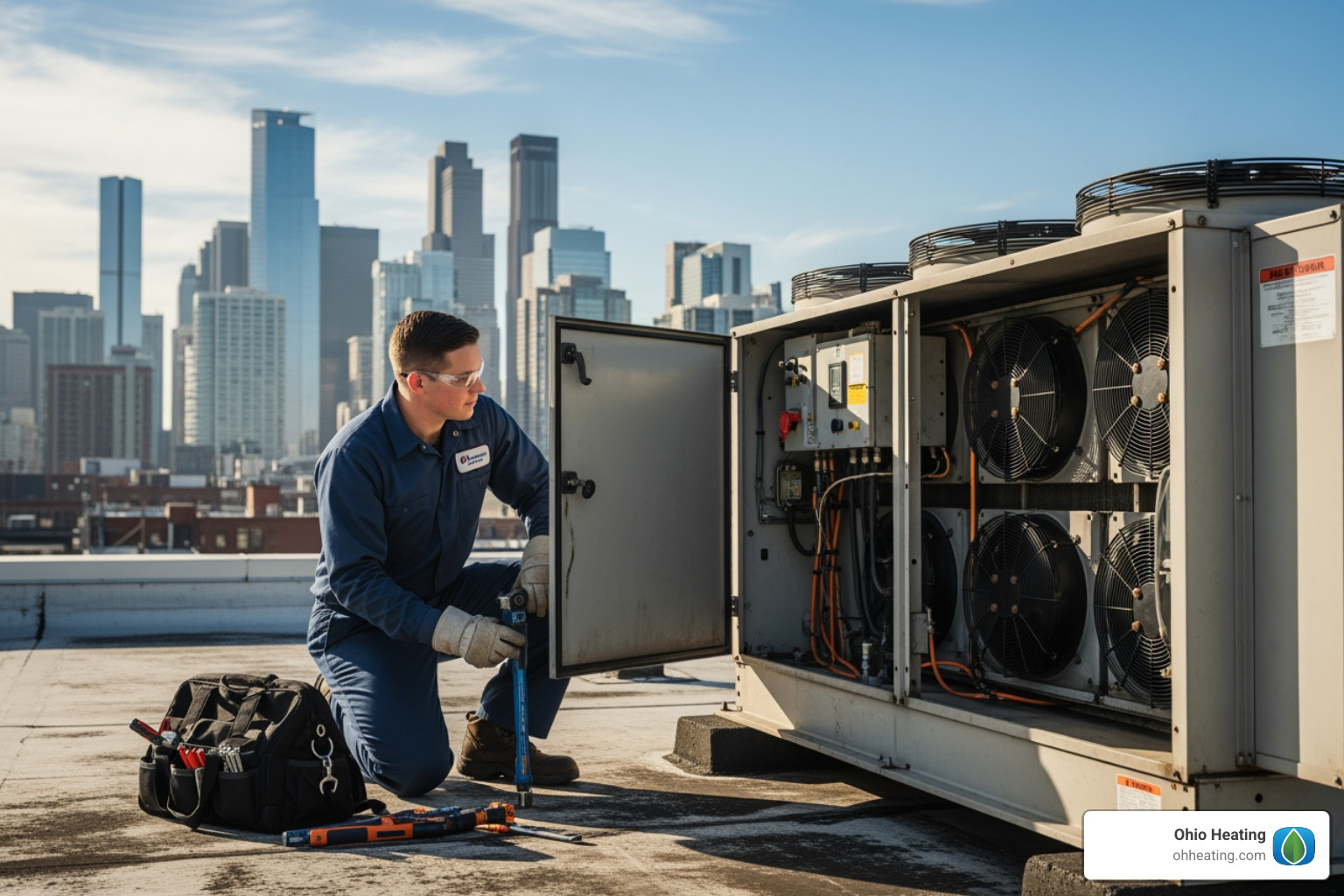
Seasonal Professional Maintenance Tasks
While some tasks are DIY-friendly, critical maintenance requires a certified technician. Our tune-ups are designed to catch problems before they become emergencies.
Spring/Summer (AC Tune-Up): We prepare your cooling system for the heat by:
- Checking refrigerant levels and inspecting for leaks.
- Cleaning the evaporator and condenser coils.
- Inspecting and tightening all electrical connections.
- Clearing condensate drain lines to prevent water damage.
- Inspecting motors, belts, and safety controls.
- Calibrating the thermostat for accuracy.
Fall/Winter (Heating Tune-Up): We ensure your heating system is safe and ready for the cold by:
- Inspecting the heat exchanger for cracks or damage (a critical carbon monoxide safety check).
- Verifying gas pressure and checking for leaks.
- Testing all safety controls.
- Cleaning burners and lubricating all moving parts.
- Inspecting the flue system for proper ventilation.
- Conducting carbon monoxide testing.
For a deeper look at winter prep, see our Comprehensive Fall Heating System Maintenance Guide for Columbus Ohio Residences.
DIY Tasks vs. Professional Service
While our technicians handle the complex work, you can help maintain your system between visits.
| DIY Tasks (Monthly/Quarterly) | Professional Tasks (Bi-annually) |
|---|---|
| Change Air Filters: This is the most important task you can do. | Electrical & Refrigerant Work: Handling high-voltage components and refrigerants requires certification. |
| Clear Debris: Keep the area around your outdoor unit clear. | Internal Component Inspection: Checking the heat exchanger, blower motor, and other internal parts. |
| Keep Vents Unblocked: Ensure registers are not blocked by furniture. | Gas & Safety Checks: Verifying gas pressure and testing safety controls to prevent hazards. |
| Listen for Unusual Noises: Report any strange sounds to your technician. | Deep Cleaning & Lubrication: Thoroughly cleaning coils and lubricating moving parts. |
Why Your HVAC System Deserves More Than Just Emergency Calls
An HVAC preventative maintenance plan is a service agreement with a professional contractor that ensures your heating and cooling systems receive regular, scheduled inspections, cleanings, and tune-ups—typically twice a year—to keep them running efficiently, safely, and reliably.
Key benefits of an HVAC preventative maintenance plan:
- Lower energy bills: Regular maintenance can reduce energy costs by up to 30%.
- Fewer breakdowns: Preventative care can reduce costly system failures by up to 95%.
- Longer equipment life: Well-maintained HVAC systems can last 20-25 years.
- Improved air quality: Clean filters and coils reduce airborne contaminants.
- Cost savings: Every $1 spent on preventative maintenance saves $4 in repair costs.
- Warranty protection: Most manufacturers require documented maintenance to honor warranty claims.
Your HVAC system works quietly in the background—until something goes wrong. A breakdown doesn’t just create discomfort; it disrupts operations and can lead to emergency repair bills ranging from $5,000 to $12,500. The difference between businesses that face frequent HVAC crises and those that don’t is a proactive maintenance plan. Think of it like an oil change for your car; your HVAC system deserves the same preventative care. Regular maintenance isn’t an expense—it’s a strategic investment that protects your operations, reduces costs, and extends the life of your equipment.
Why a Maintenance Plan is a Non-Negotiable Business Asset
Your HVAC system works around the clock to keep your Columbus business comfortable. Neglecting it threatens your bottom line, indoor air quality, and the lifespan of your equipment. An HVAC preventative maintenance plan is a strategic asset that protects your operations and your wallet.
Your energy bills are probably higher than they should be. HVAC systems account for over half of a commercial building’s energy use. When filters get clogged, your system works overtime. A complete preventative maintenance plan can slash your energy bills by up to 30%. Even a modest 10% improvement in efficiency means real money back in your budget. Learn more about Why Energy Efficient HVAC Systems Matter.
The air inside your building might be making people sick. Indoor air can be 2 to 5 times more polluted than outdoor air. Without regular maintenance, your HVAC system can circulate dust, allergens, and mold. Regular filter changes and coil maintenance actively remove these contaminants, leading to fewer sick days and a more comfortable environment. Find more in our guide on Indoor Air Quality 101: Advanced Solutions for Healthier Homes & Businesses.
You want your equipment to last decades, not years. A commercial HVAC system is a major investment. Without maintenance, it might only last 10 years. But well-maintained systems can last over 20 years. Regular tune-ups can double your equipment’s lifespan by catching small issues before they cause major damage.
Emergency breakdowns cost more than money. An AC failure during a Columbus summer or a furnace outage in winter can mean lost business and expensive emergency service. Preventative maintenance can reduce these breakdowns by up to 95%. It’s also a matter of safety: regular inspections can detect gas leaks, carbon monoxide risks, and fire hazards. For more practical guidance, explore our Commercial HVAC Tips.
Your Year-Round HVAC Maintenance Checklist
Just as Central Ohio experiences distinct seasons, your HVAC system requires a seasonal approach to maintenance. Preparing your system for the demands of summer’s heat and winter’s chill is key to its longevity and efficiency. At Ohio Heating, we believe in proactive care, which is why we’ve developed comprehensive maintenance plans custom to our local climate. You can find more details in our Columbus HVAC Prep: Year-Round Seasonal Maintenance Guides.
Seasonal Professional Maintenance Tasks
While some basic tasks can be handled in-house, many critical maintenance items require the expertise, specialized tools, and safety protocols of certified HVAC technicians. Our professional tune-ups are designed to carefully inspect and prepare your system for peak performance.
-
Spring/Summer (AC Tune-Up): As the temperatures rise in Ohio, your cooling system will be working overtime. Our spring/summer AC tune-up focuses on:
- Refrigerant Levels and Leaks: We check the refrigerant charge to ensure it’s at the optimal level and inspect for any leaks that could compromise cooling efficiency and harm the environment.
- Coil Cleaning: We thoroughly clean both the indoor evaporator coil and the outdoor condenser coil. Dirty coils significantly reduce efficiency and can lead to system breakdown. We recommend this be done twice yearly.
- Electrical Connections: We inspect and tighten all electrical connections, checking for any signs of corrosion or frayed wiring that could pose a safety hazard or lead to component failure.
- Condensate Drain Lines: We clear any clogs in the condensate drain lines and check the float switches to prevent water overflow, which can cause damage to your property and foster mold growth.
- System Components: We inspect all indoor and outdoor components, including motors, belts, circuits, safety controls, and valves, ensuring they are in good working order. We also ensure your outdoor unit is level for optimal performance.
- Thermostat Calibration: We check and calibrate your thermostat to ensure it’s accurately reading and controlling temperatures, maximizing comfort and energy savings.
-
Fall/Winter (Heating Tune-Up): Before the colder months set in, preparing your heating system is crucial for safety and warmth. Our fall/winter heating tune-up includes:
- Heat Exchanger Inspection: This is a critical safety check for gas furnaces. We carefully inspect the heat exchanger for any cracks or damage that could lead to dangerous carbon monoxide leaks.
- Gas Pressure and Connections: We verify proper gas pressure and inspect all gas connections for leaks, ensuring safe and efficient operation of your heating system.
- Safety Controls: We test all safety controls to confirm they are functioning correctly, preventing potential hazards.
- Burner Cleaning: We clean the furnace burners to ensure efficient combustion and proper heat distribution.
- Lubrication of Moving Parts: We lubricate all moving components, such as blower motors and bearings, to reduce friction, minimize wear and tear, and extend the lifespan of these parts.
- Flue System Verification: We ensure the flue system is securely connected and free of obstructions, allowing for proper ventilation of combustion byproducts.
- Carbon Monoxide Testing: We test for carbon monoxide leaks, providing an essential safety check for your business.
- Blower Assembly: We clean and inspect the blower assembly to ensure optimal airflow and efficiency.
- Thermostat Calibration: Just like in spring, we check and calibrate your thermostat for accurate heating control.
- Pilot Light/Ignitor: We inspect the pilot light or ignitor for reliable starting of your furnace.
- Boiler-Specific Checks: For businesses with boilers, we conduct thorough checks of controls, safeties, pumps, low water cutoffs, and sight glasses.
For a more in-depth look at preparing your heating system, consult our Comprehensive Fall Heating System Maintenance Guide for Columbus Ohio Residences.
DIY Tasks vs. Professional Service
As a business owner, you might be wondering what you can do yourself to contribute to your HVAC system’s health. While professional service is indispensable, there are several simple tasks you can perform to keep things running smoothly between our visits.
| DIY Tasks (Monthly/Quarterly) | Professional Tasks (Bi-annual/Annual) |
|---|---|
| Change Air Filters: Replace approximately every 1-3 months. | Electrical Work: Inspecting terminals, tightening connections, checking for corrosion or frayed wires. |
| Clear Debris from Outdoor Unit: Ensure at least 2 feet of clearance around the unit. | Refrigerant Handling: Checking levels, detecting leaks, and safely recharging refrigerant. |
| Keep Vents Unblocked and Clean: Ensure all registers are free of obstructions. | Internal Component Inspection: Thorough examination of heat exchangers, blowers, and motors. |
| Check Thermostat Settings and Batteries: Ensure correct programming and replace batteries as needed. | Gas Line Checks: Verifying proper gas pressure and inspecting all gas connections for leaks. |
| Inspect AC Drain Pan and Line: Look for visible leaks, cracks, or signs of mold. | Deep Cleaning: Specialized cleaning of evaporator and condenser coils. |
| Listen for Unusual Noises/Odors: Note any changes and report them to your HVAC technician. | Lubrication of Moving Parts: Applying proper lubricants to motors and bearings to reduce wear. |
Why a Maintenance Plan is a Non-Negotiable Business Asset
For businesses in Columbus and Central Ohio, maintaining a comfortable and productive environment is paramount. An HVAC preventative maintenance plan isn’t just a good idea; it’s a business asset that directly protects your bottom line and operational efficiency.
Here’s why a proactive approach is essential:
-
Lower Utility Bills: HVAC systems are major energy consumers. Regular maintenance ensures peak efficiency, potentially slashing your energy bills by up to 30%. Even clean filters alone can lower energy use by 15%. Learn more about why energy efficient HVAC systems matter.
-
Improved Indoor Air Quality (IAQ): Your HVAC system circulates the air everyone breathes. Without proper care, it can harbor dust, allergens, and mold. Since indoor air can be 2 to 5 times more polluted than outdoor air, regular maintenance is crucial for a healthy workplace. Our Indoor Air Quality 101 guide has more details.
-
Extended Equipment Lifespan: A commercial HVAC system is a major investment. While neglected systems may fail in 10 years, well-maintained systems can last over 20 years. Routine tune-ups protect your investment by reducing wear and tear.
-
Fewer Breakdowns and Increased Safety: An unexpected HVAC failure can halt business operations. Preventative maintenance can reduce these costly breakdowns by up to 95%. More importantly, it addresses critical safety issues like carbon monoxide leaks and fire hazards from faulty wiring.
By investing in a maintenance plan, you gain peace of mind and protect your business from disruption. For more practical guidance, explore our Commercial HVAC Tips.
Your Year-Round HVAC Maintenance Checklist
Just as Central Ohio experiences distinct seasons, your HVAC system requires a seasonal approach to maintenance. Preparing your system for the demands of summer’s heat and winter’s chill is key to its longevity and efficiency. At Ohio Heating, we believe in proactive care, which is why we’ve developed comprehensive maintenance plans custom to our local climate. You can find more details in our Columbus HVAC Prep: Year-Round Seasonal Maintenance Guides.
Seasonal Professional Maintenance Tasks
While some basic tasks can be handled in-house, many critical maintenance items require the expertise, specialized tools, and safety protocols of certified HVAC technicians. Our professional tune-ups are designed to carefully inspect and prepare your system for peak performance.
-
Spring/Summer (AC Tune-Up): As the temperatures rise in Ohio, your cooling system will be working overtime. Our spring/summer AC tune-up focuses on:
- Refrigerant Levels and Leaks: We check the refrigerant charge to ensure it’s at the optimal level and inspect for any leaks that could compromise cooling efficiency and harm the environment.
- Coil Cleaning: We thoroughly clean both the indoor evaporator coil and the outdoor condenser coil. Dirty coils significantly reduce efficiency and can lead to system breakdown. We recommend this be done twice yearly.
- Electrical Connections: We inspect and tighten all electrical connections, checking for any signs of corrosion or frayed wiring that could pose a safety hazard or lead to component failure.
- Condensate Drain Lines: We clear any clogs in the condensate drain lines and check the float switches to prevent water overflow, which can cause damage to your property and foster mold growth.
- System Components: We inspect all indoor and outdoor components, including motors, belts, circuits, safety controls, and valves, ensuring they are in good working order. We also ensure your outdoor unit is level for optimal performance.
- Thermostat Calibration: We check and calibrate your thermostat to ensure it’s accurately reading and controlling temperatures, maximizing comfort and energy savings.
-
Fall/Winter (Heating Tune-Up): Before the colder months set in, preparing your heating system is crucial for safety and warmth. Our fall/winter heating tune-up includes:
- Heat Exchanger Inspection: This is a critical safety check for gas furnaces. We carefully inspect the heat exchanger for any cracks or damage that could lead to dangerous carbon monoxide leaks.
- Gas Pressure and Connections: We verify proper gas pressure and inspect all gas connections for leaks, ensuring safe and efficient operation of your heating system.
- Safety Controls: We test all safety controls to confirm they are functioning correctly, preventing potential hazards.
- Burner Cleaning: We clean the furnace burners to ensure efficient combustion and proper heat distribution.
- Lubrication of Moving Parts: We lubricate all moving components, such as blower motors and bearings, to reduce friction, minimize wear and tear, and extend the lifespan of these parts.
- Flue System Verification: We ensure the flue system is securely connected and free of obstructions, allowing for proper ventilation of combustion byproducts.
- Carbon Monoxide Testing: We test for carbon monoxide leaks, providing an essential safety check for your business.
- Blower Assembly: We clean and inspect the blower assembly to ensure optimal airflow and efficiency.
- Thermostat Calibration: Just like in spring, we check and calibrate your thermostat for accurate heating control.
- Pilot Light/Ignitor: We inspect the pilot light or ignitor for reliable starting of your furnace.
- Boiler-Specific Checks: For businesses with boilers, we conduct thorough checks of controls, safeties, pumps, low water cutoffs, and sight glasses.
For a more in-depth look at preparing your heating system, consult our Comprehensive Fall Heating System Maintenance Guide for Columbus Ohio Residences.
DIY Tasks vs. Professional Service
As a business owner, you might be wondering what you can do yourself to contribute to your HVAC system’s health. While professional service is indispensable, there are several simple tasks you can perform to keep things running smoothly between our visits.
| DIY Tasks (Monthly/Quarterly) | Professional Tasks (Bi-annual/Annual) |
|---|---|
| Change Air Filters: Replace approximately every 1-3 months. | Electrical Work: Inspecting terminals, tightening connections, checking for corrosion or frayed wires. |
| Clear Debris from Outdoor Unit: Ensure at least 2 feet of clearance around the unit. | Refrigerant Handling: Checking levels, detecting leaks, and safely recharging refrigerant. |
| Keep Vents Unblocked and Clean: Ensure all registers are free of obstructions. | Internal Component Inspection: Thorough examination of heat exchangers, blowers, and motors. |
| Check Thermostat Settings and Batteries: Ensure correct programming and replace batteries as needed. | Gas Line Checks: Verifying proper gas pressure and inspecting all gas connections for leaks. |
| Inspect AC Drain Pan and Line: Look for visible leaks, cracks, or signs of mold. | Deep Cleaning: Specialized cleaning of evaporator and condenser coils. |
| Listen for Unusual Noises/Odors: Note any changes and report them to your HVAC technician. | Lubrication of Moving Parts: Applying proper lubricants to motors and bearings to reduce wear. |
The Financial Case for an HVAC Preventative Maintenance Plan
For any business, the bottom line matters. An HVAC preventative maintenance plan is a clear-cut financial win, protecting you from unexpected and substantial costs.
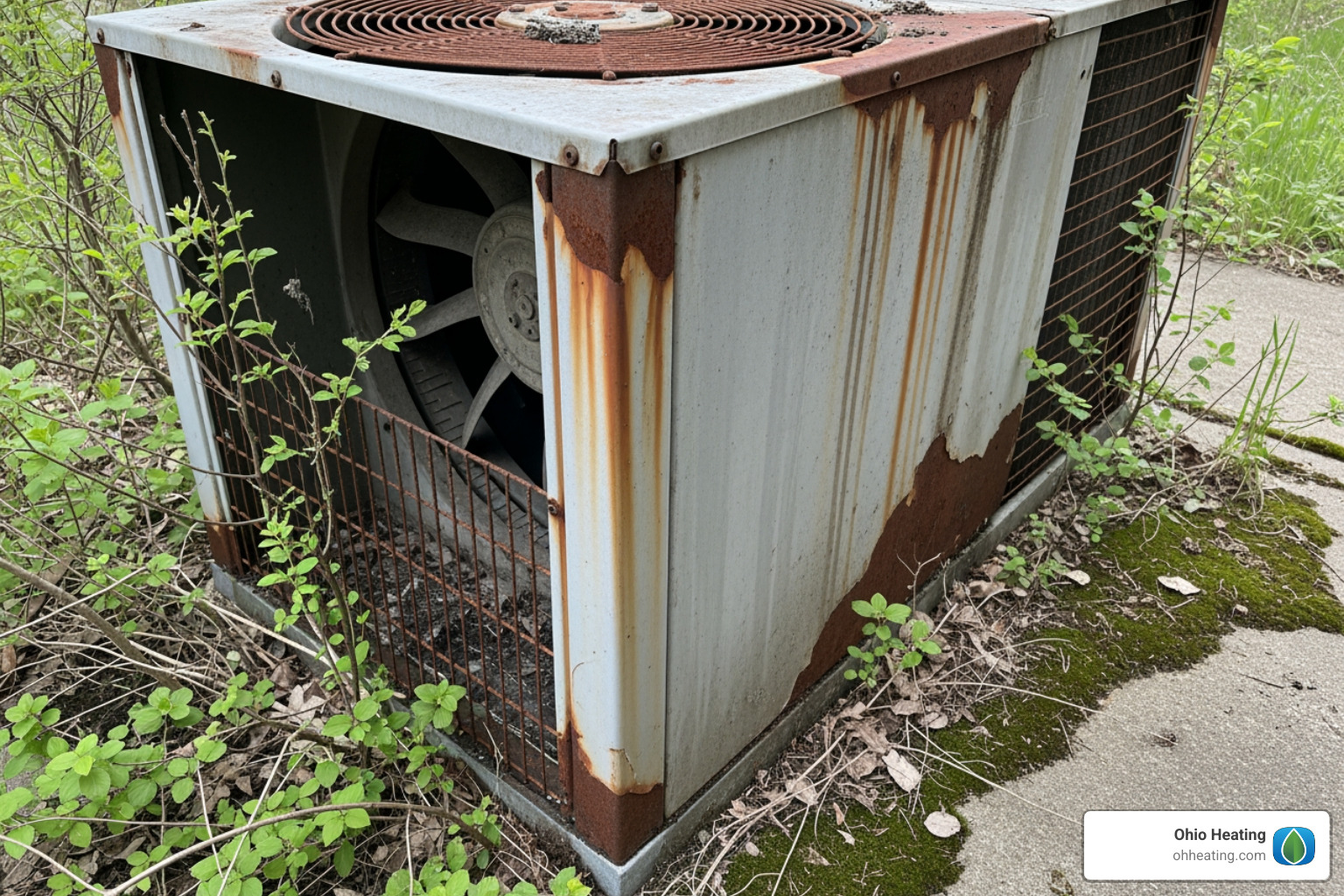
The Cost of Neglect vs. The Value of Maintenance
- Emergency Repairs: A major breakdown can cost anywhere from $5,000 to $12,500, not including lost business during downtime. A full system replacement is an even larger capital expense. You can learn more by Understanding Commercial HVAC Installation Costs in Columbus.
- Preventative Maintenance: In contrast, a typical maintenance visit is a minor operational expense, often available through affordable annual or monthly plans.
- Return on Investment: The U.S. Environmental Protection Agency estimates that every $1 spent on preventative maintenance saves $4 in repair costs. This 400% ROI comes from avoiding major failures, improving energy efficiency, and extending the life of your equipment.
The choice is simple: a small, predictable maintenance cost or a large, unexpected repair bill.
How often should maintenance be performed?
For most commercial HVAC systems in Central Ohio, professional maintenance twice a year is ideal. We recommend:
- An AC tune-up in the spring to prepare for summer heat.
- A furnace tune-up in the fall to ensure reliability through winter.
This schedule ensures your system is ready for peak demand. However, some businesses may require more frequent service. Factors like the age of your system, high-usage environments (e.g., restaurants, data centers), and specific industry regulations can make quarterly check-ups a better fit. At Ohio Heating, we customize our HVAC preventative maintenance plans to your specific needs and budget.
Frequently Asked Questions about HVAC Maintenance
Here are answers to some common questions about commercial HVAC maintenance.
What are the signs my HVAC system needs repair?
Your system will often show warning signs before a major failure. Call for service if you notice:
- Unusual Noises: Grinding, squealing, or banging sounds.
- Strange Odors: Musty or burning smells.
- Weak Airflow: Air from vents is weaker than usual.
- Higher Energy Bills: An unexplained spike in your utility costs.
- Frequent Cycling: The system turns on and off too often.
- Inconsistent Temperatures: Hot and cold spots in your building.
- Water Leaks: Puddles or moisture around indoor or outdoor units.
For a more detailed list, see our guide on 7 Crucial Signs Your HVAC System Needs Immediate Repair.
What components are checked during a maintenance visit?
A professional tune-up is comprehensive. Our technicians inspect, clean, and test key components, including:
- Thermostat calibration
- Electrical connections and motors
- Refrigerant levels
- Condensate drains
- Evaporator and condenser coils
- Air filters
- Safety controls
- Heat exchanger (for furnaces)
- Gas connections and pressure (for furnaces)
Does a maintenance plan cover repair costs?
An HVAC preventative maintenance plan is designed to prevent repairs, not act as an insurance policy. However, our plans provide significant value by including:
- Regular tune-ups to reduce the likelihood of breakdowns.
- Discounts on parts and labor for any necessary repairs.
- Priority service to get you back up and running faster.
- Waived diagnostic fees in many cases.
A plan significantly lowers your overall repair costs by catching issues early and offering financial benefits when repairs are necessary. Learn more about our Commercial HVAC Repair & Replacement services.
Secure Your Business’s Comfort and Bottom Line
Your HVAC system is a critical asset that keeps your business comfortable, productive, and profitable. An HVAC preventative maintenance plan is not an expense—it’s a smart investment that delivers measurable returns through lower energy bills, fewer breakdowns, and longer equipment life.
Every dollar spent on maintenance can save you four dollars in future repairs. Don’t wait for a system failure to disrupt your operations and impact your bottom line. A proactive approach ensures your system runs efficiently, your employees and customers are comfortable, and your investment is protected.
Since 1999, Ohio Heating has helped businesses across Central Ohio avoid costly HVAC emergencies. Our goal is to prevent problems before they happen, providing you with reliable service and peace of mind.
Ready to take control of your comfort and costs? Protect your investment with our Commercial HVAC services and let Ohio Heating create a maintenance plan that keeps your business running smoothly all year long.