
Cold Comfort: Troubleshooting Your Furnace’s Icy Blast
What to Do When Your Furnace Is Blowing Cold Air
Furnace blowing cold air is one of the most common heating complaints — especially when temperatures drop and you need your system most.
Here are the most likely reasons your furnace is blowing cold air:
- Thermostat set to “On” instead of “Auto” — the fan runs constantly, even without heat
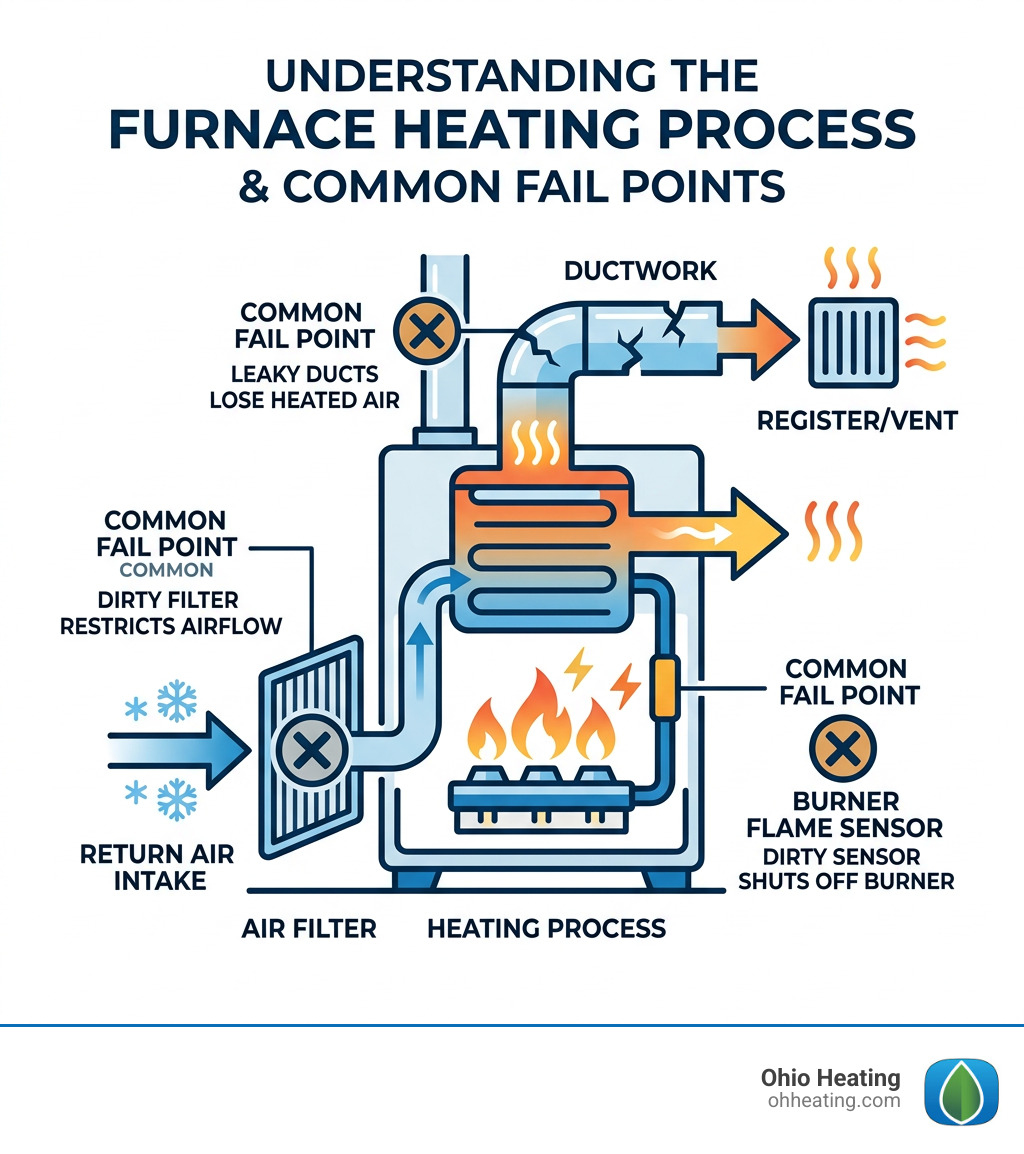
- Dirty air filter — restricts airflow, causes overheating, triggers a safety shutdown
- Pilot light or ignition failure — no flame means no heat
- Dirty flame sensor — shuts off the burner even when a flame is present
- Clogged condensate line (high-efficiency furnaces) — triggers a safety lockout
- Leaky ductwork — up to 20-30% of heated air can escape before reaching your vents
- Blocked or closed vents — restricts warm air from circulating
- Normal startup delay — furnaces can take 10-15 minutes to blow hot air after turning on
In many cases, the fix is simple. But some causes — like a cracked heat exchanger or gas supply issue — require a professional right away.
It’s no coincidence that furnace problems tend to surface on the coldest days of the year, often right after months of sitting idle. Whether you manage a single property or several, a furnace that suddenly pushes cold air instead of warm is more than an inconvenience — it’s a disruption that needs a fast, accurate diagnosis.
This guide walks you through the most common causes and what to do about each one.
My name is Jill Frattini, Service Coordinator at Ohio Heating in Columbus, OH, where I’ve spent years coordinating furnace repair and maintenance calls — including plenty of furnace blowing cold air emergencies. I’ll help you quickly identify what’s wrong and whether it’s something you can fix yourself or a job for a certified technician.
Furnace blowing cold air terms to know:
- emergency heating and air conditioning repair columbus ohio
- Boiler repair Columbus Ohio
- quality air heating and cooling columbus ohio
Why Is My Furnace Blowing Cold Air?
When you feel a chill coming from your vents, your first instinct might be to panic. However, understanding the basic mechanics of your heating system can help de-mystify the “icy blast.” A furnace is a complex machine with several safety interlocks. If any part of the combustion or distribution process fails, the system is designed to protect itself—often by shutting off the heat while keeping the fan running to cool down internal components.
The Warmup Period and Residual Air
One of the most frequent reasons a homeowner thinks their furnace blowing cold air is a sign of a breakdown is simply a lack of patience. Your furnace is a bit like a tea kettle; it doesn’t reach boiling temperatures the second you flip the switch.
When the thermostat calls for heat, the “inducer motor” starts first to clear the combustion chamber. Then the igniter glows or sparks, the gas valve opens, and the burners light. Only after the heat exchanger reaches a specific temperature does the blower motor kick in. Even then, the first bit of air you feel is the “residual air” that was sitting in your cold ductwork. This Normal startup delay is a standard part of the cycle. To keep these components moving smoothly, consistent Forced Air Furnace Maintenance is essential for every Columbus home.
Common Causes of a Furnace Blowing Cold Air
If the air stays cold for more than 15 minutes, we need to look at the “brains” of the operation: the thermostat.
The “On” vs. “Auto” Trap This is the “Is it plugged in?” equivalent of the HVAC world. Look at your thermostat. Is the fan setting set to “ON”? If it is, your blower motor will run 24/7, regardless of whether the furnace is actually heating. When the furnace finishes a heating cycle and the burners turn off, the fan keeps spinning, circulating unheated room air. Switching the setting to “AUTO” ensures the fan only blows when the air is actually hot.
Thermostat Power and Settings Check that your thermostat is actually set to “HEAT” and that the target temperature is at least five degrees above the current room temperature. If the screen is blank or flickering, it might be time for a battery replacement. A faulty or unpowered thermostat can’t send the “start” signal to your furnace, leaving you with nothing but a breeze. If your thermostat seems fine but the air is still cold, you may need Reliable Furnace Repair Services for Fast Solutions to check the wiring or the control board.
Is it normal for a furnace to blow cold air at startup?
Yes, to an extent. As mentioned, the “initial purge” of air is simply the cold air that was already inside your ducts. Think about it: if your house is 60 degrees, the air inside your metal ductwork is also 60 degrees. It takes a few minutes for the “temperature rise”—the difference between the air coming in and the air going out—to become noticeable.
In a standard Columbus winter, you should wait about 10-15 minutes. If the air hasn’t transitioned from a “cool breeze” to a “toasty flow” by then, your system likely experienced a “lockout” during the ignition phase.
Airflow and Maintenance Issues
If your thermostat is set correctly but you’re still shivering, the culprit is often a lack of maintenance. Airflow is the lifeblood of your furnace. When airflow is restricted, heat builds up inside the unit until it reaches dangerous levels.
The Danger of Dirty Filters
A dirty air filter is the number one cause of furnace service calls in Central Ohio. When a filter is clogged with dust, pet dander, and debris, the blower motor has to work twice as hard to pull air through. This creates “static pressure.” If the air can’t move fast enough, the heat exchanger overheats.
To prevent the metal from cracking or catching fire, a safety device called a “limit switch” triggers. This switch kills the burners immediately but keeps the blower running to cool the system down. The result? Your furnace blowing cold air until the unit resets (or stays locked out).
| Filter Type | Replacement Schedule | Best For |
|---|---|---|
| 1-inch Fiberglass | Every 30 Days | Basic protection; high airflow |
| 1-inch Pleated | Every 60-90 Days | Standard homes; captures more dust |
| 4-inch High-Efficiency | 6-12 Months | Families with pets or allergies |
| Washable Filters | Clean Monthly | Eco-conscious; requires thorough drying |
Regularly checking your filter is one of the top 7 Furnace Maintenance Tips for Columbus Homeowners to avoid mid-winter breakdowns.
Impact of Leaky Ductwork and Blocked Vents
Sometimes the furnace is doing its job perfectly, but the heat never makes it to your toes. According to Energy Star, the typical home loses 20 to 30 percent of the air moving through the duct system due to leaks and poor connections. If your ducts run through a cold attic or crawlspace and have holes, they will suck in icy air and mix it with the warm air from the furnace.
Similarly, check your “return registers” and “supply vents.” If you’ve pushed a sofa over a vent or closed off too many dampers in unused rooms, you’re strangling the system. This leads back to the overheating and limit switch issues mentioned above. If you suspect your ducts are the problem, professional Furnace Repair in Columbus can help seal those leaks and restore your comfort.
Ignition and Sensor Failures
If your furnace is blowing air but the burners never light, the problem is likely in the ignition system. Modern furnaces (post-2010) rarely use a “standing” pilot light, but older models in Central Ohio still do.
The Pilot Light and Thermocouple
If you have an older furnace, look for a small blue flame. If it’s out, your furnace won’t have a way to light the main burners. This often happens due to a draft or a faulty “thermocouple”—a safety sensor that detects the flame. If the thermocouple is worn out, it won’t allow the gas valve to open because it doesn’t “see” a flame.
The Infamous Flame Sensor
In modern units, the “flame sensor” is the most common part to fail. This is a small, thin metal rod that sits in the path of the burner flame. Over time, it develops a thin coating of carbon or “soot.” This oxidation acts as an insulator. The furnace will light for a few seconds, the sensor will fail to detect the flame due to the dirt, and the system will shut down the gas as a safety precaution.
Cleaning a flame sensor is a common DIY task for the handy homeowner—usually involving a light rub with an emery cloth or steel wool—but it requires precision. If you’re not comfortable opening your furnace cabinet, our team providing Furnace Repair in Dublin can handle this quick fix for you.
Troubleshooting a Gas Furnace Blowing Cold Air
Beyond sensors, there are mechanical issues that can stop the heat:
- Gas Supply: Is your gas valve turned on? Check other gas appliances like your stove or water heater. If nothing is working, contact your utility provider.
- Clogged Condensate Lines: High-efficiency furnaces produce water (condensate) as they run. If the drain line or “trap” gets clogged with sludge or debris, a float switch will trigger, preventing the furnace from lighting to avoid a flood.
- Safety Lockout: If your furnace tries to light three times and fails, the control board enters a “hard lockout.” You may need to flip the power switch off and on to reset it, but if it happens again, there is an underlying mechanical failure.
For those living in the outskirts of the city, Furnace Repair in Canal Winchester often involves clearing these drainage lines after a heavy freeze.
When to Call a Professional for Repairs
While a dirty filter or a thermostat setting is an easy fix, some furnace blowing cold air causes are downright dangerous.
The Cracked Heat Exchanger This is the “Red Alert” of furnace problems. The heat exchanger is the metal chamber where gas is burned. If it cracks due to age or overheating, it can leak Carbon Monoxide (CO) into your home’s air supply. Signs of a cracked heat exchanger include a flickering yellow flame (instead of steady blue), excessive soot, or a CO alarm sounding. If your CO alarm goes off, get everyone out of the house and call 911 and an HVAC pro immediately.
Mechanical Failures If you hear grinding, screeching, or humming without any air movement, your blower motor or “capacitor” may have died. Replacing these parts involves high-voltage electricity and should not be a DIY project.
Repair Costs vs. Replacement Minor repairs like a flame sensor cleaning or a capacitor replacement are relatively inexpensive. However, if your control board is fried or your blower motor is shot, costs can climb. If your furnace is over 15 years old and requires a repair costing more than 50% of its value, we often recommend replacement. For residents needing Furnace Repair Services in Westerville Ohio, we provide transparent quotes to help you make the best choice for your budget.
Frequently Asked Questions about Furnace Issues
How long should I wait for my furnace to blow hot air?
We recommend the “15-minute rule.” Give the system time to complete its startup sequence, purge the cold air from the ducts, and reach its operating temperature. If the air is still cold after 15 minutes of continuous running, there is a malfunction.
Is it safe to relight my own pilot light?
If you have the manufacturer’s manual and feel comfortable following the steps, it is generally safe. However, if you smell gas (a “rotten egg” odor), do not strike a match. Leave the house and call for help. If the pilot light won’t stay lit after several attempts, the thermocouple is likely broken and needs professional replacement.
How often should I replace my furnace filter?
In the Columbus area, we recommend checking your filter once a month. If you have pets that shed or family members with allergies, you should replace it every 30 to 60 days. At a minimum, never go longer than 90 days without a fresh filter.
Conclusion
A furnace blowing cold air is your home’s way of telling you that something isn’t right. Whether it’s a simple thermostat adjustment or a more serious ignition failure, addressing the problem early prevents further damage to your system. Most furnaces are designed to last about 15 to 20 years, but only if they receive the care they need.
At Ohio Heating, we’ve been keeping Central Ohio warm since 1999. We understand that a cold house is an emergency, and we pride ourselves on providing the “Quality Air” and reliable service you deserve. Don’t spend another night huddled under blankets. From annual maintenance to emergency repairs, we are here to ensure your furnace provides nothing but “warm comfort” all winter long.
Schedule expert furnace service today with Ohio Heating and let us get your heat back on track.