
HVAC Static Pressure: The Test That Explains Weak Airflow
A homeowner in Hilliard replaced a 20-year-old furnace last fall and still has a back bedroom that barely gets air. The new equipment carries a higher efficiency rating, the installer set the blower speed by the book, and the complaint did not change. HVAC static pressure is the measurement that usually explains that outcome, because a blower can only move air through the duct system it was handed.
Static pressure is the resistance your air ducts, filter and coil put in front of the blower, measured in inches of water column. Think of it as the pressure the fan has to overcome to deliver air. When it runs high you get low airflow, rooms fall out of balance, and equipment works harder for less comfort.
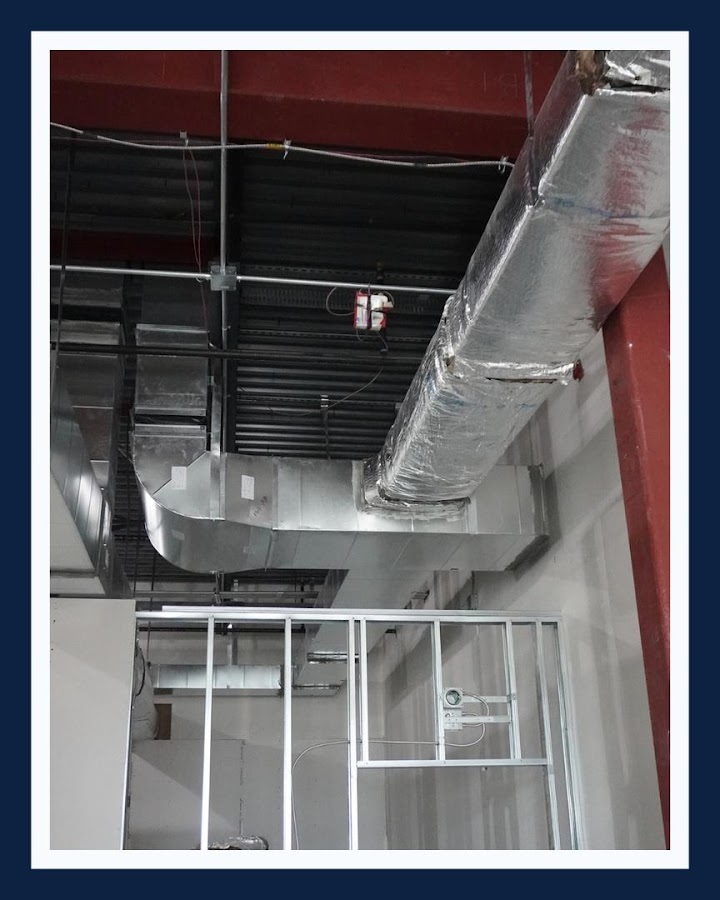
Why HVAC static pressure matters more than equipment brand
ACCA’s technical staff has collected system static pressure readings across the country for more than 25 years, and they compare the results to blood pressure: against a normal human reading of 120 over 80, the average system they measure comes in at the equivalent of 200 over 133 (ACCA HVAC Blog). Most HVAC systems in the field work against far more resistance than they were actually designed for.
Static pressure testing is written into the standards. ACCA Manual D for residential duct design and ANSI/ACCA 5 for quality installation both require static pressure measurement to verify the field-installed system’s performance, comparing the reading to the maximum rated total external static pressure, or TESP, for the air-moving equipment (ACCA HVAC Blog). If the reading is too high, the blower cannot move the required airflow, and installed performance drops no matter what the equipment label promises.
How the test actually works
A technician uses a dual port manometer and a static pressure tip, drills two 3/8-inch test ports, and plugs them when the test is finished. One port goes where air enters the furnace, after the air filter, and the second goes where air exits, before an external coil if there is one. With the system running at the highest required airflow, the two pressures get recorded and added together, and that sum is the measured TESP (ACCA HVAC Blog).
The comparison is the part that matters to you. Measured TESP goes up against the manufacturer’s rated TESP on the equipment nameplate. A measurement below the rating with correct fan speed means airflow is adequate. A measurement more than 10% to 20% higher than the maximum rated TESP means an airflow problem is degrading system performance (ACCA HVAC Blog).
Supply and return sides can be isolated the same way to find which one is causing the trouble. Twenty percent of maximum rated TESP is the typical pressure in the supply duct of a well-operating system, so on a blower rated for 0.50 inches of water column, the supply duct should stay at or below 0.10 inches. A reading of 0.20 inches on that system points to duct work that is undersized or poorly installed. The return side gets tested in the same way, with the port just ahead of the filter and the tubing on the negative port of the manometer (ACCA HVAC Blog).
| Reading, on a blower rated 0.50 in. w.c. | What it means | Typical next step |
|---|---|---|
| Total measured TESP at or below 0.50. | Duct system is delivering rated airflow. | Verify fan speed setting, then document. |
| Total TESP 0.55 to 0.60. | Borderline, roughly 10% to 20% over rating. | Check filter type and coil, retest. |
| Total TESP above 0.60. | Airflow problem degrading performance. | Isolate supply and return, plan duct repair. |
| Supply duct alone above 0.10. | Supply side undersized or restricted. | Inspect for pinched flex, closed dampers, small trunk. |
| Return duct alone above 0.10. | Return side undersized or restricted. | Add or enlarge return path, check filter rack. |
Thresholds in the table follow the TESP percentages and the 0.50 inch example in ACCA’s guidance (ACCA HVAC Blog). Your equipment’s rated TESP may differ, so ask for the nameplate number alongside the reading.
Pressure is not airflow, and the difference matters
A high reading tells you that the resistance is high, but it doesn’t tell you how many cubic feet per minute the blower is delivering. ACCA makes that distinction directly: a static pressure measurement compared against manufacturer blower data can give an estimate of airflow, but the two measurements are not the same thing (ACCA HVAC Blog).
Variable-speed blowers complicate the picture further, since they ramp up to hold airflow against resistance. The system compensates, the rooms feel better than they would with a fixed-speed blower, and the duct restriction still costs you in both energy and blower life. That is why a good technician records both the pressure reading and the blower table lookup rather than just one of the numbers.

What raises static pressure in a Columbus home
Filters come first because they are the one part you control. High-MERV pleated filters in a rack sized for a fiberglass panel add resistance from day one, and a loaded filter adds even more. Bryant tells homeowners to inspect the filter monthly and clean or replace it when needed (Bryant gas furnace owner’s manual), and ENERGY STAR gives the same monthly interval, noting that a dirty filter raises energy costs and can damage equipment, leading to early failure (ENERGY STAR maintenance checklist).
Air ducts do the rest. Flex duct crushed against a joist or kinked around a corner, undersized trunk lines left from an older, smaller furnace, one 14-inch return trying to feed a 4-ton blower, closed or blocked registers, and a cooling coil packed with dust all show up as increased pressure. Older Columbus houses that gained a finished basement or a bonus room often kept the original duct while the equipment grew, which is the exact setup that leads to high readings.
When airflow across the heat exchanger drops far enough, supply temperature climbs until the high limit opens, and Bryant’s troubleshooting guide lists a dirty filter or restricted duct system as the first thing to check on a limit trip (Bryant 58 series troubleshooting guide).
What to ask for before you buy new equipment
Ask any contractor quoting a replacement for a static pressure reading on your current system and the rated TESP of the equipment they plan to install. Ask what the plan is if the reading comes in high, since new equipment on restricted duct inherits the restriction. Ask for a room-by-room load calculation rather than a square-footage rule, and ask for measured airflow at the end of the job.
Duct corrections are usually cheaper than living with the problem. Our team measures pressure and airflow as part of air balancing, handles ductwork installation in Columbus when the duct system needs resizing, and covers furnace service and replacement once the airflow side is corrected.
Frequently asked questions
What is a normal static pressure reading? Compare it to your equipment, since ratings differ. A total external static pressure at or below the nameplate rating is the target, and a reading more than 10% to 20% above the maximum rating signals an airflow problem.
Can I measure static pressure myself? The test needs a dual port manometer, a static pressure tip and drilled test ports. Most homeowners are better served asking for the reading and the nameplate rating during a service visit.
Will a better filter fix high readings? Sometimes the filter is the whole problem, especially a thick pleated filter in a rack built for a thin one. Replacing it with the correct size and depth for your equipment helps, though duct restrictions need duct work.
Does high static pressure raise my energy bill? It works the blower harder for less air delivered, and ENERGY STAR points to restricted airflow as a cause of higher energy costs and early equipment failure. The size of the effect depends on your system.
My new furnace still has a cold room. Why? Because the duct branch serving that room may not be able to carry the air, whatever the equipment can produce. A static pressure test plus airflow readings at that register will show whether the branch or the blower is the limit.
Tired of a room that barely gets air? Call Ohio Heating at 614-863-6666 or request a visit through ohheating.com, and we will measure your static pressure before anyone quotes you equipment.