
Indoor air quality Columbus: 5 Secrets to Boost Health
Why Indoor Air Quality Columbus Matters More Than You Think
The indoor air quality Columbus residents breathe is often far worse than the air outside. Here’s a quick look at why this matters for your home or business.
Quick Facts About Columbus Indoor Air:
- Indoor air is 2-5 times more polluted than outdoor air.
- The EPA ranks indoor air pollution as a top 5 health concern.
- Columbus averages a “good” AQI of 37, but still faces ozone challenges.
- Ohio’s climate (humid summers, dry winters) worsens indoor air problems.
- Common signs: Excessive dust, musty odors, allergy symptoms, visible mold.
You might think your property is a shield from outdoor pollution, but the opposite is often true. According to the EPA, the air inside your building—where you spend 90% of your time—can be significantly more contaminated.
For property managers and business owners, poor indoor air quality impacts occupant health, productivity, and your bottom line. It leads to more sick days, tenant complaints, strained HVAC systems, and higher energy costs.
Columbus faces unique challenges. While outdoor air has improved, pollutants still infiltrate buildings. Combined with Ohio’s hot, humid summers that breed mold and cold, dry winters that trap contaminants, the stage is set for indoor air problems.
The good news is that you have more control over your indoor air than the air outside. Understanding the risks is the first step toward creating a healthier, more efficient property.
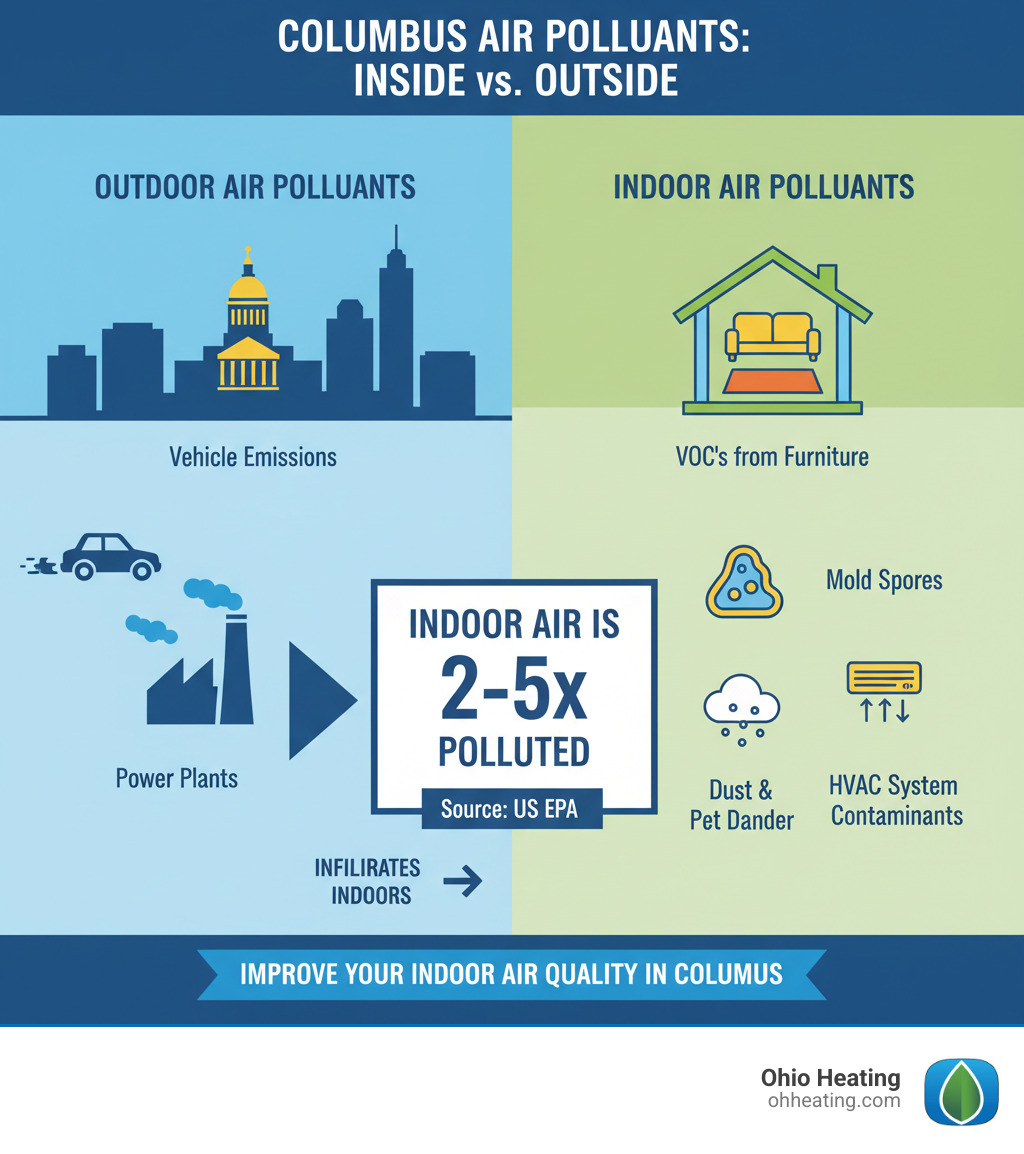
The State of Columbus’s Air: From Outside In
Outdoor air doesn’t stop at your front door; it seeps in and gets pulled into your HVAC system. To understand your indoor air, you must first look at what’s happening outside in Columbus.
Columbus wrestles with two main outdoor pollutants: ozone pollution (smog) and fine particulate matter (PM2.5). These microscopic particles can get deep into your lungs and pose real health threats, especially for children, the elderly, and those with respiratory conditions.
Historically, Columbus has struggled with ozone, even earning an “F” rating in a 2019 report. While we’ve made huge progress, reducing unhealthy ozone days from 39.3 per year in 2000 to 4.3 by 2018, we still haven’t consistently met the federal target of 3.2 days. Ozone, formed when emissions from vehicles and industry cook in the sun, is why smog alerts are common on hot days.
Fine particulate matter tells a similar story. Columbus’s annual PM2.5 level in 2019 was 11.2 µg/m³, better than Cincinnati’s but still above the World Health Organization’s target of 10 µg/m³. While the long-term trend shows significant improvement since 2000, progress isn’t always linear.
| Air Quality Metric | Columbus (Franklin County) (2019) | Cincinnati (Hamilton County) (2019) | Federal Target | WHO Target (PM2.5) |
|---|---|---|---|---|
| Annual AQI | 37 (“good”) | N/A | N/A | N/A |
| Unhealthy Ozone Days | 4.3 | 8.5 | <= 3.2 | N/A |
| Ozone Rating | “F” | “F” | N/A | N/A |
| Annual PM2.5 Level | 11.2 µg/m³ | 11.6 µg/m³ | N/A | <= 10 µg/m³ |
Overall, Columbus’s outdoor air is rated “good” most of the year. But pollution spikes, especially ozone, still infiltrate your indoor spaces.
Columbus Air Quality Snapshot
Currently, Columbus often has a “Moderate” AQI, with PM2.5 from vehicle emissions, power plants, and other combustion sources as the main pollutant. These particles flow into buildings through every opening and ventilation system. While historical trends are encouraging, challenges remain. Want to know what you’re breathing right now? Check the live Columbus air quality map for current conditions.
What to Do During a Columbus Smog Alert
A smog alert means air pollution has reached unhealthy levels (AQI over 100), affecting sensitive groups like children, the elderly, and people with asthma or allergies. During an alert:
- Limit outdoor activity, especially strenuous exercise during the hottest part of the day.
- Close windows and doors to keep polluted air out.
- Run your HVAC system to filter and condition indoor air without bringing in outdoor pollutants.
- Use indoor air purifiers to capture particles already inside.
- Consider wearing an N95 or KN95 mask if you must be outdoors.
Knowing how to respond helps you maintain better indoor air quality Columbus residents can control. Your HVAC system is a key part of this defense. To optimize your home’s air, learning more info about residential HVAC systems can help you explore options for cleaner indoor air.
Is Your Home Making You Sick? Signs of Poor IAQ
Many Columbus homeowners don’t realize their home’s air could be making them sick. That scratchy throat or persistent headache might be your body signaling that something is wrong with the air you’re breathing.
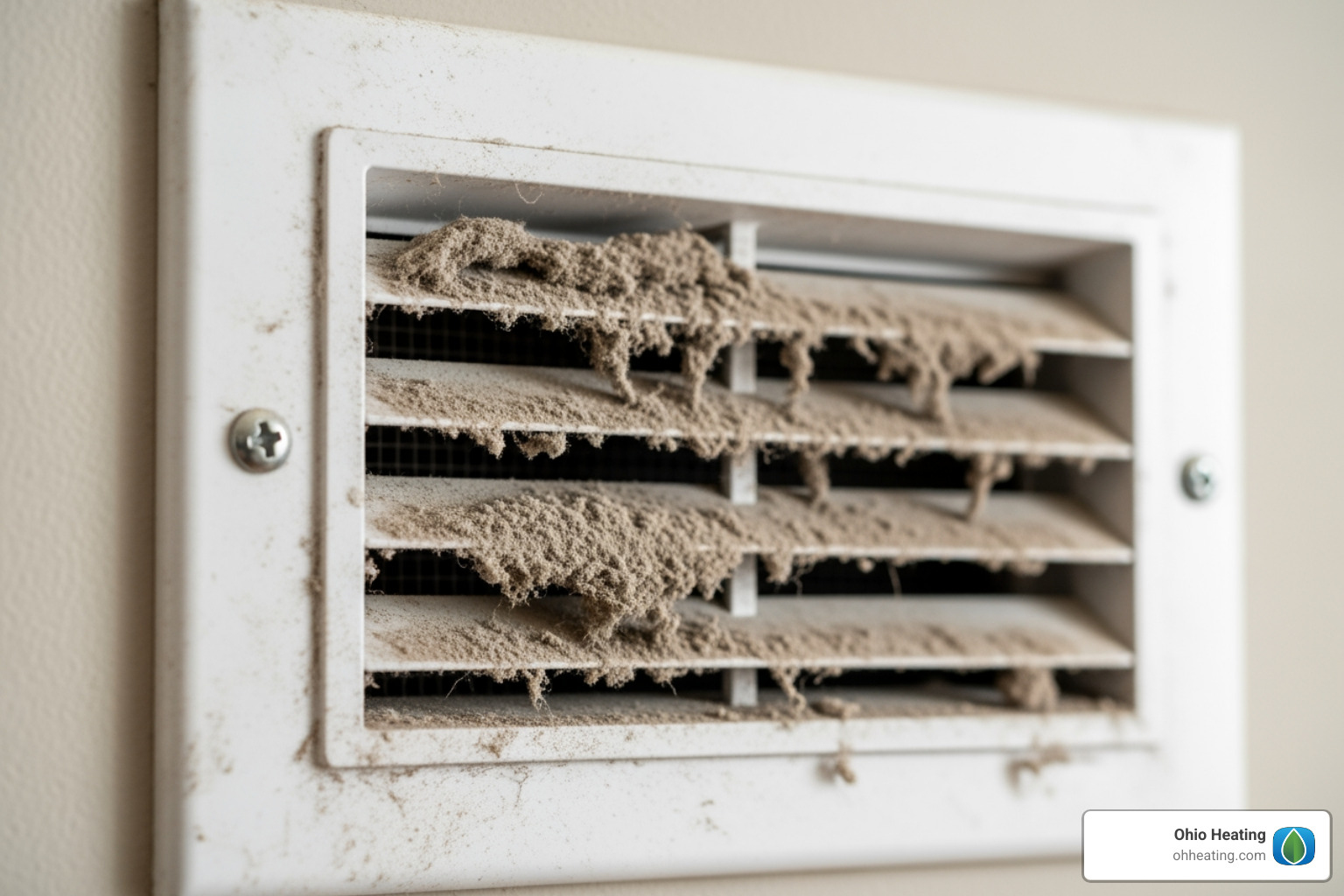
Poor indoor air quality poses real health risks. Immediate effects include respiratory irritation, headaches, and fatigue. For those with asthma or allergies, it can turn manageable symptoms into daily struggles. Long-term exposure can increase the risk of chronic lung conditions and other serious diseases. You can Learn about indoor air pollutants to better understand the risks.
Telltale Signs in Your Columbus Home
Is your home trying to tell you something? Look for these common red flags:
- Excessive dust: If dust reappears hours after cleaning, your filtration may be failing.
- Persistent musty odors: These often point to hidden mold or inadequate ventilation.
- High humidity or condensation: Excess moisture on windows or damp air creates a breeding ground for mold and dust mites.
- Uneven temperatures: Poor air circulation can cause pollutants to concentrate in stagnant areas.
- Visible mold or mildew: Any visible growth is a clear health hazard, releasing spores into the air.
- Worsening allergy symptoms: If you sneeze and cough more at home, your indoor air is likely the culprit.
- Frequent headaches or discomfort: This could indicate high levels of volatile organic compounds (VOCs) or carbon monoxide.
- Stale or stuffy air: A sign that fresh air isn’t circulating properly.
If you’re noticing several of these, it’s time to investigate. These often overlap with the 7 crucial signs your HVAC system needs repair.
Health Symptoms Linked to Indoor Air
If your symptoms improve when you leave home, your indoor air is the likely cause. Pay attention to these warning signs:
- Allergy-like symptoms: Persistent sneezing, coughing, watery eyes, sinus congestion, or shortness of breath.
- Dizziness and nausea: Can signal exposure to VOCs or dangerous carbon monoxide levels.
- Dryness and irritation: A scratchy throat, itchy skin, or dry eyes, often worsened by low winter humidity.
- Headaches and fatigue: Unexplained tiredness or headaches that follow you around the house.
- Worsening asthma: Poor air quality can trigger attacks and increase the frequency of respiratory infections.
Improving your indoor air can lead to dramatic health benefits, from better respiratory function to a lower risk of serious illness. This is why we stress The importance of regular HVAC maintenance. It’s not just about comfort—it’s about protecting your family’s health.
How Ohio’s Climate Impacts Indoor Air Quality in Columbus
Living in Columbus means dealing with Ohio’s full range of seasons, each bringing unique challenges to your indoor air. The seasonal swings in central Ohio have a direct, often underestimated, impact on the indoor air quality Columbus residents breathe.
Seasonal changes force us to seal our buildings for months. In summer’s heat and winter’s cold, windows stay shut, and HVAC systems take over. This creates a closed loop where indoor pollutants—from cooking fumes to chemicals from furniture—build up and recirculate.
Ohio’s spring and fall pollen seasons add another complication. Opening windows invites allergens inside, while keeping them closed traps existing pollutants. This makes proactive IAQ management essential.
Summer Humidity and Mold Growth
Columbus summers bring oppressive humidity that seeps into every corner of your property. High humidity is a perfect breeding ground for mold, mildew, and dust mites—all major triggers for allergies and asthma. Mold spores become airborne, causing respiratory irritation.
Your air conditioner’s job is to remove this excess moisture. If your AC is old, improperly sized, or poorly maintained, it can’t keep up, allowing problems to escalate. For serious humidity control, our Whole House Dehumidifiers work with your HVAC system to maintain optimal moisture levels.
Winter Dryness and Airborne Viruses
Winter brings the opposite problem: bone-dry indoor air. Heating systems keep us warm but strip moisture from the air, leading to dry skin, scratchy throats, and static shock. More importantly, research shows that viruses like influenza survive longer and spread more easily in low-humidity environments.
When indoor humidity drops below 30%, virus particles stay airborne longer, increasing your risk of getting sick. Maintaining 30-50% humidity supports your respiratory system’s defenses. Our Whole House Humidifiers restore this crucial moisture balance, protecting both your comfort and your health.
Your Guide to Improving Indoor Air Quality in Columbus
Understanding the challenges to indoor air quality Columbus residents face is the first step. Now, let’s focus on effective solutions. Improving your indoor air is achievable with the right approach, and your HVAC system is the hero of the story.
Modern HVAC systems are comprehensive air managers, handling ventilation (fresh air exchange), filtration (capturing pollutants), and humidity control. When these three elements work in harmony, you create a foundation for healthy indoor air. At Ohio Heating, we’ve been helping Columbus property owners breathe easier since 1999 with personalized solutions.
Professional Testing and HVAC Solutions
To fix a problem, you first have to identify it. Professional IAQ testing takes the guesswork out of improving your air. We collect and analyze air samples, testing for common culprits in Columbus homes:
- Volatile Organic Compounds (VOCs) from furniture, paint, and cleaning products.
- Mold and mildew thriving in Ohio’s humidity.
- Carbon monoxide from combustion appliances.
- Radon, a radioactive gas common in Ohio.
- Allergens like pollen, pet dander, and dust mites.
Once we know what’s in your air, we conduct a thorough HVAC inspection. Sometimes the issue is poor ventilation or contaminated ductwork. Professional duct cleaning can make a dramatic difference by removing years of accumulated dust, debris, and mold. For a deeper dive, explore our guide to Indoor Air Quality 101.
Essential IAQ Products for Your Home
Based on test results, we can recommend whole-house solutions that integrate with your HVAC system to protect your entire property.
- High-Efficiency (HEPA) Filters: These capture 99.97% of tiny airborne particles like dust, pollen, dander, and mold spores, providing serious respiratory protection.
- UV Germicidal Lights: Installed in your HVAC system, UV-C light neutralizes airborne bacteria, viruses, and mold spores on contact, preventing them from recirculating.
- Energy Recovery Ventilators (ERVs): These systems bring in fresh air and exhaust stale air while recovering energy to save on heating and cooling costs. They are ideal for modern, airtight homes that trap pollutants.
- Whole-House Humidifiers & Dehumidifiers: These integrate with your HVAC to combat winter dryness and summer humidity, respectively. They maintain ideal moisture levels year-round to prevent mold growth and improve comfort.
- Electronic Air Cleaners & Carbon Filters: Electronic cleaners use an electrostatic charge to trap particles, while carbon filters excel at absorbing odors, gases, and VOCs that other filters miss.
These solutions work together to create a comprehensive defense system for your indoor air. Explore your options in detail on our page for Whole House Air Cleaners. Investing in IAQ is an investment in your family’s health and your home’s efficiency.
Frequently Asked Questions about IAQ in Columbus
After helping Columbus families and businesses for over two decades, we’ve heard the same great questions about indoor air quality. Here are the answers to the most common ones.
What are the most common indoor air pollutants in Columbus homes?
Your home can harbor a surprising number of pollutants from everyday sources. The most common ones we find are:
- Volatile Organic Compounds (VOCs): Gases from paint, cleaning products, new furniture, and air fresheners that can cause headaches and dizziness.
- Dust and Dander: A mix of skin flakes, fibers, and pet dander that constantly circulates and triggers allergies.
- Mold Spores: Thriving in Ohio’s humidity, these spores are released from damp areas and can worsen asthma and allergies.
- Carbon Monoxide (CO): An invisible, odorless, and deadly gas from poorly vented combustion appliances like furnaces or water heaters.
- Radon: A naturally occurring radioactive gas that seeps up from the ground and is the second leading cause of lung cancer. Testing is the only way to detect it.
- Pollen: Outdoor allergens that easily find their way inside on clothes and pets.
Understanding these common threats is the first step to improving the indoor air quality Columbus homes deserve.
How often should I test my home’s indoor air quality?
We recommend testing your home’s air quality at least once a year as a baseline. However, you should test more frequently in certain situations:
- If anyone in your home has allergies, asthma, or a weakened immune system.
- After any water damage or flooding, to check for hidden mold.
- Following renovations or new construction, which release high levels of VOCs.
- When installing new combustion appliances like a furnace or gas fireplace.
- If you notice persistent strange odors or new, unexplained health symptoms.
Can changing my HVAC filter really make a difference?
Yes, absolutely. Regularly changing your HVAC filter is the single most cost-effective action you can take for your air quality and your system’s health. Your filter is the first line of defense, capturing dust, pollen, and dander before they can circulate through your home.
A clogged filter forces your HVAC system to work much harder, driving up energy bills and straining components. This restricted airflow allows dirt to bypass the filter and build up on critical parts like the evaporator coil, reducing efficiency and leading to premature system failure.
As a general rule, change your filter every 30 to 90 days. If you have pets, allergies, or live near a construction zone, change it more frequently. Staying on top of filter changes is especially critical during Columbus’s peak heating and cooling seasons. For more tips, see our Fall heating system maintenance guide for Columbus Ohio Residences. Your lungs and your wallet will thank you.
Conclusion
We’ve explored the complex world of indoor air quality Columbus residents steer daily. From outdoor pollution seeping in to indoor contaminants like mold and VOCs, the air you breathe for 90% of your life can be 2-5 times more polluted than the air outside. Ohio’s humid summers and dry winters only amplify these challenges.
The most important takeaway is this: you have far more control over your indoor air than you do over the outdoor environment.
By recognizing the signs of poor IAQ and using professional testing, you can identify the specific threats in your home or business. Solutions like high-efficiency HEPA filters, UV germicidal lights, and whole-house humidity control can transform your indoor space into a healthy sanctuary. The benefits are clear: reduced allergy and asthma symptoms, fewer respiratory infections, better sleep, and long-term protection against serious health conditions.
For businesses, this translates to increased productivity, fewer sick days, and a healthier environment for employees and customers.
At Ohio Heating, we’ve been helping Columbus breathe easier since 1999. We provide customized residential solutions and expert commercial services to ensure comfort, reliability, and superior air quality. Our team understands the unique challenges of our Ohio climate and has the experience to address them effectively.
Don’t let invisible threats compromise your health or comfort. Take the first step toward cleaner air today. Explore our commercial HVAC services to see how we can help your business, or contact us to discuss the residential solutions that fit your family’s needs. The air you breathe matters—let’s make it better, together.