
HVAC system checkup: Top 3 Essential Benefits
Why Your HVAC System Deserves a Twice-Yearly Checkup
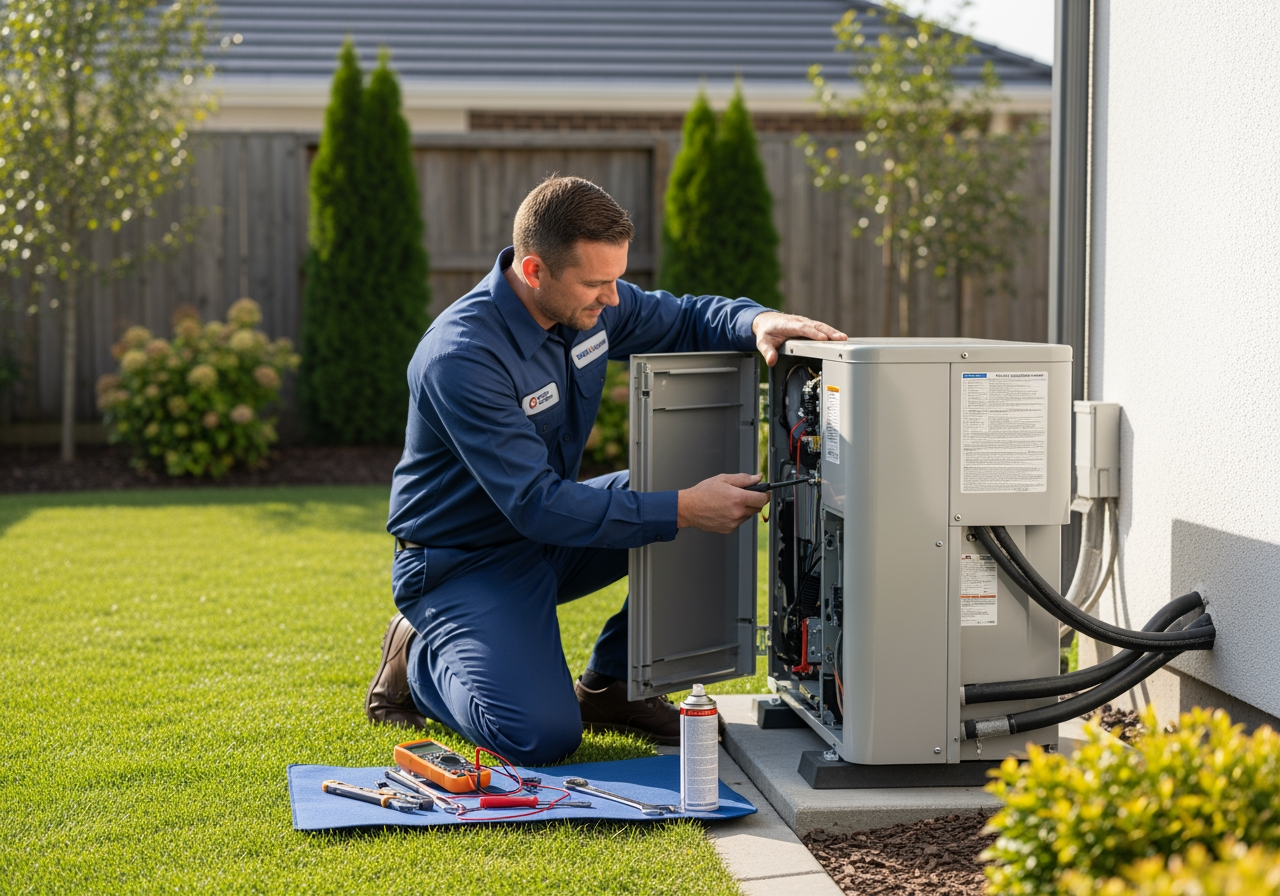
An HVAC system checkup is a professional inspection and maintenance service performed at least twice a year—once in spring for cooling systems and once in fall for heating systems—to ensure your equipment runs efficiently, safely, and reliably. Here’s what you need to know:
- What it includes: Cleaning coils, checking refrigerant levels, inspecting electrical connections, testing safety controls, lubricating moving parts, and verifying proper airflow
- When to schedule: Spring (before summer heat) for AC and fall (before winter cold) for heating
- Why it matters: Regular checkups can improve system lifetime by up to 48%, prevent efficiency losses of 15% per year, and catch small issues before they become expensive emergencies
- What it costs: Average professional inspection runs $300, with a typical range of $70 to $500+
About 2/3 of energy used in the average Canadian home goes to space heating and cooling. That makes your HVAC system one of your property’s most critical—and most expensive—components to operate and maintain. Yet many property managers and business owners only think about their heating and cooling equipment when it stops working, usually during the worst possible time: a summer heatwave or winter cold snap.
The reality is simpler: Most HVAC breakdowns are preventable. Regular maintenance catches worn parts, cleans dirty components, and identifies safety issues before they escalate into costly repairs or dangerous failures. A system that receives professional attention twice a year will run more efficiently, last longer, and give you far fewer headaches than one that’s neglected until it quits.
As Jill Frattini, a Service Coordinator at Ohio Heating with several years of experience in the HVAC industry, I’ve seen how regular HVAC system checkups transform both system performance and customer peace of mind. Whether you’re managing a commercial building or overseeing residential properties, understanding what happens during a professional checkup—and what you can do between visits—is essential for protecting your investment and ensuring occupant comfort year-round.
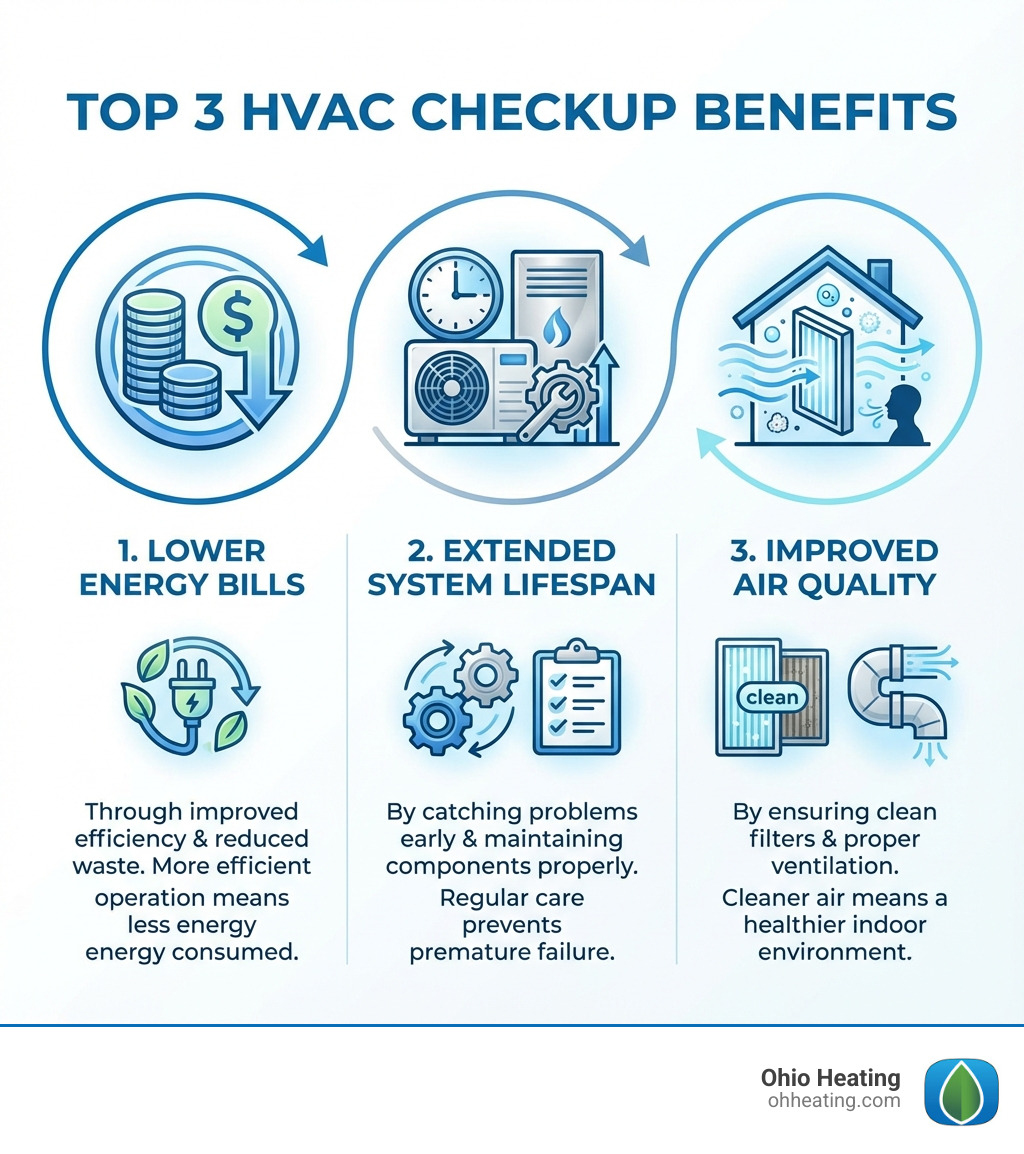
Simple HVAC system checkup word guide:
Why Regular HVAC Maintenance is Non-Negotiable
We understand that scheduling an HVAC system checkup might feel like another item on an already long to-do list. However, we cannot stress enough how crucial regular HVAC maintenance is for your home or business in Columbus, Central Ohio, and throughout the state. It’s not just about keeping your system running; it’s about optimizing your comfort, saving money, and ensuring safety.
Firstly, let’s talk about energy savings and cost reduction. A well-maintained HVAC system is an efficient HVAC system. Over time, dust, dirt, and grime accumulate on components, forcing your system to work harder to achieve the desired temperature. This increased effort translates directly into higher utility bills. For instance, airflow problems alone can reduce your system’s efficiency by up to 15 percent! Dirty coils reduce the system’s ability to cool or heat your home, causing it to run longer and consume more energy. By keeping your system clean and tuned, we help prevent these energy losses, ensuring your hard-earned money stays in your pocket rather than going to the utility company.
Beyond immediate savings, regular checkups extend your equipment’s lifespan. An HVAC system is a significant investment for any homeowner or business. While systems typically last 10 to 30 years—with AC units averaging 15 to 20 years and furnaces 15 to 30 years—neglecting maintenance can drastically shorten that lifespan. We’ve seen how worn parts, if not addressed, can lead to premature system failure. Lubricating moving parts, tightening electrical connections, and addressing minor issues before they escalate are all ways we help your system reach its maximum potential lifespan. In fact, scheduling regular preventive maintenance can improve your HVAC unit’s lifetime by an impressive 48%!
Improved indoor air quality is another vital benefit. Your HVAC system plays a critical role in filtering the air you breathe. Dirty air filters, clogged coils, and dusty ducts can circulate allergens, dust, mold spores, and other pollutants throughout your home or business. This not only exacerbates allergies and respiratory issues but can also lead to unpleasant odors. A thorough HVAC system checkup includes cleaning these components, contributing to a healthier and more comfortable indoor environment.
Finally, regular maintenance means increased safety and fewer emergency repairs. Many HVAC components, especially in heating systems, involve combustible fuels and electrical connections. Faulty electrical connections can pose fire hazards, and issues like a cracked heat exchanger in a furnace can lead to dangerous carbon monoxide leaks. Our technicians carefully inspect these critical safety components, identifying and rectifying potential hazards before they become dangerous. This proactive approach significantly reduces the likelihood of an unexpected breakdown, especially during those extreme Ohio weather conditions when you need your system most.
For more tips on energy efficiency, we encourage you to check out resources like ENERGY STAR Canada on Facebook. While they focus on Canada, the principles of maximizing energy savings apply universally.
The High Cost of Neglect
Ignoring your HVAC system is like driving a car without oil changes—eventually, you’re going to break down, and it’ll cost you a lot more than regular maintenance ever would. The consequences of neglecting regular HVAC system checkups can be severe and costly:
- Higher Utility Bills: As mentioned, a neglected system works harder, consuming more energy. Dirty coils, clogged filters, and low refrigerant levels all contribute to a significant increase in your monthly energy expenses. We’ve seen systems lose up to 15% efficiency annually due to neglect.
- Premature System Failure: Small issues, left unaddressed, become big, expensive problems. A lack of lubrication can wear out motors, loose electrical connections can damage components, and continuous strain on the system can lead to early and complete breakdown. This means replacing your entire system years before its expected lifespan, a cost that far outweighs regular maintenance.
- Poor Air Quality and Health Issues: Dirty filters and coils become breeding grounds for mold, bacteria, and allergens. This directly impacts the air quality in your space, potentially causing or worsening allergies, asthma, and other respiratory problems for occupants.
- Unexpected Breakdowns During Extreme Weather: Ohio’s summers can be scorching, and our winters can be frigid. An unmaintained system is far more likely to fail when it’s pushed to its limits during peak demand. Imagine your furnace quitting on the coldest night of the year or your AC giving up during a sweltering heatwave—it’s not just uncomfortable, it’s a major inconvenience and often an emergency expense.
- Voided Manufacturer Warranties: Many HVAC manufacturers require proof of annual professional maintenance to keep your warranty valid. Skipping these checkups could mean that if a major component fails, you’re on the hook for the full repair or replacement cost, even if the system is relatively new.
- Safety Hazards Like Carbon Monoxide Leaks: This is perhaps the most serious consequence. Heating systems, especially gas furnaces, can develop cracks in the heat exchanger or issues with gas connections. These problems can lead to dangerous carbon monoxide leaks into your indoor air, posing a silent and potentially deadly threat to everyone inside. Our safety checks are designed to prevent such critical failures.
Your Biannual Maintenance Schedule: When to Book a Checkup
Think of your HVAC system like your car: you wouldn’t wait for it to break down on the side of the road before getting an oil change, would you? Similarly, a proactive approach to your HVAC system means scheduling regular HVAC system checkups before the extreme Ohio weather hits.
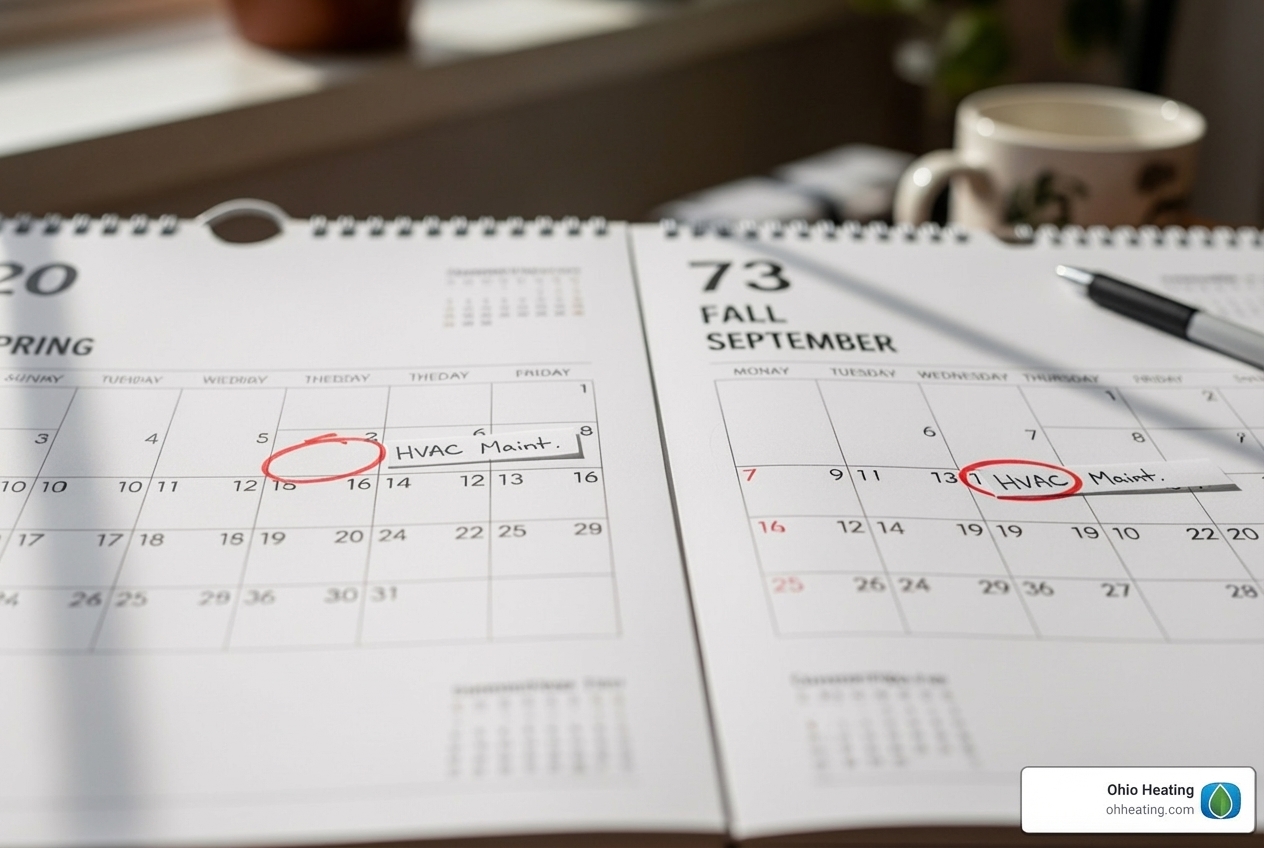
We recommend a biannual maintenance schedule, with appointments in the spring and fall. This pre-season maintenance is essential because it prepares your system for the heavy workload ahead, ensuring it operates efficiently and reliably when you need it most. Seasonal maintenance, performed periodically, ensures ongoing optimal performance. Plus, by scheduling ahead, you avoid the rush when contractors get busy during peak summer and winter seasons.
Spring & Summer Cooling System Prep
As the days get longer and warmer here in Columbus and throughout Central Ohio, your air conditioner is about to become your best friend. A spring HVAC system checkup for your cooling system is all about preparing for those hot summer months. We focus on your AC unit to ensure it can handle the upcoming heat with ease.
During this checkup, our technicians will:
- Clean condenser coils: The outdoor unit’s coils can get caked with dirt, leaves, and debris, significantly reducing its ability to release heat. We carefully clean these to restore optimal heat transfer.
- Clean evaporator coils: Located indoors, these coils absorb heat from your home’s air. They can also accumulate grime, impacting cooling efficiency.
- Check refrigerant levels: Proper refrigerant levels are crucial for effective cooling. Too little or too much can make your system less efficient and shorten its lifespan. We’ll check these levels and adjust them as necessary.
- Inspect and clear the condensate drain: The condensate drain removes moisture from your home. A clogged drain can lead to water leaks, humidity issues, and even system shutdown.
- Ensure efficient cooling performance: By addressing these points, we make sure your AC is ready to provide cool, consistent comfort, preventing it from struggling (and driving up your energy bills) when the first heatwave arrives.
Fall & Winter Heating System Prep
When the leaves start to turn and the air gets crisp in Ohio, it’s time to shift our focus to your heating system. A fall HVAC system checkup is vital for preparing your furnace or heat pump for the long, cold winter ahead. This checkup prioritizes safety and reliable warmth.
Our heating system maintenance includes:
- Inspect heat exchanger for cracks: This is a critical safety check. A cracked heat exchanger can allow dangerous carbon monoxide to leak into your home. Our technicians carefully inspect this component for any signs of damage.
- Check gas connections and pressure: For gas furnaces, we ensure all gas connections are secure and the gas pressure is at optimal levels to prevent leaks and ensure efficient combustion.
- Test burner combustion: Proper combustion is essential for both efficiency and safety. We’ll clean and adjust burners to ensure they operate correctly, producing a clean, blue flame.
- Inspect the flue system: The flue pipe safely vents combustion byproducts outside your home. We check for obstructions, proper sealing, and any signs of damage to ensure safe exhaust.
- Check safety controls: Your furnace has several safety controls designed to prevent dangerous operation. We test these to confirm they’re functioning correctly, providing peace of mind.
- Ensure safe and reliable heating: These comprehensive checks mean you can trust your heating system to keep your home or business warm and safe throughout the coldest months.
The Professional HVAC System Checkup: What to Expect
When you schedule an HVAC system checkup with Ohio Heating, you’re not just getting a quick glance at your equipment. You’re investing in the expertise of certified technicians who adhere to the highest industry standards. Our goal is to provide a comprehensive inspection process that prioritizes safety, efficiency, and the longevity of your system.
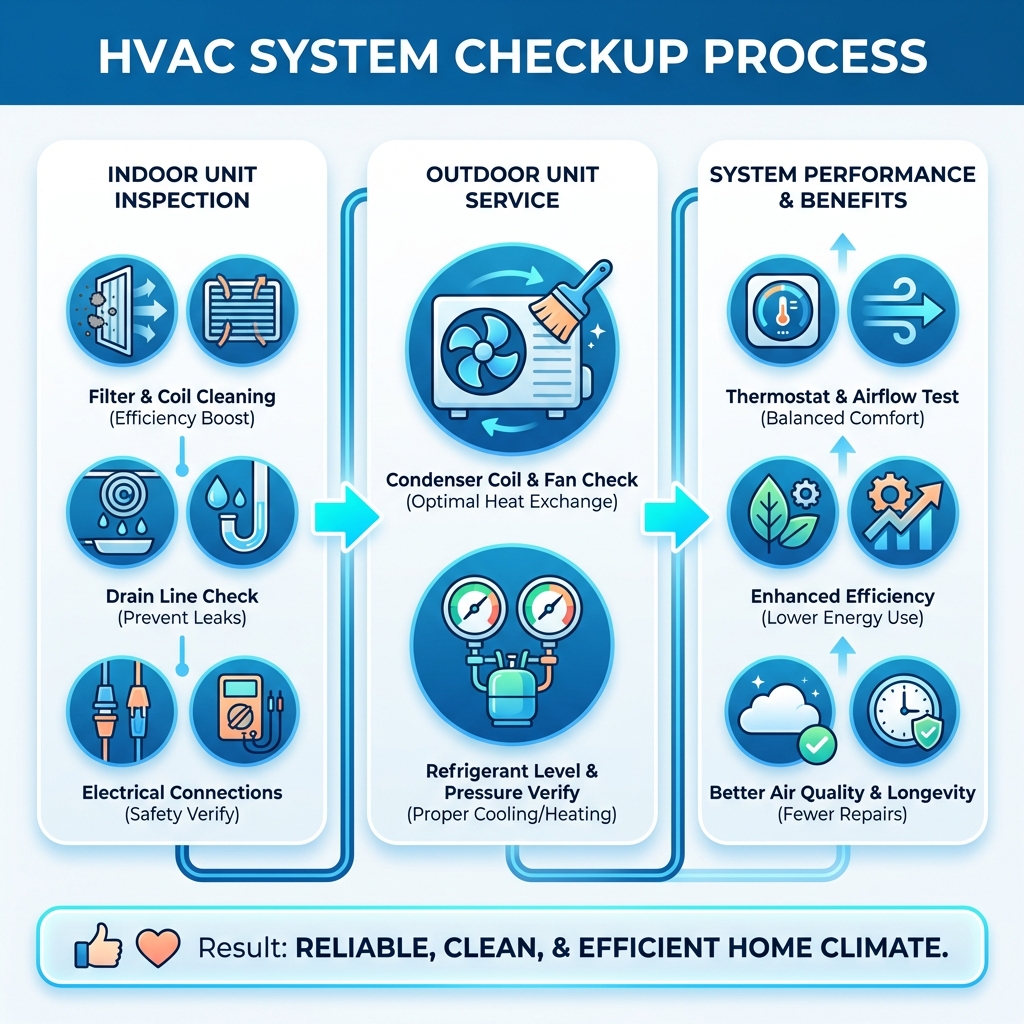
Our technicians are trained to identify subtle signs of wear and potential issues that a homeowner might miss. We use specialized tools and knowledge to perform detailed performance testing and safety checks, ensuring every component is functioning as it should. We’ll walk you through our findings and provide clear recommendations, so you always know the state of your HVAC system.
For a detailed look at what a professional checkup entails, you can also refer to the Download the Spring/Summer HVAC Maintenance Checklist.
Key Tasks in a Cooling HVAC System Checkup
During a cooling system checkup, our technicians perform a series of essential tasks to ensure your air conditioner is ready to beat the Ohio heat:
- Clean condenser and evaporator coils: These coils are vital for heat exchange. Dirty coils impede this process, making your AC work harder and consume more energy. We thoroughly clean both the outdoor condenser coils and the indoor evaporator coils.
- Check refrigerant levels and pressures: Refrigerant is the lifeblood of your AC. We accurately measure the refrigerant charge, including superheat, and adjust levels as needed to ensure optimal cooling and prevent damage to the compressor.
- Inspect and clear condensate drain: We ensure the condensate drain line is free of clogs and draining properly. A blocked drain can lead to water damage, mold growth, and increased indoor humidity.
- Tighten electrical connections: Loose electrical connections can cause unsafe operation, reduce component lifespan, and increase energy consumption. We inspect and tighten all wiring and electrical terminals.
- Calibrate thermostat: Your thermostat is the brain of your HVAC system. We check its accuracy and calibrate it if necessary to ensure it’s reading temperatures correctly and controlling your system efficiently.
- Inspect blower components for proper airflow: The blower fan circulates air throughout your home. We inspect the blower motor, fan blades, and associated components to ensure proper airflow, which is critical for both comfort and efficiency.
Key Tasks in a Heating HVAC System Checkup
When we perform a heating system checkup, our focus shifts to ensuring your furnace or heat pump provides safe, reliable, and efficient warmth throughout the cold Ohio winter:
- Inspect heat exchanger: This is a paramount safety check. We carefully inspect the heat exchanger for any cracks or corrosion that could allow combustion gases, including carbon monoxide, to leak into your home.
- Check gas connections and pressure: For gas furnaces, we verify that all gas connections are secure and leak-free. We also check the gas pressure to ensure it’s within the manufacturer’s specifications for safe and efficient operation.
- Test burner combustion: We clean and adjust the burners to ensure a clean and efficient burn. We look for a consistent blue flame, which indicates proper combustion. We may also perform a combustion analysis to check flue gas samples.
- Inspect the flue system: The flue pipe is responsible for safely venting exhaust gases outside. We inspect it for proper slope, secure connections, blockages, and any signs of damage or corrosion.
- Check safety controls: Furnaces are equipped with several safety devices, such as limit switches and flame sensors, designed to prevent overheating or gas leaks. We test these controls to ensure they are functioning correctly.
- Lubricate all moving parts and motors: Moving parts like blower motors and bearings require lubrication to reduce friction and prevent premature wear. This helps the system run smoothly and quietly, consuming less energy.
DIY Maintenance: Simple Tasks for Homeowners
While professional HVAC system checkups are indispensable, there’s plenty you, as a homeowner, can do between visits to keep your system running smoothly. These simple DIY tasks are empowering, can save you money, and often help detect minor issues before they become major headaches.
Taking an active role in your HVAC system’s health allows you to maintain its efficiency and comfort levels. For more in-depth guidance on what you can do yourself, check out A Homeowners Guide to HVAC Inspections.
Signs You Need an HVAC System Checkup
Even with regular maintenance, it’s important to be vigilant for signs that your HVAC system might be struggling. If you notice any of the following, it’s time to call us for a professional HVAC system checkup:
- Unusual noises like grinding or squealing: Your HVAC system should generally operate quietly. Grinding, squealing, banging, or rattling sounds often indicate worn-out bearings, loose parts, or other mechanical issues.
- Strange odors from vents: Musty smells could point to mold or mildew in your ducts or coils, while a burning smell might indicate an electrical problem. A sulfur-like (rotten egg) odor could signify a gas leak, which requires immediate attention!
- Weak or inconsistent airflow: If some rooms are significantly warmer or colder than others, or if the air coming from your vents feels weak, it could be due to clogged filters, ductwork issues, or a problem with the blower.
- Rising utility bills: A sudden and unexplained spike in your energy bills, without a corresponding change in usage, is a strong indicator that your HVAC system is losing efficiency and working harder than it should.
- System short-cycling: If your AC or furnace turns on and off frequently without completing a full cycle, it’s called short-cycling. This can be caused by a variety of issues and puts excessive strain on the system, leading to premature wear.
- Visible leaks or moisture: Any water pooling around your indoor unit, furnace, or outdoor AC unit is a red flag. This could indicate a clogged condensate drain, a refrigerant leak, or other serious problems.
Your DIY Maintenance Checklist
Here are some straightforward tasks you can perform regularly to supplement professional HVAC system checkups:
- Change air filters every 1-3 months: This is arguably the most important DIY task. A dirty filter restricts airflow, reduces efficiency, and degrades indoor air quality. During peak seasons or if you have pets or allergies, consider changing them monthly.
- Clear leaves and debris from the outdoor unit: Your outdoor AC or heat pump unit needs clear space to breathe. Regularly remove leaves, grass clippings, and other debris from around and on top of the unit. Ensure there’s at least two feet of clearance on all sides.
- Keep vents and registers clean and unobstructed: Dust your indoor vents and registers regularly to ensure free airflow. Make sure furniture, curtains, or rugs aren’t blocking them, as this can impede air distribution and create hot or cold spots.
- Check thermostat batteries: If your thermostat uses batteries, check and replace them annually to avoid unexpected system shutdowns. Also, ensure your thermostat is set to the “auto” fan setting for optimal efficiency.
- Visually inspect for obvious damage or leaks: Occasionally take a quick look at your indoor and outdoor units. Are there any visible signs of wear, corrosion, loose wiring, or unusual pooling of water? Catching these early can prevent bigger problems.
Frequently Asked Questions about HVAC Checkups
We often get asked common questions about HVAC maintenance. Here are some of the most frequent inquiries from homeowners and businesses in Columbus and Central Ohio:
How long does an HVAC system last?
The lifespan of your HVAC system largely depends on the type of equipment, how well it’s maintained, and how often it’s used. Generally:
- The average lifespan of a central HVAC system is about 15-20 years.
- Furnaces can last around 15 to 30 years.
- AC units typically last about 15 to 20 years.
- Heat pumps generally have a lifespan of about 10 to 15 years.
- Boilers often have the longest life span, lasting around 20 to 30 years.
The key takeaway here is that regular maintenance is absolutely crucial to reaching the maximum lifespan for any of these systems. A well-maintained system can often exceed its average lifespan, while a neglected one might fail prematurely.
How much does a professional HVAC inspection cost?
The cost of a professional HVAC system checkup can vary based on several factors, including the type and size of your system, its age, and the specific services included.
- An HVAC inspection costs $300 on average, though you might pay anywhere from $70 to $500 or more.
- For a more comprehensive AC tune-up, which includes cleaning and adjustments, costs can run between $450 and $1,000, depending on its size and condition.
Many homeowners find that investing in an annual or biannual maintenance plan offers the best value. These plans often include two checkups per year (one for heating, one for cooling) and may offer discounts on repairs or priority service. This can make budgeting for maintenance easier and ensure your system gets the attention it needs.
Can I skip a year of maintenance?
While it might be tempting to skip an HVAC system checkup to save a few dollars, we strongly advise against it. The short-term savings are almost always outweighed by the long-term costs and risks:
- Efficiency Loss: Neglecting maintenance can lead to yearly losses of up to 15% in heating and cooling efficiency. This means higher energy bills for you.
- Increased Breakdown Risk: Small, preventable issues can escalate into major breakdowns. Skipping maintenance significantly increases the risk of your system failing when you need it most, often resulting in costly emergency repairs.
- Voided Warranty: Many HVAC manufacturers require proof of annual professional maintenance to keep your system’s warranty valid. Skipping a year could mean that if a major component fails, you’ll be responsible for the full replacement cost.
- Safety Hazards: Particularly for heating systems, skipping checks can overlook dangerous issues like gas leaks or a cracked heat exchanger, which pose serious safety risks.
In short, skipping maintenance is a gamble that rarely pays off. Proactive care is always the smarter choice.
Conclusion: Protect Your Comfort and Investment
Your HVAC system is a hardworking hero, silently toiling to keep your home or business comfortable through Ohio’s changing seasons. Investing in regular HVAC system checkups isn’t just about ticking a box; it’s about protecting your comfort, your investment, and your peace of mind.
By ensuring your system receives professional attention twice a year, you reap significant benefits: improved energy efficiency, an extended equipment lifespan, improved indoor air quality, and crucial safety assurance. This proactive care approach means you’re preventing costly, reactive repairs and avoiding the stress of unexpected breakdowns.
Since 1999, Ohio Heating has been dedicated to providing expert commercial and residential installation, repair, and maintenance across Columbus, Central Ohio, and the surrounding areas. Our USP is ensuring comfort and operational reliability for homes and businesses, preventing issues like extreme temperatures and costly downtime. We’re here to help you keep your HVAC system running at its best, season after season.
For professional service you can trust, schedule your AC repair in Westerville today! We’re ready to ensure your system is in peak condition.