
Residential air balancing: Ultimate Comfort 2025
Why Your Home’s Temperature Feels Like a Battle Zone
Residential air balancing is the process of adjusting your HVAC system so that every room receives the right amount of heated or cooled air, eliminating hot and cold spots throughout your home. Here’s what you need to know:
Quick Answer: What is Residential Air Balancing?
- The Problem: Uneven temperatures between rooms (2+ degrees difference)
- The Solution: Professional testing and adjustment of your HVAC system’s airflow
- The Method: Technicians adjust dampers, fan speeds, and ductwork to distribute air evenly
- The Cost: $75-$150 per vent opening, or $750-$2,000 for a typical home
- The Result: Consistent comfort, lower energy bills, and longer equipment life
Many homeowners know the struggle: you set the thermostat, but the upstairs bedroom becomes a sauna while the basement stays freezing. These aren’t just annoyances—they’re signs your HVAC system is out of balance.
Most HVAC systems don’t distribute air uniformly. According to industry research, temperature variations of two degrees or more between areas indicate your system needs attention. And here’s a startling fact: 90% of HVAC systems are incorrectly sized, which means the problem is more common than you might think.
When your forced-air system pushes conditioned air through ductwork, it should reach every room consistently. However, issues like poor duct design, closed dampers, or an improperly calibrated system create an imbalance. The result is wasted energy, overworked HVAC equipment, and uncomfortable rooms.
I’m Jill Frattini, a Service Coordinator at Ohio Heating with years of experience helping property managers and homeowners solve comfort issues through proper residential air balancing and HVAC system optimization. In this guide, I’ll walk you through identifying airflow problems, when to use DIY fixes versus when you need professional help, and what to expect from a professional air balancing service.
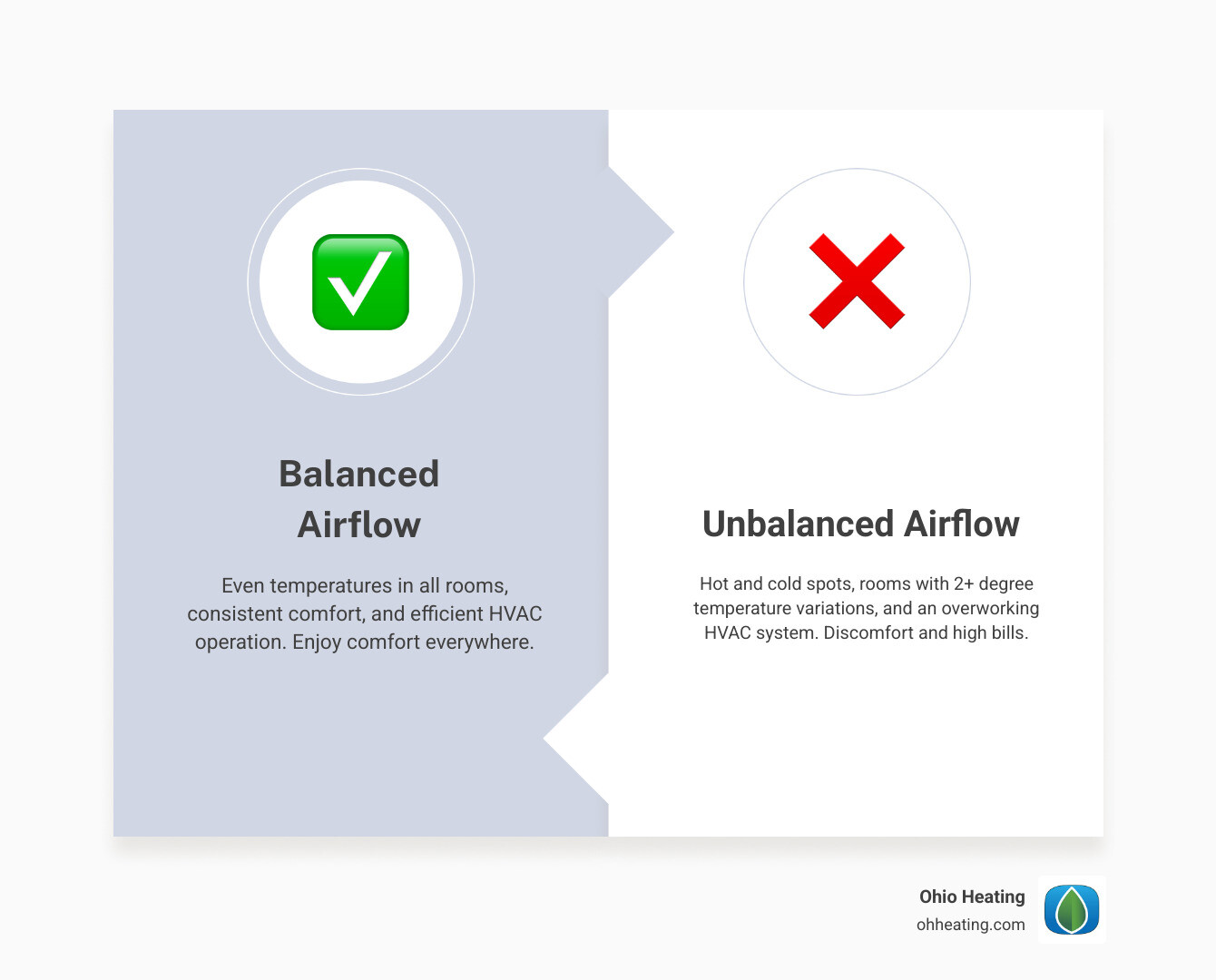
What is Air Balancing and Why is it Essential?
Imagine your home’s HVAC system as its circulatory system. The furnace or air conditioner is the heart and the ductwork are the arteries. Just as your body needs balanced blood flow, your home needs balanced airflow to function optimally.
What is Residential Air Balancing?
At its core, residential air balancing is the process of fine-tuning your forced-air system to distribute conditioned air evenly throughout your home. It ensures every room receives the exact amount of hot or cold air needed for comfort. As the experts at Family Handyman explain, it means “adjusting an HVAC system so every room in the house receives the right amount of conditioned air (hot or cold, depending on the season) to be as comfortable as possible.”
Balancing involves adjusting components that control airflow, including the blower fan speed, duct dampers, and the ducts themselves. The goal is to achieve “home temperature homeostasis,” where every area maintains a consistent, desired temperature.
Why a Balanced System is Crucial
A properly balanced HVAC system is fundamental to your home’s health and efficiency, especially in Columbus, Ohio, where we experience a full range of seasons.
Here’s why a balanced system is crucial:
- Improved Comfort: This is the most noticeable benefit. Balanced airflow ends thermostat battles and makes every room comfortable by providing consistent temperatures throughout your home.
- Improved HVAC Efficiency: An unbalanced system works harder and wastes energy. Air balancing optimizes your equipment, preventing energy waste and lowering utility bills.
- Healthy Indoor Air Quality: Balanced airflow promotes proper ventilation, which is vital for healthy indoor air quality. It helps reduce allergens, humidity, and stagnant air for a healthier home.
- System Longevity: An unbalanced system stresses HVAC components like the blower motor, causing them to wear out faster. By ensuring even airflow, air balancing extends your system’s lifespan and reduces long-term repair costs.
- Identifying Underlying HVAC Issues: Symptoms of imbalance can indicate deeper problems like leaky ducts or an improperly sized system. Air balancing helps identify these root causes, preventing more expensive future repairs.
A balanced system means a more comfortable home, a healthier family, and more money in your pocket.
Is Your Home’s Airflow Unbalanced? Telltale Signs
If you’ve noticed some rooms are freezing while others are hot, or your energy bills are creeping up, these aren’t just quirks. They are clear indicators that your HVAC system’s airflow is out of balance.
Here are common signs that a home needs residential air balancing:
- Persistent Hot or Cold Spots: The most obvious sign. If one room is consistently too warm or cold despite the thermostat setting, your airflow is likely uneven.
- Rising Heating and Cooling Costs: An unbalanced system is inefficient. Your HVAC unit works harder to compensate for poor airflow, consuming more energy and raising utility bills.
- Weak Airflow from Vents: If some rooms barely get any air even with vents fully open, it’s a direct sign of an imbalance.
- Temperature Variations of 2-3 Degrees or More: While slight differences are normal, variations of 2-3 degrees between rooms are a strong indicator of an unbalanced system.
- Whistling Vents or Ducts: A whistling sound can be a sign of excessive static pressure, meaning air is being forced through too small an opening.
- Dustier Rooms: If certain rooms get dusty faster than others, it could be due to poor air circulation from an unbalanced system.
The Impact on Comfort and Energy
Unbalanced airflow creates a cascade of negative effects beyond simple discomfort:
- Inconsistent Temperatures: The primary impact is frustratingly inconsistent temperatures. This leads to “thermostat battles” and can make parts of your home unpleasantly hot or cold.
- Overworking HVAC System and Component Strain: When airflow is uneven, the system must work overtime to meet temperature demands. This constant struggle puts significant strain on components, especially the blower motor, leading to overheating and a shortened lifespan.
- Wasted Energy: A major impact is wasted energy. You’re paying to condition air that isn’t distributed effectively, which directly translates to higher energy bills.
These issues often stem from fundamental problems. According to energy.gov, a staggering 90% of HVAC systems are incorrectly sized. An improperly sized system, poor duct design, or a sloppy installation can all contribute to an unbalanced system. Recognizing these signs early allows us to diagnose and fix the root cause.
The DIY Approach vs. Professional Residential Air Balancing
When you notice uneven temperatures, it’s natural to wonder if you can fix it yourself. While some basic adjustments can help, true residential air balancing often requires professional expertise and tools.
DIY Air Balancing: What You Can Do
For homeowners comfortable with some tinkering, simple DIY steps can improve airflow by adjusting dampers and louvers.
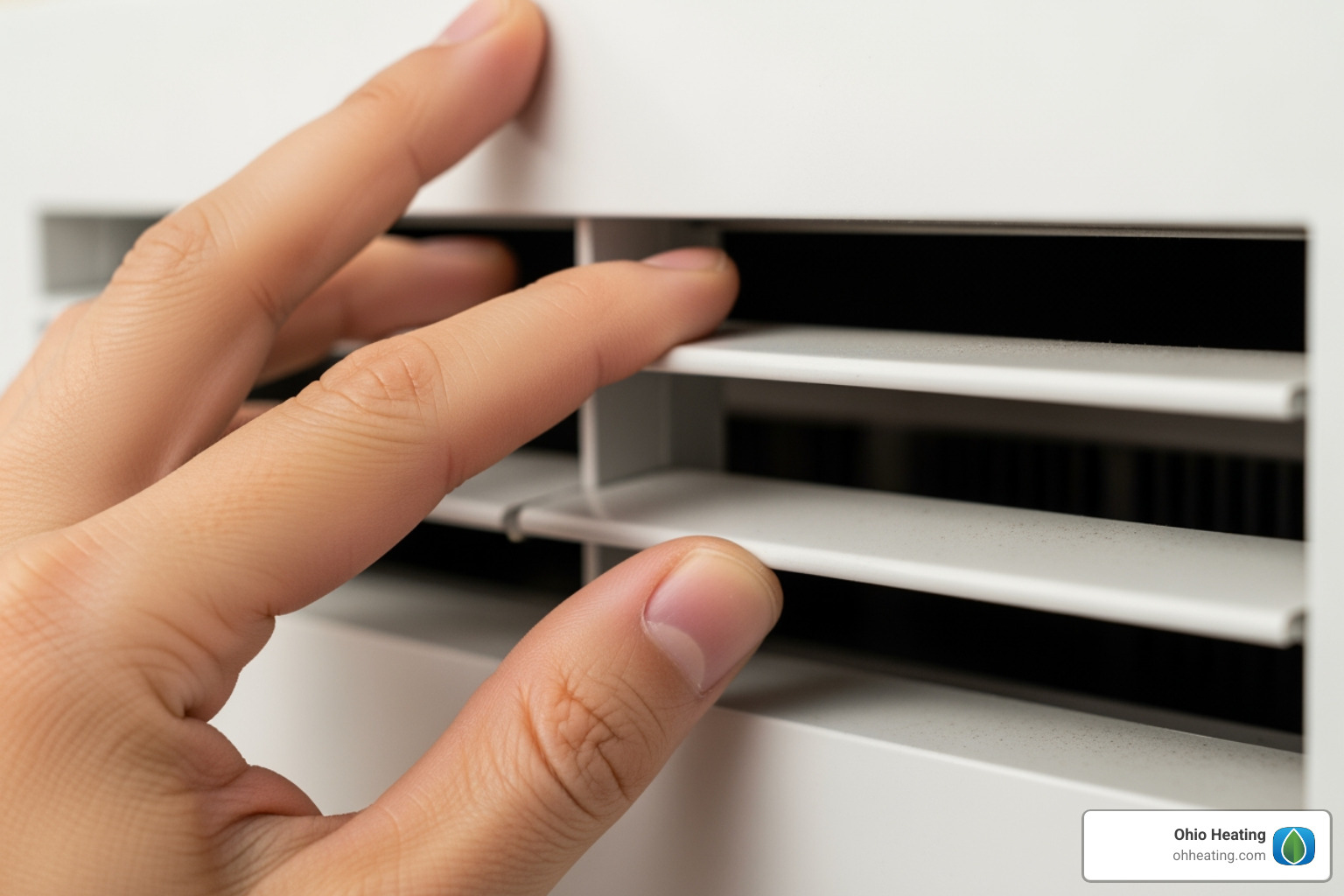
Here’s how to attempt basic DIY air balancing:
- Adjust Vent Louvers: Use the levers on your supply vents to control airflow. Slightly close vents in rooms that are too hot and ensure they are fully open in rooms that are too cold. Avoid closing vents completely, as this increases pressure on your system.
- Adjust Duct Dampers: Many homes have manual dampers (metal disks inside ducts with an external lever) in the main duct lines, often in a basement or attic. You can adjust these to direct more or less air to specific rooms or entire sections of your home.
- Make Seasonal Adjustments: In summer, direct more cool air upstairs; in winter, reverse this to send more heat downstairs.
- Use Trial and Error: DIY balancing is a process of making small adjustments and monitoring temperatures over a few days before making more changes.
Simple DIY Steps:
- Locate your HVAC unit and ductwork.
- Turn the HVAC fan to “on” for constant airflow.
- Check the airflow strength from each vent.
- For rooms with extreme temperatures, fully open dampers and vents (for cold rooms) or slightly close them (for hot rooms).
- Make small, incremental adjustments. Never completely close off a section.
- Monitor for a few days and repeat as needed.
These DIY methods can offer some relief, but they are often temporary fixes that don’t address underlying issues like leaky ducts or an improperly sized system.
When to Call a Professional for Residential Air Balancing
While DIY attempts can help, professional residential air balancing is essential in certain situations for lasting comfort and efficiency.
You should call our certified team at Ohio Heating if:
- DIY Adjustments Fail: If you still have hot/cold spots or high energy bills after trying DIY fixes.
- New HVAC Installation: A new system should always be balanced. If temperatures are still uneven, a professional balance is critical.
- Home Additions or Renovations: Changes to your home’s layout alter airflow dynamics and require your system to be rebalanced.
- Suspected Ductwork Issues: Leaky, damaged, or improperly sized ducts require professional assessment and specialized tools.
- You Want Precise, Guaranteed Results: A professional service provides precise measurements and adjustments for optimal performance, unlike trial-and-error DIY methods.
- You Need a Comprehensive HVAC Maintenance Plan: Integrating air balancing into a regular maintenance plan is a smart way to maximize system efficiency and longevity.
- You Have Persistent Indoor Air Quality Concerns: If you struggle with allergies or stagnant air, professional balancing can improve ventilation.
Attempting complex adjustments without proper knowledge can do more harm than good. Our Columbus, Ohio team has the expertise to diagnose and resolve these issues, ensuring your home achieves true HVAC harmony.
The Professional Air Balancing Process: What to Expect
When you call Ohio Heating for professional residential air balancing, you’re investing in a precise process to optimize your home’s comfort and efficiency, which is far more involved than just adjusting vents.
Key Components and Steps in a Professional Procedure
Our certified technicians follow a systematic approach to balance your HVAC system:
- Initial Assessment and System Analysis: We begin by assessing your home’s specific needs. This involves determining your system’s required airflow (CFM), examining your home’s layout and insulation, and inspecting the entire HVAC system for issues like leaks or obstructions.
- Airflow Allocation and Measurement: Using industry standards (from SMACNA and ACCA), we calculate the required airflow for each room. Our technicians then use specialized tools to measure the actual airflow (CFM) and temperature at each vent, and test the static pressure within your ductwork to find restrictions.
- Adjustments and Optimization: Based on the data, we make precise adjustments. This may involve modifying ductwork, adjusting dampers, and optimizing the blower fan speed to ensure efficient airflow.
- Verification and Final Report: After adjustments, we re-measure airflow and temperatures to verify the balance. We then provide a comprehensive report with our findings, adjustments, and recommendations for maintaining comfort and efficiency.
Tools of the Trade: How Professionals Achieve Precision
Our certified technicians use specialized tools for precision, including:
- Airflow Capture Hood: Placed over a vent to directly measure the volume of air (CFM).
- Anemometer: Measures airflow velocity within ductwork. We use tools like the Fieldpiece STA2 Hot Wire Anemometer for detailed insights.
- Manometer: Measures static pressure in the ductwork to identify restrictions.
- Psychrometer: Measures temperature and humidity to assess air quality and comfort.
- Infrared (IR) Thermometer: Provides quick, accurate surface temperature readings at registers.
These tools, combined with the expertise of a certified air flow technician, allow us to diagnose imbalances and implement solutions that restore airflow harmony. Our goal is to make your system work optimally for your family in Columbus, Ohio.
Costs and Long-Term Benefits of Air Balancing
Understanding the investment in professional residential air balancing is key to appreciating its long-term value. While there’s an upfront cost, the benefits in comfort, efficiency, and system longevity often far outweigh it.
Typical Costs for Professional Services
The cost of air balancing in Columbus, Ohio, varies based on home size, number of vents, and ductwork accessibility.
Here’s a general breakdown:
- Per Opening (Vent) Cost: Companies often charge between $75 and $150 per vent. This covers the time and specialized equipment to measure and adjust airflow at each point.
- Total Home Cost: For a typical home, a complete balance can range from $750 to $2,000.
- Factors Affecting Price: The number of vents and ease of access to ductwork are primary factors. Significant ductwork modifications or repairs would be quoted separately.
Here’s an estimated cost comparison for different home sizes in Central Ohio:
| Home Size (Approx. Openings) | Estimated Cost Range (Columbus, OH) | Notes |
|---|---|---|
| Small Home (10-12 openings) | $750 – $1,800 | Based on $75-$150 per opening, average access to ductwork. |
| Medium Home (12-18 openings) | $900 – $2,700 | More openings, potentially more complex ductwork layout. |
| Large Home (18+ openings) | $1,350 – $3,000+ | Higher number of openings, greater potential for additional ductwork modifications. |
While this is a significant investment, consider the continuous savings and benefits.
Lasting Benefits: Comfort, Efficiency, and Health
The investment in professional residential air balancing pays dividends long into the future.
- Consistent Temperatures: Say goodbye to hot and cold spots. Balanced airflow ensures every room maintains a consistent temperature, ending thermostat battles.
- Extended HVAC Lifespan: An unbalanced system strains components. Air balancing reduces this stress, helping your furnace and air conditioner operate smoothly and extending the system’s lifespan.
- Decreased Repair Costs: Less strain means fewer breakdowns and lower repair costs. Addressing imbalance early prevents more expensive future repairs.
- Better Ventilation: Proper balancing ensures even air distribution and effective removal of stale air, leading to better overall ventilation.
- Reduced Allergens and Pollutants: Improved airflow prevents stagnant air where allergens and pollutants settle, supporting healthier indoor air quality.
- Lower Energy Bills: An efficient system uses less energy. The U.S. Department of Energy estimates that HVAC system zoning, which is related to air balancing, can save homeowners up to 30 percent on a typical heating and cooling bill.
Residential air balancing is an investment in your home’s comfort, your family’s health, and your wallet, ensuring your HVAC system provides reliable, efficient performance.
Conclusion: Achieve Perfect Harmony in Your Columbus Home
We’ve covered what residential air balancing is, the signs of an unbalanced system, DIY vs. professional approaches, and the long-term benefits. The message is clear: an unbalanced HVAC system leads to discomfort, wastes energy, and shortens equipment life. While DIY fixes can help, lasting comfort and efficiency require the precision of a professional service.
Since 1999, our team at Ohio Heating has been dedicated to ensuring comfort and operational reliability for homes and businesses in Columbus, Central Ohio, and beyond. We understand the unique challenges our local climate presents and are equipped with the knowledge and tools to bring harmony back to your home’s airflow.
Don’t let uneven temperatures dictate your comfort or inflate your energy bills. For expert Air Balancing in Columbus, Ohio, contact our team today. Let us help you achieve the consistent comfort and efficiency your home deserves.