
Ice Machine Maintenance: 3 Secrets to Sparkling
Your Guide to Flawless Ice Machine Performance
Ice machine maintenance is essential for producing clean, safe ice and avoiding costly breakdowns. Here’s what you need to know:
- Daily: Wipe exterior, check for leaks, inspect ice quality
- Weekly: Empty and sanitize ice bin, clean ice scoop
- Monthly: Deep clean interior, inspect/replace air filters, check water lines
- Quarterly: Clean condenser coils, descale components, flush drain system
- Every 6 Months: Professional deep cleaning, water filter replacement, full system diagnostics
Your ice machine is a critical part of your business. Whether you run a restaurant, hotel, or healthcare facility, your ice quality affects your reputation and health code compliance.
The stakes are high. Studies show 100% of hospital ice machine drain pans contain bacteria, and 40% of operators don’t know proper cleaning protocols. A dirty machine can lead to fines, like the $250 penalty in New York City.
A well-maintained machine also runs more efficiently, lasts longer, and produces clean ice, keeping customers safe and operations smooth.
As Jill Frattini, Service Coordinator at Ohio Heating, I’ve seen how proper ice machine maintenance protects businesses from health violations and equipment failure. This guide will walk you through everything you need to know to keep your machine in top condition.
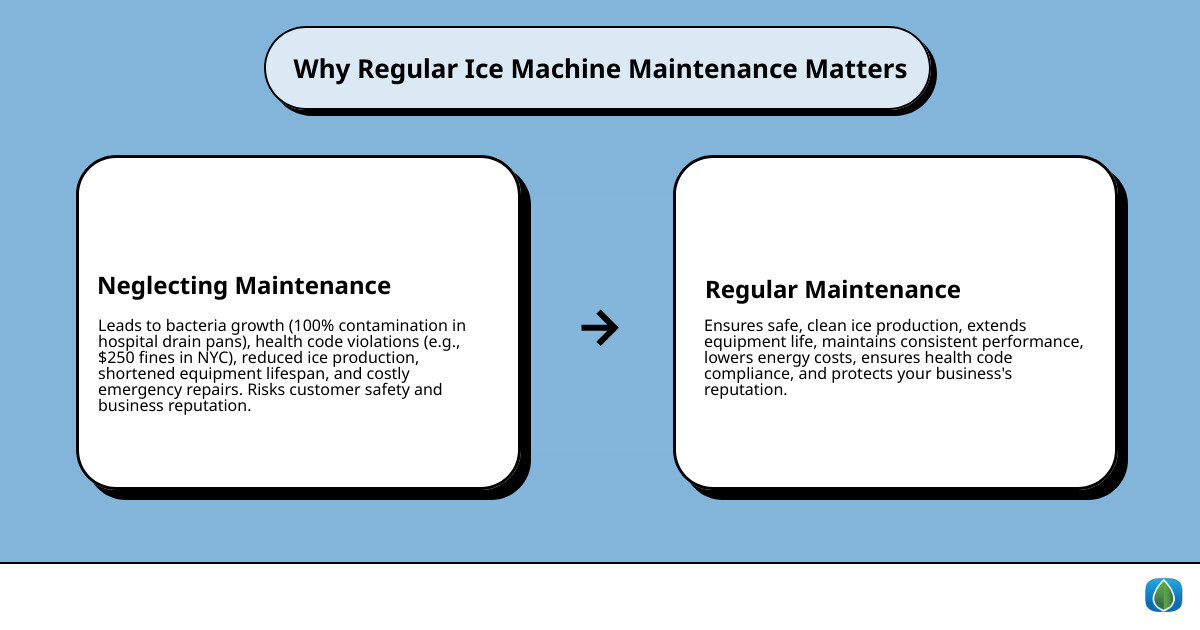
Why Regular Maintenance is Non-Negotiable
At Ohio Heating, we tell every business owner that proactive ice machine maintenance saves headaches and money. Regular care is essential for your business’s success and your customers’ safety.
Staying on top of maintenance significantly extends your equipment’s lifespan, helping you get a full return on your investment instead of facing premature replacement. It also helps you avoid costly repairs and unexpected downtime. Routine checks catch minor issues before they become emergencies, preventing lost sales on a busy day.
Regular maintenance also ensures consistent ice quality. Your customers expect clear, clean ice, and a well-kept machine delivers that every time. Clean ice also encourages hydration, which keeps employees and customers happier and healthier. Harvard Health notes that water aids digestion, regulates body temperature, and flushes out toxins, and studies show hydrated adults are more likely to feel happy.
The most serious issue is health and safety. The FDA classifies ice as food, so your machine must meet food safety regulations. The statistics are alarming: one study found 100% of drain pans contained harmful bacteria, with over half of ice and water chutes also contaminated. Another found 52 different bacterial strains in commercial ice.
Worse, 40% of operators don’t know proper cleaning protocols, meaning they may be serving contaminated ice without realizing it. Skipping maintenance leads to biofilm buildup—a slimy layer of bacteria and mold that contaminates every piece of ice.
Beyond health risks, you face penalties. A dirty ice machine in NYC costs $250 and 5 violation points; Columbus health departments are just as strict. A poor inspection score can quickly damage your reputation through online reviews.
The Critical Difference: Cleaning vs. Sanitizing
Many owners don’t realize cleaning and sanitizing are two different, essential steps for ice machine maintenance. Cleaning removes visible dirt, while sanitizing kills germs.
| Feature | Cleaning | Sanitizing |
|---|---|---|
| Purpose | Removes visible dirt, grime, mineral deposits, and lime scale. | Kills bacteria, mold, fungi, and viruses on surfaces. |
| Method | Uses specialized ice machine cleaners (acids) to dissolve buildup. | Uses EPA-approved sanitizers (e.g., sodium hypochlorite). |
| Effect | Restores machine efficiency by removing physical obstructions. | Eliminates microbial growth that can cause illness. |
| Frequency | Typically monthly to semi-annually, depending on water quality. | Always done after cleaning, or monthly/semi-annually. |
| Key Products | Ice machine cleaner/descaler (e.g., nickel-safe formulas). | Food-contact approved sanitizers. |
Cleaning (or de-liming) removes mineral deposits and lime scale caused by hard water. This buildup restricts water flow and reduces ice production. Use only manufacturer-approved, acid-based cleaners to avoid corroding parts like nickel-plated steel, which could void your warranty.
Sanitizing kills microbial growth like bacteria and mold. After cleaning, you must use an EPA-approved sanitizer to disinfect all surfaces and ensure ice is safe, as noted in manufacturer manuals like the Ice-O-Matic ICEU060 Service and Installation Manual.
You must do both: cleaning won’t kill pathogens, and sanitizing won’t remove mineral scale. Always follow manufacturer guidelines and rinse thoroughly between cleaning and sanitizing to avoid dangerous chemical reactions.
The Consequences of Neglect
Ignoring ice machine maintenance creates a cascade of problems.
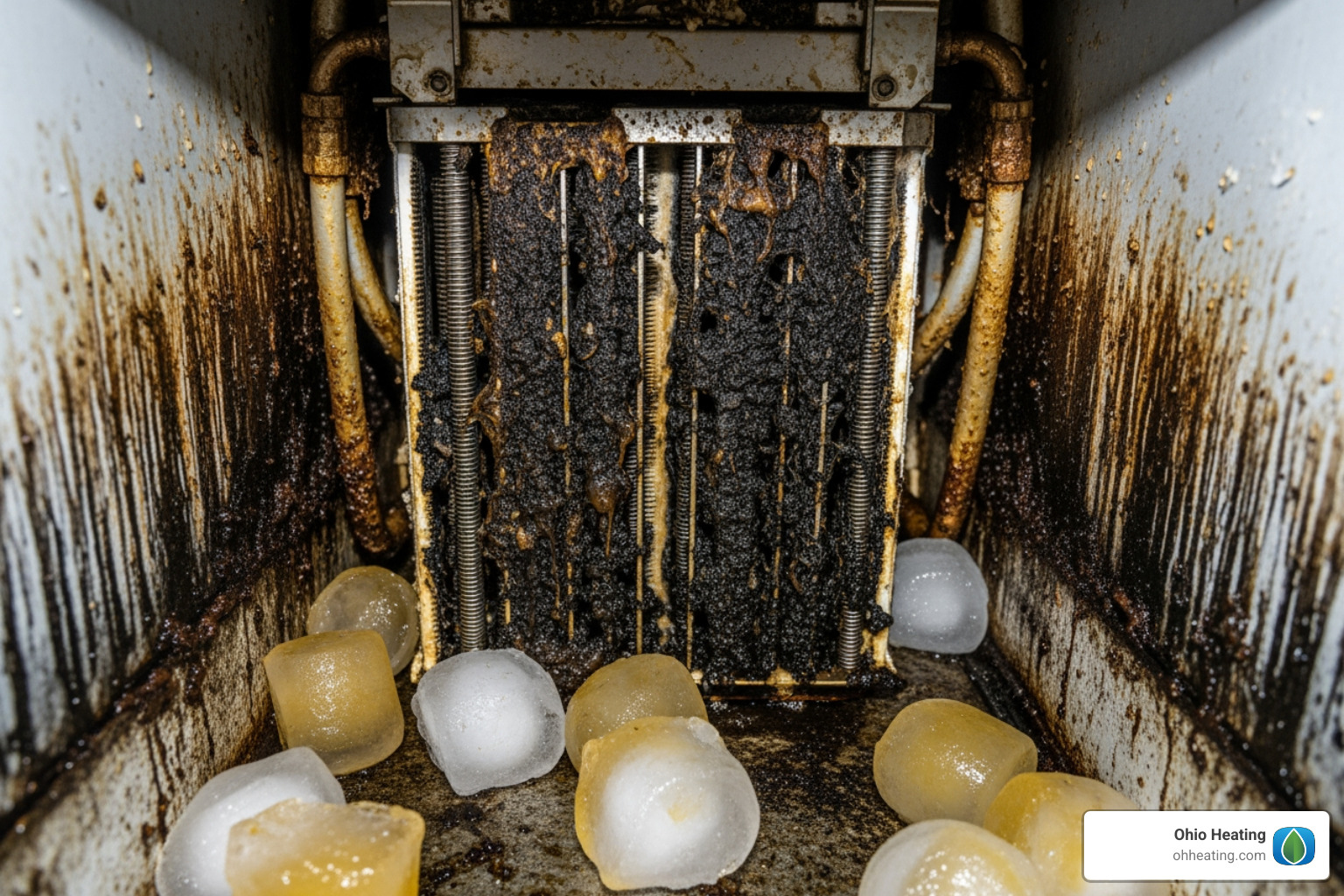
The slime and mold growth shown above isn’t just unsightly; it’s dangerous. The cool, damp interior is a perfect breeding ground for bacteria and mold, which coat components, cause odors, and lead to cloudy ice. As mentioned, studies found bacteria in 100% of drain pans.
Contaminated ice puts customer health at risk, potentially causing food poisoning. A single illness can destroy your reputation through online reviews.
Poor health inspection scores are another consequence. A dirty machine leads to fines and potential closure. Columbus enforces standards similar to NYC’s, and public scores influence customer choice.
Neglect also leads to increased energy consumption. Mineral and dirt buildup force the machine to work harder, raising your utility bills.
This extra strain causes component failure. Parts wear out faster, leading to expensive repairs or full replacement that maintenance could have prevented.
The worst result is unexpected downtime during peak hours. A neglected machine can fail at any time, causing lost sales and frustrated customers. As detailed in our guide to Common Ice Machine Problems: Know the Signs, early detection is key.
In short, neglecting ice machine maintenance threatens your profits, reputation, and public health.
Your Ultimate Ice Machine Maintenance Checklist
At Ohio Heating, we recommend a structured approach to ice machine maintenance for consistent performance. Always follow your manufacturer’s guidelines.
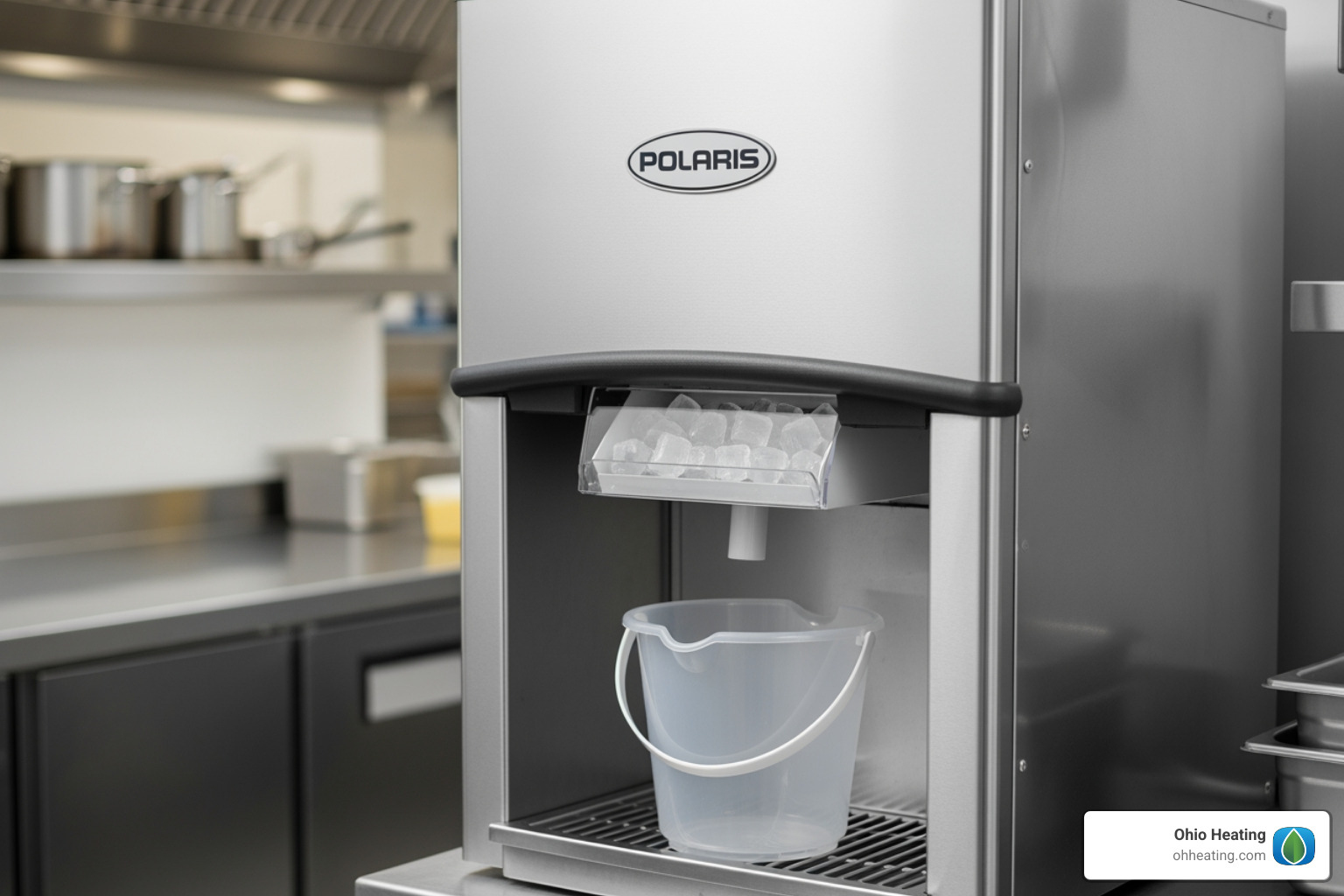
Key components require regular attention:
- Evaporator: Where ice forms; prone to mineral buildup.
- Condenser: Releases heat; a dirty condenser reduces efficiency.
- Water Pump & Drain Lines: Circulate water and remove impurities; clogs cause contamination.
- Ice Bin: Must be kept clean to prevent microbial growth.
- Water Trough: Can accumulate minerals and slime.
- Ice Thickness Sensor: Mineral deposits can affect cube size.
Now let’s break down your maintenance schedule into manageable tasks.
Daily & Weekly Tasks
These quick checks are your first line of defense.
Daily, wipe down exterior surfaces, handles, and dispensers with a mild detergent. Do a quick visual check for leaks to prevent water damage. Inspect your ice quality; cloudy or off-tasting ice signals a problem. Monitor production levels, as a drop is an early warning sign.
Clean and sanitize the ice scoop daily. Store it in a dedicated holder outside the bin, never in the ice.
Weekly, empty, clean, and sanitize the ice bin. Visually inspect the water filter.
Monthly & Quarterly Tasks
This deeper maintenance keeps your machine running efficiently.
Monthly, clean visible interior components and give the ice bin another full cleaning and sanitizing. Check the air filter on air-cooled machines (more often in dusty/greasy areas). A clogged filter restricts airflow, reduces ice production, and can cause overheating.
Inspect water lines for buildup, especially with Central Ohio’s hard water. Ensure the drain system is flowing freely to prevent blockages from biofilm.
Quarterly, clean the condenser coils on air-cooled units with a brush or vacuum. A dirty condenser reduces efficiency and shortens the machine’s lifespan. Run a descaling and sanitizing cycle (or more with hard water) using approved chemicals to prevent scale and bacteria.
For a comprehensive breakdown, the Ice Machine Preventative Maintenance Guide (PDF) offers detailed guidance.
Semi-Annual Professional Ice Machine Maintenance
While your staff can handle daily tasks, professional ice machine maintenance service twice a year is essential. Our Ohio Heating technicians provide the comprehensive care your machine needs.
During a professional visit, we:
- Deep clean and sanitize every internal component, often disassembling parts to reach hidden scale and biofilm, ensuring you meet FDA regulations.
- Replace your water filter every six months to ensure high-quality, safe ice and prevent scale buildup.
- Install a fresh air filter, check refrigerant levels, and address any leaks before they worsen.
- Inspect and tighten all electrical connections to prevent malfunctions and safety hazards.
- Run complete system diagnostics on all components to catch potential issues, extend your machine’s lifespan, and prevent emergency calls.
This service, custom to Columbus water conditions, ensures your machine runs efficiently. With experience since 1999, we know what Central Ohio machines need.
Troubleshooting and When to Call a Professional
Even with diligent ice machine maintenance, issues can arise. At Ohio Heating, we’ve served Columbus since 1999 and have seen it all. The good news is that most problems have warning signs.
Common complaints include low ice production, water leaks, strange noises, poor ice quality, or a machine that won’t turn on. Knowing when to DIY versus when to call a pro can save you money and downtime. For more details, see our guide on how to troubleshoot and maintain your ice machine.
Common Problems and DIY Fixes
Before calling for service, try these simple DIY checks:
- Check your water supply. Ensure the valve is fully open and the line isn’t kinked.
- Inspect the water filter. A clogged filter is a common cause of low ice production and poor quality. Replace it if it’s dirty.
- Ensure proper ventilation. Air-cooled machines need adequate clearance on all sides. Make sure vents aren’t blocked by boxes or debris.
- Clean the condenser coils. If they’re covered in dust or grease, a gentle cleaning with a brush can improve efficiency.
- Check the bin control sensor to ensure it’s clean and unobstructed.
- Confirm the machine is level to prevent water distribution issues.
For more local insights, read our article on Identifying Ice Machine Repair Challenges in Columbus.
Signs You Need an Expert
Some problems require a professional. Calling Ohio Heating can prevent a small issue from becoming a costly disaster.
- Persistently low ice production after checking the basics suggests an internal issue like low refrigerant or a failing compressor.
- Loud grinding or squealing noises often point to mechanical failure. Ignoring them will only lead to more expensive repairs.
- Water leaks you can’t easily fix require a pro. They can cause significant damage and may signal cracked components.
- Electrical issues or error codes are a job for an expert. Don’t risk safety by attempting a DIY fix for tripping breakers or error messages.
- Refrigerant leaks (oily residue near lines) require a certified technician for safe handling and repair.
- Major component failure, like a dead compressor or control board, is not a DIY job. These repairs require specialized tools and expertise.
Our certified technicians at Ohio Heating can diagnose and fix the problem correctly, preventing further damage or safety risks. Attempting complex repairs yourself can void your warranty. When in doubt, call the experts.
Frequently Asked Questions about Ice Machine Care
At Ohio Heating, we get a lot of questions about ice machine maintenance. Here are answers to some of the most common ones from business owners across Central Ohio.
How does my business’s location affect my maintenance schedule?
Your machine’s environment significantly impacts its maintenance needs. A machine in a bakery faces different challenges than one in a hotel lobby.
- High-yeast environments like bakeries or breweries cause faster mold and slime growth. You’ll need to sanitize more frequently.
- Dusty or greasy locations, like kitchens, clog air filters and condenser coils. This forces the machine to work harder. Check and clean air filters monthly or more often in these settings.
- Water quality also matters. Hard water, common in parts of Central Ohio, causes rapid mineral scale buildup. This reduces ice production and increases energy use. You may need to descale monthly instead of quarterly.
A good water filter helps, but you should adjust your maintenance schedule based on your specific environment. If you see buildup, clean it more often.
What role does ventilation play in ice machine performance?
Ventilation is critical; many performance issues trace back to poor airflow.
Most commercial units are air-cooled, meaning they need to “breathe.” They require at least six inches of clearance on all sides and the top for proper airflow. Pushing them into tight corners causes them to struggle. Water-cooled units are less common and use water to cool the condenser. They require less clearance but consume more water and need their own specific maintenance.
Without proper airflow, an air-cooled machine can’t dissipate heat. This leads to overheating, reduced ice production, and premature component failure. The fix is often simple: clean the condenser fins and grilles regularly and ensure vents are unobstructed. This can often solve low ice production issues without needing expensive parts.
How can I ensure the ice is always safe to serve?
Since the FDA classifies ice as food, ensuring it’s safe to serve is paramount. Here are the key practices:
- Practice proper handwashing. Anyone handling ice must wash their hands thoroughly.
- Use a clean, dedicated ice scoop. Sanitize it daily and store it in a holder outside the bin. Never use glassware to scoop ice, as it can chip and introduce bacteria.
- Never store anything in the ice bin. Using it to chill bottles or food is a major health code violation that introduces bacteria and can clog drains. Health inspectors are strict about this.
- Discard the first one or two batches of ice after cleaning or a period of disuse. This flushes out any residual cleaning solutions or impurities.
Following these practices, along with your regular maintenance schedule, ensures you can serve safe, clean ice every time.
Keep Your Business Running Smoothly with Expert Maintenance
We’ve walked through quite a journey together today—from understanding why ice machine maintenance matters to mastering the specific tasks that keep your equipment running at its best. If there’s one thing I hope you take away from this guide, it’s that caring for your ice machine isn’t just another item on your to-do list. It’s an investment in your business’s future.
Think about what regular maintenance gives you: longevity that stretches your equipment investment years beyond what neglect would allow, safety that protects every person who drops ice into their drink, efficiency that keeps your energy bills reasonable and your ice production steady, and compliance that saves you from those dreaded health code violations and fines. These aren’t small things—they’re the foundation of smooth daily operations.
The beauty of a consistent maintenance schedule is that it works for you on multiple levels. Your staff handles the quick daily and weekly checks—wiping surfaces, inspecting ice quality, keeping scoops clean. Then, for the deeper work that requires expertise and specialized tools, that’s where professional service comes in. This balanced approach means your machine gets exactly what it needs, when it needs it, without overwhelming your team or leaving critical tasks undone.
At Ohio Heating, we’ve been keeping businesses comfortable and operational since 1999. We understand that your ice machine is more than just equipment—serving your customers, whether you’re running a busy restaurant in Columbus, managing a hotel in Central Ohio, or overseeing a healthcare facility. When your ice machine works flawlessly, you can focus on what you do best, confident that your equipment won’t let you down.
Don’t wait for a breakdown or a health inspector’s warning to take action. Preventative care is always easier and more affordable than emergency repairs or equipment replacement. Let our experienced team handle your ice machine maintenance needs, from routine service to complex repairs.
Contact us today for all your commercial ice machine sales and repairs. We’re here to ensure your ice stays crystal clear and your business runs smoothly, day after day.