
Installing Commercial Boilers Without the Stress
Why Business Boiler Installation Deserves Careful Planning
Business boiler installation is one of the most important infrastructure decisions a property manager or business owner can make. Get it right, and you have reliable heat, lower energy bills, and minimal disruption. Get it wrong, and you’re looking at costly repairs, compliance issues, and unhappy occupants.
Here’s a quick overview of what business boiler installation involves:
| Step | What It Means |
|---|---|
| System selection | Choose the right boiler type and fuel source for your facility |
| Proper sizing | Match output to your building’s actual heat load |
| Professional installation | Licensed contractors handle permits, pipework, and commissioning |
| Compliance | Meet local building codes and ASHRAE standards |
| Post-install maintenance | Regular servicing to protect performance and warranty |
A commercial boiler is not a simple swap. It’s a system that affects every person in your building – every day. Older or poorly sized units can spike energy costs by 20-30% and risk unexpected shutdowns at the worst possible times.
The good news? A well-planned installation doesn’t have to be stressful. Most commercial projects wrap up in 2-5 business days, and modern high-efficiency systems can cut energy consumption by up to 30%.
I’m Jill Frattini, Service Coordinator at Ohio Heating in Columbus, OH, where I’ve spent years coordinating business boiler installation projects across commercial and industrial facilities. I’ll walk you through everything you need to know to plan your project with confidence.
Quick Business boiler installation terms:
Understanding the Basics of Business Boiler Installation
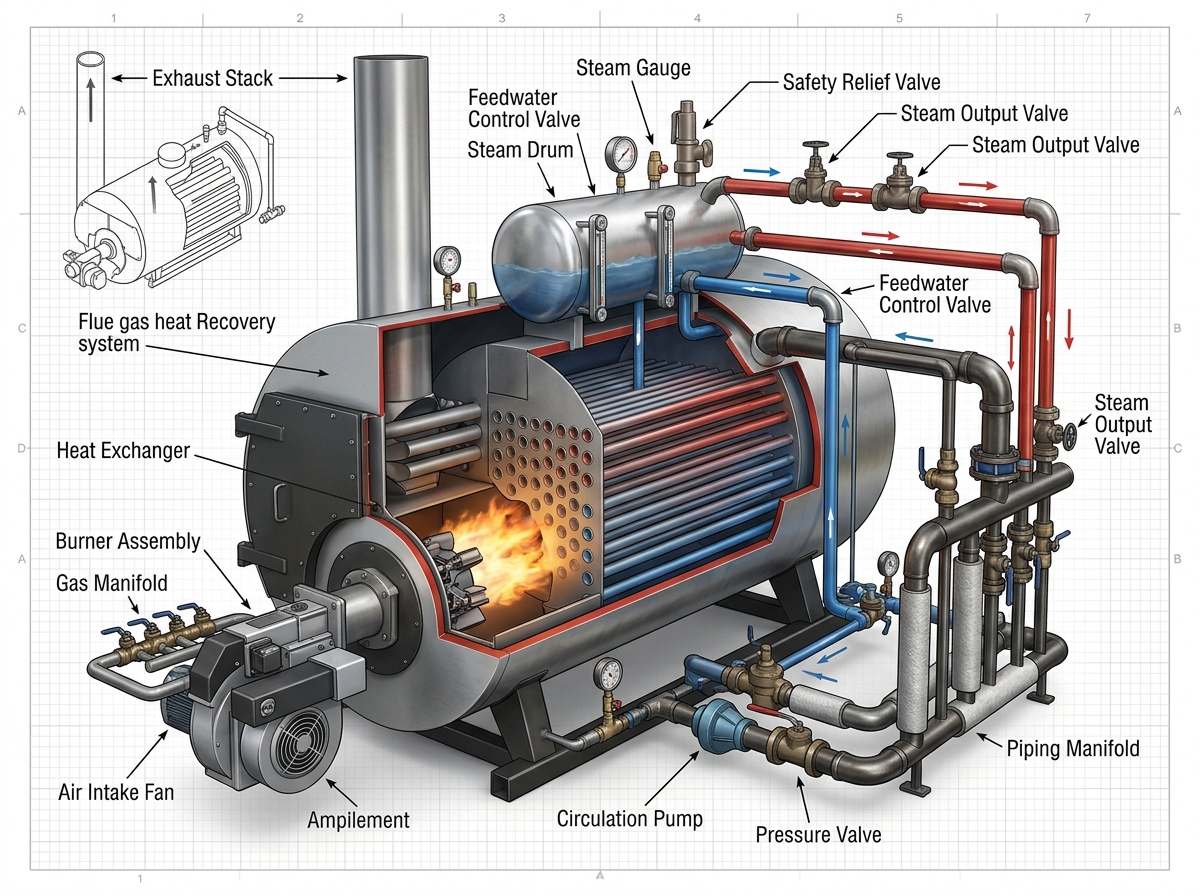
When we talk about a commercial boiler, we aren’t just talking about a “big version” of what you have in your basement at home. A commercial boiler is a pressurized system that uses electricity, gas, or oil to heat water or generate steam, which is then circulated through pipes for heating or industrial processes.
Commercial vs. Residential: What’s the Difference?
The primary difference lies in the output and complexity. While a residential boiler usually stays below 70 kW (roughly 240,000 BTU), commercial systems start above that threshold and can reach into the millions of BTUs.
Commercial systems are built for “mission-critical” environments. In a house, a boiler failure means wearing a sweater for a day. In a business—like a Columbus hotel, healthcare facility, or manufacturing plant—a failure means lost revenue, safety risks, and potential property damage. These systems often feature modular designs, allowing multiple units to work together (redundancy) so that if one fails, the others keep the building warm.
When Should You Consider a New Installation?
Knowing when to pull the trigger on a new Business boiler installation can save you thousands in emergency fees. Most commercial boilers have an average lifespan of 10 to 15 years. If your unit is celebrating its 15th birthday, it’s likely running at a significantly lower efficiency than modern models.
Common signs that it’s time to look at commercial boiler sales include:
- Rising Energy Bills: If your fuel costs are creeping up despite similar usage, the internal components are likely scaling or failing.
- Frequent Repairs: If we’re visiting your facility more than once a year for “emergency” fixes, those costs are better spent on a down payment for a new system.
- Inconsistent Heating: Cold spots in the office or fluctuating water temperatures are classic red flags.
- Strange Noises: “Kettling,” banging, or whistling sounds indicate internal pressure issues or sediment buildup.
For more detail on these warning signs, check out our guide on Urgent Boiler Repair: 5 Critical Signs You Can’t Ignore.
Cost and Financing Considerations
Replacing a commercial boiler typically costs between $5,000 and $50,000, though very large industrial systems can exceed this.
- Small units (up to 100k BTU): $5,000 – $10,000
- Mid-sized units (up to 500k BTU): $10,000 – $25,000
- Large systems (500k+ BTU): $25,000 – $50,000+
While the upfront cost looks high, upgrading to a modern unit can yield energy savings of 20% to 30%. Many businesses opt for financing or leasing options, which allow for lower upfront capital expenditure while immediately benefiting from lower monthly utility bills.
Selecting the Right System and Sizing for Your Facility
Choosing a boiler isn’t a “one size fits all” situation. The fuel source and the method of heat delivery will dictate your long-term operational costs.
Types of Commercial Boilers
- Gas Boilers: The most common in Central Ohio. They are generally cost-effective and highly efficient.
- Electric Boilers: Often used where gas lines aren’t accessible or for smaller, specialized applications. They are very quiet and don’t require venting, but electricity costs can be higher.
- Oil Boilers: Common in more rural areas of Ohio. They require on-site fuel storage.
- Condensing Boilers: The gold standard for efficiency. These recover heat from flue gases that would otherwise be wasted.
- Steam vs. Hydronic: Steam boilers are often found in older Columbus buildings or industrial sites, while hydronic (hot water) systems are the modern preference for general office heating.
Comparison of Fuel Types and Efficiency
| Fuel Type | Efficiency (AFUE) | Best For |
|---|---|---|
| Natural Gas | 85% – 97% | Most commercial facilities in Ohio |
| Electric | 99% (at unit) | Low-maintenance, no-venting needs |
| Propane/Oil | 80% – 90% | Areas without natural gas access |
According to the U.S. Department of Energy, properly sized and high-efficiency boilers can reduce energy consumption by up to 30%. When we look at energy efficient boiler options, we focus on the AFUE (Annual Fuel Utilization Efficiency) rating. A higher rating means more of the fuel you pay for actually turns into heat for your building.
Critical Factors in Business Boiler Installation Sizing
Sizing is the most common place where DIY-inclined managers go wrong. If a boiler is oversized, it will “short cycle,” turning on and off too frequently, which wears out the parts and wastes fuel. If it’s undersized, it will run constantly and still fail to keep your team warm on a sub-zero Columbus morning.
We perform detailed load calculations (often using the Manual J or equivalent commercial standards) that consider:
- Building Envelope: Insulation quality, window types, and roof material.
- Occupancy: How many people are in the building and what is the equipment heat load?
- Climate Challenges: We design for Ohio winters, ensuring the system can handle “design days” where temperatures drop into the negatives.
- System Redundancy: For hospitals or schools, we often recommend a “lead-lag” setup where two smaller boilers share the load, providing a backup if one needs service.
For a deeper dive into how we evaluate these factors, see our Boiler Installation Insights for Columbus Homeowners (the physics of heat load applies to businesses too!).
Recommended Manufacturers for Commercial Use
At Ohio Heating, we work with industry leaders known for reliability and strong warranties. Brands like Raypak, Fulton, Lochinvar, and Trane are staples in the commercial world. These manufacturers offer robust warranties, often covering heat exchangers for 5-10 years and other components for 1-5 years.
The Step-by-Step Commercial Installation Process
A successful Business boiler installation is a choreographed dance between our technicians and your facility’s schedule.
- Site Assessment & Planning: We don’t just guess. We measure your space, check existing gas lines, and verify electrical capacity.
- Permitting: We handle all mechanical permits with local building departments in Columbus and Central Ohio. This is non-negotiable for safety and insurance compliance.
- Removal of Old System: We safely disconnect and dispose of your old unit, following EPA guidelines for any hazardous materials.
- Pipework & Fabrication: Often, new boilers require updated piping or condensate tanks. We handle the custom fabrication to ensure a perfect fit.
- Installation & Hookup: The unit is positioned, leveled, and connected to fuel, water, and electrical lines.
- Venting: Proper venting is critical to prevent Boiler Carbon Monoxide issues. We ensure all exhaust meets ASHRAE standards.
- Commissioning & Testing: This is the “power-on” phase. We test for leaks, check combustion levels, and ensure the system integrates with your Building Management System (BMS).
Minimizing Disruption During Business Boiler Installation
We know that shutting down heat in a retail store or office can hurt your bottom line. A typical installation takes 2 to 5 days. To minimize the impact, we offer:
- Off-Hours Scheduling: We can work evenings or weekends.
- Phased Implementation: In multi-boiler systems, we replace one unit at a time so the building stays warm.
- Temporary Solutions: If a total shutdown is required, we can coordinate temporary heating units to keep operations running.
Our Boiler care strategies for Columbus businesses focus on these logistical hurdles to keep your “stress levels” at zero.
Post-Installation Maintenance and Longevity
Once the boiler is in, the work isn’t over. Preventive maintenance is the difference between a system that lasts 10 years and one that lasts 20.
- Quarterly Inspections: We check for leaks, scale buildup, and sensor accuracy.
- Combustion Analysis: Ensuring the burner is tuned for maximum efficiency.
- Water Treatment: Ohio water can be “hard.” Without proper treatment, scale will destroy a new heat exchanger in record time.
We provide dedicated Boiler Repair and Maintenance in Westerville Ohio and surrounding areas to ensure your investment is protected.
Frequently Asked Questions
How long does a typical commercial boiler installation take?
Most projects take 2 to 5 business days. A simple “swap” where the piping is already compatible might take only 24-48 hours, while a full plant room redesign can take a week or more. We always provide a detailed timeline during the proposal phase.
What permits and regulations are required for business boilers?
In Ohio, commercial boiler installations require mechanical permits from the local building department (like the City of Columbus Building and Zoning Services). The system must also meet ASHRAE standards and local fire codes. We handle the paperwork and coordinate the final inspection so you don’t have to.
How much can a new boiler save on energy costs?
By upgrading an old, inefficient unit to a modern condensing boiler, most businesses see a 20% to 30% reduction in their monthly heating bills. Over the 15-year life of the boiler, these savings often pay for the installation itself.
Conclusion
At Ohio Heating, we’ve been the trusted partner for Central Ohio businesses since 1999. We understand that Business boiler installation is about more than just hardware; it’s about ensuring your operations never miss a beat. Our NATE-certified technicians bring over 200 years of combined experience to every job site, ensuring your new system is sized correctly, installed safely, and maintained for the long haul.
Whether you are in Columbus, Sunbury, or Gahanna, we are ready to help you plan your next heating project. For expert advice and a reliable quote, visit our Ohio Plumbing Boiler Sales and Service page today. Let’s keep your business warm, efficient, and stress-free.