
Boiler not heating: 3 Quick Solutions 2025
When Your Boiler Won’t Heat: Why It Happens and What to Do
A boiler not heating is a major headache for any property manager or business owner, especially during a cold Ohio winter. A failed heating system can lead to frozen pipes, unhappy tenants, and costly operational disruptions. The good news is that many common boiler problems can be diagnosed and even fixed without a technician.
Quick Answer: Most Common Causes of a Boiler Not Heating
- Low boiler pressure (below 1 bar)
- Thermostat issues (wrong setting or dead batteries)
- No power (tripped breaker or blown fuse)
- Frozen condensate pipe (in winter)
- Pilot light or ignition failure
- Faulty pump or valve
- Air in radiators or system sludge
Boiler systems are reliable, but they aren’t immune to problems. This guide will walk you through simple DIY checks, help you identify component failures, and clarify when to call a professional. Whether you have no heat, inconsistent warmth, or strange noises, we’ll help you find the solution.
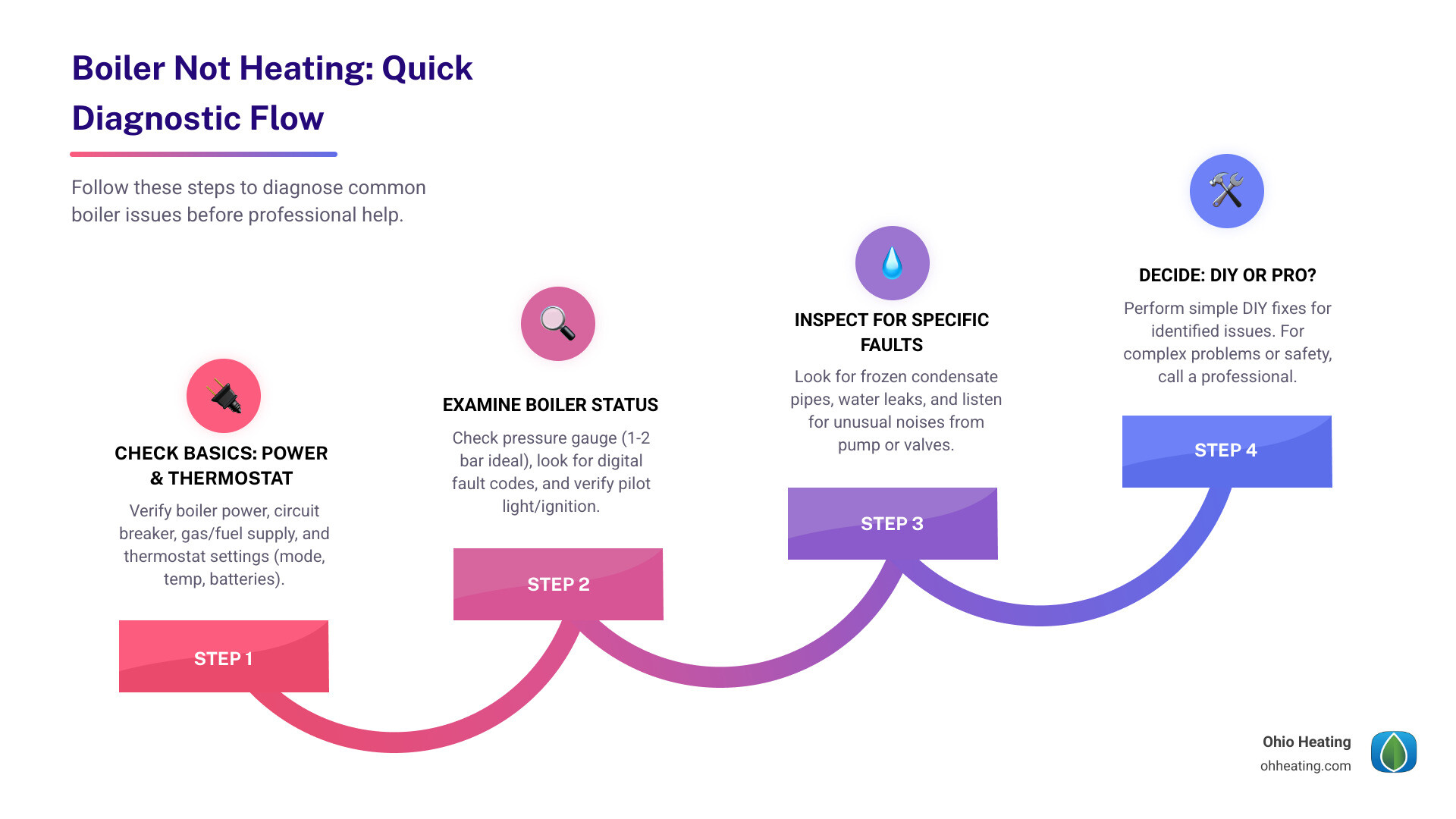
First Response: Simple DIY Checks When Your Boiler is Not Heating
Before calling for emergency service, perform these simple checks. They often solve the problem and can save you time and money.
Check Power, Fuel, and Electrical Systems
Your boiler needs power and fuel to run. Start with these basics:
- Boiler Power Switch: Ensure the switch near the boiler is in the “on” position. It can be accidentally turned off.
- Circuit Breaker/Fuse Box: Check your electrical panel for a tripped breaker or blown fuse. Reset the breaker once. If it trips again, there’s a more serious electrical issue. Electrical overloads can indicate underlying issues that require a professional. Do not reset it again; call an expert.
- Gas Supply: For gas boilers, confirm the gas valve is fully open. If other gas appliances aren’t working, the problem may be with your main supply.
- Prepayment Meter: If you use one, check that you have credit.
Inspect the Thermostat for Simple Errors
The thermostat is your boiler’s command center. Check these settings:
- Mode: Make sure it’s set to “heat,” not “cool” or “fan.”
- Temperature: The set temperature must be higher than the current room temperature for the boiler to turn on. A setting of 68-72°F is typical for comfort and efficiency in Ohio.
- Batteries: If the screen is blank or dim, replace the batteries.
- Smart Thermostat: Verify its Wi-Fi connection. A quick reset can often fix connectivity glitches. If problems persist, you may need to look into more information about thermostat replacement.
Read the Boiler’s Pressure Gauge
Your boiler requires correct water pressure to function. The pressure gauge, a dial on the front of the unit, will show you if it’s in the right range.

When cold, the pressure should be between 1 and 2 bar. If the needle is in the red zone (below 1 bar), the boiler’s safety system will shut it down. This is a very common reason for a boiler not heating.
Look for Digital Fault Codes
Modern boilers have digital displays that show error or fault codes when something is wrong.
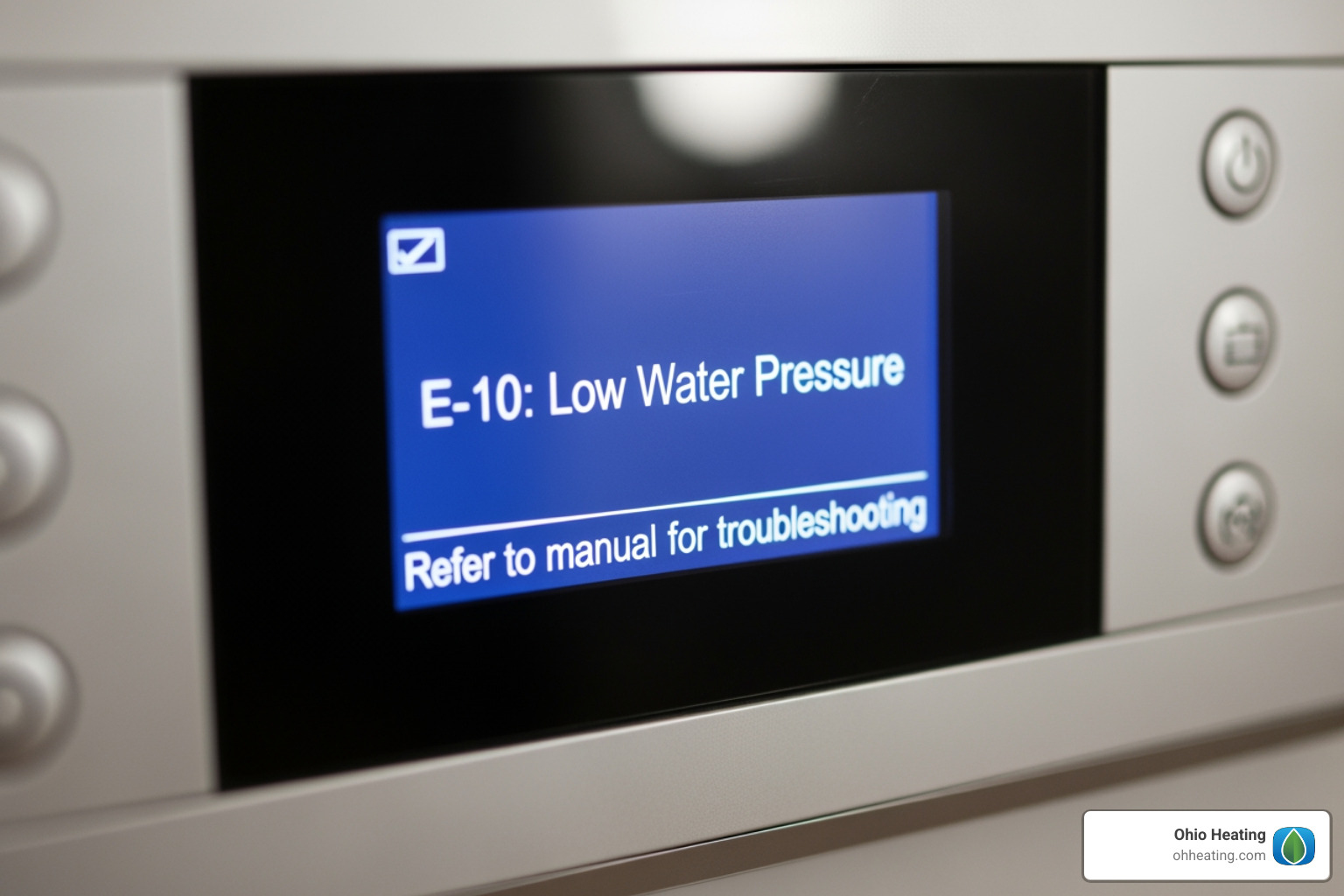
Check the display for flashing lights or codes. Look up the code in your boiler’s manual to understand the issue. Sometimes, pressing the reset button can clear a temporary glitch. However, if the code returns, it signals a persistent problem that needs professional attention. Common codes relate to pressure, ignition, fan, or sensor faults.
Diagnosing Common Boiler Problems: From DIY Fixes to Pro Repairs
If the basic checks didn’t solve the issue, it’s time to investigate specific components. Some fixes are DIY-friendly, while others require a professional.
Low Boiler Pressure: A Top Reason for a Boiler Not Heating
If your pressure gauge is below 1 bar, you’ve likely found the problem. Low pressure is a top cause for a boiler not heating, but it’s often fixable. You’ll need to repressurize the system using the filling loop (a small hose with valves under your boiler).
To fix it, securely attach the filling loop (if external), then slowly open the valves to let water into the system. Watch the gauge and close the valves when the pressure reaches 1.5 bar. If you have to do this often, you have a leak. A persistent leak requires professional diagnosis to prevent water damage. For help, our team provides expert Boiler Repair and Maintenance in Hilliard, OH.
Pilot Light & Ignition Failure: A Common Cause for a Boiler Not Heating
If your boiler won’t fire up, the ignition system is a likely culprit.
- Older Boilers (Pilot Light): These have a small, continuous flame. If it’s out, your boiler won’t work. Check your manual for relighting instructions. A healthy pilot flame is steady and blue; a weak or yellow flame indicates a dirty burner or a failing thermocouple, which requires a professional.
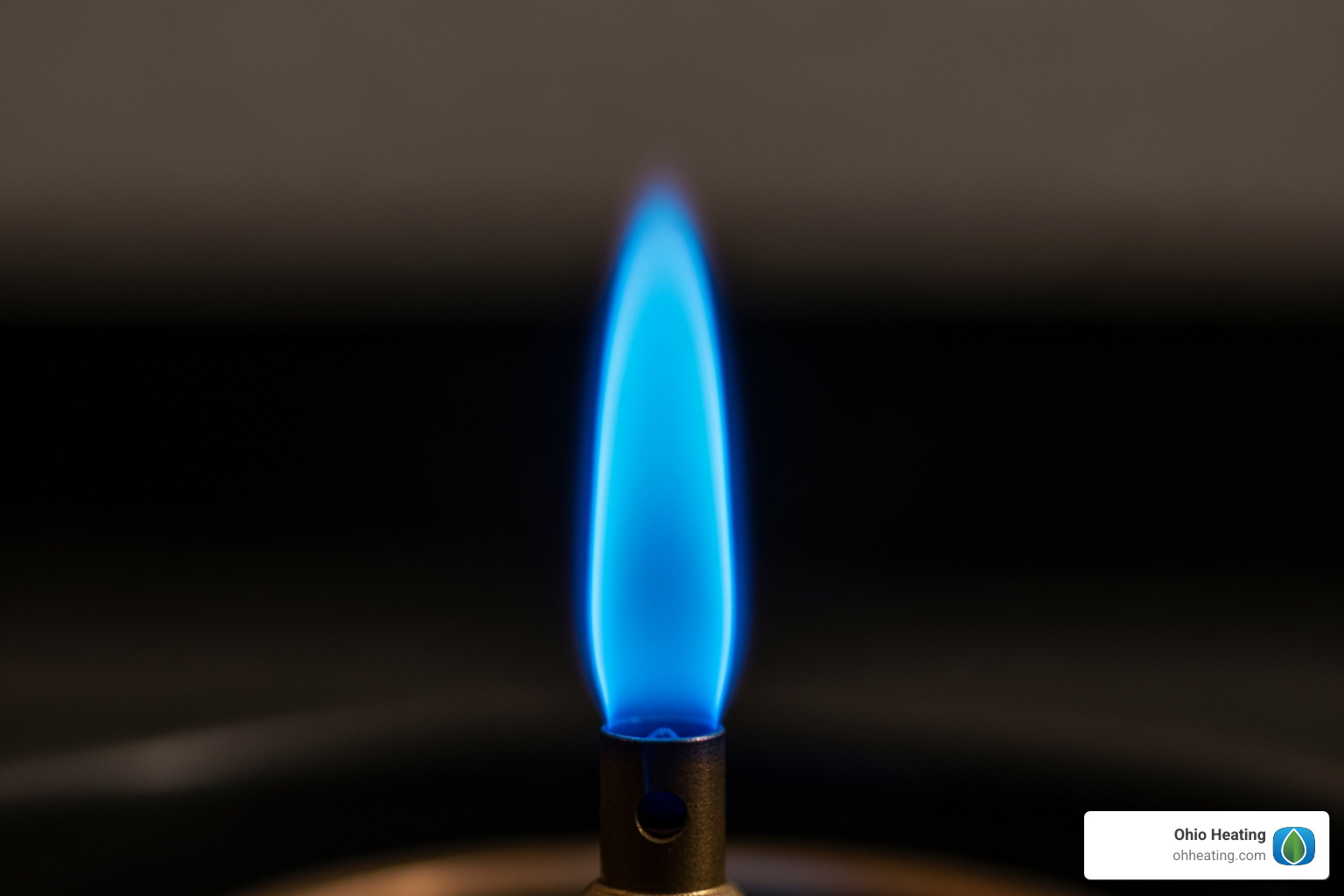
- Modern Boilers (Electronic Ignition): These use a spark to ignite the gas. If you hear clicking but see no flame, the igniter is likely faulty and needs professional replacement.
Frozen Condensate Pipe: A Common Winter Culprit
During Ohio’s freezing winters, the condensate pipe, which drains acidic wastewater outside, can freeze solid. This blockage causes the boiler to shut down, often displaying an error code.
To fix this, locate the plastic pipe outside and carefully pour warm (not boiling) water over it or wrap it with a hot water bottle until the ice melts. Once clear, reset your boiler. To prevent it from happening again, insulate the external portion of the pipe with foam lagging.
Circulator Pump and Diverter Valve Issues
Two internal parts are critical for heat delivery:
- Circulator Pump: This pump moves hot water to your radiators. If it fails, the water stays in the boiler. Whining or grinding noises are a bad sign. This is a job for a technician.
- Diverter Valve (Combi Boilers): This valve directs hot water to either your heating or your taps. If it fails, you might get one but not the other (e.g., hot water but no heating). This also requires a professional repair.
If you’re in the Gahanna area, our experts offer reliable Boiler Repair and Maintenance in Gahanna, OH for these complex issues.
Sludge, Scale, and Radiator Cold Spots
Over time, rust (sludge) and mineral deposits (scale) can build up in your system.
- Kettling: A sound like a boiling kettle means scale has built up on the heat exchanger.
- Radiator Cold Spots: If a radiator is cold at the top, it has trapped air. If it’s cold at the bottom, sludge has settled inside.
Bleeding radiators is an easy DIY fix for trapped air. Use a radiator key to open the small valve at the top of a cold radiator until water, not air, comes out. For sludge buildup, however, your system needs a professional power flush. This service cleans the entire system, restoring flow and efficiency. We provide power flushing and other services as part of our Boiler Repair and Maintenance in Grove City, OH.
Safety First: When You Absolutely Must Call a Professional
Some boiler problems are not DIY projects. For your safety, it’s crucial to recognize the signs that demand immediate professional help.
Signs of a Gas Leak and What to Do Immediately
A gas leak is an emergency. Do not attempt to fix it yourself. The most obvious sign is the smell of rotten eggs or sulfur, an additive in natural gas. You might also hear a hissing sound near gas lines or the boiler.
If you suspect a gas leak, follow these steps immediately:
- Do not use any electronics. Don’t flip light switches, use your phone, or unplug appliances. Any spark could ignite the gas.
- Ventilate the area. If you can, open windows and doors to let the gas disperse.
- Turn off the gas supply. If you know where your main gas shutoff valve is and can reach it safely, turn it off.
- Evacuate everyone from the building immediately.
- Call for help. Once you are safely outside and away from the building, call your local gas utility’s emergency line or 911.
Water Leaks and Internal Component Failure
Water pooling around your boiler is a clear sign to call a professional. While a tiny drip from a radiator valve might be a simple tightening job, significant leaks require an expert.
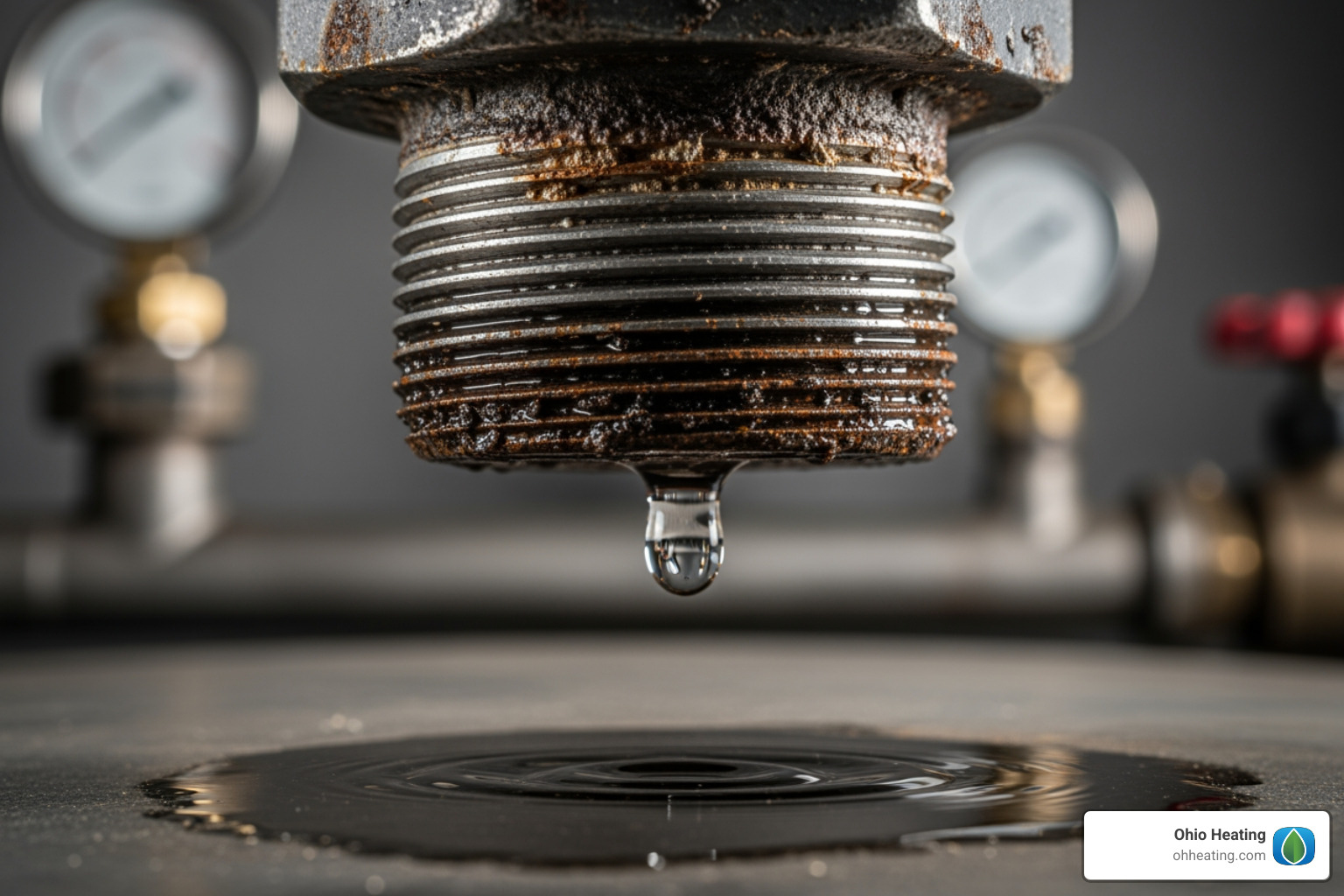
Look for puddles on the floor or signs of corrosion and rust on pipes or the boiler casing. These indicate a persistent leak that could be coming from a failed internal seal, a cracked pipe, or a faulty valve. A constantly dripping pressure relief valve is another serious issue, as it could signal dangerously high system pressure or a failed safety component.
If you see a leak, turn off the water supply to the boiler and call a certified technician. For reliable service, our team offers expert Boiler Repair and Maintenance in Delaware, OH to safely resolve any leaks.
Preventative Maintenance to Keep Your Boiler Running Smoothly
Most emergency calls for a boiler not heating are preventable. Just like a car, your boiler needs regular maintenance to run reliably and efficiently, saving you from the stress and expense of unexpected breakdowns.
Annual boiler service is the single most important step you can take. We recommend scheduling a professional inspection each year before the cold weather hits. During a service visit, a certified technician will clean internal components to prevent sludge buildup, check for gas leaks, test safety controls, and ensure proper combustion. This tune-up not only improves safety and efficiency but also catches small problems before they become major failures. To learn more, review this boiler maintenance checklist, and book your inspection with our team via Contact us for expert boiler sales and service.
Between professional visits, you can perform a few simple tasks:
- Bleed your radiators annually to remove trapped air and eliminate cold spots.
- Insulate your pipes, especially the condensate pipe, to prevent freezing during Ohio’s winters.
- Check the pressure gauge monthly. If it’s low, you can repressurize the system before it shuts down.
For property managers and business owners, preventative care protects your investment and avoids costly downtime. Our team providing Boiler Repair and Maintenance in Westerville, OH has seen how regular maintenance saves clients money and ensures reliability when it matters most.
Frequently Asked Questions About Boiler Heating Issues
After decades of serving the Columbus area, we’ve heard just about every question regarding a boiler not heating. Here are answers to the most common ones.
Why does my boiler keep shutting off and on (short cycling)?
Short cycling is when your boiler fires up, runs for a very short time, then shuts down, only to repeat the process. This is inefficient, increases wear and tear, and raises energy bills. Common causes include:
- Low Water Pressure: The boiler’s safety sensors may be shutting it down. Check your pressure gauge.
- Thermostat Problems: A faulty thermostat or poor placement (e.g., in direct sunlight) can send incorrect signals.
- Poor Circulation: Sludge or an airlock in the system can cause the boiler to overheat and shut off. You may hear gurgling or banging noises.
- Oversized Boiler: A boiler that is too powerful for your property will heat the space too quickly and shut off, leading to a constant on-off cycle.
While you can check the pressure and thermostat, persistent short cycling often points to an internal issue that requires a professional.
Why are my radiators cold at the top or bottom?
Cold spots on radiators are a common complaint with a clear diagnosis:
- Cold at the Top: This means air is trapped inside. Air rises above the hot water, preventing the top of the radiator from heating up. You can fix this by bleeding the radiator. Use a radiator key to open the bleed valve at the top until water, not air, hisses out.
- Cold at the Bottom: This is a classic sign of sludge buildup. Over time, rust and debris settle at the bottom of the radiator, blocking water flow. If you see dark, dirty water when bleeding a radiator, you have a sludge problem. A professional power flush is the best solution to clean out the entire system.
For issues with sludge or system balancing, our team providing Boiler Repair and Maintenance in Dublin, OH can restore even heating to your property.
How do I know if my boiler needs to be replaced?
Deciding between repair and replacement can be tough. Here are the key factors to consider:
- Age: Most boilers have a lifespan of 10-15 years. If yours is approaching or has passed this age, replacement is often the smarter long-term choice.
- Frequent Breakdowns: If you’re calling for repairs every season, the cumulative cost and inconvenience may outweigh the price of a new, reliable unit.
- Rising Energy Bills: An older, less efficient boiler has to work harder to heat your space, costing you more each month. A new high-efficiency model can lead to significant savings.
- Cost of Repair: A good rule of thumb is if a single repair costs 50% or more of the price of a new boiler, replacement is the more financially sound option.
An investment in a new boiler provides reliability, efficiency, and peace of mind. For an expert assessment, contact us about Boiler Installation and Replacement in Worthington, OH.
Get Your Heat Back: Your Next Steps
By now, you should feel more confident in diagnosing why your boiler not heating. We’ve covered simple DIY checks like inspecting your thermostat and pressure gauge, as well as more complex issues like frozen pipes and internal component failures. Most importantly, you know the critical safety signs—like a gas leak or major water leak—that mean it’s time to call a professional.
Knowing when to call for help is just as important as knowing what to fix yourself. When you need an expert, Ohio Heating is ready to help. Since 1999, our certified technicians have provided reliable boiler repair and maintenance across Central Ohio, ensuring homes and businesses stay warm and operational.
A boiler breakdown is more than an inconvenience; it’s an emergency that can disrupt your business or endanger your property. Don’t wait for the problem to get worse.
Whether you need a fast repair, preventative maintenance, or a consultation on a new system, Contact us for expert boiler sales and service. We’re here to get your heat back on and keep it running all winter long.