
Why Commercial AC Maintenance Is Critical for Your Business
Commercial AC maintenance is the regular inspection, cleaning, and servicing of cooling equipment — like rooftop units, split systems, packaged units, and air handlers — to keep them running safely and efficiently.
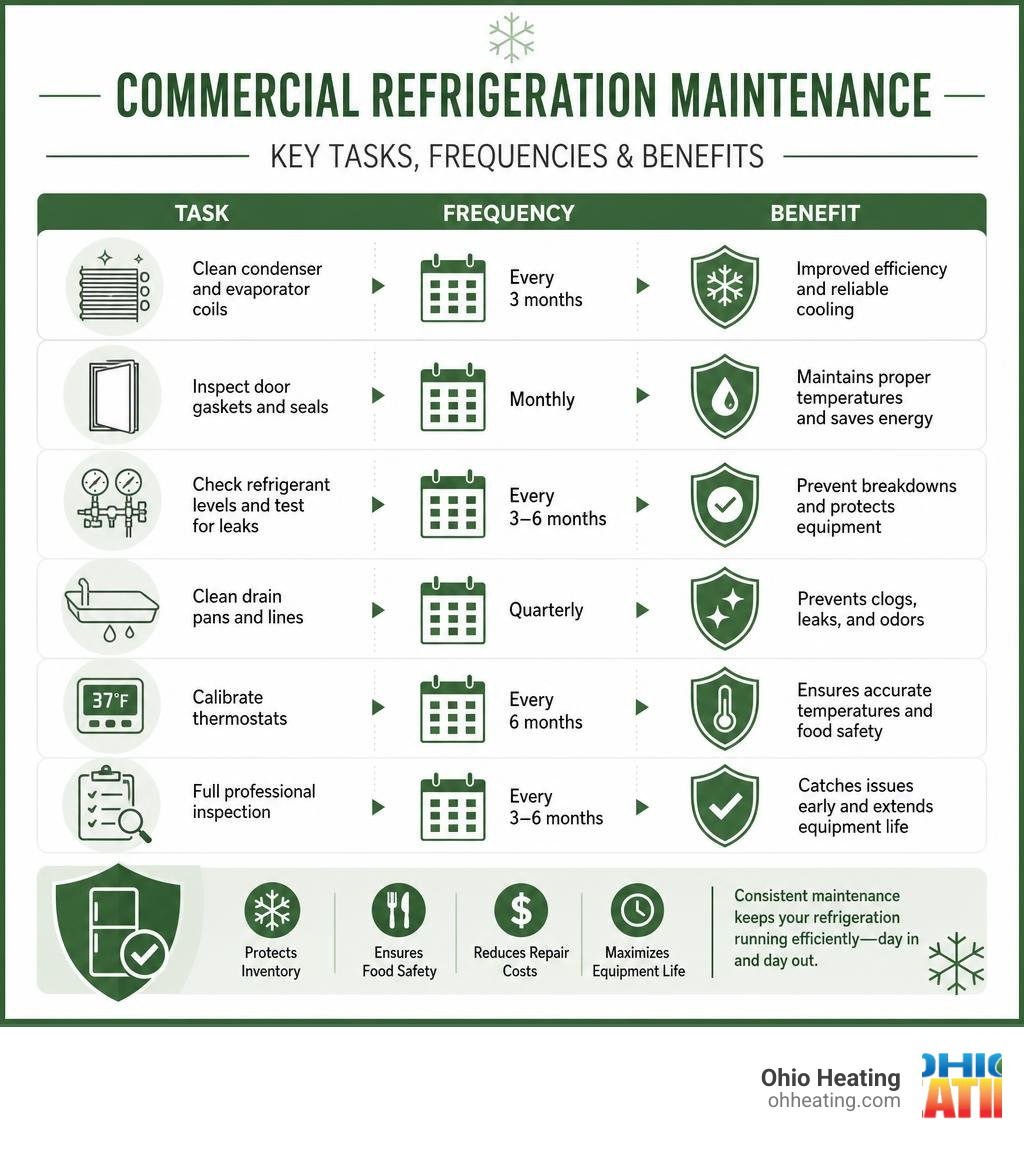
Quick answer: What does commercial AC maintenance include?
| Task | Frequency |
|---|---|
| Clean condenser and evaporator coils | Every 3 months |
| Inspect belts, fans, and electrical connections | Monthly |
| Check refrigerant levels and test for leaks | Every 3–6 months |
| Clean drain pans and condensate lines | Quarterly |
| Calibrate thermostats and controls | Every 6 months |
| Full professional cooling system inspection | Every 3–6 months |
Your AC equipment works hard during hot weather. And when it fails, the consequences are immediate — uncomfortable employees and customers, disrupted operations, and costly emergency repairs.
A cooling system that drifts even a few degrees out of range can make your building uncomfortable, increase humidity, and force your equipment to run longer than necessary.
The good news? Regular maintenance can reduce commercial cooling breakdowns by up to 90%. That means most AC failures are preventable.
I’m Jill Frattini, Service Coordinator in Columbus, OH, where I’ve spent years scheduling and overseeing commercial AC maintenance alongside our certified technicians. In this guide, I’ll walk you through everything you need to know to protect your cooling equipment, reduce repair costs, and keep your business comfortable.
The Ultimate Checklist for Commercial AC Maintenance
To keep your Columbus business running without a hitch, we recommend dividing your AC maintenance efforts into tasks your staff can handle and tasks that require a professional cooling technician.
Here is a quick look at how DIY tasks stack up against professional cooling system maintenance:
| Maintenance Aspect | DIY Staff Tasks | Professional Technician Tasks |
|---|---|---|
| Coil Cleaning | Surface brushing, light vacuuming of dust | Deep cleaning, pressure washing when appropriate, fin straightening |
| Electrical Checks | Visual inspection of disconnects and accessible power cords | Voltage monitoring, tightening connections, testing relays and contactors |
| Refrigerant Levels | Not applicable; requires certified service | Leak detection, pressure testing, and proper refrigerant charging |
| Filter and Airflow Checks | Replacing accessible filters, reporting weak airflow | Measuring static pressure, inspecting blower components, balancing airflow |
| Drain Line Care | Checking for standing water, wiping up visible moisture | Flushing condensate lines, clearing sludge, testing safety switches |
| Thermostat Calibration | Monitoring temperature display consistency | Calibrating sensors, checking control sequences, verifying cooling cycles |
By establishing a clear division of labor, your team can handle basic upkeep while our certified technicians handle the complex mechanical work.
Cleaning Condenser and Evaporator Coils
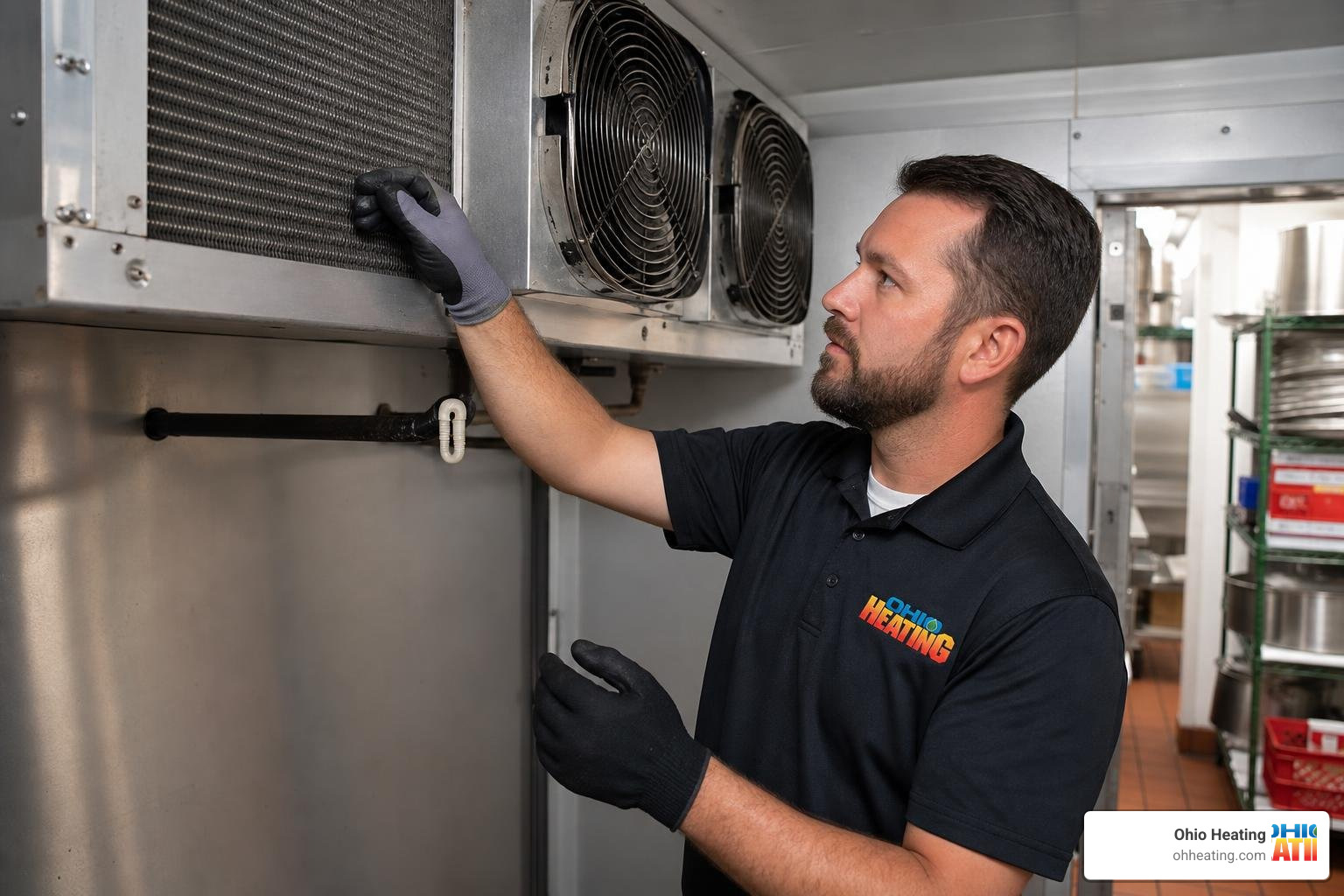
The condenser and evaporator coils are the heart of your AC system’s heat transfer process. The condenser coil releases heat outdoors, while the evaporator coil absorbs heat from indoor air.
When dust, pollen, grease, and debris accumulate on these coils, they create an insulating barrier. This blockage restricts airflow and forces your compressor to work harder to maintain the target temperature. Over time, this extra strain leads to overheating, higher energy bills, and premature compressor failure.
For related cooling-equipment care resources, read our guide on preventive cooling maintenance to reduce buildup and protect system performance. If you want to take the guesswork out of budgeting for service visits, consider exploring fixed-fee cooling service contracts.
Inspecting Airflow, Filters, and Controls
Clean filters and balanced airflow are critical to AC performance. A clogged filter can restrict air movement, reduce comfort, increase humidity, and cause the evaporator coil to freeze.
Your staff should replace accessible filters on a routine schedule and report hot spots, weak airflow, or unusual odors. During professional service, technicians inspect blower components, test controls, verify refrigerant performance, and make sure your cooling system can keep up with building demand.
For AC repairs, maintenance, and installation planning, relying on professional technicians ensures your equipment is properly sized, calibrated, and restored to manufacturer standards.
Why Proactive AC System Care Saves Money
Many business owners view maintenance as an optional expense. In reality, neglecting your cooling systems is far more expensive than maintaining them. Proactive care directly reduces your daily operating costs, prevents downtime, and extends the lifespan of your AC equipment.
When you invest in a planned maintenance strategy, you prevent minor issues — like a slightly dirty coil, clogged filter, or worn fan component — from turning into major AC repairs. To learn how to build a durable cooling infrastructure for your commercial facility, check out these 10 Easy Commercial Cooling Maintenance Strategies to Boost System Durability.
Recommended Frequency for Commercial AC Maintenance
How often should your cooling equipment be serviced? While basic filter checks and visual inspections can be handled by your staff, professional inspections should follow a structured schedule.
For standard commercial operations in Central Ohio, we recommend scheduling professional AC service every 3 to 6 months. High-demand facilities or buildings with older equipment may require monthly or quarterly checkups to ensure consistent performance.
To understand the industry baselines for system care, you can review the ANSI/ACCA Quality Maintenance Standards, which outline minimum inspection tasks required to keep commercial cooling systems running safely. For businesses operating in high-traffic commercial districts, understanding how constant demand affects AC components is key to preventing unexpected downtime.
Reducing Energy Consumption and Utility Bills
Air conditioning is a major energy consumer in commercial properties, especially during periods of sustained heat and high occupancy.
When coils are clean, filters are replaced, airflow is balanced, and thermostats are calibrated, your system runs shorter, more efficient cycles. This optimization significantly lowers your monthly utility bills.
To explore the relationship between equipment tuning and utility savings, read our detailed article, energy efficiency in commercial cooling systems. Understanding these principles helps you lower your carbon footprint while protecting your bottom line.
The Value of Professional Commercial AC Maintenance
While your staff can handle basic filter changes and visual checks, commercial AC systems require professional diagnostic tools and training. Certified technicians have the expertise to check refrigerant charge, test electrical relays, inspect compressors, verify airflow, and catch small issues before they shut down your system.
Professional support also helps with AC repair decisions and installation planning. If your unit is aging, undersized, or repeatedly failing, a technician can help determine whether repair or replacement is the smarter investment.
By enrolling in our Commercial Cooling Maintenance Program, you can ensure your commercial cooling systems receive consistent, high-quality care. For a deeper look at the long-term operational advantages of these programs, read about our comprehensive Commercial Cooling Maintenance Services and find out Why Your Building Needs a Planned Commercial Cooling Maintenance Strategy.
Additionally, working with certified professionals helps support manufacturer warranty requirements and keeps your cooling systems running at peak efficiency.
Warning Signs Your AC System Needs Immediate Service
AC systems rarely fail without warning. Usually, they leave a trail of clues that tell you a breakdown is imminent. Recognizing these warning signs early can save you thousands of dollars in emergency repairs and business disruptions.
For a comprehensive look at how to identify and manage cooling system issues, refer to our resource, Stay Frosty: The Ultimate Guide to Commercial Cooling. If you are currently experiencing AC problems, getting professional diagnostic support quickly is essential to restore comfort and keep your systems running.
Temperature Fluctuations and Comfort Risks
If your building is comfortable in the morning but becomes warm and humid by mid-afternoon, you may have a serious AC problem. Temperature fluctuations can point to a failing compressor, low refrigerant, restricted airflow, or a malfunctioning thermostat.
Consistent cooling is essential for employee productivity, customer comfort, and equipment protection. When indoor temperatures rise unexpectedly, your AC system may be working harder than it should — and a breakdown may be close behind.
Excessive Condensation or Ice Accumulation
Your AC system should not produce excessive water around the unit, ice on refrigerant lines, or heavy frost on the evaporator coil.
Ice buildup often occurs when airflow is restricted or refrigerant performance is off. This ice blocks heat transfer, reduces cooling capacity, and can strain the compressor. If left unaddressed, frozen coils can cause water leaks, damaged components, and expensive AC repairs.
Frequently Asked Questions
How often should commercial AC systems be serviced?
We recommend professional maintenance every 3 to 6 months. However, high-use facilities, buildings with heavy occupancy, or locations with older equipment should schedule monthly or quarterly inspections to prevent sudden breakdowns.
What are the most common signs of a failing commercial AC system?
The most common warning signs include:
- Temperature fluctuations or inability to maintain comfort
- Strange clicking, squealing, or buzzing noises from the compressor or fan components
- Ice buildup on coils or refrigerant lines
- Water pooling around the unit or near condensate drains
- A sudden, unexplained spike in your monthly energy bills
Can regular maintenance reduce AC repair costs?
Yes. Regular maintenance helps technicians catch worn parts, refrigerant issues, clogged drains, dirty coils, and airflow problems before they cause major failures. It also helps your AC system run more efficiently and last longer.
Conclusion: Partner with Columbus’s Cooling Experts
Your commercial AC system is essential to business comfort and day-to-day operations. Don’t wait for a hot building or unexpected breakdown to call for help. Taking a proactive approach to your cooling systems saves money, improves comfort, and gives you peace of mind.
Our team has been helping Columbus businesses stay cool since 1999. Our certified technicians are ready to provide AC repairs, maintenance, and installation support tailored to your specific needs and equipment.
Don’t let a preventable AC breakdown disrupt your business. Schedule professional cooling services today and keep your business running smoothly all year round!