Furnace Burning Smell: What’s Normal in the First Cold Week and What Isn’t
A furnace burning smell on the first cold night of the season worries a lot of Columbus homeowners, but most of the time the cause is harmless. Your furnace sat idle for five months, dust buildup settled on the heat exchanger and the blower motor, and the first heating cycle burns it off. That burning dust should fade within a few hours of runtime.
Other furnace smells don’t fade, and a few of them mean you should stop and make a phone call before you do anything else. A burning odor from hot dust and a burning rubber smell from a blower motor are very different problems. Here’s how to sort one from the other.
What a Furnace Burning Smell Usually Means
Dust burn-off is the most common explanation for a burning smell from a furnace running its first cycles. Household dust, pet dander, and drywall fines collect on the heat exchanger and burner area over the summer. When the burners fire, that material scorches and you smell it at the registers, so the smell coming out of the vents is strongest right after startup.
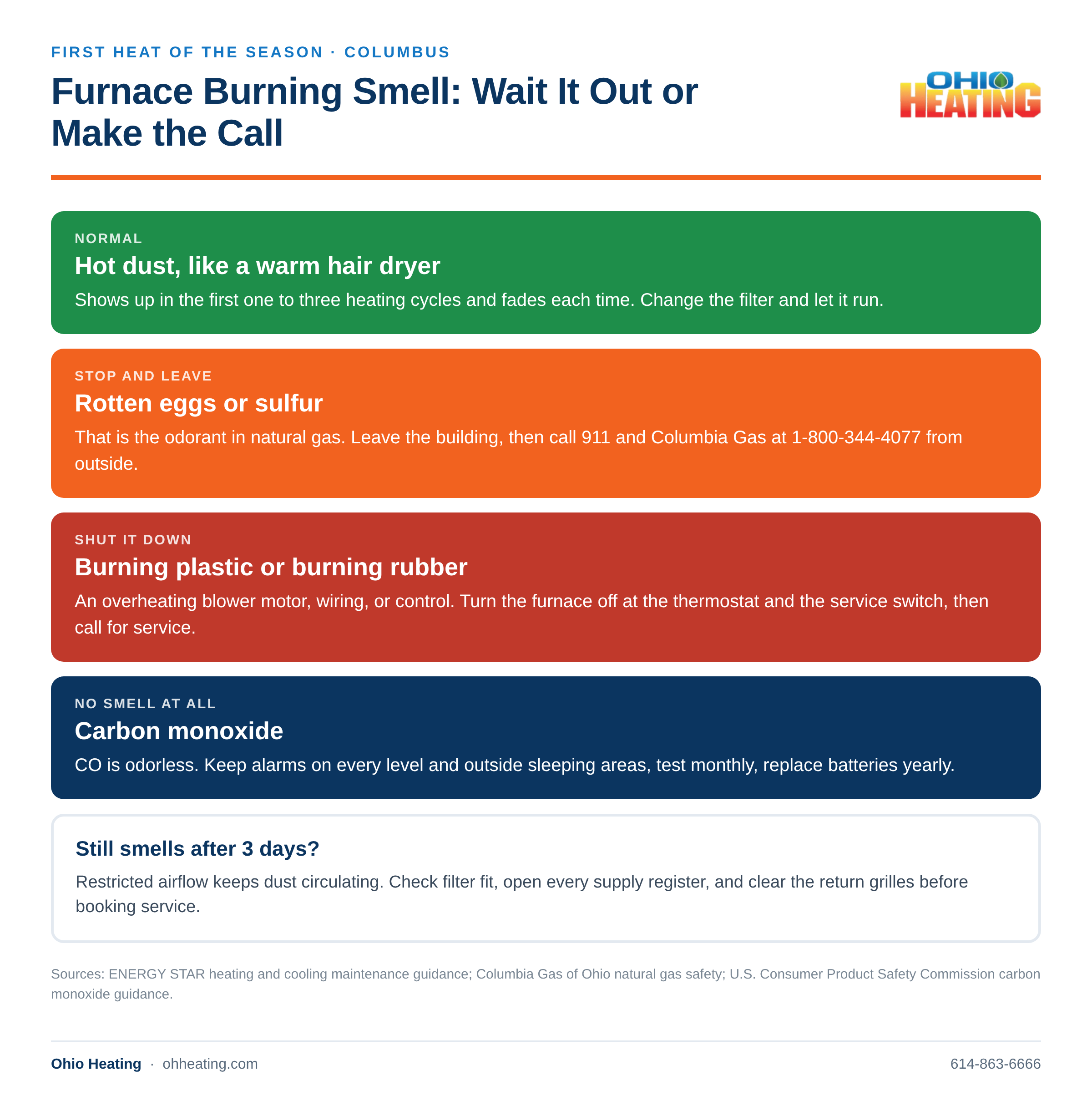
Normal burn-off has a signature smell, like a hot iron or a warm hair dryer. This smell shows up during the first one or two heating cycles of the season, and it weakens each time the furnace runs. By the second or third day, you shouldn’t notice it at all.
If your filter hasn’t been changed since spring, swap the clogged filter out before you decide anything. ENERGY STAR recommends checking the filter every month during heavy-use months and replacing it at least every three months, because a dirty filter slows airflow and makes the system work harder (
ENERGY STAR). A clogged filter also concentrates dust right where the air moves quickest, which drags the smell out for days.
The Smells That Mean Stop and Call
Two smells need action before troubleshooting.
The first is rotten eggs or sulfur. That’s mercaptan, the odorant added to natural gas so you can detect a leak. Columbia Gas of Ohio’s instruction is direct: stop what you’re doing, leave the area immediately, and from a safe location call 911 and Columbia Gas at 1-800-344-4077. Avoid lighting a match, flipping a switch, using your phone indoors, opening windows to ventilate, or trying to find the leak yourself (
Columbia Gas of Ohio).
The second is a furnace burning plastic smell, or a sharp electrical odor, that keeps going after the furnace shuts off. That one usually comes from the blower motor or a slipping belt running hot. Shut the system down at the thermostat, then at the furnace switch, and get a technician out. A smell that persists with the burners off indicates wiring, or a motor or control component rather than normal dust burnoff.
Carbon monoxide has no smell at all, which is why the alarm matters more than your nose. The Consumer Product Safety Commission recommends CO alarms on every level of the home and outside sleeping areas. Replace the batteries annually and test the alarms monthly. More than 200 people in the United States die each year from accidental non-fire CO poisoning tied to consumer products (
CPSC). If your CO alarm sounds, get everyone outside and call 911.
Furnace Smell Reference Table
| What you smell |
Likely cause |
How long it should last |
What to do |
| Hot dust, warm hair dryer |
Dust burning off the heat exchanger |
One to three heating cycles. |
Change the filter and let it run. |
| Rotten eggs or sulfur |
Natural gas odorant, possible leak |
Treat any amount as urgent. |
Leave the building, then call 911 and Columbia Gas at 1-800-344-4077. |
| Burning plastic or burning rubber |
Overheating blower motor, wiring, or control |
Should not show up at any point. |
Shut the furnace off and schedule service. |
| Musty or damp |
Moisture in the ductwork or a dirty coil |
Lingers each time the blower runs. |
Have the coil, drain, and duct condition checked. |
| Oily or smoky |
Debris on the burners or a venting problem |
Needs a technician the same day. |
Shut the furnace off and schedule service. |
| Faint dust smell after two weeks |
Restricted airflow keeping dust in circulation |
Ongoing until airflow is corrected. |
Check filter fit, open blocked registers, request an airflow check. |

Why a Fall Tune-Up Catches Most of This
The smells you can identify at the register are the tail end of conditions a technician can measure directly. Combustion analysis shows whether or not the burners run clean. A vent inspection catches a blocked or disconnected flue, which is the failure mode behind most furnace-related CO problems. Static pressure readings show whether the duct system is choking the blower, and a motor draw test flags an overheating blower before it starts smelling like plastic.
Booking that visit before the first hard freeze also gets you a normal appointment slot instead of an emergency one. Our
furnace and heating service team runs these checks across Columbus and the surrounding suburbs, and the
seven furnace maintenance tips we published for Columbus homeowners cover what you can handle yourself between visits.
What You Can Check Yourself Before Calling
Start with the filter, since a clogged filter is the most common cause and the least expensive fix. Confirm the size matches the cabinet, seat it so air can’t slip around the edges, and note the arrow direction.
Walk the house and open every supply register. Closing vents in unused rooms feels efficient, but it raises static pressure across the whole system instead. Pull furniture and rugs off return grilles for the same reason.
Look at the area around the furnace. Paint cans, cleaning products, and stored cardboard near a combustion appliance give off their own odors and are worth moving regardless.
A new furnace burning smell follows the same rules, and so does an electric furnace burning smell. New heat exchangers carry manufacturing oils that burn off in the first few cycles, and electric heating elements collect dust the same way gas burners do.
If the smell survives all three of those checks, it’s a service call. Dust burn-off responds to time and a clean filter, and anything else usually doesn’t. Our
indoor air quality options come up often in these conversations, since filtration and duct condition drive both the smell and the dust load in the house.
Frequently Asked Questions
How long should a furnace burning smell last at the start of the season? A few hours of runtime, spread across one to three heating cycles. If you still notice it after a couple of days of normal operation, something is restricting airflow or the smell isn’t dust.
Is a burning smell from the furnace dangerous? Dust burn-off isn’t. A rotten-egg smell, a burning-plastic smell, or any smell paired with a sounding CO alarm needs immediate action, starting with getting people out of the house.
Can I prevent the smell before the first cold night? Run the furnace for 20 to 30 minutes on a mild day in early fall with a fresh filter installed and windows cracked. You’ll clear the dust on your own schedule instead of at 11 pm in November.
Does a dirty filter cause a burning smell? It makes one worse and drags it out. Restricted airflow raises temperatures inside the cabinet and keeps circulating dust that would otherwise be captured.
What should I do if my carbon monoxide alarm sounds? Get everyone outside to fresh air and call 911 from outside the building. Wait for responders before going back in.
Do I need a CO alarm if my furnace is new? Yes. CPSC recommends alarms on every level of the home and outside sleeping areas regardless of equipment age. CO can come from any fuel-burning appliance, a vehicle in an attached garage, or a portable generator.
Get It Checked Before the First Hard Freeze
A fall inspection protects your equipment, keeps your family safe from venting faults you can’t smell, and saves you an emergency visit in January. Call Ohio Heating at 614-863-6666 or schedule a furnace inspection online.