
Furnace Leaking Water? Where It Comes From and What to Check
You go down to the basement for a load of laundry and find a puddle spreading from under the furnace. The heat still seems to work, but the concrete is wet and the base of the cabinet has a rust line. A furnace leaking water is common in central Ohio homes during the first weeks of heating season, and the source is usually easy to find once you know where to look.
Most leaks come from a high-efficiency furnace’s drain system. Others start at the air conditioning coil above the furnace, a whole-house humidifier, or the vent pipe. The checks below can help you sort out which one you have.
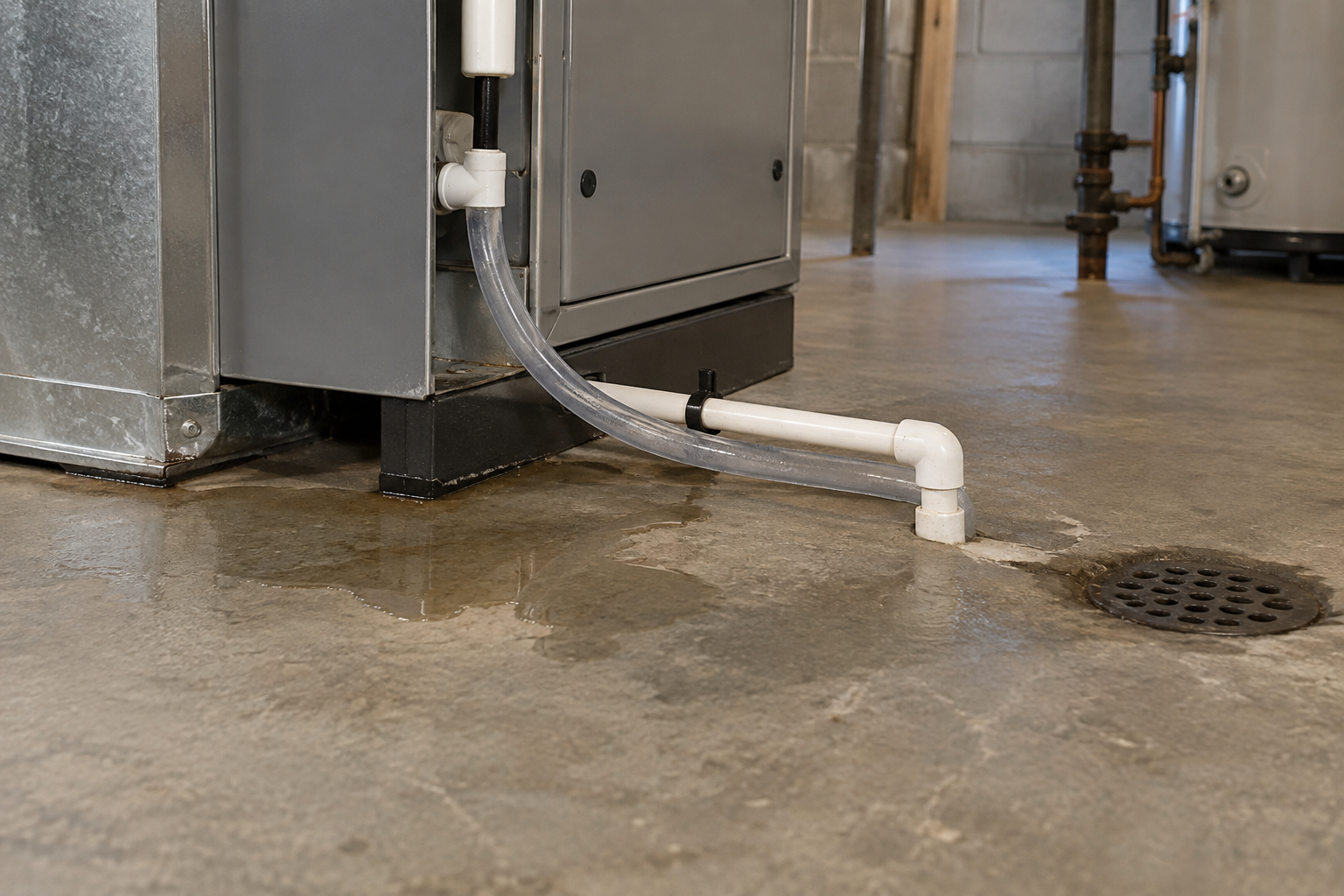
Why a gas furnace makes water at all
High-efficiency furnaces pull so much heat out of the exhaust that water vapor in the combustion gases condenses into liquid. Carrier’s installation manual for its 59SC2 condensing furnace says this directly: because the furnace uses a condensing heat exchanger, some water accumulates in the unit as part of the heat transfer process (Carrier 59SC2 installation and service instructions).
That water flows from a collector box into a condensate trap on the side of the cabinet. From there, a drain line carries it to a floor drain or a small condensate pump. You can usually spot a condensing furnace by its two white PVC pipes, one for the vent and one for combustion air.
Standard efficiency furnaces vent through metal pipe and are not designed to produce condensate. They can still leak water when the vent is the wrong size.
Why your furnace is leaking water: a quick location guide
| Where you find water | Likely source | What to do |
|---|---|---|
| Near the trap or drain tubing on the side of the furnace. | Clogged condensate trap or tubing. | Check for kinks and standing water in the tubing, then call for a trap cleaning. |
| Around a small pump box near the furnace. | Failed condensate pump or clogged pump line. | Check that the pump is plugged in and runs when the reservoir fills. |
| Dripping from above the furnace cabinet. | Air conditioning coil drain or a humidifier drain. | Check whether the humidifier is running and if its drain is clear. |
| At a joint in the white vent pipe. | Vent pipe that sags, slopes the wrong way, or has a broken fitting. | Look for sags and cracked joints, then have the vent re-pitched. |
| On the floor after a very cold night, in a garage or crawl space install. | Frozen drain or trap. | Call for service, since the drain needs freeze protection. |
Source for drain, pump, vent and freeze details: Carrier 59SC2 installation and service instructions.
A clogged condensate drain is the most common cause
Debris collects in the trap and the small tubes around it, which is why Carrier’s service steps include flushing the collector box until the water runs clean. When the trap is plugged, water backs up and spills out of the cabinet, or it backs into the collector box. When that happens, the furnace often shuts itself off. Carrier lists a plugged condensate drain as one of the causes of a pressure switch fault, and it warns that a plugged drain or a failed condensate pump may shut the furnace down.
Carrier’s maintenance steps call for rinsing the trap in warm water, flushing the drain lines, and cleaning the relief port on the collector box with a small wire. The same steps say the relief hose should be secured with no sags or low spots. These parts are found inside the furnace cabinet, so leave them for a technician to check during a tune-up.
A few checks are safe for you to make first. Look at the clear tubing for trapped water or slime. Make sure the drain line runs downhill the whole way to the floor drain. If you have a condensate pump, pour a little water into its reservoir and confirm the pump kicks on.

Coil drains, humidifiers and vent pipes
Your air conditioning coil usually sits on top of the furnace. It can still drip in fall if the AC runs on a warm afternoon, or if its drain pan has rusted through. A whole-house humidifier adds another drain to the same area. Carrier allows a coil or humidifier drain to join the furnace drain only under specific conditions. The lines can’t be hard-piped together, and there has to be an air gap where they meet, or a larger drain with a relief tee. Without that, blower pressure pushes into the coil drain and furnace condensate stops flowing reliably.
Water from above does more than wet the floor. Carrier’s service guide tells technicians to inspect failed blower motors and control modules for water damage, and to check the A-coil and humidifier when they find it. A slow drip onto the electronics can end in a no-heat call. If you have a humidifier, our whole-house humidifier service includes the drain and water supply.
The white vent pipe can also leak. Condensate forms inside it, and the pipe has to slope so that water runs back to the furnace. Carrier tells homeowners to inspect the vent system before each heating season for water leakage, sagging pipes and broken fittings.
Freezing drains in garages, attics and crawl spaces
Central Ohio winters are cold enough to freeze an exposed drain. January normals at John Glenn Columbus International sit at a 37.1°F average high and a 22.0°F average low (NOAA 1991-2020 normals via NWS Wilmington). Carrier’s manual says that where a furnace may sit below 32°F, a condensate freeze protection kit with a heated trap is required. It also allows self-regulating heat tape on the rest of the drain line, and says the drain must end at an inside drain.
A frozen drain backs water into the furnace the same way a clog does. If your furnace sits in a garage or crawl space and it quits on the coldest mornings, ask your technician to check the freeze protection before winter.
Frequently asked questions
Is a leaking furnace dangerous? The water itself is usually a drain problem, but it can damage the control board, rust the cabinet and shut the furnace down. Have it checked soon.
Can I pour vinegar or bleach into the condensate trap? Skip it and call instead. Carrier’s maintenance steps have the trap removed and rinsed in warm water, with the relief port cleared by hand. Carrier also warns against automotive antifreeze in the drain system because it can damage plastic parts.
Why does water show up only when the AC runs? That points to the air conditioning coil drain, not the furnace. Look at the coil drain and pan above the furnace.
How often should the condensate drain be cleaned? Have it checked at each annual tune-up. Homes with a condensate pump should test the pump at the start of each heating season.
Should I keep running the furnace while it leaks? If the leak is small and the furnace still heats, you can run it while you arrange service. Turn it off if water is reaching the electrical components or the floor around the pump keeps getting wetter.
A furnace leaking water rarely fixes itself, and a clean, well-sloped drain protects the furnace and your basement. For furnace repair and service anywhere in Central Ohio, call Ohio Heating at 614-863-6666 or request a visit at ohheating.com.