
Heat Pump Maintenance Before a Columbus Winter
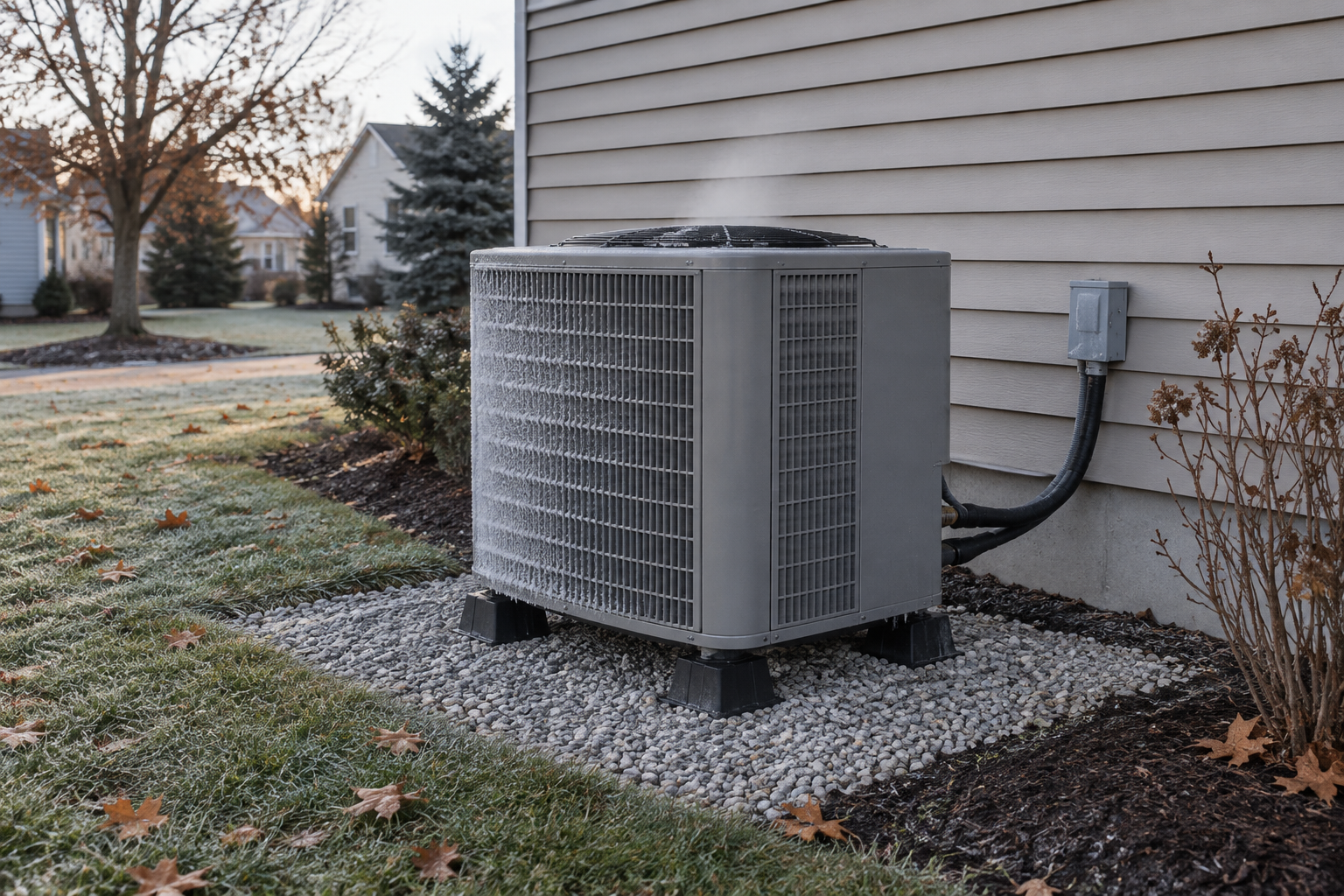
On the first frosty morning in October, you might see a cloud of steam rising from the furnace unit beside your house. That’s usually the heat pump melting frost, and it’s working just the way it should. A little heat pump maintenance in the fall will help you separate normal winter behavior from a real problem. It also keeps the system from leaning on costly backup heat.
Your heat pump both heats and cools, so it runs most of the year while the outdoor unit sits in leaves, snow and roof runoff. Below you’ll find what you can do yourself, what our technicians check on a fall visit, and what to watch for once the cold sets in.
Heat pump maintenance you can do yourself
Your filter should be the first thing you check. A Department of Energy guide for new heat pump owners says to wash or replace ducted system filters about every 90 days, or as your manufacturer recommends (DOE heat pump owner guide). ENERGY STAR suggests checking it monthly, since a dirty filter raises operating costs and wears out equipment (ENERGY STAR maintenance checklist). If you aren’t sure which filter fits, our MERV rating guide explains the options.
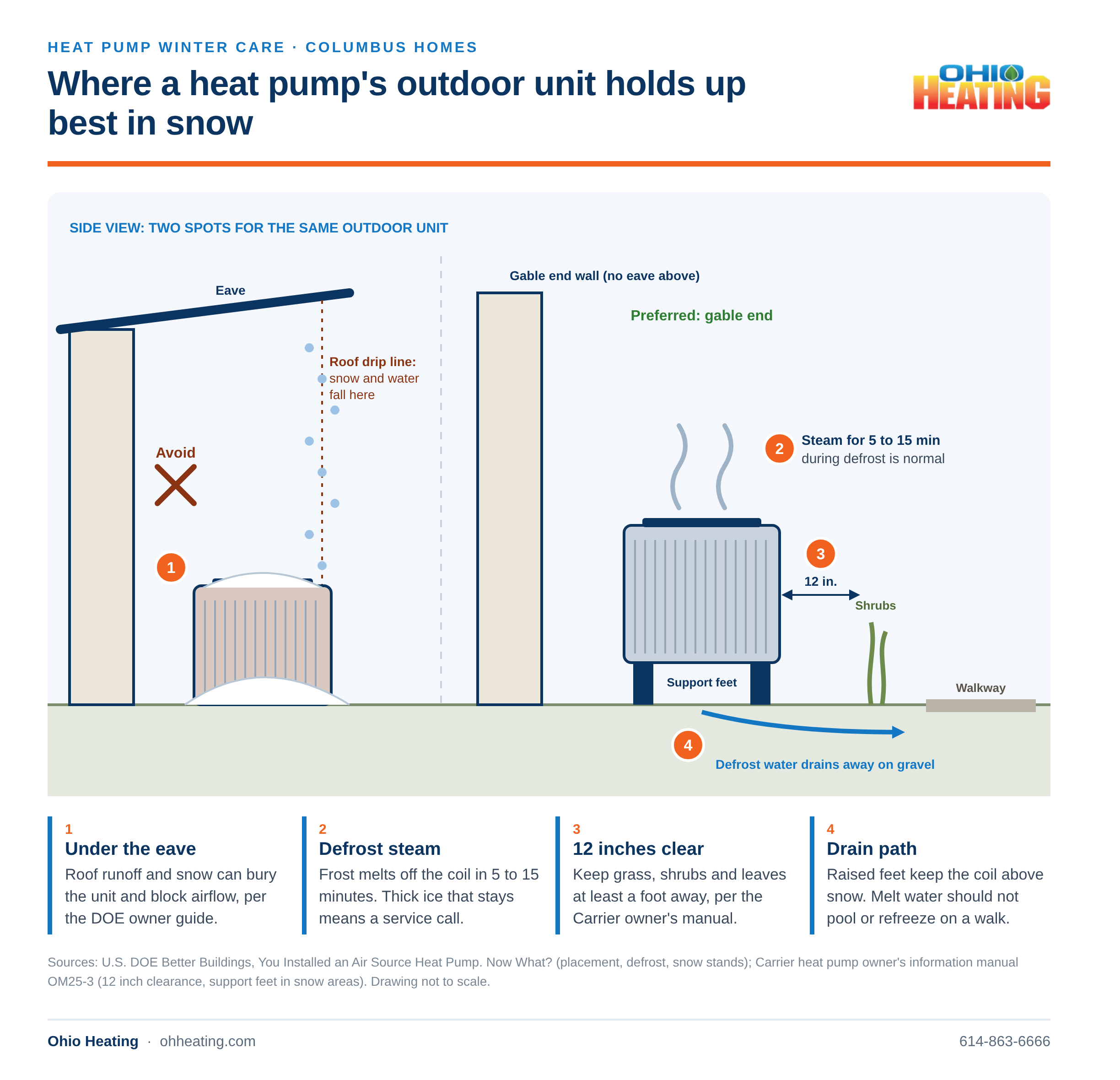
Outside, Carrier’s heat pump owner’s manual calls for at least 12 inches of open space between the unit and grass, shrubs or vines (Carrier heat pump owner’s manual). Clear any fallen leaves off the top and sides of the unit, and pull debris away from the base so that water can drain. Skip the winter cover, since the unit needs open airflow to pull heat from the outside air.
Back inside the house, be sure to vacuum your supply registers and return grilles once a year. The DOE guide notes that dust in the ducts lowers efficiency and can hurt your indoor air.
Your thermostat setting matters too. The ENERGY STAR heat pump page advises Heat mode in winter instead of Auto, so the system doesn’t flip to cooling on a sunny afternoon. It also suggests one steady temperature, because a heat pump doesn’t gain much from deep setbacks the way a furnace can.
What a fall heat pump tune-up covers
Some jobs need gauges, meters and training. The DOE guide says most makers call for professional service every one to two years. Its technician list is a good checklist for a fall visit:
- Confirm the refrigerant charge and look for leaks.
- Measure airflow through the system.
- Clean the indoor and outdoor coils.
- Clear the condensate drain pan and line.
- Tighten and inspect electrical terminals.
- Seal leaks in the ductwork.
- Check that the refrigerant line insulation is intact.
- Confirm backup heat only turns on when it’s needed.
Restricted ducts or a dirty indoor coil can make a heat pump run longer and call for backup heat sooner. Our post on HVAC static pressure explains how a technician measures that. Duct cleaning is a separate job, and the inspection will tell you whether your home needs it or not.
Normal winter behavior and signs of trouble
Columbus averages a January low near 22°F (National Weather Service, Columbus normals 1991 to 2020). When the outdoor coil drops below freezing, frost builds on it, and the heat pump runs a defrost cycle to melt it. The DOE guide says defrost usually lasts 5 to 15 minutes. The outdoor fan may slow down or stop, and the backup heat may come on to help keep your rooms stay warm.
| What you notice | Normal or a problem? | What to do |
|---|---|---|
| Steam or fog rising from the outdoor unit for a few minutes. | Normal defrost. | Nothing. |
| A thin layer of frost that clears on its own. | Normal. | Nothing. |
| Air from the vents feels warm but not hot. | Normal. Carrier lists supply air at about 90 to 105°F. | Nothing. |
| Thick ice that stays on the unit after defrost. | Problem. | Call for service. |
| The thermostat shows auxiliary or backup heat most of the time. | Problem. Strip heat costs more to run. | Call for service. |
| A sudden jump in your electric bill. | Problem, per the DOE guide. | Check the filter, then call. |
| Water from defrost pooling and freezing on a walkway. | Placement problem. | Ask about a snow stand or a drain fix. |
The DOE guide lists other warning signs: rooms that don’t reach the set point, loud noises, odd smells, and mold near the unit. Any of these signs require a heat pump repair visit before a cold snap makes the wait longer.
Where the outdoor unit sits matters in snow
The DOE guide warns that a unit under a roof eave’s drip line or deck boards can get buried by falling snow and water. It prefers the gable end of the house. Carrier notes that units in snowy areas are raised on support feet so snow and defrost water stay below the coil.
If your unit sits under a gutterless eave, or ice forms under it every winter, we can talk about a snow stand, a deflector or a move. If you’re still deciding between a heat pump and a gas furnace, our heat pump vs. gas furnace cost comparison runs the numbers for Columbus.
Frequently asked questions
How often does a heat pump need professional service? The DOE guide says most manufacturers call for service every one to two years. ENERGY STAR suggests a cooling check in spring and a heating check in fall, and your heat pump does both jobs.
Is steam coming off my heat pump in winter normal? Yes, in most cases. Steam or fog for a few minutes means the defrost cycle is melting frost. Call us if thick ice stays on the unit.
Should I cover my heat pump for winter? No. A heat pump pulls heat from outdoor air all winter, so a cover blocks the airflow it needs. Keep leaves and snow cleared instead.
Why does my thermostat say auxiliary heat? Auxiliary heat is electric strip heat that helps during defrost and very cold weather. If it shows most of the time, the heat pump may need service, because strip heat costs more to run.
How often should I change a heat pump filter? The DOE guide says about every 90 days for ducted systems, with a monthly check in between. Homes with pets often need changes sooner.
Get your heat pump ready for winter
Fall heat pump maintenance lets you catch a weak part before the first deep freeze, and it keeps the system off expensive backup heat. Our technicians serve homes across the Columbus area. Call 614-863-6666 or get in touch online to book a tune-up and protect your comfort this winter.