
Why Ductwork and Piping Repair Directly Affects Your Cooling Costs and Comfort
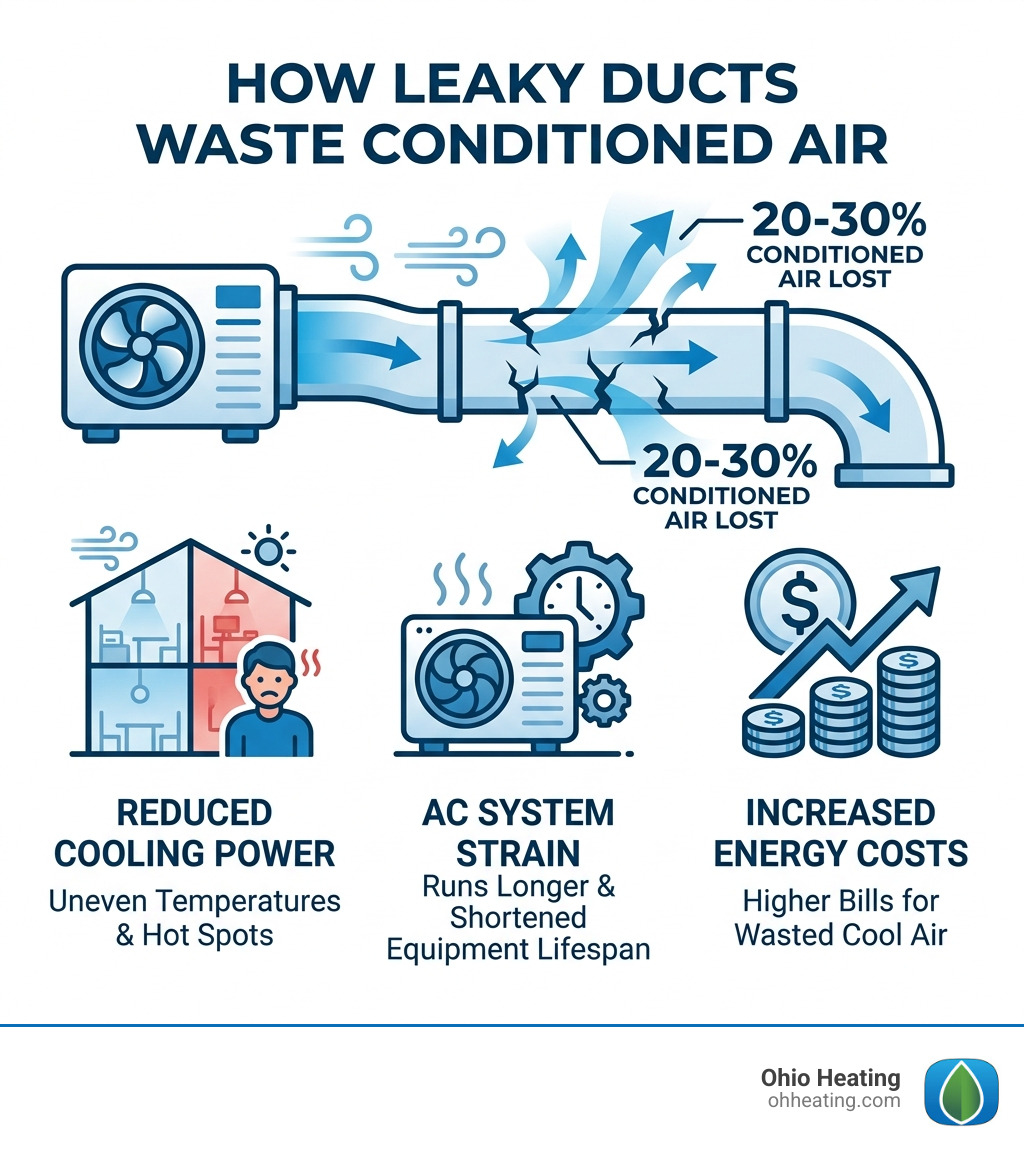
Ductwork and piping repair is one of the most impactful — and most overlooked — maintenance needs for any commercial property or managed building. When your AC distribution system is leaking or damaged, you’re not just losing comfort. You’re losing money, every single day.
Here’s what you need to know upfront:
| Problem | Impact |
|---|---|
| Leaky ducts | Waste up to 30% of conditioned air |
| Damaged piping connections | Force AC equipment to work harder, shortening its lifespan |
| Poor duct sealing | Allow allergens, dust, and humidity into occupied spaces |
| Sagging or crushed ducts | Restrict airflow and create hot spots throughout a building |
Quick answer: If you’re seeing uneven temperatures across rooms, rising energy bills, weak airflow from vents, or unusual noises when your AC runs — your ductwork or piping likely needs repair. Minor issues can sometimes be addressed with UL 181-rated foil tape or mastic sealant, as recommended by the U.S. Department of Energy for reducing energy waste. More serious damage requires a licensed professional for pressure testing, sealing, or section replacement.
The stakes are especially high for property managers and business owners. A poorly performing distribution system doesn’t just frustrate occupants — it puts unnecessary strain on expensive cooling equipment and drives up operational costs month after month.
I’m Jill Frattini, Service Coordinator at Ohio Heating in Columbus, OH, where I work daily with our team on ductwork and piping repair projects across commercial and residential properties. With years of experience in the HVAC industry — including time at other national HVAC companies — I’ve seen how the right repair approach can restore system performance and protect a building owner’s bottom line.
Signs Your AC System Needs Ductwork and Piping Repair
In our experience at Ohio Heating, we’ve found that ductwork is often “out of sight, out of mind” for many property owners in Columbus. However, your air conditioning system is only as good as the veins that carry the cool air. If those veins are restricted or leaking, your comfort will suffer.
Common signs that your system is crying out for ductwork and piping repair include:
- Temperature Inconsistencies and Hot Spots: Have you noticed that the conference room is freezing while your corner office feels like a sauna? This is rarely a problem with the AC unit itself; it’s usually a sign of a disconnected duct or a major leak.
- Weak Airflow: If you hold your hand up to a vent and feel only a faint whisper of air, something is wrong. The duct might be crushed, sagging, or disconnected entirely.
- Sky-High Utility Bills: If your energy costs are spiking even though the weather hasn’t changed much, your AC is likely working overtime to compensate for air leaking into your attic or crawl space.
- Unusual Noises: Whistling sounds often indicate air escaping through a small hole under high pressure. Rattling or flapping noises might mean a section of the ductwork has come loose.
- Excessive Dust and Musty Odors: Leaky return ducts can pull in dust from unfinished spaces and blow it directly into your living or work areas. If you notice a moldy smell, moisture might be trapped in sagging sections.
If you are experiencing these issues, it may be time for a professional evaluation. You can learn more about ductwork in Columbus to see how we handle these local challenges.
Identifying Leaks in Ductwork and Piping Repair
Finding a leak in a vast network of ducts can feel like finding a needle in a haystack. We use several methods to pinpoint the trouble areas:
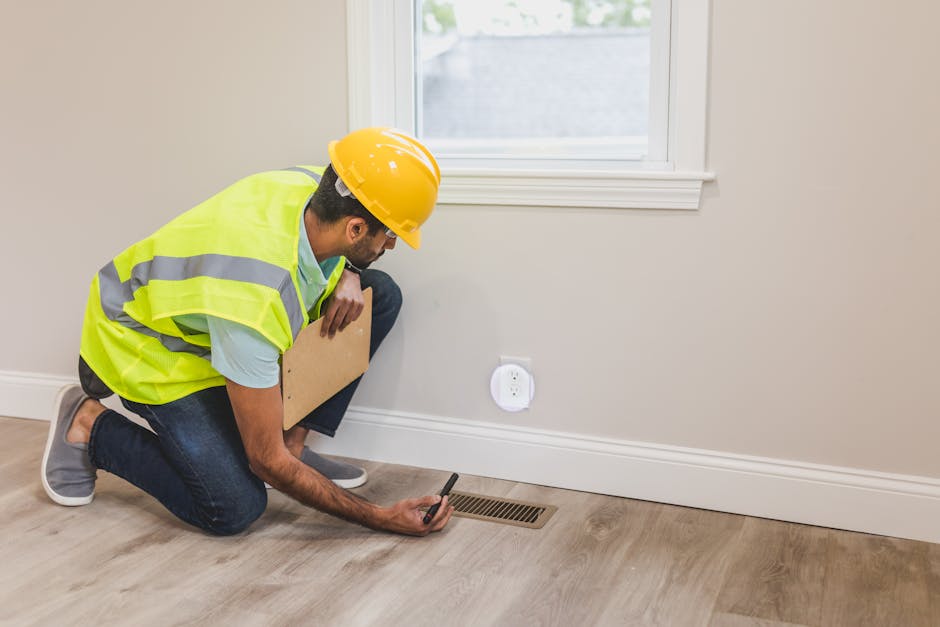
- Visual Inspection: We start with the basics. Armed with high-powered flashlights and mirrors, our technicians look for visible gaps, disconnected joints, or “dust signatures” (dark streaks) that indicate where air is escaping.
- Smoke Pencils: By using a non-toxic chemical smoke near suspected joints while the system is running, we can see exactly where the air currents pull or push the smoke.
- Pressure Testing: This is the gold standard. We seal off the registers and use a calibrated fan to pressurize the system. This tells us exactly how much air is leaking out.
- Airflow Balancing: We measure the Cubic Feet per Minute (CFM) at each vent to ensure the air is being distributed as designed.
For residents in specific areas, we offer specialized ductwork in Gahanna to ensure every neighborhood gets the attention it deserves.
Impact on Cooling Efficiency and IAQ
The statistics for April 2026 are clear: leaky ducts can waste 20% to 30% of the conditioned air your system produces. That is air you have already paid to cool, simply vanishing before it reaches its destination.
Beyond the financial loss, the strain on your AC equipment is immense. When air leaks out, the system has to run longer cycles to meet the thermostat’s demands. This leads to premature component failure and a shorter overall lifespan for your unit. Furthermore, poor duct integrity compromises humidity control—a major factor in Central Ohio summers—and allows allergens to bypass your filtration system. For those in the northern suburbs, we provide expert ductwork in Westerville to keep indoor air quality (IAQ) at its peak.
Causes of Damage to Cooling Distribution Systems
What exactly causes these robust-looking systems to fail? It’s usually a combination of time, environment, and initial installation quality.
| Duct Material | Typical Lifespan | Common Failure Points |
|---|---|---|
| Sheet Metal (Galvanized) | 20–70 Years | Corrosion, loose joints, seal failure |
| Flexible Ducts (Flex) | ~10 Years | Punctures, sagging, UV degradation |
| Fiberboard / Duct Board | 10–15 Years | Erosion of fiberglass, mold, moisture absorption |
In Hilliard, we often see older homes and buildings where the original design no longer matches modern high-efficiency AC units. You can check out our services for ductwork in Hilliard to see how we modernize these systems.
Material Lifespans in 2026
As we move through 2026, we are seeing a shift toward more durable materials. Sheet metal remains the king of longevity, often lasting as long as the building itself if kept dry. However, the sealants used on those metal joints (like old-fashioned rubberized tape) often fail much sooner. Flexible ducts are popular for their ease of install but are highly susceptible to “kinking” or being crushed by storage items in an attic. For premium durability, we recommend galvanized steel or aluminum for main trunks. If you’re in the Upper Arlington area, see our guide on ductwork in Upper Arlington.
Environmental and Structural Factors
The environment in Ohio plays a huge role in the need for ductwork and piping repair.
- Vibration: Constant cycling of the AC can loosen mechanical fasteners over time.
- Attic Heat: Extreme temperatures can dry out inferior tapes and sealants, causing them to peel away.
- Crawl Space Moisture: High humidity leads to corrosion in metal pipes and mold growth in fiber-based materials.
- Pests: Rodents love the “tunnel” system of your ducts and can easily chew through flex ducting or insulation.
- Punctures and Sagging: Improperly supported ducts will eventually sag, creating “bellies” where condensation collects, leading to rust or mold.
Our team frequently addresses these issues for clients needing ductwork in Dublin.
Professional vs. DIY: Sealing and Repairing AC Ducts
We often get asked: “Can I just fix this myself with some duct tape?” The short answer is: Please don’t! Ironically, standard “duct tape” is one of the worst things you can use for ductwork and piping repair. It dries out, loses its adhesive, and is not fire-rated for HVAC use.
Materials for Ductwork and Piping Repair
If you are attempting a minor fix on an accessible duct, you must use the right materials:
- UL 181 Foil Tape: This is a professional-grade aluminum tape that can handle the temperature fluctuations of an AC system.
- Mastic Sealant: This is a thick, gooey paste applied with a brush. It dries into a flexible, rubbery seal that is much more permanent than tape.
- Fiberglass Mesh: For gaps larger than 1/4 inch, we embed mesh into the mastic to provide structural reinforcement.
For more information on the proper materials used in your area, visit our page on ductwork in Lancaster.
When to Call a Professional
While you might be able to tape a small hole in an exposed basement duct, most ductwork and piping repair requires a pro. You should call us if:
- The damage is in an inaccessible area (crawl space or behind drywall).
- You suspect mold or a pest infestation.
- The issue involves refrigerant piping, which requires specialized certification to handle.
- The system needs “balancing” to fix room-to-room temperature differences.
Our professional toolkit includes specialized diagnostic equipment that the average homeowner doesn’t have:
- Infrared cameras to see “cold leaks” through walls.
- Manometers to measure static pressure.
- Calibrated “Blower Doors” for whole-building leakage testing.
We serve the entire region, including ductwork in Grove City.
Advanced Professional Techniques and Cost Factors
At Ohio Heating, we use the latest technology to ensure your ductwork and piping repair is permanent. One of the most effective methods for existing buildings is Aeroseal. This process involves sealing the entire system from the inside. We inject a pressurized mist of sealant particles into the ducts; these particles stay in the air until they hit a leak, where they cling to the edges and build up a permanent seal. This can seal holes up to 5/8 of an inch without us ever having to tear down a wall.
For commercial clients, we also offer Duct Armor, a proprietary lining that can restore even severely damaged or underground ducts. To ensure the design is perfect, we use Manual D calculations to verify that every duct is sized correctly for the airflow your AC unit provides. You can find more details on our commercial ductwork and piping page.
Cost Breakdown and Repair vs. Replacement
The cost of ductwork and piping repair varies based on several factors:
- Accessibility: Is the duct in an open basement or a tight, 120-degree attic?
- Extent of Damage: Are we patching a few holes or replacing entire runs?
- Materials: Mastic and foil tape are affordable; Aeroseal or full replacement is a larger investment.
- Diagnostic Fees: We typically charge a flat fee to come out and perform a full system “health check.”
Repair vs. Replacement Rule of Thumb:
- If your ducts are under 15 years old and the damage is localized, repair is the way to go.
- If your ducts are over 20 years old, made of deteriorating fiberboard, or were never sized correctly for your current AC unit, replacement or modification is often more cost-effective in the long run.
The Role of Proper Insulation
Sealing a leak is only half the battle. If your ducts aren’t properly insulated, you’ll lose cooling energy through the walls of the duct itself—a process called thermal gain. In the humid Ohio climate, uninsulated cold ducts in a hot attic will also “sweat,” leading to condensation, rust, and mold. We ensure all repairs meet modern R-value standards and include a proper vapor barrier.
Frequently Asked Questions about Ductwork and Piping
How much does professional ductwork repair typically cost?
While every job is unique, minor repairs or modifications for individual duct runs in the Columbus area typically range from $300 to $1,200. A full system diagnostic usually starts with a service call fee (around $60–$100), which helps us provide an accurate, upfront quote. The investment often pays for itself through lower energy bills within a few years.
Can I use standard duct tape for AC duct repairs?
Absolutely not. Standard silver cloth duct tape is not rated for HVAC systems. The adhesive will fail within months due to the heat and cold cycles. You must use UL 181-rated tapes or mastic sealants to ensure a safe, long-lasting, and code-compliant repair.
How often should my AC ducts be inspected?
We recommend a professional ductwork inspection every 3 to 5 years, or whenever you are replacing your AC unit. However, you should monitor your system’s performance annually during your regular AC tune-up. If you notice a sudden increase in dust or a change in airflow, don’t wait—get it checked immediately.
Conclusion
At Ohio Heating, we’ve been the trusted choice for Columbus and Central Ohio since 1999. We understand that your business or home relies on operational reliability. Don’t let leaky ducts or damaged piping drain your budget and ruin your comfort. Whether it’s a simple seal or a complex commercial modification, our NATE-certified technicians are ready to restore your system’s peak performance.
Ready to stop wasting 30% of your cooling? Schedule professional ductwork and piping repair with Ohio Heating today and feel the difference that proper airflow makes!