
How to Fix Walk-In Cooler in 5 Steps
Why Walk-In Cooler Repair Matters for Your Business
Walk-in cooler repair is something every restaurant owner, property manager, or food service operator will face at some point. When your cooler stops working, you’re not just dealing with an equipment problem — you’re racing against the clock to protect your inventory.
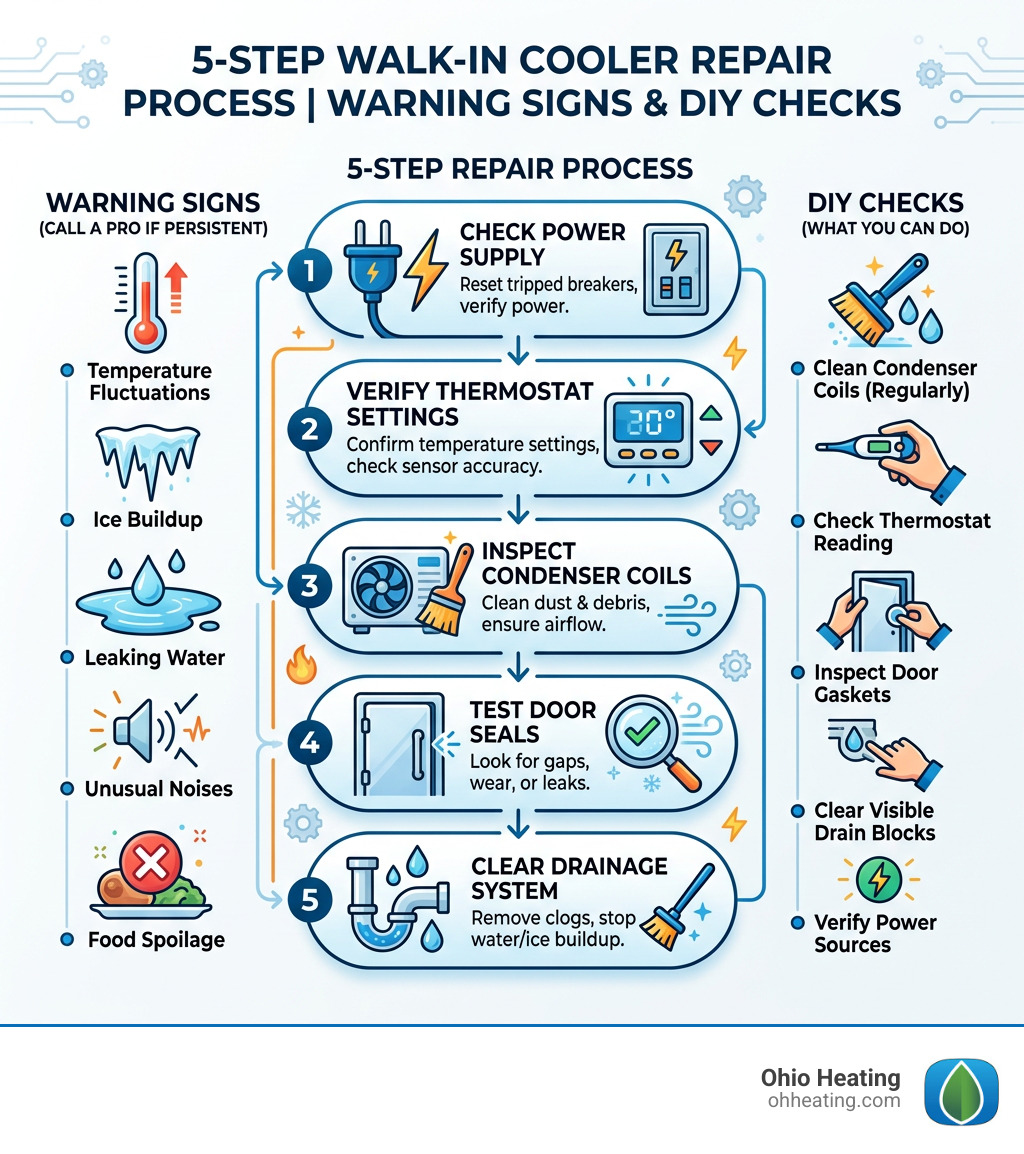
Here’s a quick overview of how to fix common walk-in cooler issues:
- Check the power supply – Reset tripped breakers and verify the unit is receiving power
- Verify thermostat settings – Confirm the temperature is set correctly and the sensor is accurate
- Inspect condenser coils – Clean any dust or debris blocking airflow
- Test door seals – Look for gaps or wear that let cold air escape
- Clear the drainage system – Remove any clogs causing water or ice buildup
Important: According to FDA guidelines, perishable foods enter the danger zone between 40°F and 140°F. A malfunctioning cooler puts your entire inventory — and your customers — at risk.
Walk-in coolers typically last around 15 years, but unexpected breakdowns can happen at any age. And with a replacement unit costing anywhere from $6,000 to $10,000 or more, repairs are almost always the smarter first move.
I’m Jill Frattini, Service Coordinator at Ohio Heating in Columbus, OH, where I’ve spent years coordinating walk-in cooler repair and commercial refrigeration services for businesses across Central Ohio. In this guide, I’ll walk you through exactly what to check, what to fix yourself, and when to call a pro.
Identifying Common Signs of Malfunction
Before we dive into the “how-to” of fixing things, we need to recognize the red flags. A walk-in cooler rarely fails in total silence; it usually sends out several SOS signals first. At Ohio Heating, we’ve found that catching these early can be the difference between a simple part replacement and a total inventory loss.
Temperature Fluctuations and Rising Heat
The most obvious sign is a rising thermometer. If your unit is struggling to stay between the ideal 35°F and 38°F, something is wrong. You might notice “warm spots” in certain corners of the cooler, which often points to airflow issues or a failing compressor. We’ve detailed more on this in our guide on 5 Warning Signs Your Walk-in Cooler Needs Repaired.
Frost and Ice Buildup
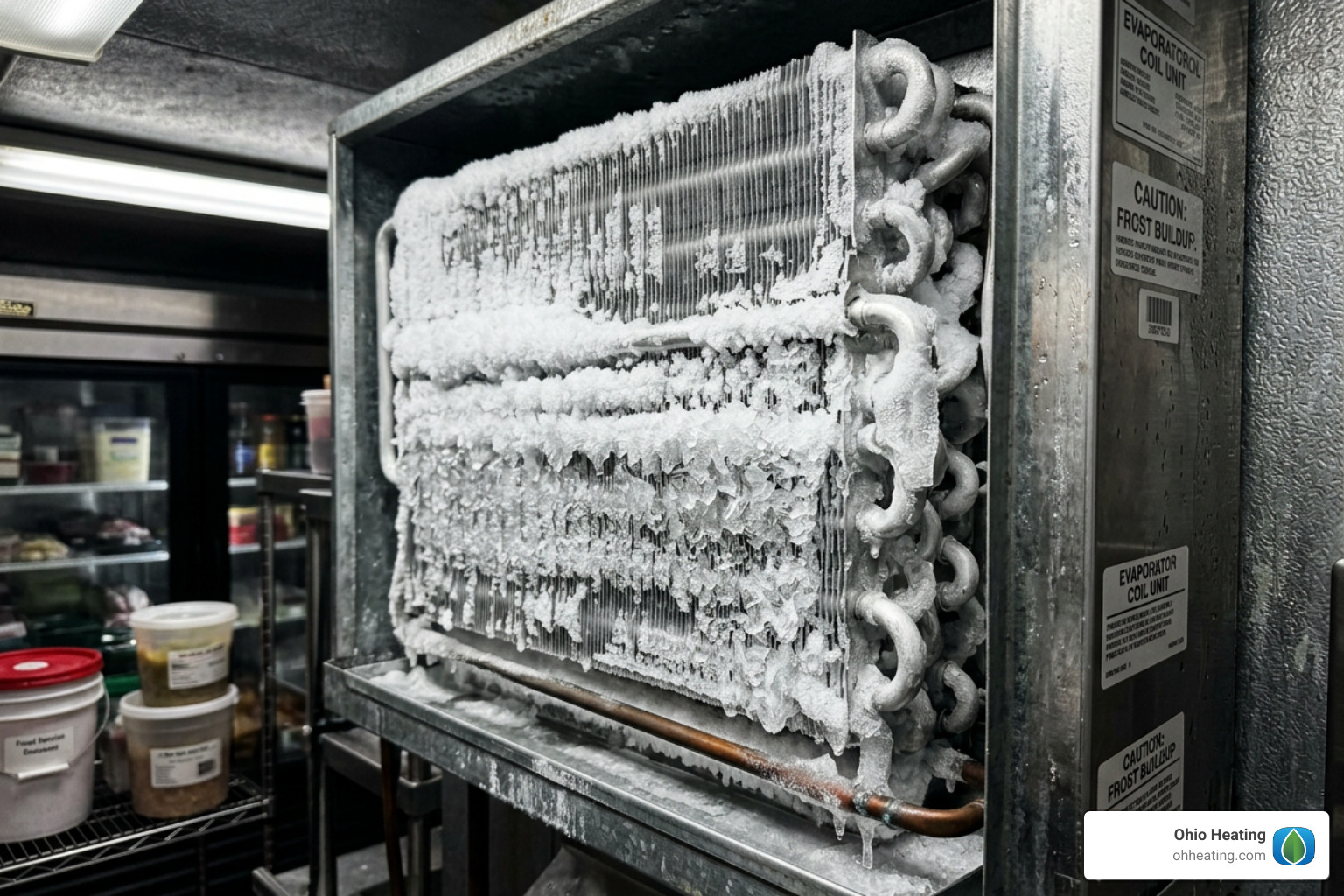
While a walk-in cooler is cold, it should not look like the Arctic Circle inside. If you see ice forming on the evaporator coils or thick frost on the walls, your unit is likely suffering from a faulty defrost cycle or excessive moisture. This moisture often enters through worn door seals or because the door is being left open too long.
Unusual Noises
Your cooler should operate with a steady, low-level hum. If you start hearing grinding, squealing, or loud clicking, don’t ignore it. These sounds are often the “death rattle” of a fan motor or a compressor that is about to give up the ghost.
Water Leakage and Odors
Water pooling on the floor or dripping from the ceiling is a major hazard. This usually indicates a clogged drain line or a cracked drain pan. If you notice a stale or “funky” odor, it could be a sign of mold growth or a refrigerant leak. Both require immediate attention to keep your food safe and compliant with health department standards.
Rising Energy Bills
If your electricity bill suddenly spikes without an increase in usage, your cooler is likely working overtime. This happens when the system has to fight against dirty coils, low refrigerant, or leaky gaskets to maintain its set temperature.
How to Fix Walk-In Cooler Issues in 5 Troubleshooting Steps
If your cooler is acting up, don’t panic just yet. There are several things you can check yourself before calling in the cavalry. Follow these five steps to see if you can get things back on track.
1. Power Supply Verification
It sounds simple, but you’d be surprised how often a “broken” cooler is just a tripped circuit breaker.
- Check the Panel: Locate your electrical box and look for any flipped switches.
- Inspect Wiring: Look for any frayed wires or loose connections near the unit (but don’t touch them!).
- Reset: Sometimes, simply cycling the power off and back on can reset the control board.
2. Thermostat Calibration and Settings
If the power is on but the temp is wrong, check the brain of the operation.
- Verify Settings: Ensure someone didn’t accidentally bump the thermostat to a higher setting.
- Test Accuracy: Place a separate, calibrated thermometer inside the cooler for an hour. If the reading doesn’t match your digital display, the sensor or the thermostat itself may need replacement.
3. Inspect and Clean Condenser Coils
Dirty coils are the #1 cause of cooling failures. When dust and grease coat the coils, the unit can’t release heat effectively.
- Locate the Coils: Usually found on top of the unit or in a separate outdoor housing.
- Clean Regularly: Use a soft brush or a vacuum to remove dust. For greasy buildup, a specialized coil cleaner may be necessary. For more tips, see our article on Keeping Your Commercial Refrigeration Systems Cool.
4. Test Door Seal Integrity
Your gaskets (the rubber seals around the door) are the only thing keeping the cold air in.
- The Dollar Bill Test: Close the door on a dollar bill. If you can pull the bill out easily, your seal is too loose.
- Visual Check: Look for cracks, tears, or brittleness. Even a small gap can cause the compressor to run constantly, leading to a premature breakdown.
5. Clear the Drainage System
If you see water or ice on the floor, your drain is likely blocked.
- Check the Line: Locate the PVC or copper drain line. Look for “gunk” or ice blockages.
- Flush the System: You can often clear minor clogs with a mixture of warm water and a little bleach or specialized drain tabs to prevent bacterial growth (slime).
When to Call a Professional for Walk-In Cooler Repair
While DIY checks are great for maintenance, some problems are too complex — and dangerous — for a non-professional to handle. Knowing when to put down the screwdriver and pick up the phone is vital for your safety and your bottom line.
Refrigerant Leaks and Major Mechanical Failures
Refrigerant is a chemical that requires EPA certification to handle. If your unit has a leak, you can’t just “top it off.” A technician must find the leak, repair it, and recharge the system to specific levels. Similarly, if your compressor or evaporator fan motor has failed, these are high-voltage components that require professional replacement.
Electrical Component Failure
If your control board is blank or you smell something burning, stay away. Electrical faults can lead to fires or severe shocks. Our NATE-certified technicians at Ohio Heating have the tools to safely diagnose shorts, blown fuses, and faulty relays.
Food Safety Compliance
Remember the FDA food safety guidelines? If your cooler has been in the “danger zone” for more than two hours, your inventory might be compromised. A professional can provide a diagnostic report that may be necessary for insurance claims or health inspections.
Why Timely Professional Repair Saves Money
Waiting to fix a small noise or a tiny leak always leads to a bigger bill later. A compressor struggling with a leak will eventually burn out entirely. By calling for Walk-in Refrigeration help early, you prevent a “domino effect” of part failures. Learn more about Why Timely Walk-in Freezer Repair Saves Money.
DIY vs. Professional Intervention: At a Glance
| Issue | DIY Fix? | Professional Needed? | Why? |
|---|---|---|---|
| Dusty Coils | Yes | No | Simple cleaning improves efficiency. |
| Tripped Breaker | Yes | Maybe | If it trips repeatedly, there’s a short. |
| Worn Gaskets | Yes | No | Most gaskets are “push-in” and easy to swap. |
| Refrigerant Leak | NO | YES | Requires EPA certification and specialized tools. |
| Compressor Failure | NO | YES | Complex, high-voltage mechanical work. |
| Iced-up Evaporator | No | Yes | Usually indicates a failed defrost heater or timer. |
If you are in the Columbus or Central Ohio area and facing an emergency, our Ohio Refrigeration team is available 24/7 to help keep your business running.
Preventive Maintenance and Extending Equipment Lifespan
The average lifespan of a walk-in cooler is about 15 years, but we’ve seen well-maintained units in Columbus last much longer. The secret isn’t magic; it’s a consistent maintenance schedule.
Bi-Annual Professional Inspections
We recommend a professional tune-up at least twice a year—ideally in the spring and fall. This allows us to check refrigerant levels, test electrical connections, and ensure the system meets modern efficiency standards, such as the DOE’s AWEF (Annual Walk-in Energy Factor) ratings.
Load Management and Airflow Optimization
How you stack your cooler matters.
- Don’t Overcrowd: Air needs to circulate around your products to keep them at a consistent temperature.
- Clear the Fans: Never stack boxes directly in front of the evaporator fans. This blocks the “throw” of cold air and causes the motor to overheat.
Gasket and Hardware Care
Keep your gaskets clean by wiping them down with mild soap and water. This prevents food particles from rotting the rubber. Also, check your hinges and door closers. Busy kitchens often see “door slamming” damage, which can lead to misaligned doors that don’t seal properly. If your door is beyond repair, we offer Walk-in Cooler Install and Service in Columbus to get you a modern, energy-efficient replacement.
Frequently Asked Questions about Commercial Cooling
What factors affect the cost of walk-in cooler repair?
Several things influence the final bill. Labor rates are a standard factor, often increasing for after-hours or holiday emergency calls. Replacement parts vary wildly—a new door handle is cheap, but a new compressor is a significant investment. The refrigerant type also matters, as older refrigerants are becoming more expensive due to environmental phase-outs. For more specific pricing info, check our page on Walk-in Freezer Install and Service in Columbus.
How often should I schedule professional walk-in cooler repair maintenance?
At a minimum, you should have a pro look at your system twice a year. Think of it like a doctor’s check-up for your business. We test the “vitals” of your machine, catching small issues like a worn-out capacitor before it causes a total system shutdown during your busiest Friday night rush.
How do I handle a cooling emergency to minimize inventory loss?
If your cooler fails:
- Keep the doors closed! A well-insulated cooler can hold its temperature for several hours if you don’t let the cold air out.
- Monitor the temperature. Keep a log so you know if the food has entered the danger zone.
- Move perishables. If you have a backup reach-in or another walk-in, move your most expensive items (meats, dairy) first.
- Call for help. Contact a 24/7 repair service immediately to get a technician on-site.
Conclusion
A walk-in cooler is the heart of any food-service operation. When it fails, your revenue and your reputation are on the line. By following the 5-step troubleshooting guide and keeping up with regular maintenance, you can avoid most major disasters.
At Ohio Heating, we’ve been the trusted choice for Expert Walk-In Refrigeration Services in Columbus since 1999. Our goal is to ensure your business stays cool and your operations remain reliable, no matter how hot the Ohio summers get. Whether you need a quick gasket fix or a full system overhaul, our team is ready to help.
Need immediate walk-in cooler repair? Give us a call today and let’s get your system back to peak performance!