
Commercial Boiler Inspection in Ohio: What the Law Requires Before Heating Season
A commercial boiler inspection in Ohio is not just a maintenance preference, it is actually a legal requirement. The intervals are set in statute and a certificate of operation goes with them.
Late August is the right time to handle it, as your building does not need heat yet, and the inspector’s calendar is not full yet either.
The intervals set by law
Boiler safety in this state is administered by the Ohio Department of Commerce, Division of Industrial Compliance. Ohio Revised Code 4104.11 sets boiler inspections by type. These are the numbers that govern the intervals.
| Boiler type | Required inspection | Interval | Source |
|---|---|---|---|
| Power boilers, and high pressure or high temperature water boilers. | Internal and external, plus under operating conditions. | Not more than one year, unless approved for biennial inspection under ORC 4104.13. | ORC 4104.11(A) |
| Low pressure boilers. | External, under operating conditions. | Not more than one year. | ORC 4104.11(B) |
| Low pressure boilers, except cast-iron. | Internal. | Not more than three years. | ORC 4104.11(B) |
| Process boilers. | Internal and external, plus under operating conditions. | Not more than three years, unless approved for quinquennial inspection under ORC 4104.13. | ORC 4104.11© |
The statute holds one additional rule: no boiler may run above the safe working pressure stated on its certificate of operation (ORC 4104.11).
That clause gets skimmed more than any other line in the statute, which results in owners running a vessel harder than the certificate actually allows. The pressure printed on the certificate is the ceiling at which the boiler may operate, so it belongs in the operating limits your staff works from rather than in a filing cabinet.
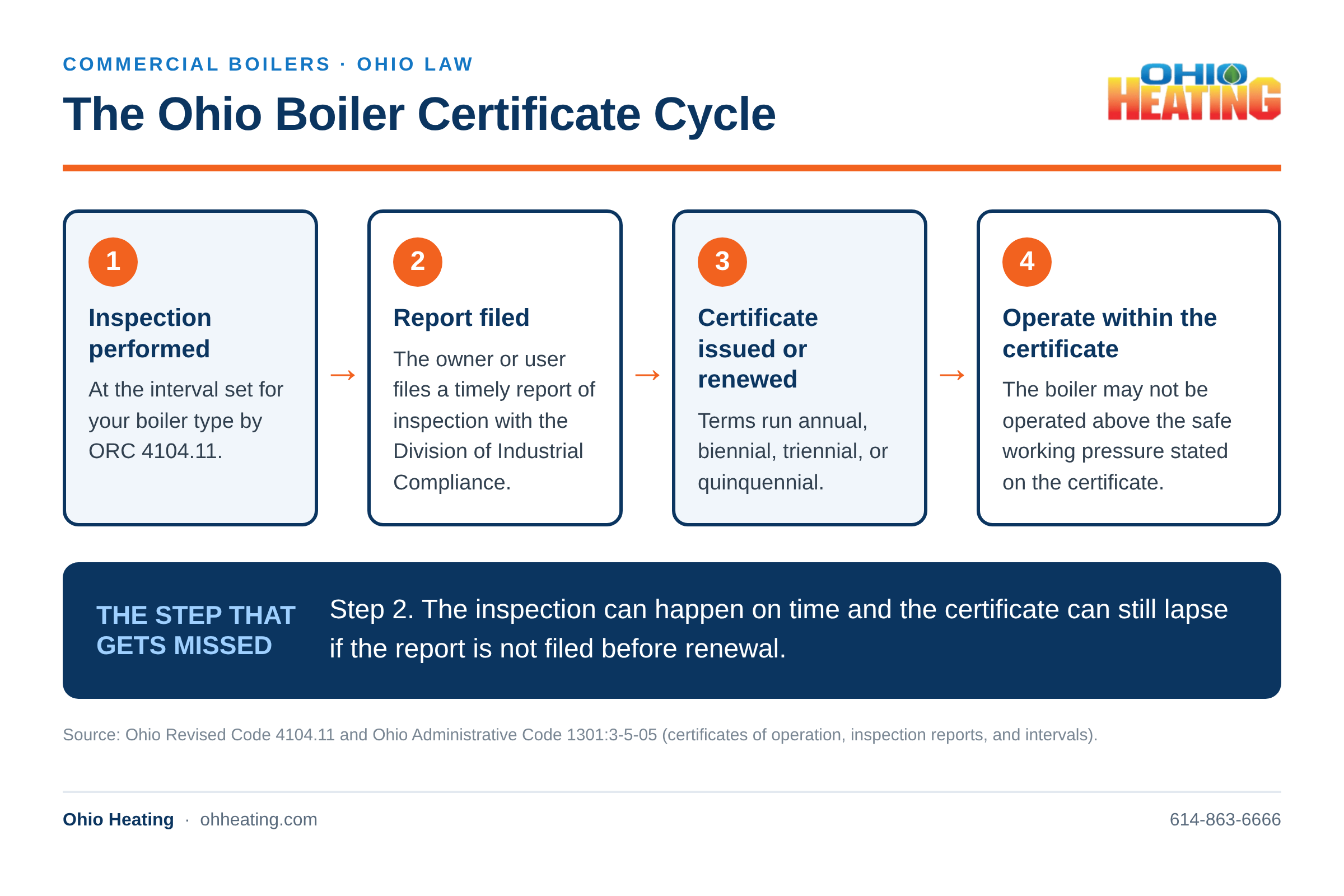
How the certificate cycle works
Certificates come in annual, biennial, triennial, and quinquennial terms. (Ohio Administrative Code 1301:3-5-05).
Before a certificate is renewed, the owner or user has to file a timely report of inspection with the Division of Industrial Compliance. The report must state that the boiler was inspected and approved during the applicable period (OAC 1301:3-5-05(B)).
In plain terms: the inspection happens, the report gets filed, and the certificate renews. If any steps are missed, the certificate lapses, even if the boiler was still inspected. To protect yourself from this mishap, post the certificate in the boiler room. Dates are much harder to lose track of there than in an office folder. And be sure to book the inspection ahead of the expiration, not on the date of it. If the visit turns up a problem, you want time to fix it before the certificate expires.
What to do before the inspector arrives
An inspection goes smoother when the room is ready for it. A pre-season condition check like the one below sits alongside the state inspection, and it’s what a decent service call already covers. Running it in early fall turns findings into work you can schedule instead of emergencies you get stuck with in January.
| Area | What gets checked | Why it matters now |
|---|---|---|
| Safety relief valve. | Condition, tag, and discharge piping. | It is the last defense against overpressure. |
| Low-water cutoff. | Function test, blowdown, and controls. | Firing a dry boiler wrecks tubes and heat exchangers. |
| Water level controls and gauge glass. | Clean, readable, working. | Nobody can verify level on a fouled glass. |
| Combustion and burner. | Fire condition, combustion test, safety interlocks. | Efficiency and safe combustion both live here. |
| Venting and flue. | Integrity, corrosion, obstruction. | A vent failure is a carbon monoxide path. |
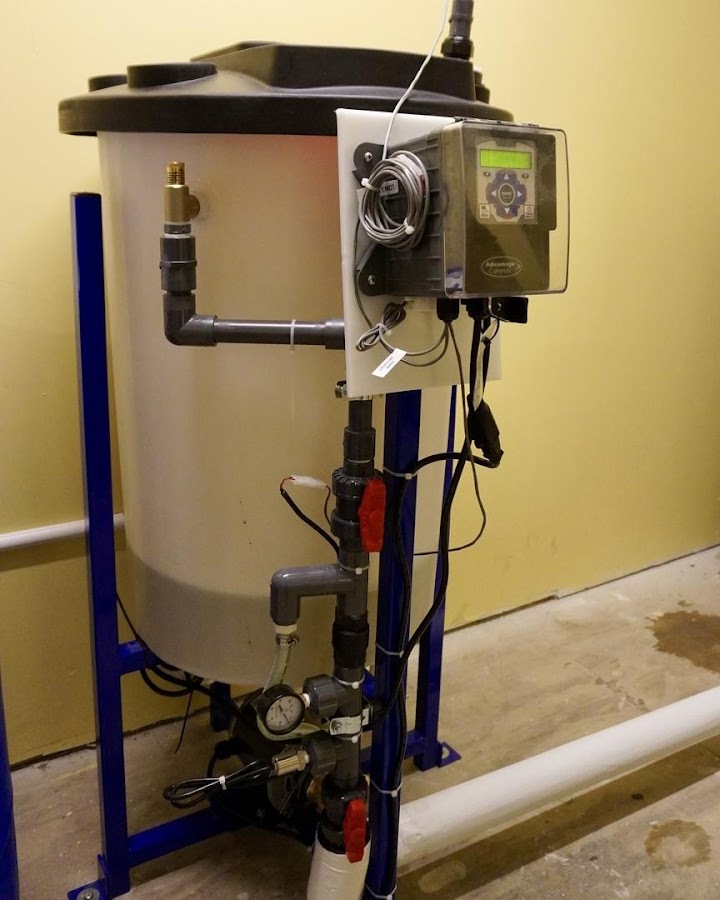
| Water treatment. | Chemistry, feed system, blowdown routine. | Scale and corrosion shorten a boiler’s life. |
| Boiler room access. | Clearances, lighting, nothing stored against equipment. | Blocked access delays or fails the visit. |
Find something on the combustion or venting rows? Treat it as urgent, not seasonal. Our page on boiler carbon monoxide covers the warning signs that should stop a boiler until it is checked.
Why a commercial boiler inspection belongs on the schedule before winter
Columbus normals put January highs at 37.1°F and lows at 22.0°F (NOAA/NWS Columbus climate normals, 1991–2020). A boiler idle since spring goes from zero to steady duty in a few weeks.
Idle time is not neutral, damage can occur during this time. Seals dry out, controls stick, and standing water works on fireside and waterside surfaces.
Every building in central Ohio wants boiler attention in the same six-week window. The ones that call in August get the appointment, while the ones that call after the first cold night take whatever appointment is left.
Ongoing coverage under a commercial HVAC maintenance program is how most facility managers get out of that annual race. If your boiler already shows symptoms, start with boiler repair in Columbus.
Want the pre-season check handled while there is still room on the schedule? Ask us to look at the boiler room this month.
Frequently asked questions
How often does a commercial boiler have to be inspected in Ohio? It depends on the type. Power boilers and high pressure or high temperature water boilers need inspection at intervals of not more than one year, unless approved for biennial inspection. Low pressure boilers need an annual external inspection, and, except for cast-iron boilers, an internal inspection at intervals of not more than three years. Process boilers need inspection at intervals of not more than three years, unless approved for quinquennial inspection (ORC 4104.11).
What is a certificate of operation? It is the document that authorizes operation and states the safe working pressure. A boiler may not run above that pressure (ORC 4104.11). Terms run annual, biennial, triennial, or quinquennial (OAC 1301:3-5-05).
Does the inspection renew my certificate on its own? No. Before renewal, the owner or user must file a timely report of inspection with the Division of Industrial Compliance stating the boiler was inspected and approved in the applicable period (OAC 1301:3-5-05(B)).
Are cast-iron boilers treated differently? Yes, in one respect. The three-year internal inspection requirement for low pressure boilers excludes cast-iron boilers (ORC 4104.11(B)).
When should we schedule pre-season boiler service? Late summer to early fall, before sustained cold. Columbus January normals of 37.1°F high and 22.0°F low mean the system reaches steady duty fast (NOAA/NWS).
What gets neglected most in a boiler room? Low-water cutoff testing and water treatment. Both stay quiet until the day they are not. Both show up as damage rather than as a warning.