
Ductless Split Units are the Coolest Kids on the Block
What Is a Ductless Mini Split AC Unit (And Why It Matters for Your Property)
A ductless mini split ac unit is a cooling system made up of two main parts: an outdoor compressor and one or more indoor air handlers — connected by a small conduit through the wall, with no ductwork required.
Here’s a quick breakdown of what you need to know:
| Feature | Details |
|---|---|
| How it works | Transfers heat from inside your space to the outdoors via refrigerant lines |
| Main components | Outdoor compressor unit + indoor wall-mounted air handler |
| Best for | Spaces without ductwork, room additions, zoned cooling |
| Energy savings | Up to 40% more efficient than ducted systems |
| Typical BTU range | 9,000 – 48,000 BTU |
| Zones supported | 1 to 8 indoor units per outdoor unit |
For property managers and business owners, this matters for one key reason: reliable, targeted cooling without the cost and complexity of ductwork. No leaky ducts. No cooling empty rooms. No wasted energy.
I’m Jill Frattini, Service Coordinator at Ohio Heating in Columbus, OH, with years of hands-on AC experience helping property owners find the right ductless mini split ac unit for their specific needs. In this guide, I’ll walk you through everything — from how these systems work to what it takes to keep them running efficiently.
Understanding the Ductless Mini Split AC Unit and How It Works
To understand why a ductless mini split ac unit is often called the “coolest kid on the block,” we first have to look at how it operates. Unlike traditional central air that pushes chilled air through a web of metal vents, a ductless system delivers comfort directly to the room where the unit is installed.
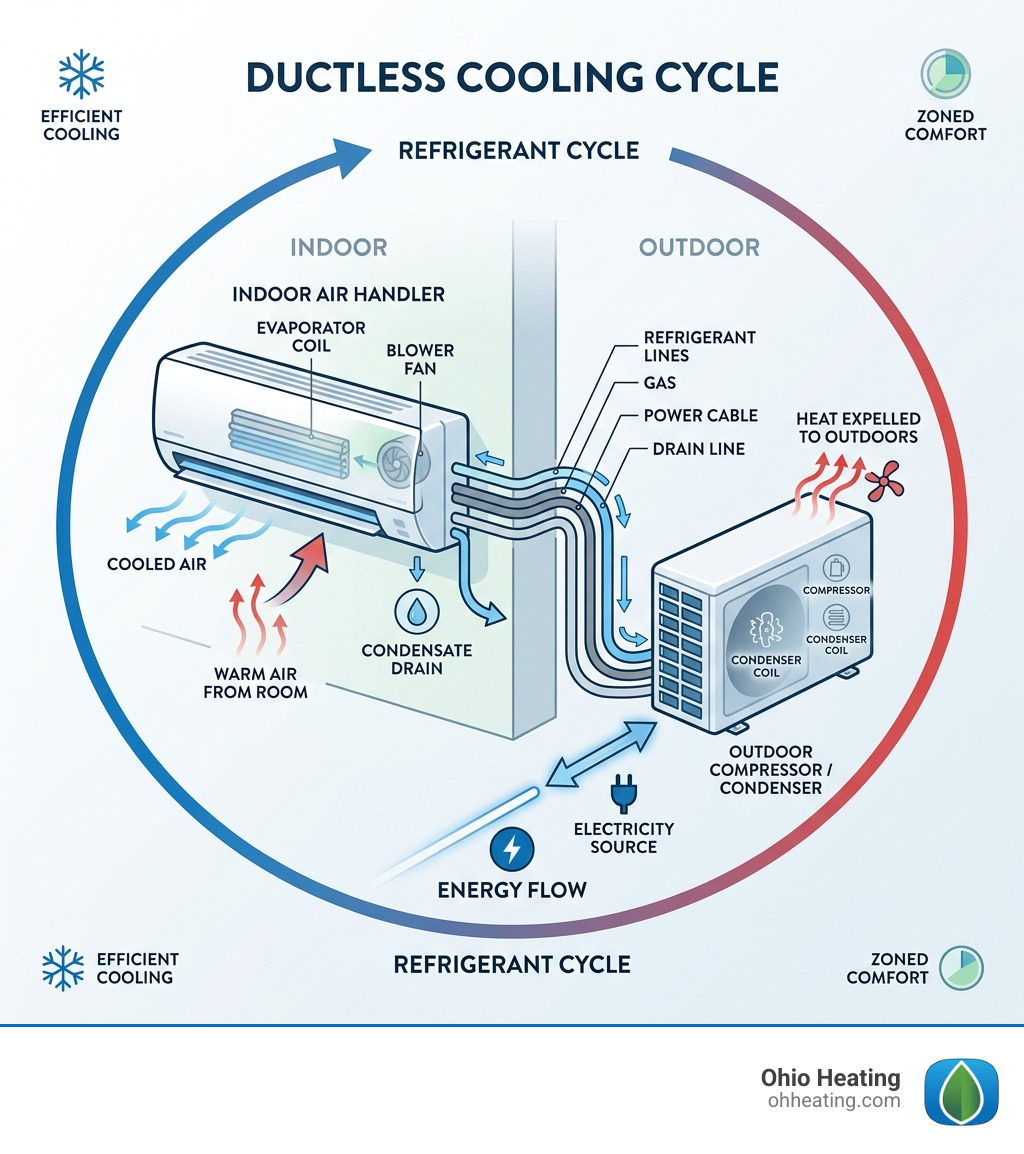
The system consists of two primary components: an outdoor compressor (or condenser) and an indoor air handler. These two are joined by a “conduit” which is essentially a bundle of three things: a power cable, refrigerant tubing, and a condensate drain line. Because the connection only requires a small three-inch hole through the wall, the architectural integrity of your home or office remains intact.
The process is a continuous cycle of heat transfer. The indoor unit contains an evaporator coil filled with cold refrigerant. As the indoor fan pulls warm air from your room across this coil, the refrigerant absorbs the heat. That heat is then pumped through the refrigerant lines to the outdoor unit, where the compressor releases it into the outside air.
For those looking for high-efficiency options, models like the 9,000 BTU Ductless Mini Split Inverter AC use inverter technology. This allows the compressor to speed up or slow down based on demand, rather than simply switching on and off, which saves a massive amount of energy. You can find more info about ductless systems on our dedicated service page to see how these components integrate into a seamless cooling solution.
Sizing Your Ductless Mini Split AC Unit for Maximum Efficiency
One of the most common mistakes we see in Central Ohio is homeowners choosing a unit that is either too small to handle the summer humidity or so large that it “short cycles.” Short cycling happens when a unit cools a room so quickly that it shuts off before it can properly dehumidify the air, leaving you feeling cold but clammy.
To find the perfect fit, we look at the BTU (British Thermal Unit) capacity. As a general rule of thumb in April 2026, a 12,000 BTU unit—often referred to as a “one-ton” unit—is designed to cover roughly 450 to 600 square feet. However, square footage is just the starting point. At Ohio Heating, we also consider:
- Ceiling Height: Rooms with vaulted ceilings have more air volume to cool.
- Sunlight Exposure: A south-facing room with large windows will require more cooling power than a shaded basement.
- Insulation Quality: Older homes in historic Columbus neighborhoods often need a bit more “oomph” due to thinner insulation.
A great example of a high-performance mid-sized unit is the Energy Star 12,000 BTU 22 SEER2 Ductless Mini Split AC, which balances high SEER2 efficiency with enough capacity to handle a large master suite or a generous living area.
Types of Indoor Units for Your Ductless Mini Split AC Unit
Gone are the days when “ductless” only meant a white box on the wall. While the wall-mount unit remains the most popular and cost-effective choice, there are several other ways to customize your comfort:
- Ceiling Cassettes: These units are installed flush against the ceiling. They are perfect for offices or rooms where wall space is at a premium, as they distribute air in four directions.
- Floor Consoles: Ideal for attics with slanted walls or rooms where you want the unit tucked away near the baseboard.
- Concealed Ducted: For those who want the efficiency of ductless but the “invisible” look of central air, these units are hidden behind a wall or in a crawlspace, with only a small decorative grille visible.
- Multi-Zone Systems: This is where the magic happens. You can connect up to eight indoor units to a single outdoor compressor. This allows you to have a wall-mount in the bedroom, a cassette in the kitchen, and a floor console in the sunroom—all controlled independently.
For our business clients, Ductless AC for Commercial Buildings offers a way to provide individualized comfort to different offices without a massive renovation.
Why Ductless Systems Outperform Traditional Cooling
If you’re comparing a ductless mini split ac unit to a traditional central AC or those noisy window units, the “coolest kid” wins on almost every front. The most significant advantage is efficiency.
According to the Department of Energy, typical central air systems lose about 30% of their energy through leaky or uninsulated ductwork. Since ductless systems don’t use ducts, that 30% loss is instantly eliminated. Furthermore, central systems are “all or nothing”—you cool the whole house even if you’re only using one room. Ductless allows for “zoned control,” meaning you only pay to cool the rooms you are actually using.
| Feature | Ductless Mini Split | Central Air Conditioning | Window / Portable Units |
|---|---|---|---|
| Energy Efficiency | Up to 30+ SEER2 | Typically 13-18 SEER2 | Very Low |
| Noise Level | Whisper-quiet (46 dB) | Loud (Outdoor & Vents) | Very Loud |
| Installation | Non-invasive (3″ hole) | Major (Ductwork needed) | Easy but blocks window |
| Air Loss | 0% (No ducts) | ~30% (Leaky ducts) | High (Window gaps) |
| Lifespan | 15+ Years | 12-15 Years | 5-7 Years |
While we are experts in Ductwork Installation in Columbus OH, we often recommend ductless for older homes where adding ducts would require dropping ceilings or losing closet space. Plus, outdoor units from top brands like Mitsubishi or Trane operate as quietly as 46 decibels—that’s about the level of a quiet conversation. You won’t have to turn up the TV every time the AC kicks on!
Professional Installation vs. DIY Considerations
In the age of YouTube, it’s tempting to try a “DIY” mini split. Some brands, like MRCOOL, even offer pre-charged lines to make it easier. However, there are several reasons why professional installation is the gold standard for long-term reliability.
First, there is the electrical requirement. Most ductless mini split ac unit models require a dedicated 220V circuit, though some smaller 9,000 BTU units can run on 110V. This isn’t just about plugging it into a wall; it requires a professional electrician to ensure your panel can handle the load and that the disconnect box is safely installed outdoors.
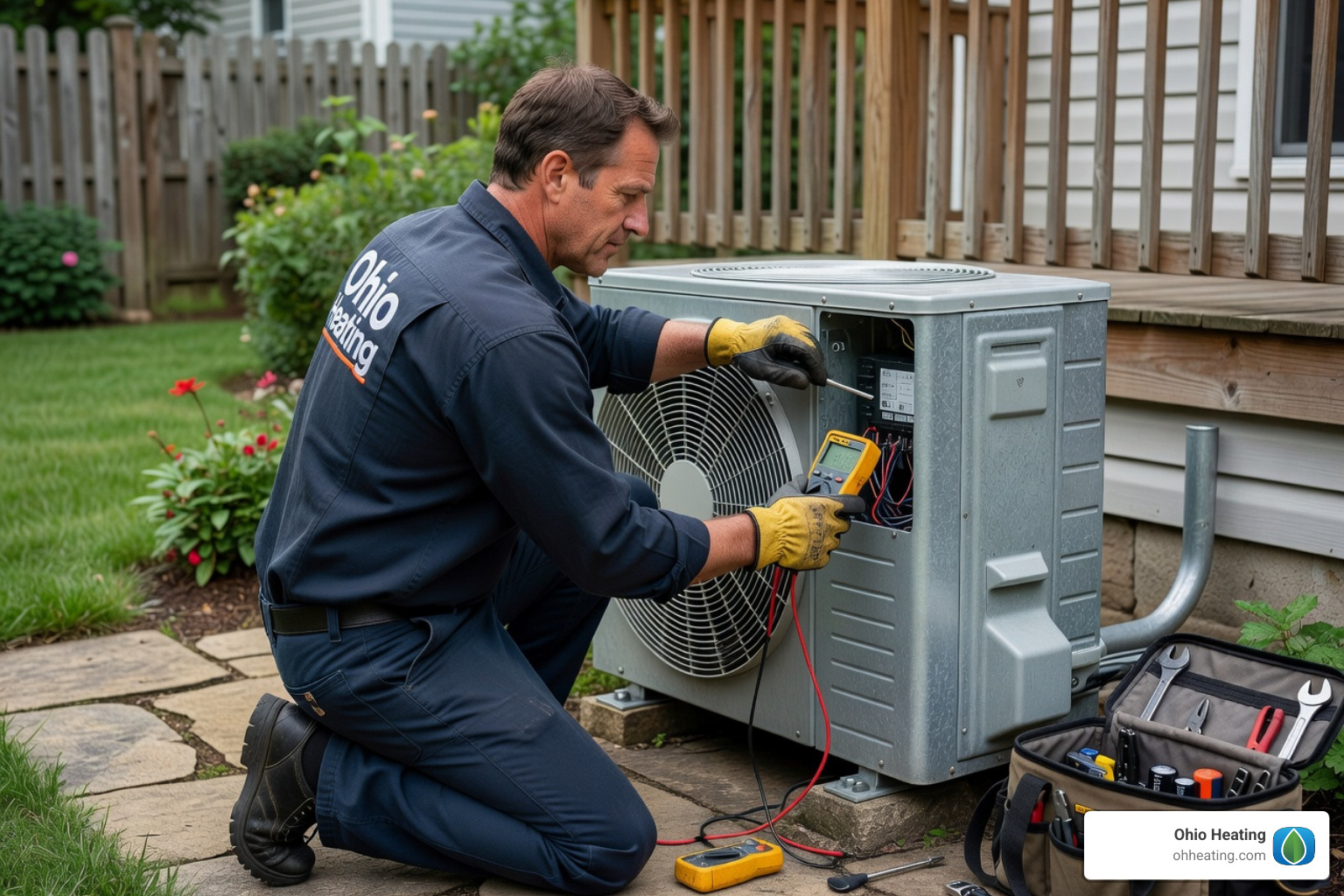
Second is the handling of refrigerant. Unless you are using a specific DIY kit with quick-connect lines, the system must be vacuumed to remove moisture and air before the refrigerant is released. If moisture stays in the lines, it can turn into acid and eat your compressor from the inside out within a few years. When we perform Ductwork Installation in Dublin OH or set up a new ductless system, we use precision gauges to ensure the system is perfectly sealed.
Finally, there is the matter of warranties and permits. Most manufacturers will only honor their 10 or 12-year warranties if the unit was installed by a licensed professional. Additionally, local building codes in Central Ohio often require a permit for new AC installations to ensure safety and compliance.
Maintenance for Long-Term Cooling Performance
To keep your ductless mini split ac unit running for its full 15-year (or longer) lifespan, maintenance is key—but thankfully, it’s quite simple.
The most important task for you as a homeowner is checking the washable filters inside the indoor air handler. Since these units sit high on the wall, they can pull in dust and pet hair. We recommend sliding the filters out and rinsing them under a tap every four to six weeks during the peak cooling season. This ensures clear airflow and prevents the coils from freezing up.
For the deeper stuff, we recommend professional servicing once a year. During a maintenance visit, our team will:
- Clean the indoor and outdoor coils: Dirt buildup acts like a blanket, forcing the system to work harder.
- Check condensate drainage: We ensure the drain line is clear of algae or debris to prevent indoor water leaks.
- Inspect electrical connections: Vibration over time can loosen wires.
- Test refrigerant levels: A small leak can drastically reduce efficiency.
Whether you need Ductwork Installation in Westerville OH or a tune-up for your ductless system, regular care is the best way to optimize efficiency and prevent a mid-July breakdown.
Frequently Asked Questions about Ductless Cooling
How much does a mini-split system cost to install?
While prices vary based on the number of zones and the complexity of the run, a single-zone ductless mini split ac unit typically ranges from $3,000 to $6,000 including professional installation. While this is more than a window unit, the energy savings and increased property value often provide a return on investment within a few years.
Are ductless AC units more efficient than central air?
Yes, in almost all cases. Because they avoid the 30% energy loss associated with ductwork and allow for zoned cooling, they are significantly more efficient. Many units reach 20-30 SEER2 ratings, whereas standard central air units often hover around 14-16 SEER2.
Can one outdoor unit support multiple indoor cooling zones?
Absolutely. Multi-zone outdoor units are designed specifically for this. You can mix and match indoor unit types (like a wall-mount in the bedroom and a ceiling cassette in the office) all connected to one powerful outdoor compressor.
Conclusion
The ductless mini split ac unit has revolutionized how we think about comfort in Central Ohio. Whether you’re cooling a garage workshop, a new sunroom, or an entire historic home that can’t accommodate bulky ducts, these systems offer a whisper-quiet, ultra-efficient solution.
At Ohio Heating, we’ve been the Columbus AC experts since 1999. Our mission is to ensure your operational reliability and residential comfort, no matter how high the Ohio humidity climbs. If you’re ready to ditch the window units and experience the best in modern cooling, check out our Ductless Systems page or give us a call. We’re here to make sure you’re the coolest kid on your block!