
Mastering the art of HVAC control systems
The Mechanics of Modern HVAC Controls Systems
At its core, the primary function of hvac controls systems is to manage the environment by comparing the “actual state” (the current temperature or humidity in a room) to a “target state” (your desired setpoint). When those two numbers don’t match, the control system springs into action, telling the cooling equipment exactly what to do to close the gap.
Think of it as a continuous feedback loop. In April 2026, we see these systems becoming more intuitive than ever, moving from simple “on/off” switches to sophisticated logic that can predict cooling needs before the room even gets warm. For those looking to dive deeper into how these solutions are tailored for local buildings, you can find more info about Ohio Control Solutions to see how we implement these “brains” in the field.
Key Components: Sensors, Controllers, and Actuators
To understand how hvac controls systems function, we have to look at the three main players in the hardware lineup:
- Sensors (The Senses): These are the eyes and ears of the system. They measure input data like air temperature, humidity levels, and even CO2 concentrations. In a modern cooling setup, these sensors tell the system if a room is occupied or if the afternoon sun is starting to bake a specific zone.
- Controllers (The Brain): This is where the logic lives. The controller receives the data from the sensors and decides what needs to happen based on its programming. It processes the “sequence of operations”—a set of instructions that dictates how the AC should behave.
- Actuators (The Muscles): Once the controller makes a decision, it sends a signal to an actuator. These devices physically move things. For example, an actuator might open a damper to let more chilled air into a conference room or adjust a valve to increase the flow of coolant.
High-end hardware, such as the Reliable Controls | RC-FLEXair Advanced VAV Controller, demonstrates just how powerful these components have become. These controllers can store over 1 million data points, allowing for incredibly granular tracking of how your cooling system performs over time.
Direct Digital Control (DDC) in HVAC Controls Systems
In modern cooling, Direct Digital Control (DDC) is the gold standard. Unlike older systems that relied on air pressure or simple electrical relays, DDC systems use electronic signals and microprocessors to manage equipment.
DDC acts as the central hub, allowing for “programmable logic.” This means we can write custom code that tells your AC unit to run differently on a humid Tuesday in Columbus than it does on a dry Sunday. This level of customization ensures that every fan, pump, and compressor is running at the exact speed needed—no more, no less. For a look at how these digital transitions are managed, check out more info about Conventional Controls.
Evolution of Cooling Technology: From Pneumatic to DDC
To appreciate where we are in April 2026, we have to look at where we started. The history of hvac controls systems is a journey from mechanical simplicity to digital brilliance.
| Feature | Pneumatic Systems (Old) | DDC Systems (Modern) |
|---|---|---|
| Medium | Compressed Air | Electronic Signals |
| Logic | Mechanical Springs/Bellows | Software/Microprocessors |
| Precision | Low (drift is common) | High (precise to 0.1 degrees) |
| Maintenance | High (leaks, compressor oil) | Low (software updates, sensor checks) |
| Integration | Difficult/Stand-alone | Seamless/Networked |
If you are currently managing an older facility, you might still be dealing with Pneumatics in Columbus Ohio, which requires a very specific set of maintenance skills.
The Legacy of Pneumatic Systems
Pneumatic controls were the industry standard for decades. They use a network of plastic or copper tubing to carry compressed air. When a thermostat senses a change, it varies the air pressure in the line, which mechanically moves a bellows or piston to open a valve.
While rugged, these systems are prone to “bleeding” air, and the Pneumatic Compressor in Columbus Ohio required to run them must be kept meticulously dry and oil-free to prevent the lines from clogging. By 1985, these systems began to lose ground as electronic technology became more affordable and reliable.
Transitioning to Modern Digital Infrastructure
Today, we are helping many businesses move away from these legacy setups. Transitioning to a digital infrastructure involves installing network cabling (or wireless gateways) and replacing mechanical thermostats with smart controllers.
The benefit of upgrading Pneumatic Systems in Columbus Ohio is immediate: you gain the ability to see exactly what your system is doing from a computer or smartphone. No more walking to a mechanical room to check a pressure gauge; the data comes to you.
Advanced Strategies for Commercial Cooling
In large commercial buildings, managing cooling isn’t just about one thermostat on a wall. It’s about managing a complex ecosystem of dozens or hundreds of different zones. This is where hvac controls systems truly shine, providing the precision needed to keep a server room at 68°F while the lobby stays at a comfortable 72°F.
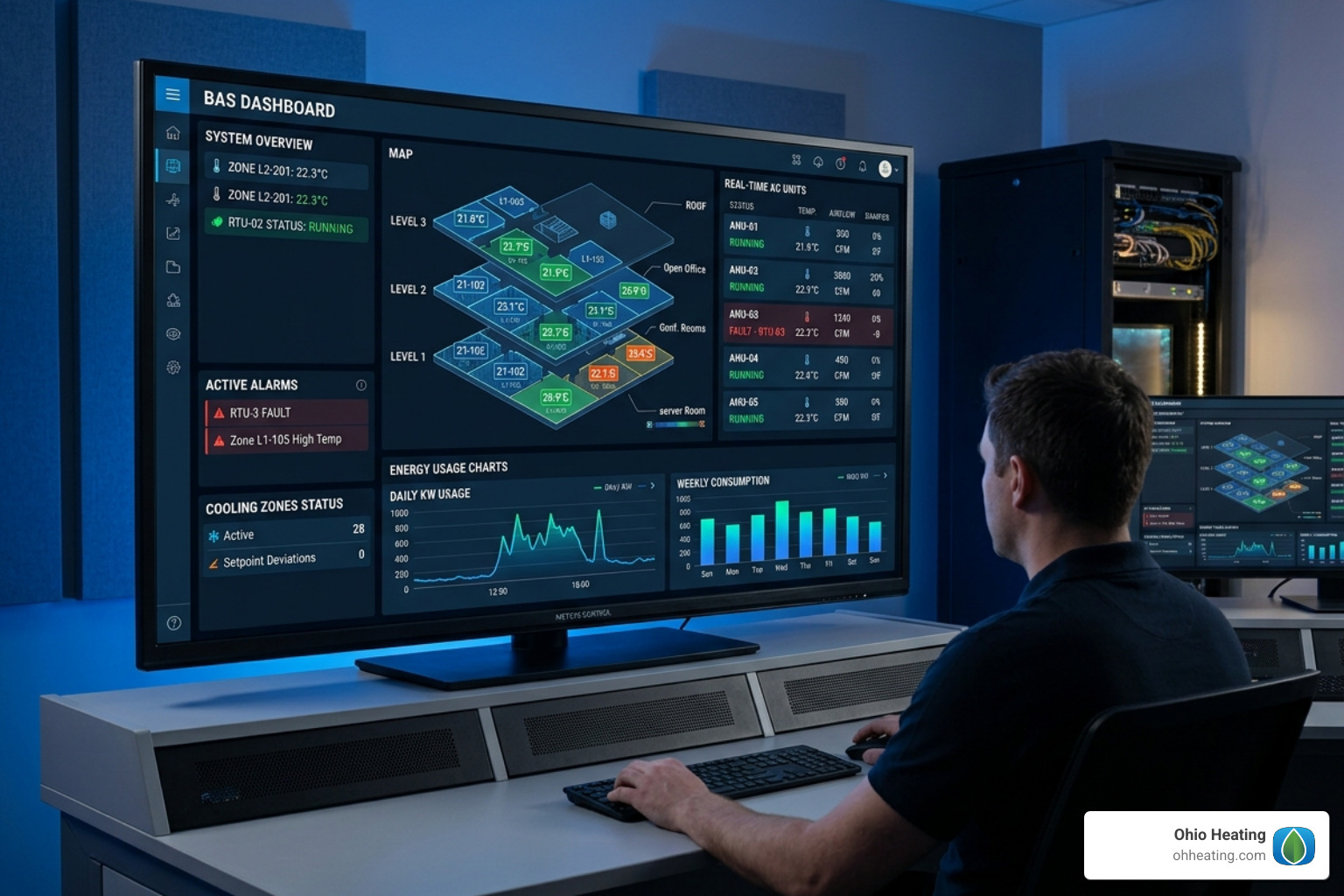
Building Automation Systems (BAS) Integration
A Building Automation System (BAS) is the overarching platform that ties everything together. It doesn’t just manage the AC; it can integrate with lighting, security, and fire safety systems. For cooling specifically, a BAS allows facility managers to:
- Centralize Monitoring: View the status of every AC unit in the building from a single dashboard.
- Respond to Alarms: Get instant notifications if a compressor fails or if a zone exceeds its temperature limit.
- Schedule Operations: Set complex cooling schedules that account for holidays, weekends, and special events.
Platforms like the WebCTRL® Building Automation System | Automated Logic provide these tools in a web-based interface, making it easy to manage a multi-site portfolio from anywhere in Central Ohio. If you’re looking for local expertise in these high-level integrations, we specialize in implementing the BAS System in Columbus Ohio.
Zoning Systems and Airflow Precision
One of the most effective ways to save money on cooling is through zoning. Instead of cooling the entire building to satisfy the warmest room, hvac controls systems use Variable Air Volume (VAV) controllers and motorized dampers.
These dampers act like “valves” for air. They can open or close in small increments to deliver the exact amount of chilled air required for a specific room. This prevents over-cooling unoccupied spaces and ensures occupant comfort where it matters most. To learn how to fine-tune your facility’s airflow, explore our resources on Building and Energy Management.
Benefits of Smart HVAC Controls Systems
The move toward “smart” technology isn’t just a trend; it’s a financial and environmental necessity. Modern hvac controls systems leverage the Internet of Things (IoT) to provide a level of performance that was impossible just a decade ago.
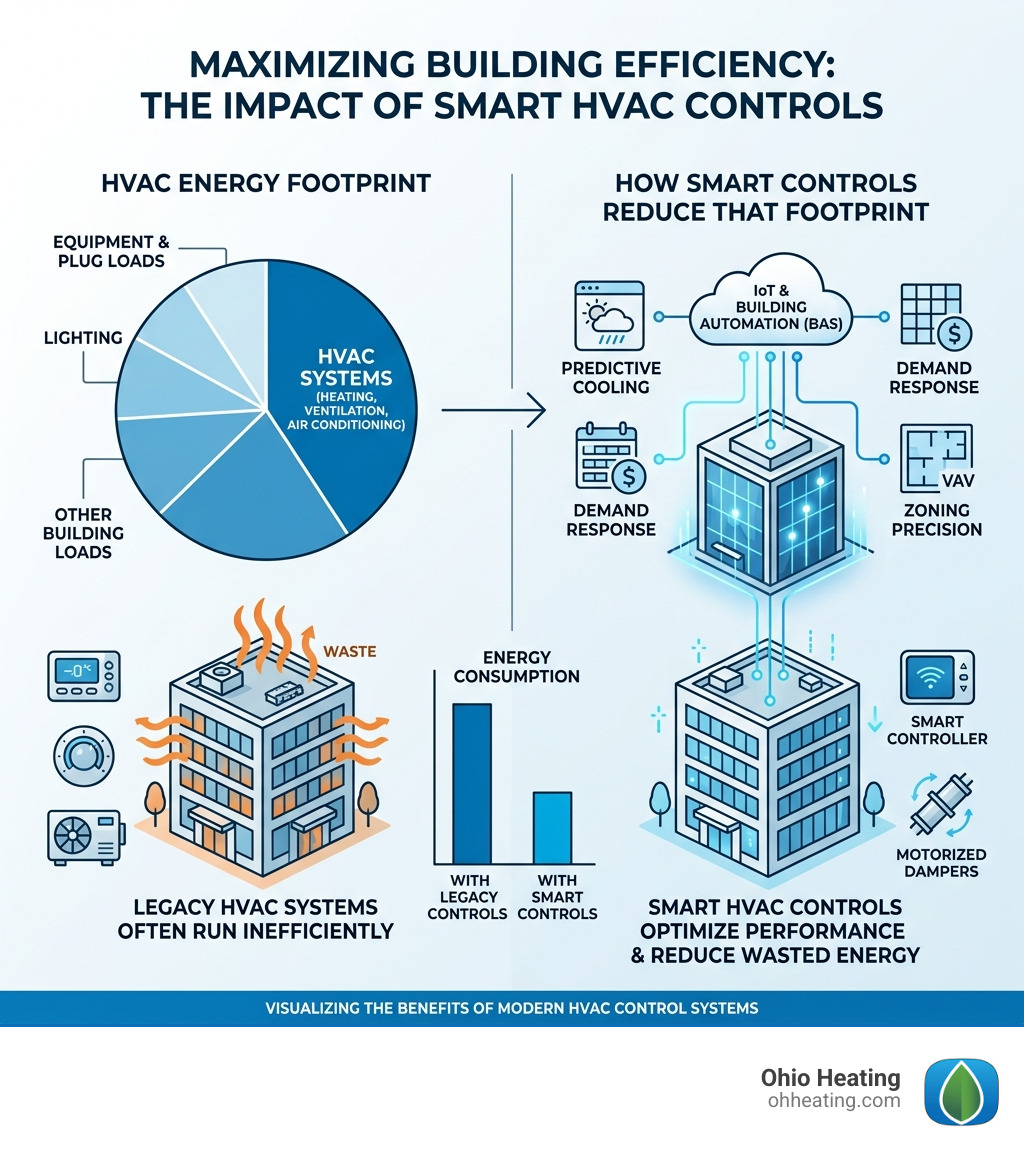
Maximizing Efficiency with Smart HVAC Controls Systems
Efficiency is the name of the game. Newer systems with energy guide stickers are designed to save customers hundreds to thousands of dollars over the life of the equipment. Smart controls take this further by:
- Predictive Cooling: Using weather forecasts to “pre-cool” a building before a heatwave hits, which reduces the load on the electrical grid during peak hours.
- Demand Response: Automatically adjusting setpoints by a degree or two during periods of high energy prices.
- Remote Management: Allowing our technicians to diagnose a cooling issue remotely, often fixing the problem before you even realize the building is getting warm.
Solutions like Siemens Climatix offer these IoT-enabled features in a scalable package. For more on how to slash your utility bills through better tech, see our section on Energy Management.
Sustainability and Indoor Air Quality (IAQ)
In April 2026, sustainability is a top priority for many Ohio businesses. hvac controls systems contribute to “green” building goals by reducing carbon emissions through lower energy use. Furthermore, they play a critical role in Indoor Air Quality (IAQ).
By monitoring CO2 levels and humidity, the control system can adjust ventilation to bring in fresh outdoor air when needed. The AprilAire 8126X Whole-House Ventilation Control System is a great example of how dedicated controls can dilute airborne contaminants and manage odors, ensuring the air you breathe is as cool as it is clean.
Maintaining Your Cooling Control Infrastructure
Even the best hvac controls systems require a little TLC to stay accurate. Over time, sensors can “drift,” meaning they might think it’s 72°F when it’s actually 75°F. Regular calibration is essential to keep the system honest.
Our team uses advanced diagnostic tools and “trend logs” to look back at how your system has behaved over weeks or months. If we see a cooling valve that is constantly 100% open, it tells us there might be a mechanical issue with the AC unit or a leak in the refrigerant line. You can learn more about our ongoing support through our Customer Services page.
Proactive Maintenance and Fault Detection
We have moved beyond “break-fix” maintenance. With “sensorification”—the practice of adding sensors to almost every part of the cooling cycle—we can use predictive analytics to spot failures before they happen.
- Uptime: By identifying a struggling motor or a clogged filter early, we ensure your building stays cool 24/7.
- Data Retention: Modern controllers can store years of data, helping us identify long-term patterns that could be costing you money.
Selecting the Right Control Manufacturer
When it’s time to install or upgrade, choosing the right manufacturer is key. Names like Trane, Johnson Controls, and Siemens are industry leaders for a reason—they offer interoperability (the ability for different systems to talk to each other) and long-term scalability.
When we help you select a system, we look for:
- Open Protocols: Ensuring the system uses standard languages like BACnet so you aren’t locked into one brand forever.
- Ease of Use: A dashboard that your facility manager can actually understand and use.
- Cybersecurity: Protecting your building’s network from outside threats.
Explore some of the high-quality options we carry by visiting Our Products page.
Frequently Asked Questions about HVAC Control Systems
What is the primary function of an HVAC control system in cooling?
The primary function is to act as the “brain” of the cooling system. It monitors the indoor environment via sensors and directs the AC equipment (compressors, fans, and dampers) to maintain the desired temperature and humidity levels as efficiently as possible.
How does a DDC system improve energy efficiency compared to older controls?
DDC systems use precise electronic logic rather than mechanical parts. This allows for features like “night setback” (reducing cooling when the building is empty), variable speed control (running the AC at 50% capacity instead of 100% when demand is low), and highly accurate sensor data that prevents over-cooling.
Can I manage my commercial cooling system remotely?
Yes! Most modern hvac controls systems are web-accessible. This means you can log in from a laptop or smartphone to check temperatures, adjust schedules, and receive alarm notifications from anywhere in the world.
Conclusion
At Ohio Heating, we believe that a cooling system is only as good as the controls that run it. Since 1999, we have been the trusted partner for homes and businesses across Columbus and Central Ohio, ensuring that their hvac controls systems provide maximum comfort and operational reliability.
Whether you need a simple AC repair, a complex BAS integration, or a transition from old pneumatic lines to modern DDC, our team has the expertise to get the job done right. Don’t let a “dumb” controller lead to high energy bills and uncomfortable tenants. Master your comfort with Ohio Control Solutions and experience the difference that expert installation and maintenance can make.