
What You Need to Know About Commercial Ice Machines
Commercial ice machines are a core piece of equipment for any business in the food, hospitality, or healthcare industry — and choosing the wrong system or service partner can cost you in energy bills, downtime, and unsatisfied customers.
Here’s a quick overview of what most business owners need to know:
| What You’re Looking For | Quick Answer |
|---|---|
| Primary Ice Machine Services | Installation, preventative maintenance, emergency repairs |
| Main Machine Types | Modular, undercounter, countertop, ice-and-water dispensers |
| Key Performance Indicators | Daily ice production (lbs), storage bin capacity, energy efficiency |
| Cooling Technologies | Air-cooled, water-cooled, remote condensers |
| Key Buying Factors | Business type, daily volume needs, space constraints, ice type |
| Maintenance Needs | Regular cleaning, sanitizing, water filter replacements, professional tune-ups |
Whether you run a busy restaurant, a hotel, a convenience store, or a healthcare facility, having a reliable supply of ice is essential. This guide breaks down commercial ice makers in plain language.
I’m Jill Frattini, Service Coordinator at Ohio Cooling in Columbus, OH, where I work closely with our refrigeration team on commercial ice machine installs, repairs, and service scheduling across Central Ohio. I’ve seen what separates a well-matched ice setup from a costly headache — and this guide reflects that experience.
Understanding Commercial Ice Machines and Ice Applications
When you think of commercial refrigeration, ice is often at the top of the list. The type of ice machine you choose impacts your daily operations, beverage quality, and customer satisfaction. Selecting the correct ice maker setup is the first and most important step in finding the perfect cooling solution for your business. For an in-depth dive into matching ice styles with specific business types, check out our resource on cooling systems.
High-Capacity Ice Makers for Large Venues
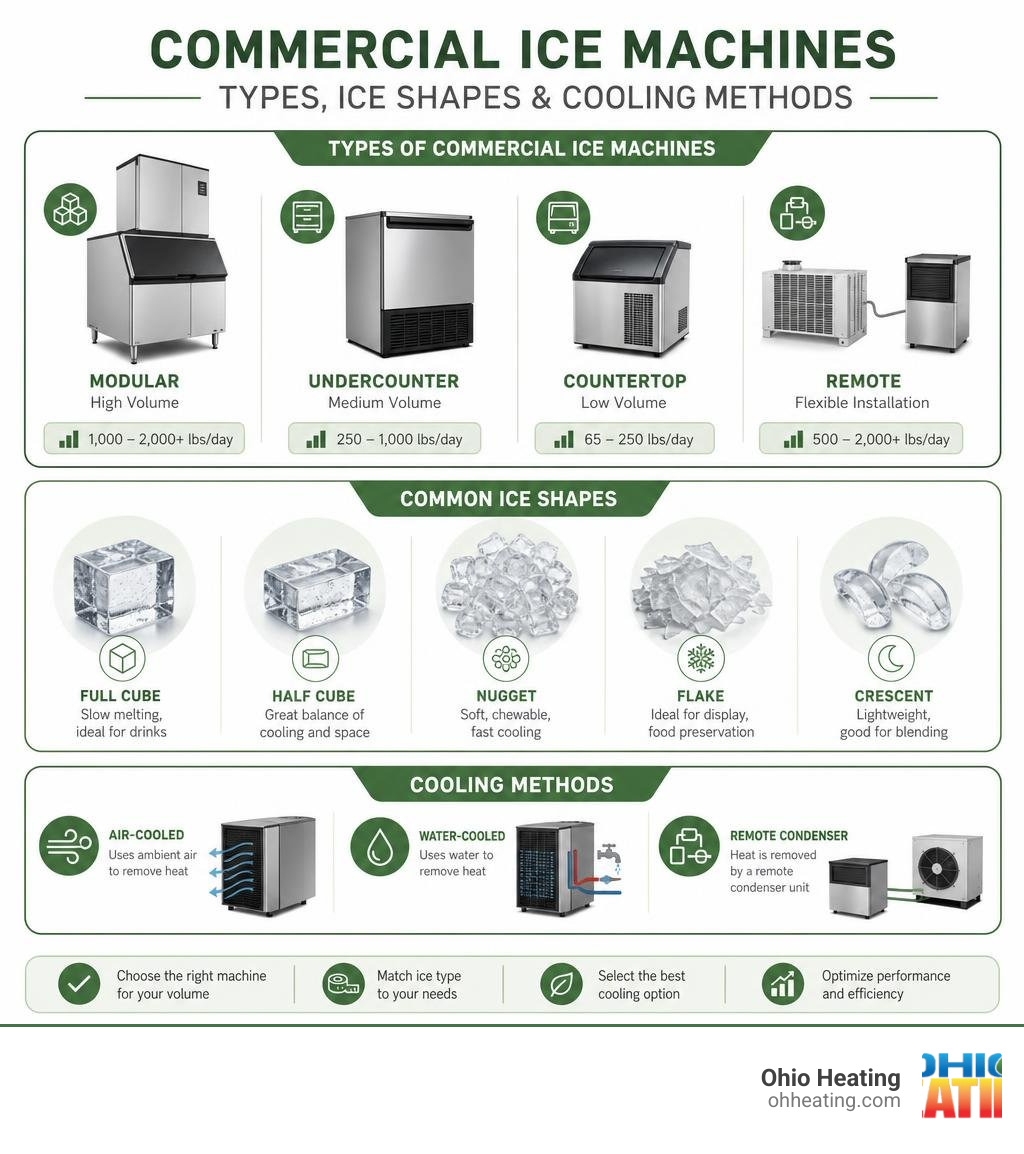
High-volume establishments require robust systems that can keep up with constant demand. These systems come in several primary variations, including modular units and large-scale dispensers.
- Modular Ice Machines: These heavy-duty, high-output units are designed to sit on top of an ice storage bin or a beverage dispenser. Because of their design, they produce massive quantities of ice without taking up excessive floor space. If you run a high-volume venue, investing in high-capacity cooling systems ensures your facility never runs out of ice during peak hours.
- Undercounter Ice Machines: This is a common workhorse of the bar and small restaurant industry. Undercounter units combine the ice maker and storage bin into a single compact cabinet, making them highly adaptable. They are also much easier to service, making them the preferred choice for tight spaces, clinics, and office breakrooms.
Specialized Ice Makers for Targeted Needs
Not every business needs massive, modular ice makers. In fact, for some spaces, standard cube ice is impractical.
- Countertop Ice and Water Dispensers: These units are highly efficient and allow for precise portion control in self-service areas. They are a massive hit at hospital hallways, small offices, and cafeteria lines. In healthcare facilities, clean and accessible ice is the gold standard because it helps maintain patient comfort and hydration. To find the right setup for these targeted cooling needs, look into a dedicated specialized cooling systems resource for specialized cooling insights, or explore industry-standard cooling systems manufacturers who also pioneer advanced ice-making and cooling technologies.
Comparing Ice Machine Condenser Cooling Technologies
To produce ice, your commercial ice machine has to pull heat out of the water. That heat has to go somewhere, and how your ice maker rejects that heat is determined by its condenser type. Choosing the wrong condenser technology can lead to skyrocketing utility bills or an indoor environment that feels like a sauna.
| Condenser Type | Best For | Pros | Cons |
|---|---|---|---|
| Air-Cooled | Most standard commercial kitchens, cost-conscious businesses | Easy to install, uses no extra water, highly energy-efficient | Performance can drop slightly in extreme ambient kitchen heat |
| Water-Cooled | High-temperature environments, facilities with cooling towers | Extremely quiet, highly efficient in hot areas | Requires water treatment, higher water consumption and utility costs |
| Remote Condenser | Quiet dining areas, restricted indoor spaces, multi-unit setups | Zero heat or noise indoors, highly efficient | Complex installation, higher upfront equipment costs |
Air-Cooled Ice Machine Condensers
Air-cooled condensers are by far the most popular choice for commercial ice machines in Columbus and Central Ohio. They pull ambient indoor air across the condenser coils using powerful fans to cool the refrigerant.
The main draw here is simplicity and utility savings. Because they don’t use extra water to cool the system, they are highly cost-effective to run. If you are focused on keeping your operational overhead low, understanding What is Energy Efficiency in Commercial Cooling? can help you select an air-cooled ice machine model that qualifies for high efficiency ratings, saving you thousands over the life of the system.
However, air-cooled outdoor or indoor units require plenty of breathing room. If you crowd an ice machine with boxes or place it near hot cooking equipment, it will struggle to release heat and eventually overheat. Proper placement is key to Keeping Your Commercial Cooling Systems Cool and ensuring your ice maker runs at peak performance.
Water-Cooled and Remote Condensers
When standard air-cooled units aren’t practical for hot or confined commercial kitchens, water-cooled or remote systems step in to do the heavy lifting.
- Water-Cooled Condensers: These units run water through a heat exchanger to absorb heat from the refrigerant. They are incredibly quiet and highly efficient for hot environments. If you have a closed-loop cooling tower on-site, using water-cooled modular AC units can be an incredibly smart, high-efficiency choice for your building’s ice production needs.
- Remote Condensers: If you want to minimize indoor noise and heat transfer, a remote condenser setup is ideal. The ice-making head sits inside your building, while the condenser unit is installed outdoors (usually on the roof). This setup is perfect for quiet dining environments. If you want to dive deeper into how these complex cooling systems fit into your overall building layout, check out Stay Frosty: The Ultimate Guide to Commercial Cooling.
Choosing the Right Commercial Ice Machine for Your Business
Now that you know your cooling preferences, it is time to look at the physical system configuration. You can browse a wide variety of designs in a commercial cooling equipment catalog to see how commercial ice machine footprints compare, but generally, commercial ice makers fall into three main physical designs:
- Modular Ice Machine Heads: These are high-output, self-contained ice makers designed to sit on top of a separate storage bin or dispenser. They are highly customizable and perfect for businesses that need to produce large quantities of ice.
- Undercounter Ice Machines: Perfect for bars, clinics, and small breakrooms, these systems combine the ice maker and storage bin into a single compact unit.
- Countertop Dispensers: Often found in healthcare facilities, offices, and self-service areas, these units deliver ice and water directly into cups without the need for manual scooping.
If you are currently looking to purchase or upgrade your ice setup, our guide on Don’t Lose Your Cool: Finding an AC Specialist Nearby is a great starting point for local Columbus business owners seeking professional refrigeration solutions.
Sizing and Capacity of Commercial Ice Machines
Sizing a commercial ice machine is a delicate balancing act. If you buy a system that is too small, it will run constantly and fail to keep up with ice demand during busy weekend shifts. If you buy a system that is too large, it will cycle unnecessarily, leading to higher energy bills, wasted water, and premature wear and tear.
To get your ice production capacity right, refrigeration professionals calculate the load based on several factors:
- Business Type: Restaurants typically need about 1.5 lbs of ice per customer, while bars need about 3 lbs per seat.
- Peak Demand: The busiest hours of your week (more customers mean more ice usage).
- Ambient Temperature: High kitchen temperatures can reduce an ice machine’s daily production capacity.
- Storage Bin Capacity: Having a large enough bin ensures you have plenty of ice stored up before peak hours.
Remember to size your ice machine for the hottest days of the year. For high-demand environments, choosing high-output air-cooled AC models of ice-making equipment ensures you have a safety margin during peak summer heatwaves.
Essential Accessories for Commercial Ice Machines
A commercial ice machine requires a complete supporting cast to run reliably and maintain sanitary ice production.
- Water Filtration Systems: This is the single most important accessory for your ice machine. Filters remove chlorine, sediment, and scale-forming minerals. Clean water prevents scale buildup on the evaporator plates, which can restrict ice release and cause the system to freeze up.
- Ice Storage Bins: Unless you are using a countertop dispenser, you will need a properly insulated bin to store the ice produced by your modular head.
- Sanitary Ice Scoops and Holders: To stay compliant with health codes and prevent contamination, proper scoops and dedicated holders are essential.
Proper setup requires professional electrical, water, and drain connections. For expert installation in Central Ohio, look to our team at AC Install and Service in Columbus (where our technicians apply the same advanced refrigeration standards to commercial ice machines) to ensure your water lines and electrical configurations meet all local building codes. If you are exploring sales options or need assistance matching an ice machine to your existing infrastructure, our Commercial AC Sales and Repairs team is here to help with all commercial ice machine sales and service needs.
Ice Machine Maintenance, Cleaning, and Longevity
A commercial ice machine operates in demanding environments, constantly circulating water and managing moisture. If you do not maintain your ice machine regularly, the evaporator plates will accumulate scale, water flow will drop, and the system will run less efficiently, eventually leading to compressor failure. In fact, the majority of emergency ice machine service calls are directly related to a lack of regular preventative maintenance and sanitizing.
To keep your commercial ice machine running smoothly, follow this standard maintenance checklist:
- Monthly: Check and replace water filters if necessary. If the filter is clogged with sediment, water flow to the evaporator will be restricted, resulting in thin or malformed ice cubes.
- Quarterly: Inspect the water distribution tubes and bin drains to ensure there are no blockages or slime growth that could cause water leaks or sanitary issues.
- Every 6 Months: Perform a professional deep clean and sanitizing. This involves running specialized scale remover and sanitizer through the water system, cleaning the condenser coils, checking refrigerant levels, and inspecting electrical connections.
For a complete breakdown of what goes into keeping ice systems sanitary and efficient, read our detailed guide on AC Maintenance (which highlights the critical importance of cleanliness in all commercial ice machines).
If you don’t have the time or tools to handle this technical maintenance yourself, our certified technicians can manage it for you. We specialize in Mastering Commercial & Industrial AC Repair and advanced commercial ice machine maintenance to keep your equipment running at peak efficiency.
To take the guesswork out of your budget, we also offer Fixed Fee Service Contracts: The Smart Way to Maintain Your AC, which can be customized to cover your commercial ice machines. These maintenance agreements ensure your ice maker gets professional service on schedule, preventing emergency breakdowns and extending the lifespan of your compressor. If you do find yourself facing an unexpected ice machine issue, finding trustworthy help is easy with our guide on The Cold Hard Facts: Finding Top-Rated Commercial AC Repair Services Nearby for local refrigeration repair services.
Frequently Asked Questions about Commercial Ice Machines
How do I determine the right ice machine size for my commercial building?
As a general rule of thumb, restaurants require about 1.5 lbs of ice per customer, while bars require about 3 lbs of ice per seat. For hotels, plan for about 5 lbs of ice per room per day. A professional refrigeration load calculation is always recommended to ensure your ice machine and storage bin are perfectly sized for your specific business needs.
Why is regular cleaning critical for commercial ice machines?
Ice is classified as food, meaning your ice machine must be kept sanitary. Over time, water minerals create scale buildup on the evaporator plates, while airborne yeast and mold can grow inside the storage bin. This buildup acts as an insulating blanket, preventing efficient heat transfer and slowing down ice production. It also poses a serious health code violation.
What are the electrical and plumbing requirements for commercial ice machine installation?
Most commercial ice machines require dedicated electrical circuits to handle the high voltage and current draw of the compressor. Smaller undercounter units may run on 115V single-phase power, while larger modular units typically require 208-230V single-phase or three-phase power.
For plumbing, commercial ice machines require a dedicated potable water supply line, a water filtration system, and a gravity drain line to safely carry away purge water and melted ice from the storage bin. This drain must have an air gap and be properly routed to an open floor drain to prevent backflow. For a deeper look at local installation hurdles and how to avoid them, read about Identifying AC Repair Challenges in Columbus to see how local regulations impact commercial refrigeration setups.
Conclusion
A reliable commercial ice machine is the backbone of your daily business operations, ensuring a steady supply of clean ice for your employees and customers alike. By choosing the right machine type, matching your production capacity to peak demand, and committing to a strict preventative maintenance schedule, you can protect your investment and keep your operations running smoothly.
At Ohio Cooling, we have been keeping Columbus and Central Ohio businesses running since 1999. Our team of certified refrigeration and ice machine experts is always ready to assist you with sales, professional installations, routine maintenance, or emergency repairs.
Don’t let a broken ice machine slow down your business. Schedule professional AC repair and cooling services with our refrigeration specialists today, and let us help you keep the ice flowing!