
Furnace Pressure Switch Problems: Why Your Furnace Starts, Then Gives Up
You set the thermostat on the first chilly night, hear a small motor spin up in the basement, but then nothing else happens. The burners stay dark, the motor stops, and a few minutes later the whole thing tries again. In most central Ohio homes, that pattern indicates the furnace pressure switch, a small safety device that has to confirm that the venting works before the furnace is allowed to make heat.
A bad switch is less common than people think. More often it reports a real problem somewhere else in the vent, the drain or the tubing.

What the switch does during startup
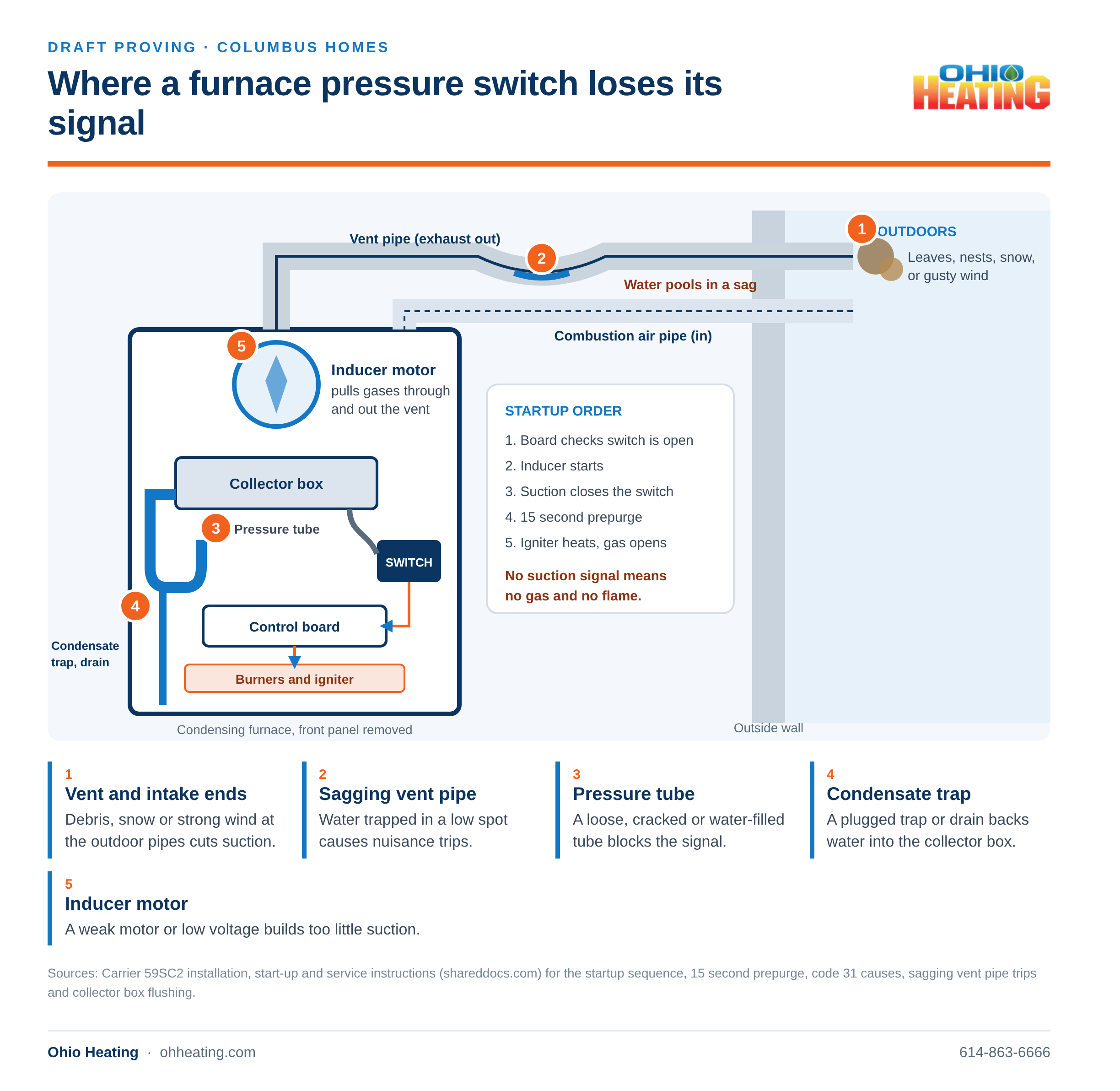
Your furnace runs a fixed sequence each time the thermostat calls for heat. The control board first confirms the pressure switch contacts are open, then starts the inducer motor, which pulls combustion gases through the heat exchanger and pushes them out the vent. When the inducer builds enough suction, the switch closes. On Carrier and Bryant condensing furnaces, that closure begins a 15 second pre-purge before the igniter heats up (Carrier 59SC2 installation and service instructions).
Carrier describes the pressure switch in furnaces like its 59SC2 in one line: it proves operation of the draft inducer blower. If the switch does not close, the control will not open the gas valve. That keeps a furnace from burning gas into a blocked vent, which is the primary way carbon monoxide ends up inside a house.
Each switch is set to a specific pressure, measured in inches of water column. The same manual gives an example of a switch that breaks at 0.68 inches, with a tolerance of plus or minus 0.05 inches. Those are tiny pressures, so a little water in a tube or a small vent restriction can be enough to keep the contacts from closing.
Furnace pressure switch codes and what they point to
Most modern furnaces flash a status code through a small window in the blower door. Write it down before you turn off power, since cutting power usually clears it. The table below uses the codes from Carrier’s condensing furnace manual. Your model may use different numbers, so check the label inside the door.
| What you see | Code on Carrier 59SC2 | Common causes |
|---|---|---|
| Inducer runs, burners stay dark. | 31, switch did not close or reopened. | Plugged condensate drain, water in a sagging vent pipe, disconnected or blocked tubing. |
| Furnace lights, then shuts down mid-cycle. | 31, switch reopened. | Restricted vent, strong wind at the vent outlet, weak inducer motor. |
| Inducer doesn’t start, nothing happens. | 23, switch did not open. | Blocked pressure tube or switch contacts stuck closed. |
| Repeated tries with a long pause between them. | Varies by model. | Switch stays open, and the control waits before the next attempt. |
Source for codes and causes: Carrier 59SC2 installation and service instructions. Bryant’s 58 series guide adds that when the switch stays open longer than five minutes, the inducer shuts off for 15 minutes before the next try (Bryant 58 series troubleshooting guide).
Water, vents and wind cause most trips
Carrier’s full list of causes for code 31 is longer than most people expect. It includes vent sizing, an air leak between the burner area and the blower compartment, loose or blocked tubing, a bad or mis-wired switch, strong wind, and more.
On a high-efficiency furnace, water is the usual suspect. These furnaces make condensate as part of normal operation, and it drains out through a trap on the side of the cabinet. When the trap or drain line clogs, water backs up into the collector box and the switch loses its pressure signal. Carrier also warns that short horizontal vent runs are hard to pitch correctly and can trap water, which leads to nuisance pressure switch trips.
Outside, check the two white pipes where they leave the house. Leaves, a wasp nest or drifted snow at the intake or vent outlet will restrict flow just like a blockage inside would. Wind can do the same thing on a gusty day.
Checks you can make before you call
You can safely handle a few of these yourself. Start with the ones below, and stop at the first sign of a gas smell or soot.
- Look at the vent and intake outside. Clear leaves, nests or snow from both pipe ends. Don’t reach inside the pipe.
- Check the condensate drain. Look for standing water in the clear tubing or around the trap, and make sure the drain line runs downhill to a floor drain or pump.
- Look for a loose tube. The small rubber tube between the switch and the furnace should be firmly attached at both ends with no kinks or cracks.
- Change the filter. Carrier tells homeowners to check the filter each month (Carrier 59SC2 instructions), if it’s dirty or clogged, change it.
- Walk the vent pipe. Carrier lists a vent inspection before each heating season for leaks, sagging pipes and broken fittings.
Don’t blow into the pressure switch tube while it is still connected to the switch. Carrier’s service steps say this directly, since the pressure can damage the switch. Don’t jump the switch with a wire either, because that removes the one safety check standing between a blocked vent and the gas valve.
What a technician checks
A service visit starts with a real test instead of a guess. Carrier’s manual describes one version: the technician disconnects the inducer, calls for heat, and confirms that the igniter does not glow and the board flashes code 31. If the igniter glows with the inducer unplugged, the furnace gets shut down on the spot.
From there, the technician measures the pressure the inducer actually produces and compares it to the switch rating on the label. Low suction points to the vent, the inducer or the heat exchanger path. Good suction with an open switch points to the switch or its tubing. Carrier also includes a flushing procedure for the collector box, plus cleaning the pressure port with a small wire, which clears the water and debris that cause most trips.
Replacing the switch without that testing can hide the real cause for a few days. A cracked vent joint or a clogged trap will keep tripping a brand-new switch. If the furnace also runs short cycles once it does light, our guide to furnace short cycling covers the related causes, and our furnace won’t turn on checklist walks through the power and thermostat side.
Carbon monoxide is the reason pressure switches exist. According to the CDC, carbon monoxide causes more than 400 unintentional non-fire deaths a year in the United States, plus more than 100,000 emergency department visits (CDC carbon monoxide). Test your CO alarms at the start of each heating season.
Frequently asked questions
Can I replace the switch myself? We don’t recommend it. The replacement has to match the original pressure rating, and the real cause is often the vent or drain. A new switch on a blocked vent will fail the same way.
Why does my furnace work fine some days and not others? Intermittent trips usually track with conditions. Wind at the vent outlet, a drain that only backs up after long runs, or water that collects in a sagging vent pipe can all come and go.
Is it safe to keep resetting the furnace? A few restarts while you check the vent and drain are fine. Repeated resets without finding the cause mean the furnace keeps trying to run with a venting problem, so call for service.
What does a clicking sound with no flame mean? Often the inducer runs and the switch stays open, so the control stops the sequence. Note any flashing code and give it to the technician.
Does a clogged filter cause pressure switch problems? Not directly. A dirty filter usually trips the high limit switch instead. It is still worth changing first, since it removes one possible cause.
Your furnace pressure switch is doing its job when it stops the burners, and it helps protect your family from a blocked vent. Treat each error as a warning about the vent or drain. For furnace repair and service anywhere in Central Ohio, call Ohio Heating at 614-863-6666 or request a visit at ohheating.com.