
What Does It Actually Cost to Fix AC in a House?
The cost to fix AC in your house typically falls between $150 and $600 for most common repairs — but the final number depends heavily on what broke, when you call, and how old your system is.
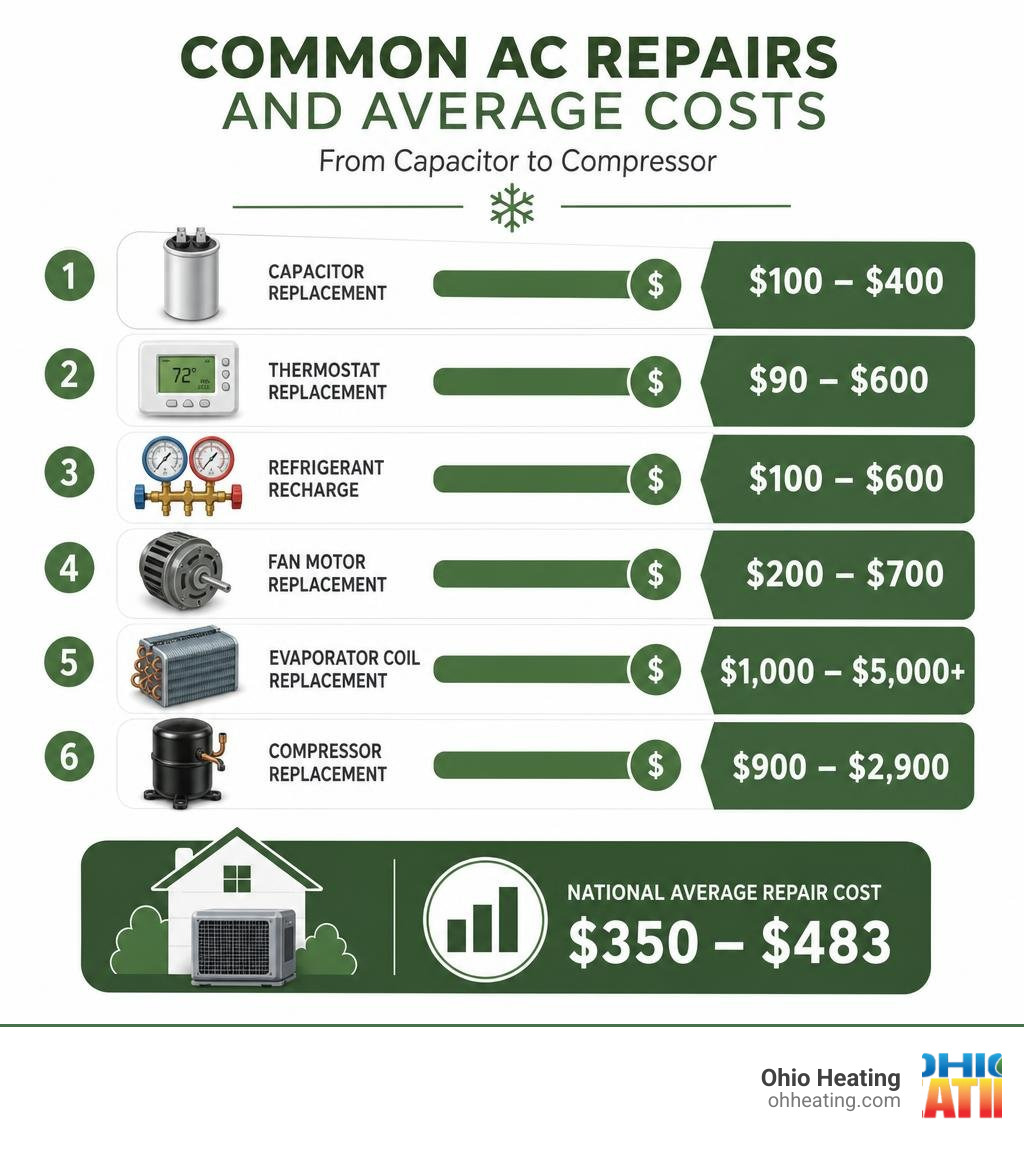
Here’s a quick snapshot of what homeowners pay most often:
| Repair Type | Typical Cost Range |
|---|---|
| Capacitor replacement | $100 – $400 |
| Thermostat replacement | $90 – $600 |
| Refrigerant recharge | $100 – $600 |
| Fan motor replacement | $200 – $700 |
| Evaporator coil replacement | $1,000 – $5,000+ |
| Compressor replacement | $900 – $2,900 |
| National average repair | $350 – $483 |
The national average sits around $350 to $483, with most repairs landing somewhere between $221 and $1,052. Minor fixes can run as low as $100. A major component failure — like a compressor or evaporator coil — can push past $2,000 or more.
Knowing the range before a technician arrives puts you in a much stronger position. You’ll know if a quote is fair, when to push back, and when replacing the system altogether might actually save you money.
I’m Jill Frattini, Service Coordinator at Ohio Heating in Columbus, OH, and I’ve spent years helping property managers and homeowners navigate the real cost to fix AC in their homes — from a simple capacitor swap to a full system diagnosis. In this guide, I’ll walk you through exactly what drives those costs so you can make a confident, informed decision.
Key cost to fix ac in house vocabulary:
- Central Air Repair
- Cost of Central Air Repair
The Real Cost to Fix AC in House: National vs. Local Averages
When your air conditioner stops blowing cold air on a humid July afternoon in Central Ohio, national averages only tell part of the story. While the national average cost to repair a central air conditioner ranges from $221 to $1,052, local factors such as regional labor rates, local climate demands, and regional regulatory standards play a significant role in what you actually pay out of pocket.
Nationally, most homeowners pay between $150 and $600 for common, non-emergency air conditioning repairs, with an overall average of $350 per repair visit.
Here in Columbus, Ohio, and the surrounding Central Ohio communities, our local average costs line up closely with these figures, though they lean slightly more affordable. In Ohio, the average AC repair cost is approximately $315, with most standard repairs falling into a comfortable $135 to $540 range.
Because we experience distinct seasonal shifts—with our cooling systems sitting idle for several months before being pushed to their limits during hot, sticky summer heatwaves—minor wear and tear can escalate quickly if left unaddressed. To better understand how local pricing trends and seasonal demands affect your budget, you can read our detailed breakdown on Average AC repair prices in Columbus, Ohio.
For a broader look at how these prices stack up against national benchmarks, check out this comprehensive Air conditioning repair cost guide.
Common AC Repairs and Price Breakdown
To help you budget for an unexpected cooling system breakdown, we have compiled a detailed breakdown of what you can expect to pay for specific parts and labor.
| Component / Repair | Average Part Cost | Average Installed Cost | Typical Repair Time |
|---|---|---|---|
| AC Capacitor | $20 – $60 | $100 – $400 | 1 Hour |
| Thermostat | $20 – $250 | $90 – $600 | 1 – 2 Hours |
| Condensate Drain Line Cleaning | $10 – $30 | $100 – $195 | 1 Hour |
| Condensate Pump | $40 – $80 | $100 – $165 | 1 Hour |
| Drain Pan | $50 – $150 | $150 – $350 | 1 – 2 Hours |
| Fuses and Relays | $10 – $50 | $75 – $290 | 1 Hour |
| Circuit Board | $50 – $200 | $75 – $600 | 1 – 2 Hours |
| Expansion Valve (TXV) | $100 – $250 | $100 – $700 | 2 – 3 Hours |
| Condenser Fan Motor | $100 – $300 | $200 – $700 | 1 – 2 Hours |
| Refrigerant Leak Detection & Fix | N/A | $225 – $1,000+ | 2 – 4 Hours |
| Refrigerant Recharge | N/A | $100 – $600 | 1 – 2 Hours |
| Evaporator Coil | $400 – $1,200 | $1,000 – $5,000+ | 3 – 5 Hours |
| Condenser Coil | $500 – $1,500 | $1,000 – $4,000+ | 3 – 5 Hours |
| Compressor | $600 – $1,800 | $900 – $2,900 | 3 – 5 Hours |
Hourly labor rates for licensed AC technicians in Central Ohio typically range from $75 to $150 per hour, depending on the complexity of the job, the accessibility of the unit, and whether you require standard business hours or emergency assistance.
Minor Repairs: Low-Cost to Fix AC in House
Minor repairs are the most common issues we encounter. They are usually resolved quickly in a single visit and do not require major system dismantling.
- Capacitor Replacement ($100 – $400): The capacitor acts like a temporary battery that gives your AC motor the high-voltage push it needs to start running. Over time, heat and electrical fluctuations degrade capacitors. Replacing one is a quick, routine fix.
- Thermostat Replacement ($90 – $600): If your cooling system won’t kick on, the culprit might be a faulty thermostat rather than the AC unit itself. A basic digital thermostat replacement sits at the lower end of the scale ($90–$150), while smart, Wi-Fi-enabled models range from $200 to $600 installed.
- Condensate Drain Line Cleaning ($100 – $195): Your air conditioner naturally pulls moisture out of the air as it cools. If the drain line becomes clogged with algae, dirt, or mold, water can back up, triggering a safety switch that shuts down your system. Clearing this blockage prevents water damage and restores operation.
For more details on how these smaller components affect your overall bill, check out this guide on AC repair cost by component.
Major Component Failures: High Cost to Fix AC in House
When major parts fail, the cost to fix AC in your house rises significantly due to the price of the specialized components and the extensive labor required to safely extract and replace them.
- Compressor Replacement ($900 – $2,900): Often called the “heart” of your air conditioning system, the compressor circulates refrigerant between the indoor and outdoor units. If the compressor fails on an older system, the cost of parts, labor, and new refrigerant can make a full system replacement a more practical choice.
- Evaporator Coil Replacement ($1,000 – $5,000+): Located inside your home, the evaporator coil absorbs heat from your indoor air. Over time, these coils can develop microscopic leaks due to corrosion. Replacing a coil requires recovering the old refrigerant, installing the new coil, testing for leaks, and recharging the system.
- Condenser Coil Replacement ($1,000 – $4,000+): Located in the outdoor unit, the condenser coil releases the heat absorbed from your home. Because it is exposed to the elements, it can suffer damage from dirt, debris, or physical impacts.
If you are facing a major component breakdown, you can read our expert analysis on the Average cost of central air repair to help you weigh your options.
Key Factors That Influence Your AC Repair Bill
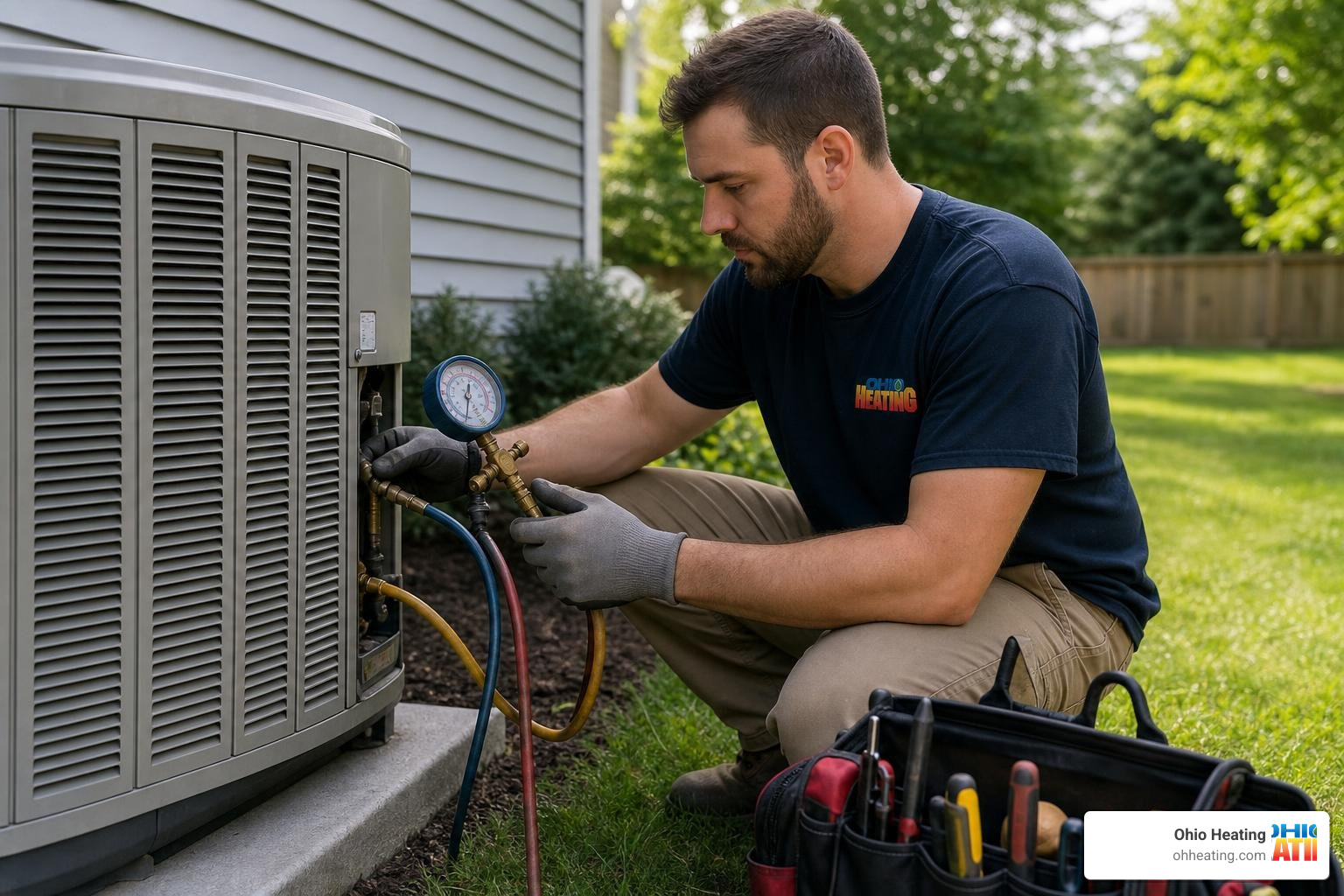
Several variables dictate where your final invoice will land. Understanding these factors can help you avoid surprise charges when the technician presents their estimate.
- Refrigerant Type (R-22 vs. R-410A): The type of refrigerant your system uses is one of the most critical cost drivers. Older air conditioners manufactured before 2010 run on R-22 (commonly known as Freon). Due to environmental regulations, R-22 has been completely phased out, making remaining recycled supplies incredibly scarce and expensive—often running $100 to $200+ per pound. A simple leak repair and recharge on an R-22 system can easily top $1,000 to $2,400. Newer systems utilize R-410A, which is far more affordable and widely available, keeping recharge costs closer to $100–$350.
- Emergency vs. Scheduled Service: AC systems have a habit of breaking down at the worst possible times—like a holiday weekend or a scorching Sunday afternoon. Emergency or after-hours service calls typically carry a flat diagnostic surcharge of $75 to $250, or labor rates that are 1.5x to 2.5x higher than standard weekday rates.
- Accessibility and Site Conditions: If your indoor evaporator coil is tucked away in a tight attic, crawlspace, or behind a structural wall, it adds significant labor hours. Difficult access can add $150 to $750 to a major repair bill simply because of the extra time and safety precautions required.
To see how these variables are itemized on a professional estimate, review this comprehensive AC service price list.
Repair vs. Replace: When to Walk Away from an Old AC
When the cost to fix AC in your house starts climbing into the thousands, you face a tough decision: do you keep patching up an old system, or is it time to invest in a brand-new, high-efficiency cooling unit?
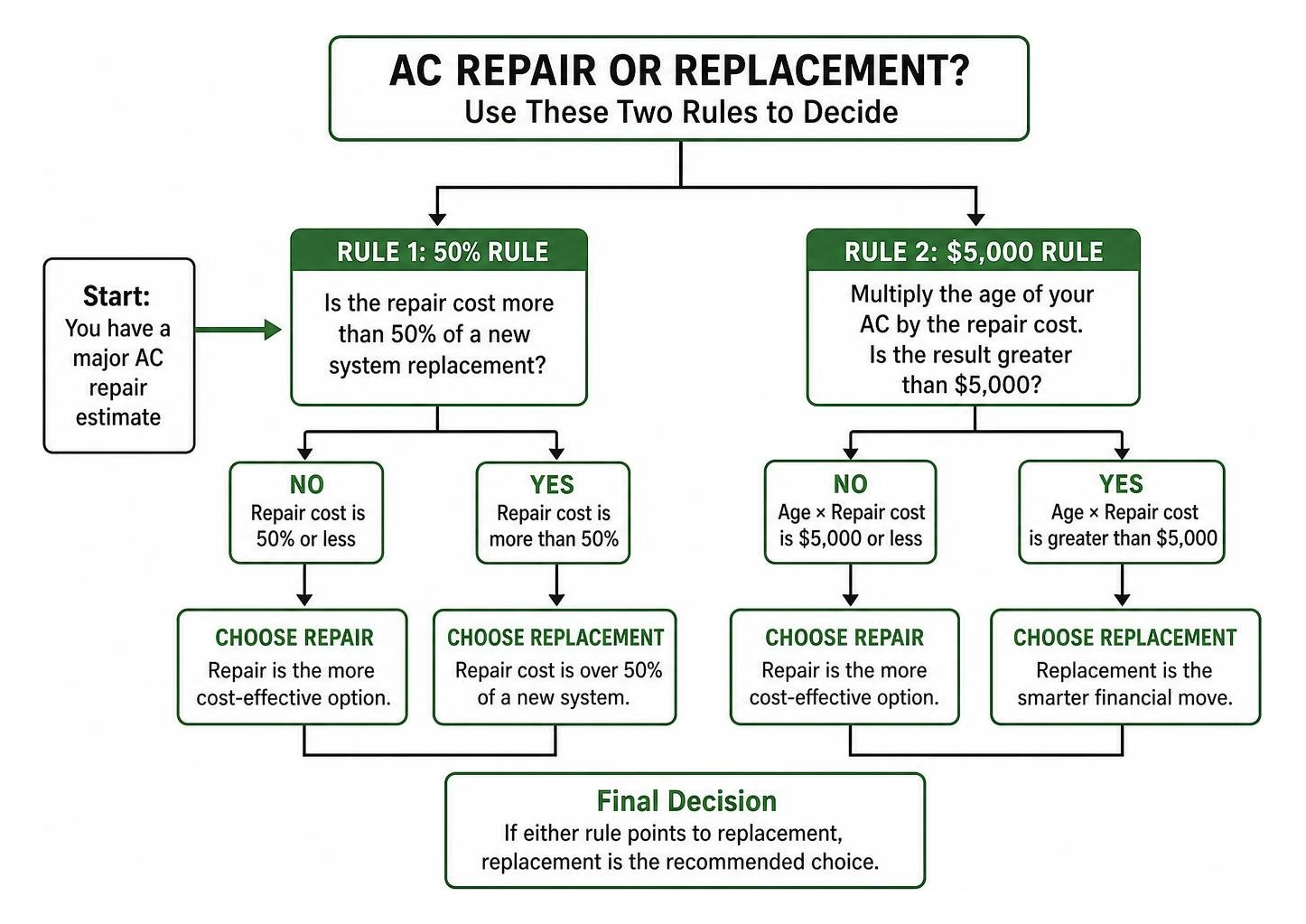
To make a financially sound decision, air conditioning professionals rely on two main rules of thumb:
- The 50% Rule: If the cost of the proposed repair exceeds 50% of the cost of a complete system replacement, you should put that money toward a new unit.
- The $5,000 Rule: Multiply the age of your air conditioner by the cost of the repair. If the result is greater than $5,000, replacement is generally the smarter financial move. For example, if a 12-year-old system needs a $600 fan motor replacement, the calculation is $600 x 12 = $7,200. Because this exceeds $5,000, replacing the unit is likely the better long-term choice.
Federal SEER2 (Seasonal Energy Efficiency Ratio) efficiency standards also come into play. Modern cooling units are significantly more efficient than those built a decade ago. Upgrading an old SEER 10 system to a modern SEER2 unit can lower your monthly energy consumption by 20% to 40%, helping the new system pay for itself over time.
To dive deeper into this decision, read our guide on Whether to repair or replace your air conditioning unit.
If you want to estimate what a new system would run for your specific home size, you can check out this AC replacement cost calculator. To make sure you don’t overpay or fall victim to inflated quotes, we also recommend reading our breakdown on Understanding new AC unit costs.
How To Save Money on AC Repairs and Maintenance
The absolute best way to lower the cost to fix AC in your house is to prevent major breakdowns from happening in the first place.
By staying proactive, you can keep your system running smoothly and keep your hard-earned money in your wallet.
- Change Your Air Filters Regularly: A dirty, clogged air filter blocks airflow, forcing your air conditioner to work twice as hard to cool your home. This extra strain can cause your evaporator coil to freeze over, destroy your blower motor, or trigger a complete system shutdown. Check your filter monthly and replace it at least every 90 days.
- Schedule a Spring Tune-Up: Having a professional inspect and clean your system before the summer heat hits is incredibly cost-effective. A routine tune-up ($75–$200) allows technicians to catch small issues—like a weakening capacitor or a tiny refrigerant leak—before they turn into a $1,000 emergency breakdown in August.
- Keep the Outdoor Unit Clear: Keep grass, weeds, leaves, and debris at least two feet away from your outdoor condenser unit. Restricted airflow around the condenser forces the system to run hotter and less efficiently, accelerating wear on the compressor.
To learn more about what goes into professional cleaning and how it protects your system, read The Ultimate Guide to AC Cleaning Services Charges and Avoiding Sticker Shock.
Frequently Asked Questions About AC Repair Costs
How long does a typical AC repair take?
Most minor air conditioner repairs—such as swapping out a bad capacitor, replacing a thermostat, or clearing a clogged condensate line—can be completed in 1 to 2 hours. A standard diagnostic assessment usually takes 30 to 60 minutes. Major component replacements, such as installing a new compressor or evaporator coil, are more labor-intensive and typically take 3 to 5 hours.
Why is my AC running but not blowing cold air?
If your air conditioner is running but blowing warm or lukewarm air, it is usually caused by one of three issues:
- Restricted Airflow: A heavily clogged air filter or dirty evaporator coil blocks air from passing through the system properly.
- Frozen Evaporator Coil: If airflow is restricted or refrigerant is low, the indoor coil can drop below freezing, turning condensation into ice and blocking all cooling.
- Low Refrigerant: A leak in your refrigerant lines prevents the system from absorbing heat from your indoor air.
What is included in a standard AC service call?
A standard AC service call includes a professional diagnostic assessment where a certified technician inspects your system’s electrical connections, measures refrigerant levels, tests safety switches, and identifies the root cause of the malfunction. Once the diagnosis is complete, you should receive a transparent, written estimate detailing the necessary parts and labor before any repair work begins.
Conclusion
A broken air conditioner during a hot Ohio summer is stressful, but understanding the real cost to fix AC in your house helps you make the right choice for your home and your budget. Whether you need a simple, quick capacitor fix or are weighing a major component replacement, having a transparent, reliable partner makes all the difference.
Since 1999, the team at Ohio Heating has provided expert residential cooling services throughout Columbus and Central Ohio. Our absolute priority is ensuring your home remains comfortable and reliable all summer long, protecting you from extreme indoor temperatures and unexpected, high-pressure repair bills.
If your air conditioner is acting up, blowing warm air, or making strange noises, don’t wait for a complete breakdown. Check out our AC blowing warm air troubleshooting guide for quick DIY checks, or contact the Columbus cooling experts at Ohio Heating today to schedule a professional, transparent diagnostic visit.