
What Does It Cost to Replace an Air Conditioner in 2026?
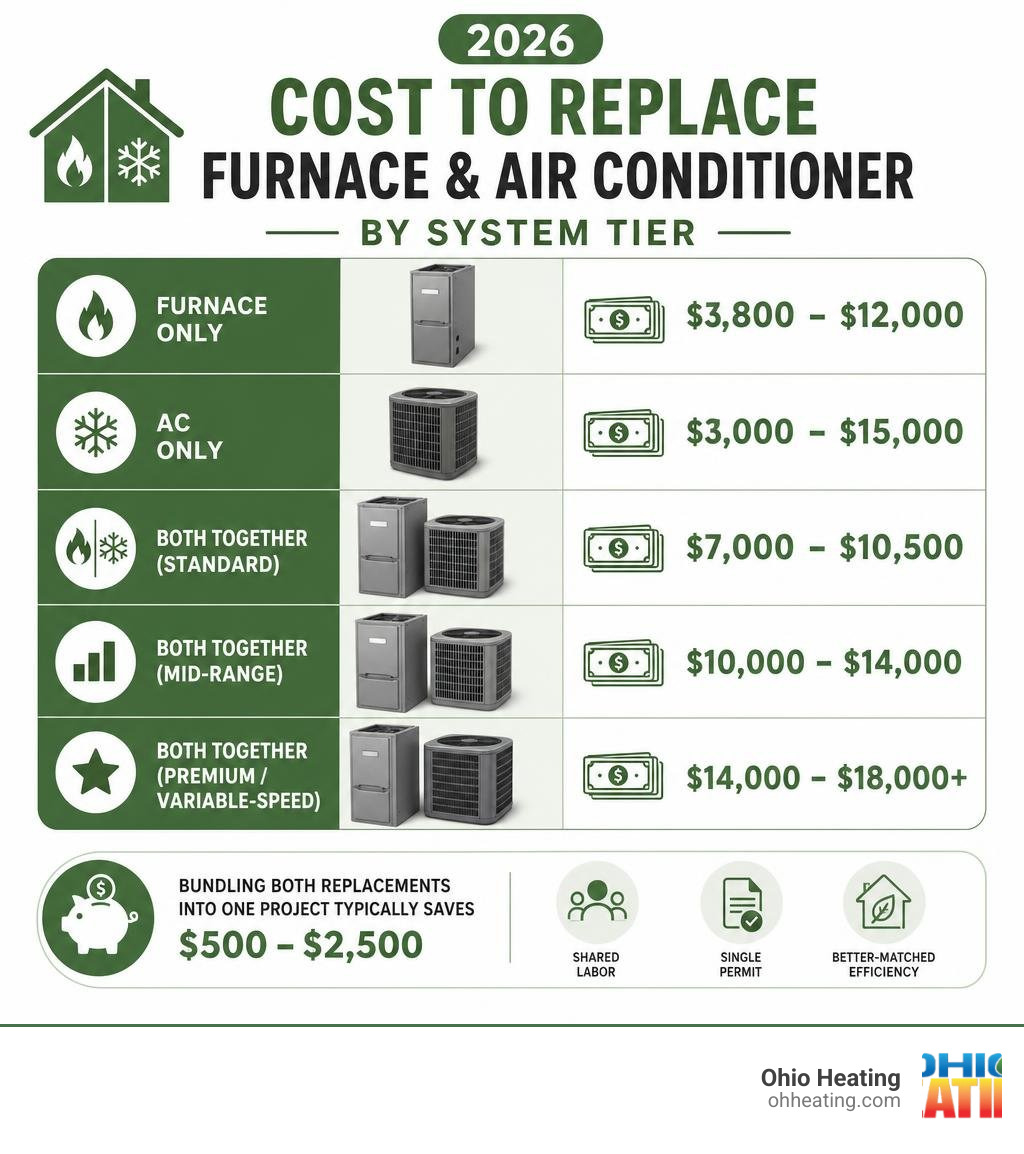
The cost to replace air conditioner systems typically ranges from $3,000 to $15,000 for most homes in 2026, with a national average around $6,500 to $9,500 fully installed.
Here’s a quick snapshot of what to expect:
| Replacement Scenario | Typical Installed Cost (2026) |
|---|---|
| AC only (standard) | $3,000 – $6,500 |
| AC only (mid-range) | $6,500 – $10,000 |
| AC only (premium/variable-speed) | $10,000 – $15,000+ |
Replacing your cooling system is a significant investment, and the pricing isn’t always straightforward. Costs shift based on your home’s size, the efficiency ratings you choose, your existing ductwork condition, and where you live. For homeowners and property managers in Columbus, OH, regional labor rates and local permitting requirements can affect final costs.
I’m Jill Frattini, Service Coordinator at Ohio Heating in Columbus, OH, and I’ve spent years coordinating HVAC projects — including comprehensive AC replacements — for residential clients across Central Ohio. In this guide, I’ll walk you through everything that affects the cost to replace an air conditioner so you can budget with confidence and avoid surprise charges.
Common cost to replace air conditioner vocab:
- central air repair
- cost of central air repair
Understanding the Cost to Replace Air Conditioner Systems
While home comfort setups can involve multiple components, this portion of our guide focuses deeply on the cooling side of your home comfort setup—specifically, the air conditioning system. Because Central Ohio summers bring heavy humidity and high temperatures, getting your AC replacement right is crucial for both comfort and your wallet.
An air conditioner replacement typically costs between $3,000 and $15,000, depending on the equipment type, efficiency rating, and installation complexity. When you install a new system, you are primarily paying for a split system. A split system consists of an outdoor condenser unit (the metal box that sits outside your home) and an indoor evaporator coil (which sits on top of your indoor blower assembly).
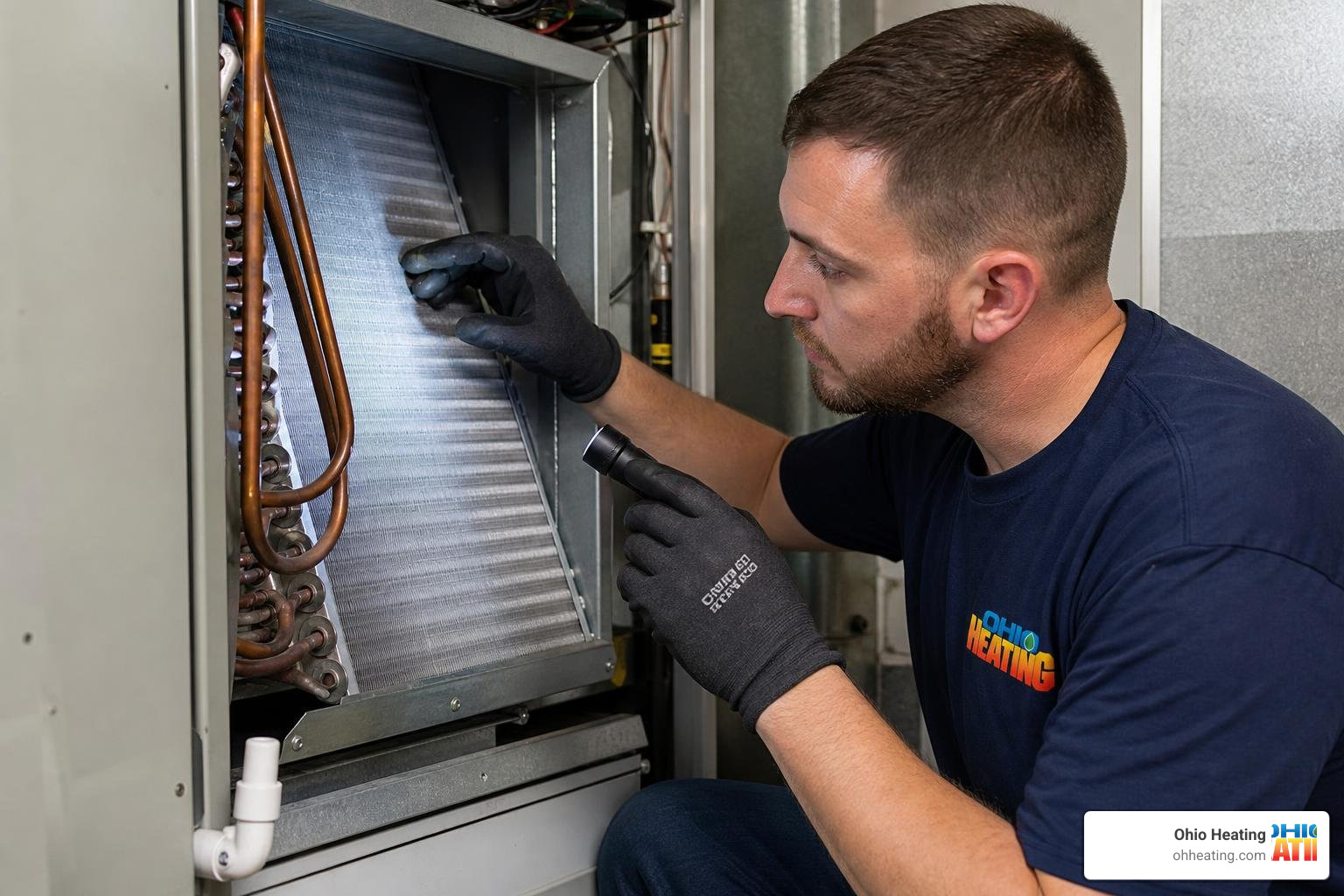
The outdoor unit and indoor coil must work in perfect harmony to transfer heat out of your home. If you want to dive deeper into how these elements come together and what local homeowners typically pay, check out our guide on Air Conditioning Installation Costs Columbus Ohio Insights.
How Cooling Capacity Affects the Cost to Replace Air Conditioner Units
Air conditioners are not one-size-fits-all appliances. They are sized in “tons,” which refers to their cooling capacity, not their physical weight. One ton of air conditioning can remove 12,000 BTUs (British Thermal Units) of heat from your home per hour. Residential cooling systems typically range from 1.5 to 5 tons.
To determine the exact size your home needs, we perform a Manual J load calculation. This scientific calculation considers several factors:
- The total square footage of your home
- The number of windows and doors, plus which direction they face
- Your home’s insulation levels
- Local climate patterns in Central Ohio
- The number of occupants in the household
Sizing is incredibly important. According to the Department of Energy, over 50% of residential HVAC systems in the United States are sized incorrectly. If a system is oversized, it will turn on and off rapidly (called short-cycling), which wears out the compressor prematurely and fails to remove humidity from the air. If it is undersized, it will run constantly, skyrocketing your utility bills while failing to keep you cool on a hot July afternoon.
To get a rough estimate of the system size and baseline equipment cost your home might require, you can use the HVAC replacement cost calculator | BTU Size.
Long-Term Savings: Efficiency Ratings and the Cost to Replace Air Conditioner Systems
When shopping for a new air conditioner, you will see a lot of references to SEER2 (Seasonal Energy Efficiency Ratio 2) ratings. SEER2 is the updated industry standard used to measure the cooling efficiency of an air conditioner under realistic operating conditions.
The baseline efficiency standards set by federal regulations require a minimum of 13.4 SEER2 in northern climates like Ohio. However, modern systems can reach efficiency levels of 21+ SEER2.
- Standard Efficiency (13.4 to 15 SEER2): These systems have the lowest upfront purchase price. They are reliable, single-stage units, but they will not offer the lowest monthly operating costs.
- Mid-Tier Efficiency (16 to 18 SEER2): These systems often feature two-stage compressors. They can run at a lower speed for mild days and kick into high speed when the heat peaks, offering a great balance of upfront cost and monthly energy savings.
- High-Efficiency (19+ SEER2): These premium systems utilize variable-speed technology. The compressor can adjust its output in tiny increments (sometimes up to 700 different levels) to maintain your indoor temperature within half a degree. While the upfront investment is higher, they provide substantial savings on your monthly electricity bills over the system’s lifespan.
Choosing a higher efficiency rating will increase your initial estimate, but the long-term energy savings can offset the difference in four to seven years. To make sure you do not pay more than you need to, read our breakdown on how to avoid overpaying in Don’t Get Quoted 30k: Understanding New AC Unit Costs.
Key Factors Influencing Your AC Installation Estimate
An AC estimate is made up of much more than just the price of the metal box sitting in your yard. The physical layout of your home, the condition of your infrastructure, and the complexity of the installation process play massive roles in the final number.
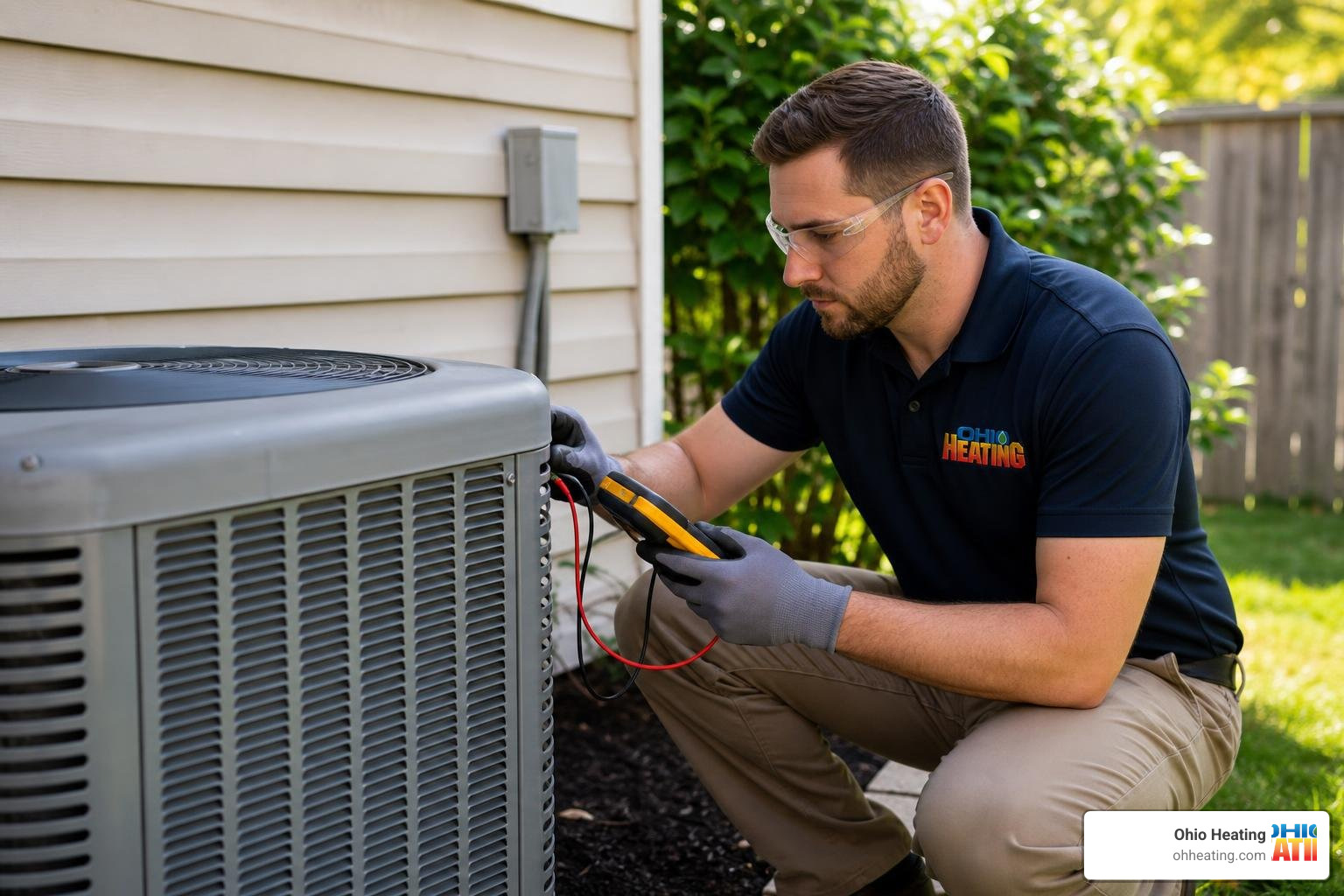
When we evaluate a home for a new air conditioner, we look at the entire system. This includes the refrigerant lines that connect the indoor and outdoor units, the electrical service panel, and the ductwork. If you want to learn more about how to navigate these choices and maximize your budget, take a look at our practical tips on How to Upgrade Your HVAC and Save Money.
Labor and Installation Complexity
Labor makes up roughly 35% to 55% of the total installation bill. A standard, straightforward replacement where we swap out an old outdoor condenser for a new one in the same location typically takes a two-person crew about 8 to 14 hours.
However, complexity factors can quickly add to those labor hours:
- System Location: If your indoor coil is located in a tight crawlspace or a hard-to-reach attic rather than an open basement, the installation will take longer. An attic installation requiring new refrigerant lines and complex safety pans can take up to five days, compared to a standard basement swap that takes just one or two days.
- Permits and Code Compliance: Local municipalities across Central Ohio require mechanical permits and post-installation inspections to ensure safety and code compliance. Mechanical permits typically run between $75 and $400.
- Electrical Upgrades: Modern high-efficiency systems sometimes require different electrical breakers or even an upgrade to your home’s main electrical panel. An electrical panel upgrade can add $1,100 to $3,500 to a project.
If you are currently dealing with a system that is struggling or you want to discuss your sales options, you can explore our Air Conditioner Repairs and Sales page to see how we handle these complex logistics.
Ductwork and Airflow Optimization
Your new air conditioner can only perform as well as the ductwork it is connected to. Ductwork is the circulatory system of your home’s comfort. If your ducts are leaky, crushed, or improperly sized, your brand-new, high-efficiency AC unit could lose 15% to 25% of its cooling performance.
During an estimate, we measure the static pressure of your duct system using a manometer. This tells us if your ducts are restricting airflow. Common ductwork modifications include:
- Replacing crushed or fallen flexible duct runs
- Sealing leaks at the plenum and main trunk lines to prevent cool air from escaping into your basement or attic
- Adding return air drops to improve the system’s ability to pull warm air out of your living spaces
Additionally, we look at your air filtration needs. High-efficiency air filters (with higher MERV ratings) protect your new indoor evaporator coil from dust and debris buildup. However, thicker filters require proper duct design so they do not restrict airflow and cause your indoor coil to freeze up.
Frequently Asked Questions About Cooling System Upgrades
Making a decision about a new air conditioning system can feel overwhelming. To help you weigh your options, we have compiled a quick comparison table of standard versus high-efficiency systems, followed by answers to the questions we hear most often from Columbus homeowners.
| Feature | Standard Efficiency (13.4 – 14.3 SEER2) | High-Efficiency (16 – 20+ SEER2) |
|---|---|---|
| Upfront Cost | Lowest ($3,000 – $6,500) | Higher ($5,500 – $12,000+) |
| Compressor Type | Single-Stage | Two-Stage or Variable-Speed |
| Humidity Control | Basic | Exceptional (runs longer, slower cycles) |
| Monthly Energy Savings | Baseline | 20% to 40% savings compared to older units |
| Sound Levels | Standard | Extremely quiet (insulated compartments) |
How long does a new central air conditioner typically last?
A well-installed, high-quality central air conditioner typically lasts between 12 and 17 years. In some cases, with meticulous care, they can last up to 20 years.
The single biggest factor in system durability is preventative maintenance. Just like changing the oil in your car, scheduling annual professional cleanings and safety checks keeps your system running smoothly. Neglecting maintenance can cut your system’s lifespan short by 5 to 10 years and void your manufacturer’s parts warranty.
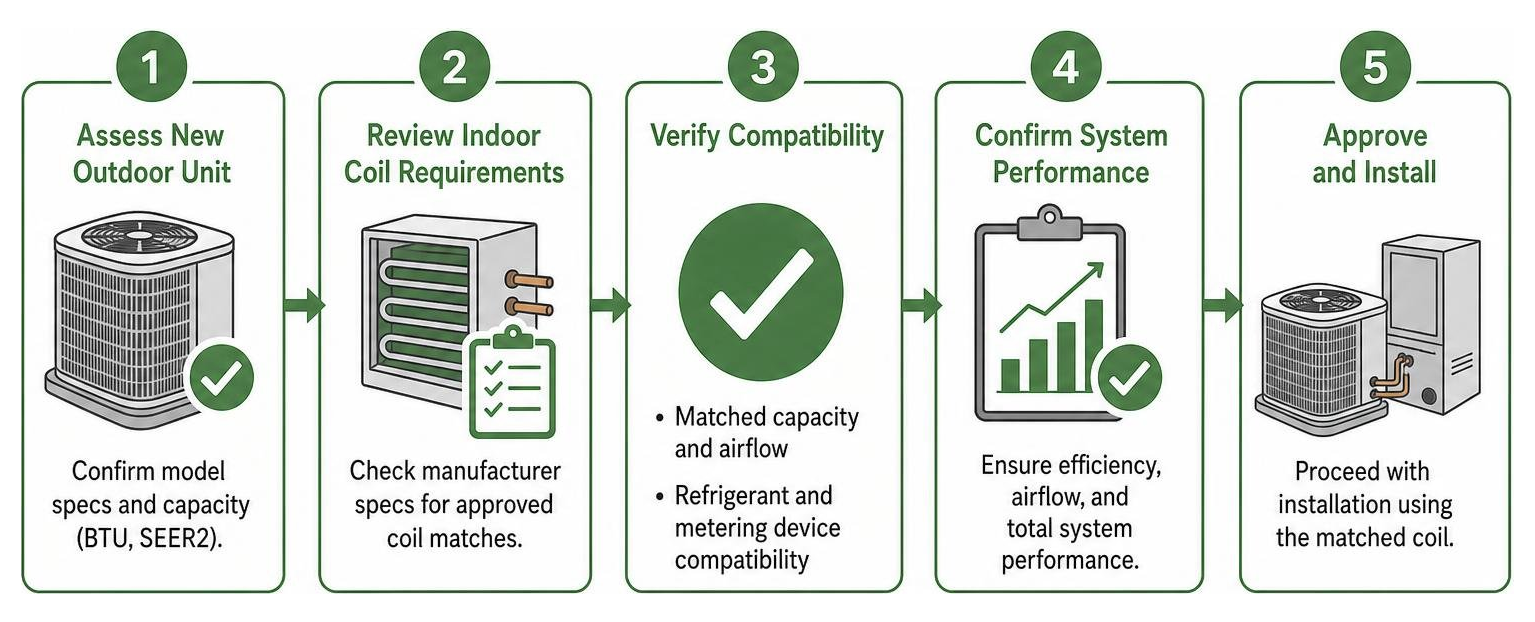
Can I replace just the outdoor AC unit and keep the old indoor coil?
We strongly advise against this. While it might seem like a quick way to save money upfront, mixing a brand-new outdoor condenser with an old, worn-out indoor coil is a recipe for trouble.
Air conditioning systems are engineered and tested as matched systems. When you mix old and new components:
- Reduced Efficiency: Your new unit will not achieve its rated SEER2 efficiency. In fact, a mismatched system can drop your effective efficiency by 10% to 15%.
- Premature Failure: Old coils often contain trace amounts of old refrigerant and mineral oil that are incompatible with the synthetic oils used in modern R-410A or newer low-GWP refrigerant systems. This contamination can destroy your new compressor.
- Voided Warranty: Most major manufacturers will not honor their 10-year parts warranty unless you can prove that the outdoor unit was installed with a certified, compatible indoor coil.
What is the best time of year to schedule an AC replacement?
The absolute best time to schedule an AC replacement is during the “shoulder seasons” of spring (March to May) and fall (September to November).
During the peak heat of summer, HVAC companies are flooded with emergency repair calls, which means scheduling a full replacement can take longer. By planning your replacement proactively during the mild spring or fall months, you benefit from:
- Flexible Scheduling: You can pick an installation date that works best for your calendar.
- Off-Peak Pricing: Many manufacturers and local contractors offer special promotions, rebates, or flexible financing options during these slower periods to keep their crews busy.
- Stress-Free Installation: You won’t have to suffer through several days of a hot house while your system is being swapped out.
Conclusion
Investing in a new central air conditioning system is one of the most important decisions you will make for your home’s comfort and energy efficiency over the next two decades. By understanding the key factors that drive the cost to replace air conditioner systems—from cooling capacity and SEER2 ratings to labor complexity and ductwork condition—you can make an informed choice that fits both your budget and your lifestyle.
Since 1999, the team at Ohio Heating has been helping families across Columbus and Central Ohio stay cool and comfortable. We pride ourselves on providing honest, transparent pricing, performing detailed Manual J load calculations, and ensuring your new cooling system is installed to the highest professional standards.
If your current cooling system is starting to show its age, or if you are dealing with a system that is actively blowing warm air, do not wait for a complete breakdown in the middle of a summer heatwave. You can read our handy guide on AC Blowing Warm Air Troubleshooting to see what might be causing the issue, or contact us today to schedule a free, no-obligation in-home estimate. We are here to help you find the perfect cooling solution for your Central Ohio home!