
Furnace tune-up cost is one of the few heating expenses you can actually plan for, because you choose the date and you know the scope before the technician arrives. With a no-heat call in January, you don’t get to pick the date or the scope. ENERGY STAR recommends a heating check-up each fall, before contractors get busy with winter calls (ENERGY STAR maintenance checklist).
This guide explains what a tune-up covers, what changes the price, and how a yearly visit protects your furnace and your family. It’s written for central Ohio homeowners with a gas furnace who want to set aside the right amount for heating care this season.
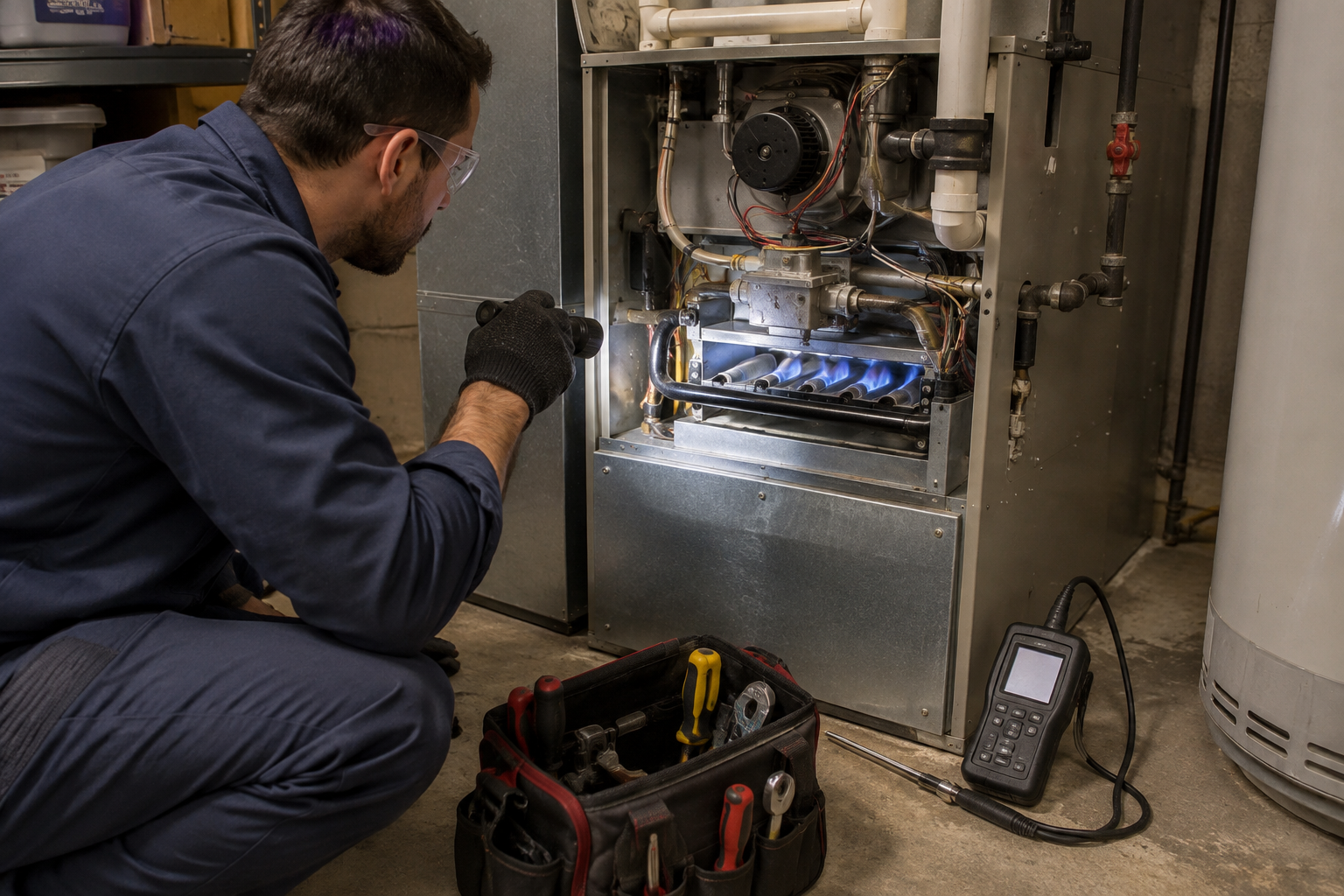
What a furnace tune-up includes
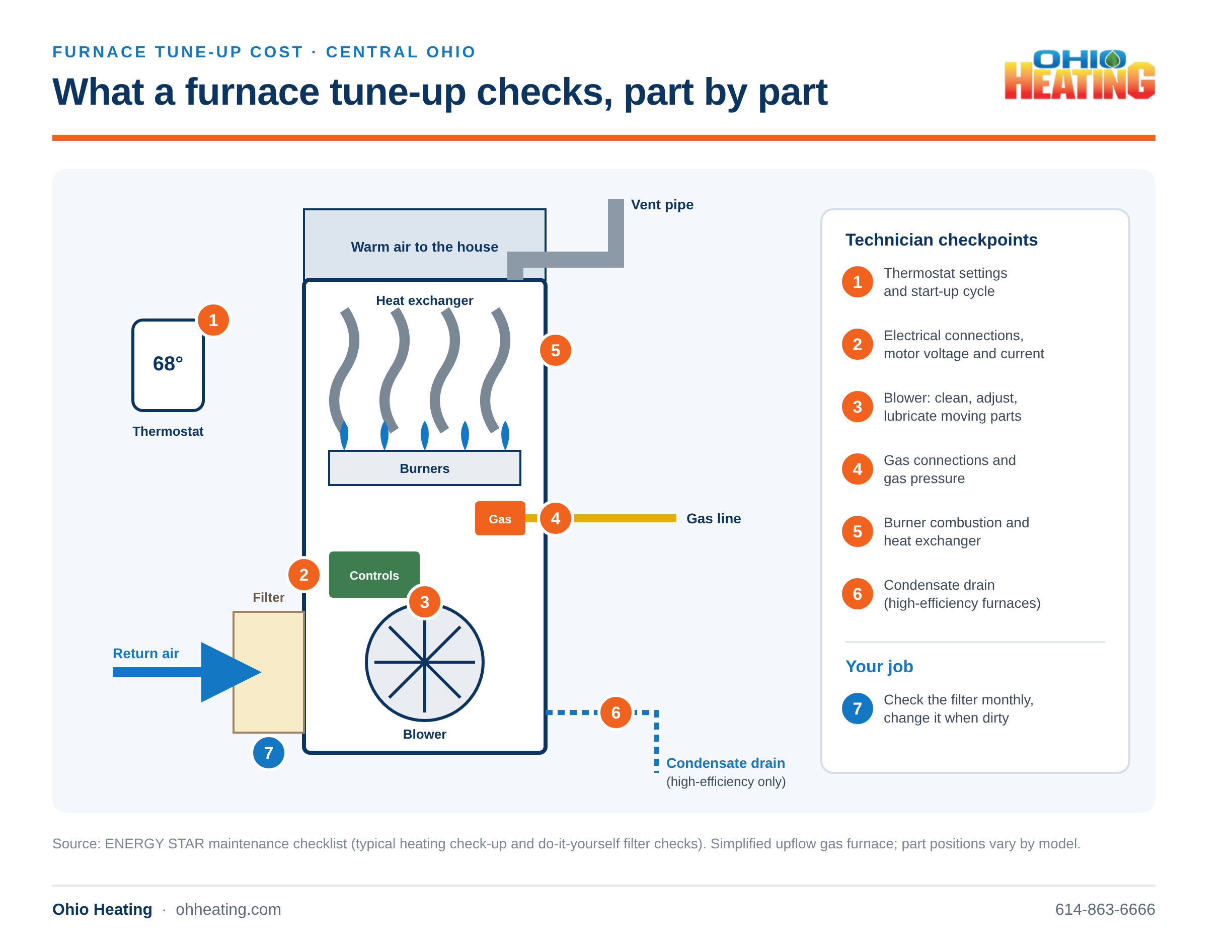
A tune-up is a planned inspection and cleaning visit. ENERGY STAR lists what a typical heating check-up should cover:
- Check the thermostat settings.
- Tighten electrical connections and measure voltage and current on the motors.
- Lubricate moving parts.
- Inspect the condensate drain on a high-efficiency furnace.
- Check the controls and the starting cycle, so the furnace starts, runs and shuts off the right way.
- Check the gas connections, gas pressure, burner combustion and heat exchanger.
Our furnace tune-up checklist walks through each step of the visit in more detail.
What you pay for in each part of the visit
Each task on that list has a reason behind it. The table below shows what ENERGY STAR says can go wrong when that part of the furnace is skipped.
| Tune-up task | What ENERGY STAR says can happen without it |
|---|---|
| Tighten electrical connections. | Unsafe operation and a shorter life for major parts. |
| Lubricate moving parts. | Friction in the motors raises your electricity use. |
| Inspect the condensate drain. | Water damage in the house and indoor humidity problems. |
| Check gas connections and pressure. | A fire hazard and possible health problems. |
| Check the burner and heat exchanger. | A dirty burner or cracked heat exchanger makes the furnace run less safely. |
| Clean and adjust the blower. | Airflow problems can cut system efficiency by up to 15%. |
All rows come from the ENERGY STAR maintenance checklist.
What changes your furnace tune-up cost
Prices vary from one company to the next, so you want to compare what each visit includes rather than the quoted price alone. These are the main things that move the price:
- A one-time visit or a plan. A single fall visit covers the furnace. A maintenance plan bundles the heating visit with a cooling visit in the spring.
- The type of furnace. A condensing furnace has a condensate drain and trap to check. An older furnace may need more cleaning.
- What the technician finds. A tune-up covers inspection, cleaning and adjustment. A worn part or a failed test turns into a separate furnace repair, priced on its own.
- When you book. ENERGY STAR notes that contractors get busy once winter comes. If you book in the fall, you can pick a time that works for you.
At Ohio Heating, you get the repair price before any repair work starts, so a tune-up doesn’t turn into an open-ended bill.
Why the cost of a tune-up is worth it
ENERGY STAR’s heating and cooling guide says dirt and neglect are the top causes of heating and cooling system inefficiency and failure (ENERGY STAR guide). The cost of a yearly tune-up pays for the routine maintenance that guide calls for.
Safety is the bigger reason. The CDC advises having your heating system, water heater and other gas-burning appliances serviced by a qualified technician each year to help prevent carbon monoxide poisoning (CDC). The burner and heat exchanger checks are the key parts of the visit that will look for those risks.
Columbus winters also put real hours on a gas furnace. The National Weather Service lists the normal January low at 22.0°F for 1991 to 2020 (NWS Wilmington). Furnaces that run that hard benefit from a check before the season starts, while a small fix is still small.
One-time tune-up or maintenance plan
Ohio Heating offers both options. The Furnace Clean & Check is a one-time safety check of your furnace. The Safeguard Preventive Maintenance Program includes one fall or winter clean and check on your heating unit and one spring or summer clean and check on your cooling unit each year. Current pricing and plan details are on our maintenance plans page.
The plan can make sense if you have central air as well as a furnace, since it covers both seasons. A one-time visit can be the simpler choice if you only need the heating side checked this fall. Either way, the furnace maintenance itself is the same safety check.
How to keep tune-up costs down
The professional visit still matters, but you can make it go faster and keep small problems from growing:
- Check your air filter once a month and change it when it’s dirty. ENERGY STAR warns that a dirty filter can raise energy costs and damage your equipment, leading to early failure. Our MERV rating filter guide helps you pick the right one.
- Clear boxes and storage away from the furnace so the technician can reach the panels.
- Write down anything odd you’ve noticed, such as noises, smells or short run times, and share it at the start of the visit.
- Book in the fall. ENERGY STAR suggests tying the check-ups to the spring and fall time changes so you remember them.
Frequently asked questions
How much does a furnace tune-up cost in Columbus?
Furnace tune-up cost varies by company and by what the visit covers. Ohio Heating lists the current price of its Furnace Clean & Check on its maintenance plans page, so you know the cost before you book.
How often should I get a furnace tune-up?
Once a year, in the fall. ENERGY STAR recommends a yearly heating check-up, and the CDC advises yearly service of gas-burning appliances to help prevent carbon monoxide poisoning.
Is a tune-up the same as a diagnostic visit?
No. A tune-up is planned maintenance on a furnace that’s working. A diagnostic visit is for a furnace that has a problem, and it covers the technician’s time to find the cause.
Does a tune-up include repairs?
A tune-up covers inspection, cleaning and adjustment. If the technician finds a part that needs replacing, you get the repair price before any work begins.
Can I do my own furnace tune-up?
You can check and change the filter yourself. The gas pressure, combustion and heat exchanger checks need a qualified technician with the right tools.
A yearly tune-up is a modest, planned expense that helps protect your furnace and keep your family safe through a Columbus winter. For furnace tune-ups and heating service anywhere in Central Ohio, call Ohio Heating at 614-863-6666 or request a visit at ohheating.com.