
The first signs that your furnace is going out tend to show up in the fall time, when the heat starts running daily again. Catching them in November will give you time to plan for a furnace repair or replacement before the December and January cold sets in. ENERGY STAR suggests you consider replacing a furnace once yours is more than 15 years old (ENERGY STAR), so the age of your furnace is the first thing you want to check.
Each sign listed below says what it could indicate and what to do next. Some are simple fixes, and others mean the end is near.
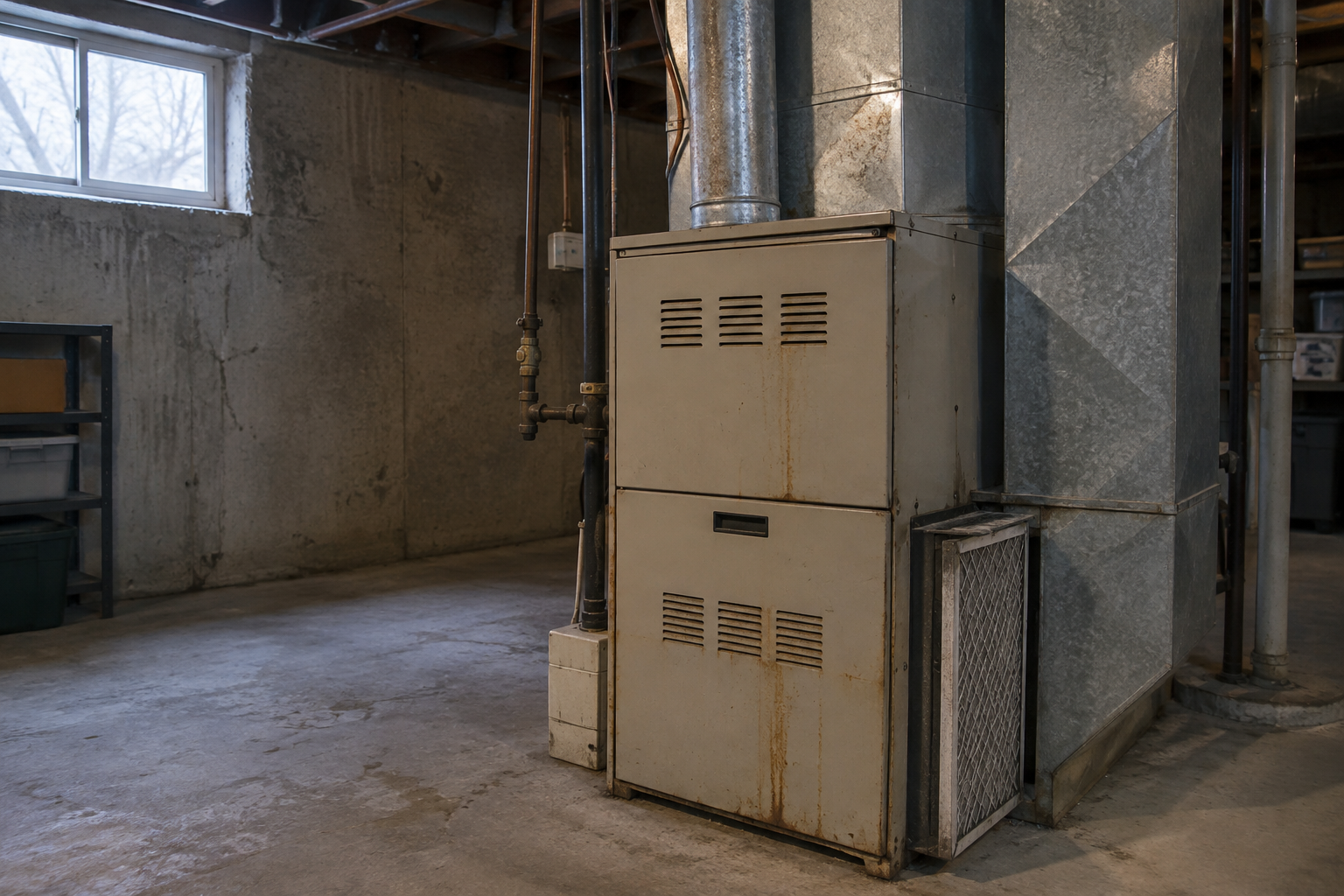
1. Your energy bills keep going up
ENERGY STAR lists frequent repairs combined with rising energy bills as a sign that it may be time to replace your heating equipment, because the furnace may have become less efficient. Compare this winter’s gas bills with the same months last year. If usage climbs while the weather and your thermostat setting stay about the same, that means the furnace is working harder to heat the house.
A dirty filter can cause the same symptom. ENERGY STAR warns that a dirty filter can raise energy costs and damage your equipment, leading to early failure (ENERGY STAR maintenance checklist). Check the filter first, since it’s going to be the simplest fix.
2. Some rooms stay too cold
Rooms that are too hot or too cold are included in the same ENERGY STAR list. The cause could be the furnace, the ducts, or the insulation, so a technician should check all three before deciding which is the culprit. If the vents blow cool air, our guide to a furnace not blowing hot air covers the most common causes for that.
3. New noises when the heat comes on
A noisy heating system is another warning sign ENERGY STAR lists. Pay attention to new sounds, not the normal hum of the blower. Banging, squealing or rattling noises that weren’t there last winter are worth a service call. A technician can tell you whether the noise comes from a worn part, loose panels or the ductwork.
4. The furnace turns on and off too often
A furnace that runs for a few minutes, shuts off and starts again is short cycling. It can wear parts faster and leave rooms uneven. Start by checking the thermostat. Make sure it’s set to heat, the batteries are fresh and it isn’t sitting near a heat source. If the thermostat checks out, read our post on furnace short cycling for the other common causes.
A furnace that won’t start at all is a different problem. Our furnace won’t turn on guide walks you through the safe checks you can do yourself.
5. Safety warning signs
Some signs mean you should stop using the furnace until a technician checks it. ENERGY STAR notes that a dirty burner or a cracked heat exchanger can make a furnace run less safely. Our post on cracked heat exchanger symptoms explains what to look for.
Carbon monoxide (CO) is the main risk. The CDC lists headache, dizziness, weakness, upset stomach, vomiting, chest pain, and confusion as the most common symptoms of CO poisoning (CDC). If your CO alarm sounds, the U.S. Consumer Product Safety Commission says to move outside to fresh air right away and call 911 (CPSC).
A burning smell in the first days of the season is often dust on the burners. If it lasts, our furnace burning smell guide explains when to call for a technician.

Signs your furnace is going out: repair or replace
One sign on its own often points to a repair. Several signs together on an older furnace indicate it is likely time for a replacement. The table below sums up what each sign can mean.
| Sign | What it can point to | First step |
|---|---|---|
| Rising energy bills. | Dirty filter or a furnace losing efficiency. | Check the filter, then compare bills. |
| Cold rooms. | Furnace, duct or insulation problems. | Have a technician check all three. |
| New noises. | A worn part, loose panels or ductwork. | Book a service call. |
| Short cycling. | Thermostat, airflow or a safety switch. | Check the thermostat first. |
| CO alarm or symptoms. | A combustion or venting problem. | Get outside and call 911. |
Signs 1 to 3 come from the ENERGY STAR replacement guide. The CO steps come from the CDC and CPSC.
The CDC advises yearly service of your heating system by a qualified technician to help prevent CO poisoning. A fall tune-up is a good time to catch these signs early. If you’re weighing a big repair on an older furnace, our furnace repair or replace decision table can help.
Frequently asked questions
What are the first signs your furnace is going out?
Rising gas bills, rooms that won’t warm up and new noises are common early signs. ENERGY STAR lists all three, along with age over 15 years.
Will Ohio Heating push a new furnace if mine can be repaired?
No. Our technicians look at what your system needs before recommending anything. We’d rather fix what can be fixed and help you plan a replacement when the time comes.
Is it safe to run a furnace that’s going out?
It depends on the sign. A noisy or short-cycling furnace can usually run until a technician arrives. A CO alarm, CO symptoms or a suspected cracked heat exchanger means you should stop and get help.
How long should a furnace last?
ENERGY STAR suggests considering a replacement after 15 years. Yearly maintenance helps a furnace reach the end of its expected life.
Spotting the signs your furnace is going out in November gives you time to choose a repair or replacement on your schedule. A yearly check will protect your home and keep your family safe through a Columbus winter. For furnace repair and service anywhere in Central Ohio, call Ohio Heating at 614-863-6666 or request a visit at ohheating.com.