
Is a high-efficiency furnace worth it in central Ohio? For many homes it is, because a Columbus furnace runs for months each year and the gas savings add up. ENERGY STAR says certified gas furnaces in the northern half of the country are up to 18% more efficient than baseline models and can save about $160 a year in energy costs (ENERGY STAR furnaces). Ohio is on ENERGY STAR’s list of northern states.
The answer still depends on your house. The age of your current furnace, how long you plan to stay in your home, and how the new unit will vent all impact the answer. This guide walks you through each factor so you can decide before a cold snap makes the decision for you.
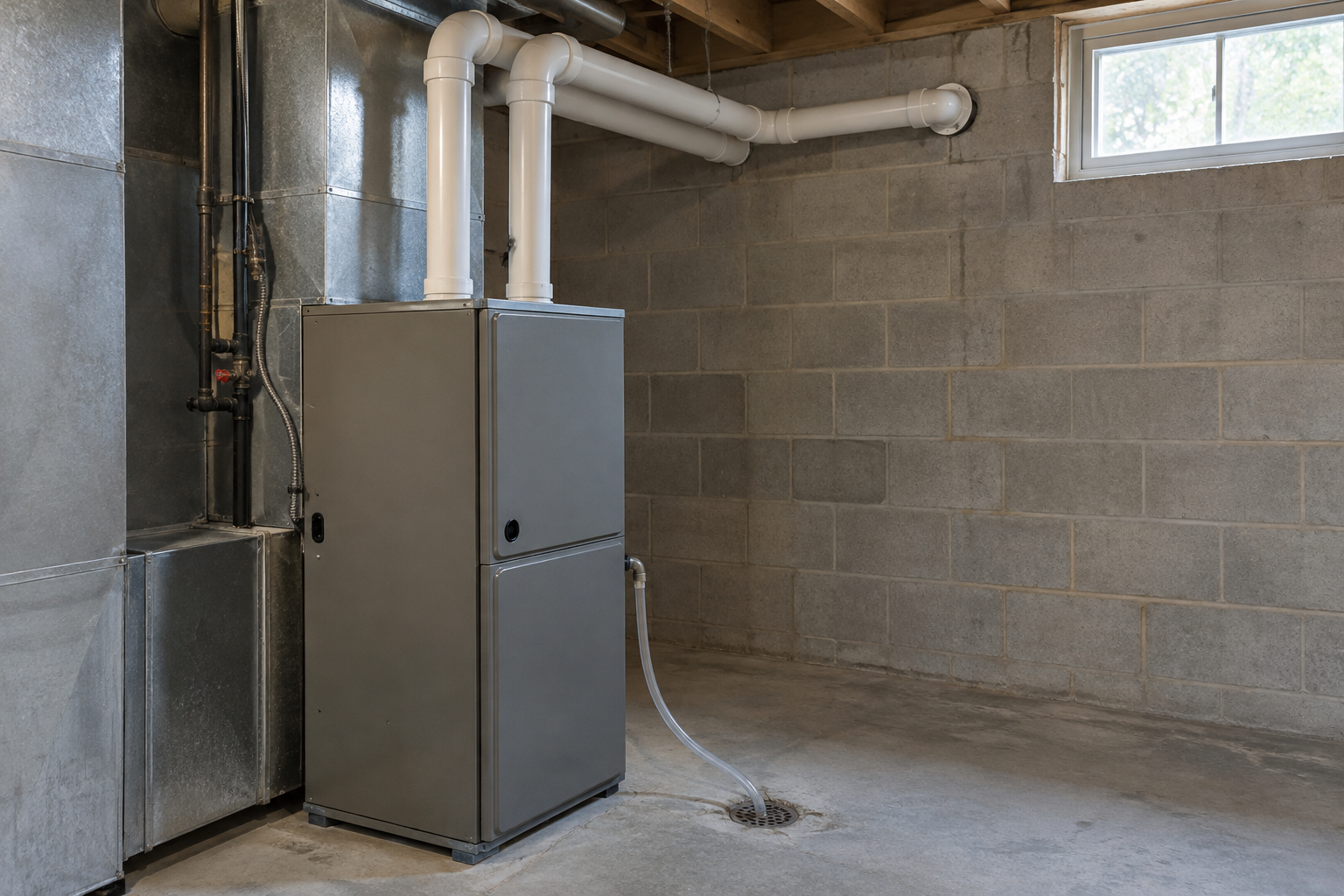
What makes a furnace high-efficiency
Furnaces are rated by AFUE, which stands for annual fuel utilization efficiency. AFUE is the share of the gas that turns into heat for your home. A 96% AFUE furnace turns 96 of every 100 units of gas into heat, and the rest goes out through the vent.
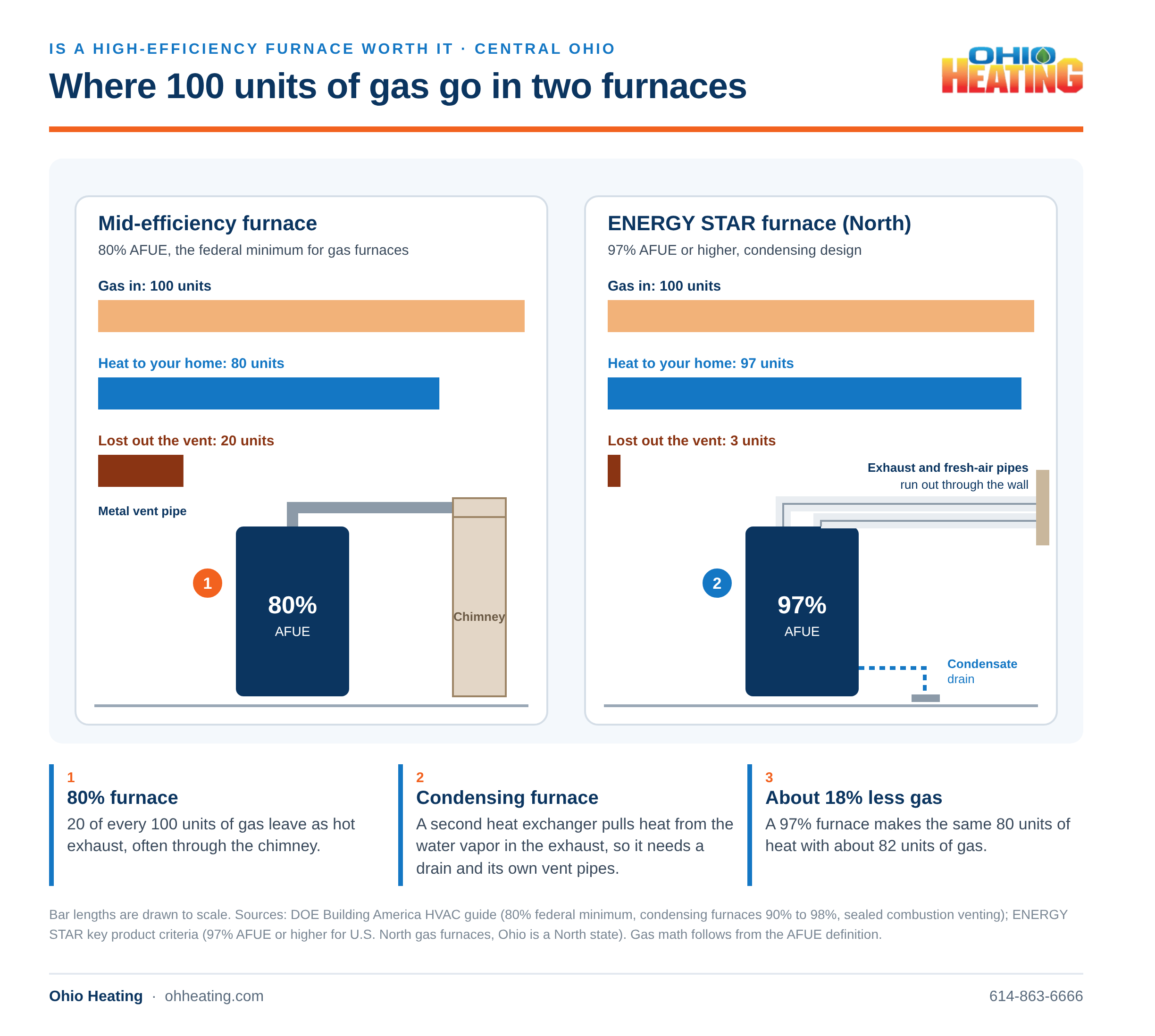
The U.S. Department of Energy (DOE) says nearly all gas furnaces sold today meet or beat 80% AFUE, the federal minimum for gas furnaces (DOE Building America HVAC guide). A condensing furnace reaches 90% to 98% by using a second heat exchanger. The DOE guide explains that about 12% of the heat from burning gas is trapped in water vapor in the exhaust. A condensing furnace cools that vapor until it turns to water, and it captures the heat that a standard furnace would send up the chimney.
To earn the ENERGY STAR label in Ohio, a gas furnace needs a rating of 97% AFUE or higher (ENERGY STAR key product criteria).
Standard vs. high-efficiency furnaces side by side
The table below compares the furnace types you’re likely to find in a central Ohio basement. The gas figures are simple math from each AFUE rating, so they show how much heat you get from the same 100 units of gas.
| Furnace type | AFUE range | Heat from 100 units of gas | How it vents |
|---|---|---|---|
| Older furnace with a pilot light. | Under 72%. | Under 72 units. | Through the chimney. |
| Mid-efficiency furnace with an inducer fan. | 80% to 82%. | 80 to 82 units. | Metal vent, often through the chimney. |
| Condensing furnace. | 90% to 98%. | 90 to 98 units. | Its own vent pipe plus an outside air pipe. |
| ENERGY STAR furnace for the North. | 97% or higher. | 97 units or more. | Its own vent pipe plus an outside air pipe. |
AFUE ranges and venting come from the DOE guide and ENERGY STAR.
Here’s what that means for your gas use. An 80% furnace needs 100 units of gas to deliver 80 units of heat. A 97% furnace delivers the same 80 units of heat with about 82 units of gas. That’s roughly 18% less gas for the same warm house, which lines up with the ENERGY STAR figure.
When is a high-efficiency furnace worth it in Columbus
A furnace in Columbus runs for much of the year, so a condensing furnace has more hours to recover its higher price. The National Weather Service lists the normal January high at 37.1°F and the normal low at 22.0°F for 1991 to 2020 (NWS Wilmington). The more your furnace runs, the more money each point of AFUE is worth.
ENERGY STAR notes that certified furnaces can cost more up front, and that the price gap is paid back over time through lower energy bills (ENERGY STAR furnaces). An upgrade tends to make the most sense when:
- Your furnace is more than 15 years old, which is the age ENERGY STAR gives for considering a replacement (ENERGY STAR replace guide).
- Your current furnace is a pilot-light or 80% model and your winter gas bills are high.
- You plan to stay in the home long enough to collect several winters of savings.
- Your basement has a short, clear path to an outside wall for the new vent pipes.
A newer furnace that’s working well may not be worth replacing only for efficiency. Our furnace repair or replace decision table can help you weigh a repair quote against the cost of a new unit.
What changes in your home when you switch
A condensing furnace doesn’t vent the way your old one did, and the DOE guide lists three changes you need to plan for.
- New vent pipes. A condensing furnace uses sealed combustion. It sends exhaust outside through its own vent pipe and should get a second pipe that brings outside air in for burning. Your installer needs a safe route through a wall or roof for both.
- A condensate drain. The furnace makes water as it pulls heat from the exhaust, so it needs a drain line to a floor drain or a pump. If that line clogs, you can end up with a furnace leaking water.
- A chimney that may be too big. If a gas water heater still vents into the old chimney, the DOE guide warns the chimney may now be oversized for that one appliance. That can leave too little draft and let exhaust spill back into the home. The fix is to reline the chimney to fit the water heater or replace the water heater.
Ask your installer to include all three in the quote so it covers the whole job.
Tax credits and your timeline
ENERGY STAR’s tax credit page lists a federal credit of 30% of project cost, up to $600, for ENERGY STAR gas furnaces with 97% AFUE or higher. That page lists the credit for equipment purchased and installed between January 1, 2023, and December 31, 2025 (ENERGY STAR tax credits). Check with your tax preparer before you count on a credit for a furnace installed in 2026.
Timing also matters. If you shop while your old furnace is still running, you have time to compare equipment and plan the venting. If you wait for a January breakdown, you may end up taking whatever unit is in stock.
Our heat pump vs. gas furnace comparison looks at operating costs in Columbus if you’re also weighing a heat pump.
Frequently asked questions
Is a high-efficiency furnace worth it if my furnace still works?
It depends on the age and efficiency of the furnace you have now. ENERGY STAR suggests considering replacement once a furnace passes 15 years. A newer 80% furnace that runs well can be worth keeping until it needs a major repair.
What AFUE rating should I look for in Ohio?
ENERGY STAR requires 97% AFUE or higher for gas furnaces in northern states, including Ohio. Any condensing furnace rated 90% or higher will use less gas than an 80% model.
Why does a condensing furnace need a drain?
A condensing furnace cools its exhaust until the water vapor turns to liquid. That water has to drain to a floor drain or a condensate pump.
Can a condensing furnace use my old chimney?
No. It vents through its own pipe. If a water heater still uses the chimney, the DOE says the chimney may need a liner sized for the water heater alone.
How much can an ENERGY STAR furnace save?
ENERGY STAR estimates a certified gas furnace in the North can save about $160 a year in energy costs. Your savings depend on your old furnace, your home and your gas rates.
A high-efficiency furnace is worth it when your old furnace is near the end of its life and your home is able to vent the new furnace safely. Our team can check your current furnace, your venting, and your chimney, then explain your options in plain terms so you can protect your comfort and your budget this winter. For furnace replacement and service anywhere in Central Ohio, call Ohio Heating at 614-863-6666 or request a visit at ohheating.com.