
How long do furnaces last? A gas furnace usually lasts 15 to 25 years, according to the InterNACHI life expectancy chart, and the U.S. Department of Energy puts the service life of a condensing furnace at 15 to 20 years (DOE Building America HVAC guide). Where your furnace lands in that range depends on how it was sized and installed, how often the filter gets changed, and whether it gets a yearly check-up or not.
ENERGY STAR suggests you consider a replacement once a furnace passes 15 years (ENERGY STAR). That’s a point to start the conversation, and plenty of furnaces keep running safely past it. This guide shows you how to estimate your furnace’s age, what wears furnaces out early, and the signs that yours is close to the end.
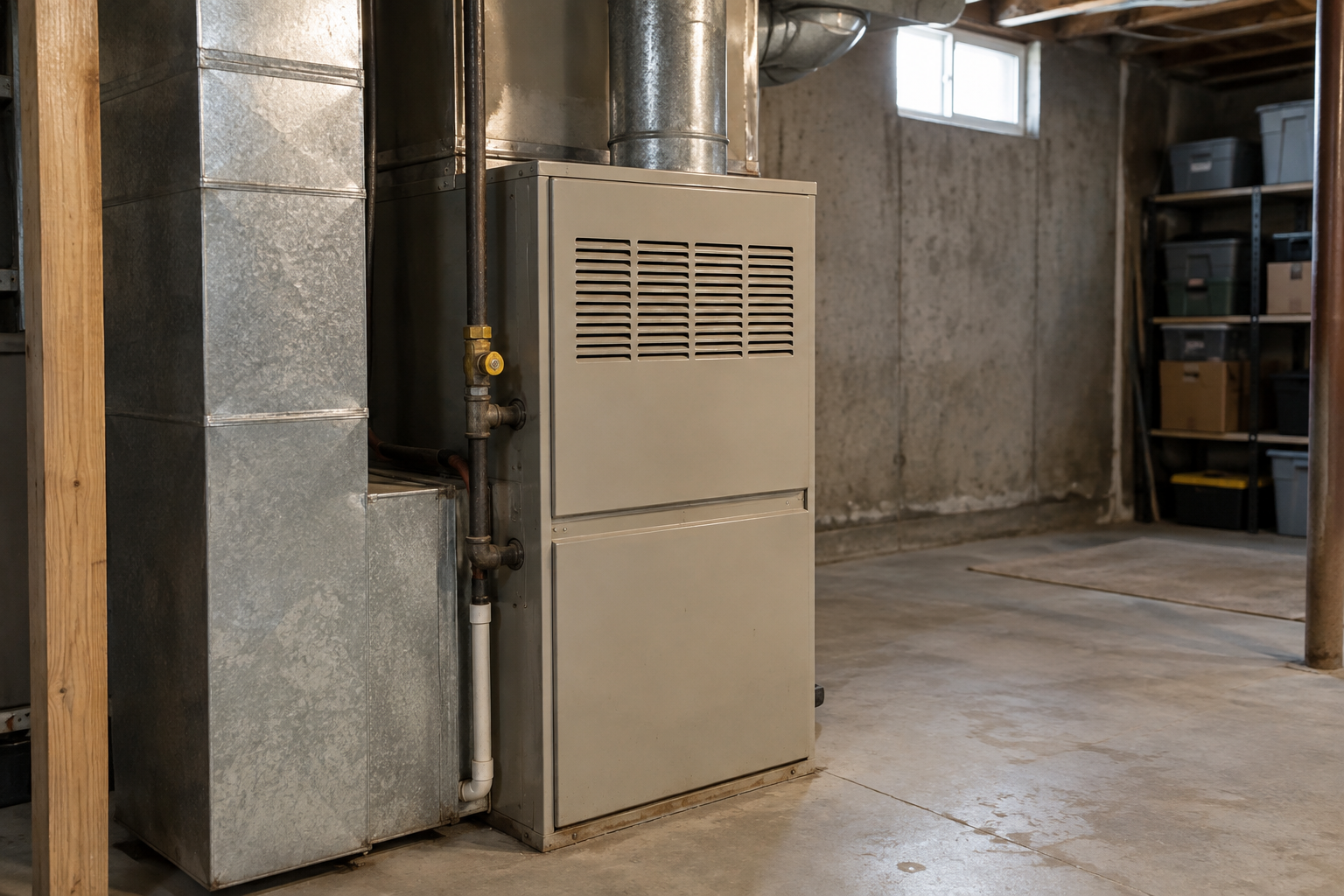
How long do furnaces last in Columbus winters
The published numbers vary because each source measures something a little different. The table below puts them side by side.
| Source | What it says | Expected years |
|---|---|---|
| InterNACHI life expectancy chart. | Typical furnace lifespan. | 15 to 25 years. |
| DOE Building America HVAC guide. | Expected years for a condensing furnace. | 15 to 20 years. |
| ENERGY STAR repair or replace guide. | Repair is reasonable under 15 years. Replacement is worth a look over 15 years. | 15-year review point. |
A furnace in Columbus gets steady use from fall into spring. The National Weather Service lists the normal January low at 22.0°F and the normal high at 37.1°F for 1991 to 2020 (NWS Wilmington). That’s a long stretch of daily run time, which is why the yearly check-up matters so much here.
How to find your furnace’s age and efficiency
Start with the rating plate inside the furnace door. It lists the model and serial number, and a technician can usually work out the manufacture date from them. The original install invoice works too if you have it.
If you can’t find either one, the design of the furnace will give you a rough date. The DOE guide explains that federal rules set a 78% minimum efficiency for gas furnaces starting in 1992, and an 80% minimum for gas furnaces starting in 2015. AFUE (annual fuel utilization efficiency) is the share of the gas that becomes heat for your home, so a 90% AFUE furnace turns 90% of its fuel into heat.
| What you see on the furnace | What it suggests | AFUE range |
|---|---|---|
| A standing pilot light that stays lit. | Likely installed before 1992. | Under 72%. |
| A draft hood on top, with no inducer fan. | Older natural-draft design. | About 65%. |
| A small inducer fan pulling exhaust into a metal vent. | Mid-efficiency, fan-assisted design. | 80% to 82%. |
| Sealed combustion with its own vent pipe, an outside air pipe and a condensate drain. | Condensing, high-efficiency design. | 90% to 98%. |
All four rows come from the same DOE guide. A pilot-light furnace that still runs is likely more than 30 years old, and it burns a lot more gas than a new one to heat the same house.

Why some furnaces don’t last as long
ENERGY STAR’s heating and cooling guide states that dirt and neglect are the top causes of heating and cooling system inefficiency and failure (ENERGY STAR guide). In most homes, early wear comes down to dirty filters, the size of the furnace and the yearly tune-up:
- A dirty filter. ENERGY STAR warns that a dirty filter can raise energy costs and damage your equipment, leading to early failure (ENERGY STAR maintenance checklist). Our MERV rating filter guide can help you pick the right one for your system.
- A furnace that’s too big for the house. The DOE guide notes that many older furnaces are oversized because installers used rules of thumb, and it recommends a load calculation using ACCA Manual J. An oversized furnace heats the house fast and shuts off, which is a common cause of furnace short cycling.
- Skipped tune-ups. The yearly visit is when a technician checks the gas pressure, burner combustion and heat exchanger before small problems grow.
Signs your furnace is near the end
Age alone doesn’t tell you how long your furnace will last. The ENERGY STAR replacement page lists these signs that it may be time to replace your heating equipment:
- Your furnace is more than 15 years old.
- It needs frequent repairs and your energy bills are going up.
- Some rooms are too hot or too cold.
- Your home has humidity problems or a lot of dust.
- The system is noisy.
Uneven heating, dust and noise can also come from duct problems, so a technician should check the ducts before you decide that the furnace itself is the cause. A cracked heat exchanger is a separate case because it’s a safety issue, and our post on cracked heat exchanger symptoms explains what to watch for.
How to extend your furnace lifespan
You can’t stop a furnace from aging, but you can help it last as long as possible:
- Check the filter each month during the heating season, and change it when it’s dirty or at least every three months, as the ENERGY STAR guide recommends.
- Book a heating check-up each fall. According to ENERGY STAR, a typical visit checks gas connections, gas pressure, burner combustion and the heat exchanger. Our furnace tune-up checklist walks through the full visit.
- Fix airflow problems early, since a blocked return or a closed register makes the furnace work harder.
- When a big repair quote comes in on an older furnace, compare the options with our furnace repair or replace decision table before you decide.
Frequently asked questions
Should I replace my furnace at 15 years old?
You don’t have to replace it at 15. The ENERGY STAR repair or replace guide says repair still makes sense if the furnace has a good service record and only needs a minor fix. If two or more signs point toward replacement, such as repeat problems and a costly repair quote, it’s time to price a replacement.
How can I tell how old my furnace is?
Look at the rating plate inside the furnace door for the model and serial number, or find the original install invoice. A standing pilot light suggests the furnace went in before 1992, according to the DOE.
Is it safe to keep running an old furnace?
An older furnace can keep running if it passes a yearly inspection. ENERGY STAR notes that a dirty burner or a cracked heat exchanger can make equipment run less safely, so the check-up should cover both.
Do furnaces last longer with regular maintenance?
Yes, maintenance helps. Dirt and neglect are the top causes of system failure according to ENERGY STAR, which also links dirty filters to early failure.
How efficient is my old furnace?
It depends on the design. The DOE says older pilot-light furnaces run under 72% AFUE, while condensing furnaces reach 90% to 98%.
Knowing how long furnaces last helps you plan a replacement on your own schedule instead of during a January breakdown. A yearly check-up will protect your furnace and keep it running safely for as many winters as possible. For furnace repair and service anywhere in Central Ohio, call Ohio Heating at 614-863-6666 or request a visit at ohheating.com.