
Find the Right Temperature Controller for Your Air Conditioner
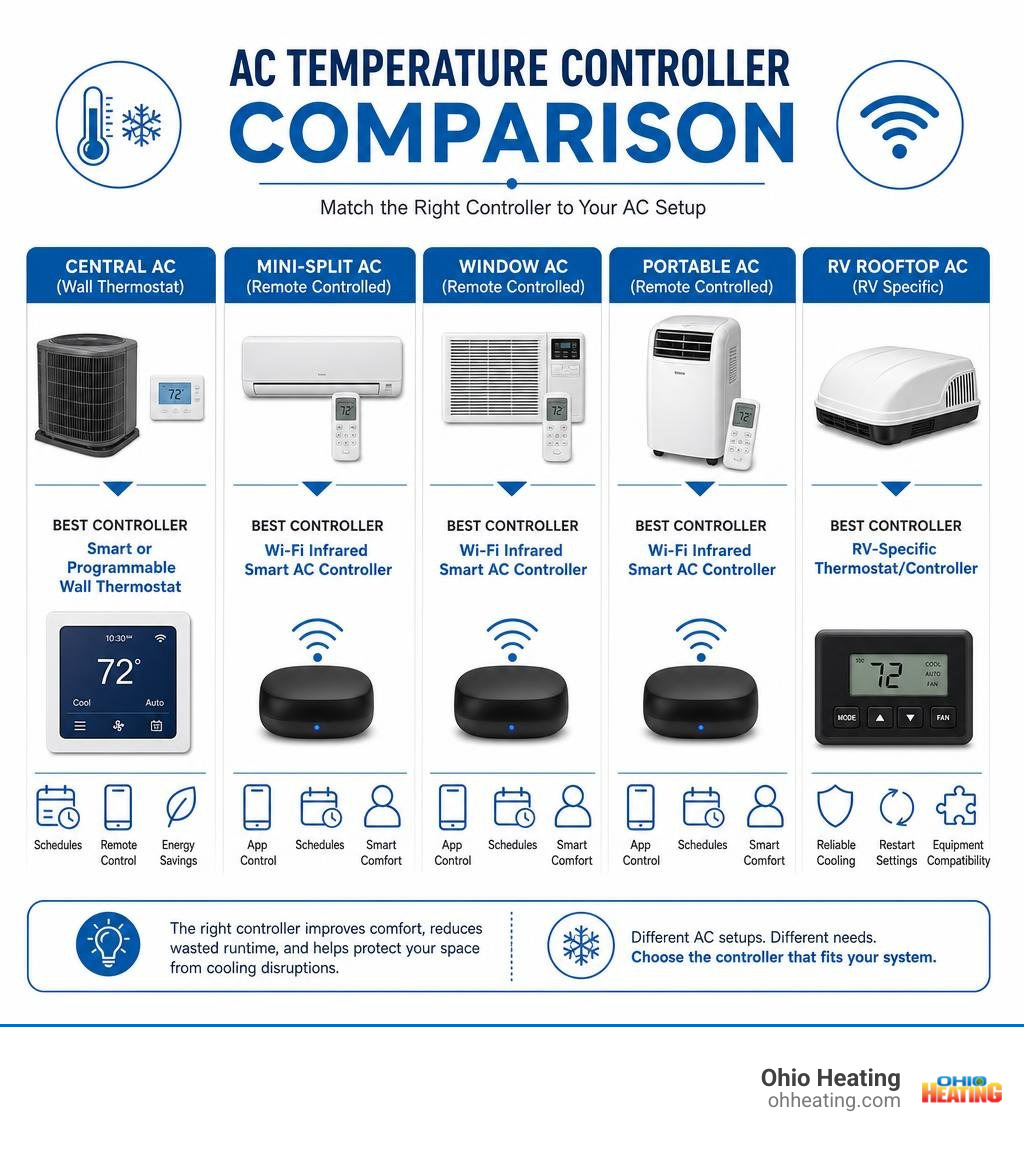
A temperature controller for air conditioner systems helps maintain a set indoor temperature by telling the AC when to run, stop, or adjust its cooling settings. The right choice depends mainly on the type of AC you manage and whether it uses a wall thermostat or an infrared remote.
| AC setup | Best controller type | Typical use |
|---|---|---|
| Central AC with a wall thermostat | Smart or programmable wall thermostat | Building-wide cooling schedules and remote control |
| Mini-split, window, or portable AC with a remote | Wi-Fi infrared smart AC controller | App control, schedules, and occupancy-based cooling |
| RV rooftop AC | RV-specific thermostat/controller | Reliable mobile cooling, restart settings, and equipment compatibility |
| Commercial fan coil system | Compatible fan coil thermostat or modulating controller | More precise temperature and fan-speed control |
For property managers and business owners, the goal is not simply a smarter screen on the wall. A dependable controller can reduce wasted runtime, support consistent comfort for occupants, and help protect temperature-sensitive spaces from disruptive cooling failures.
I’m Jill Frattini, a Service Coordinator with our HVAC team in Columbus, with several years of HVAC industry experience supporting service scheduling, project oversight, and customer communication. I help connect customers with practical guidance on choosing and maintaining the right temperature controller for air conditioner equipment, starting with the AC system already in place.
Temperature controller for air conditioner helpful reading:
Understanding Every Type of Temperature Controller for Air Conditioner Units
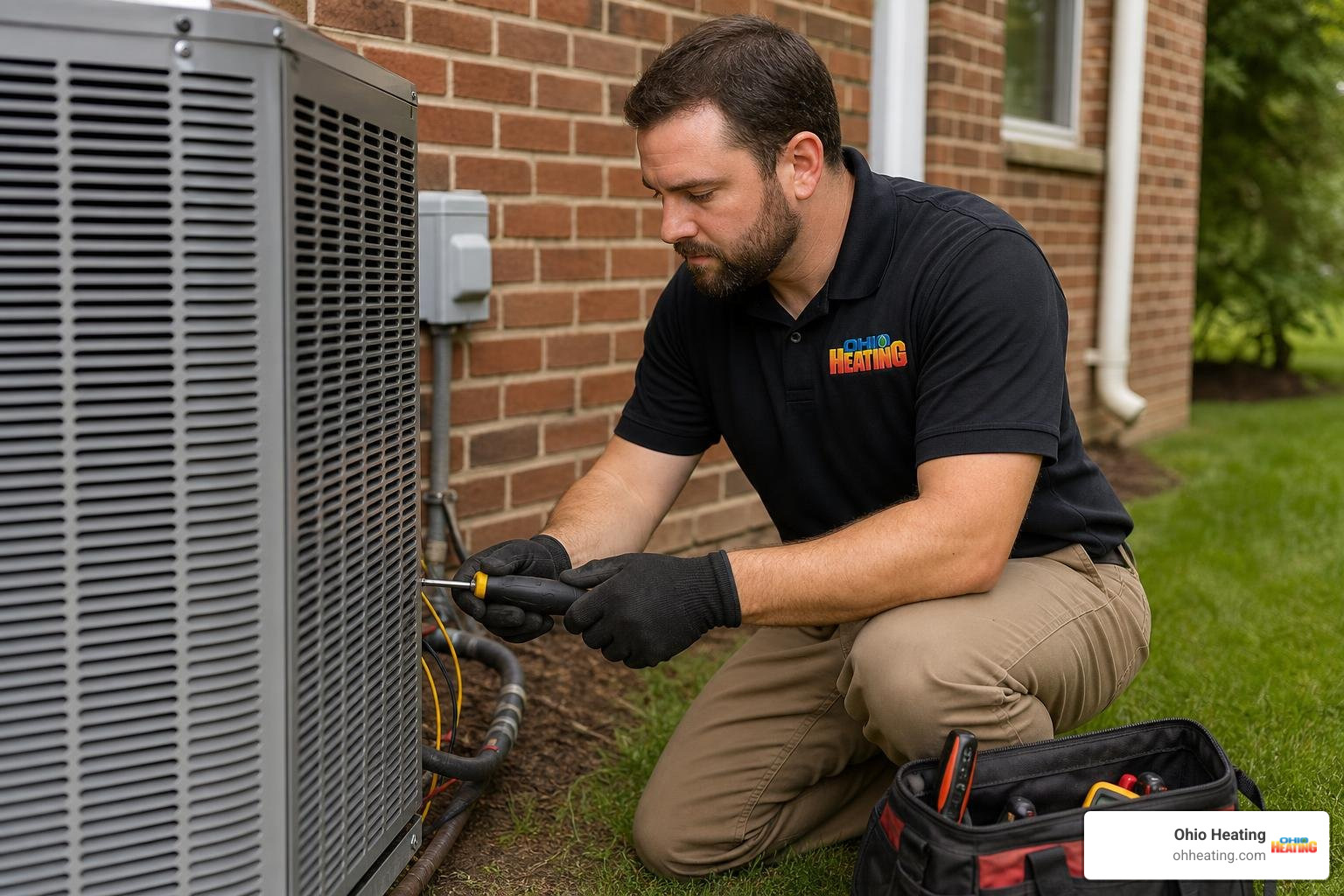
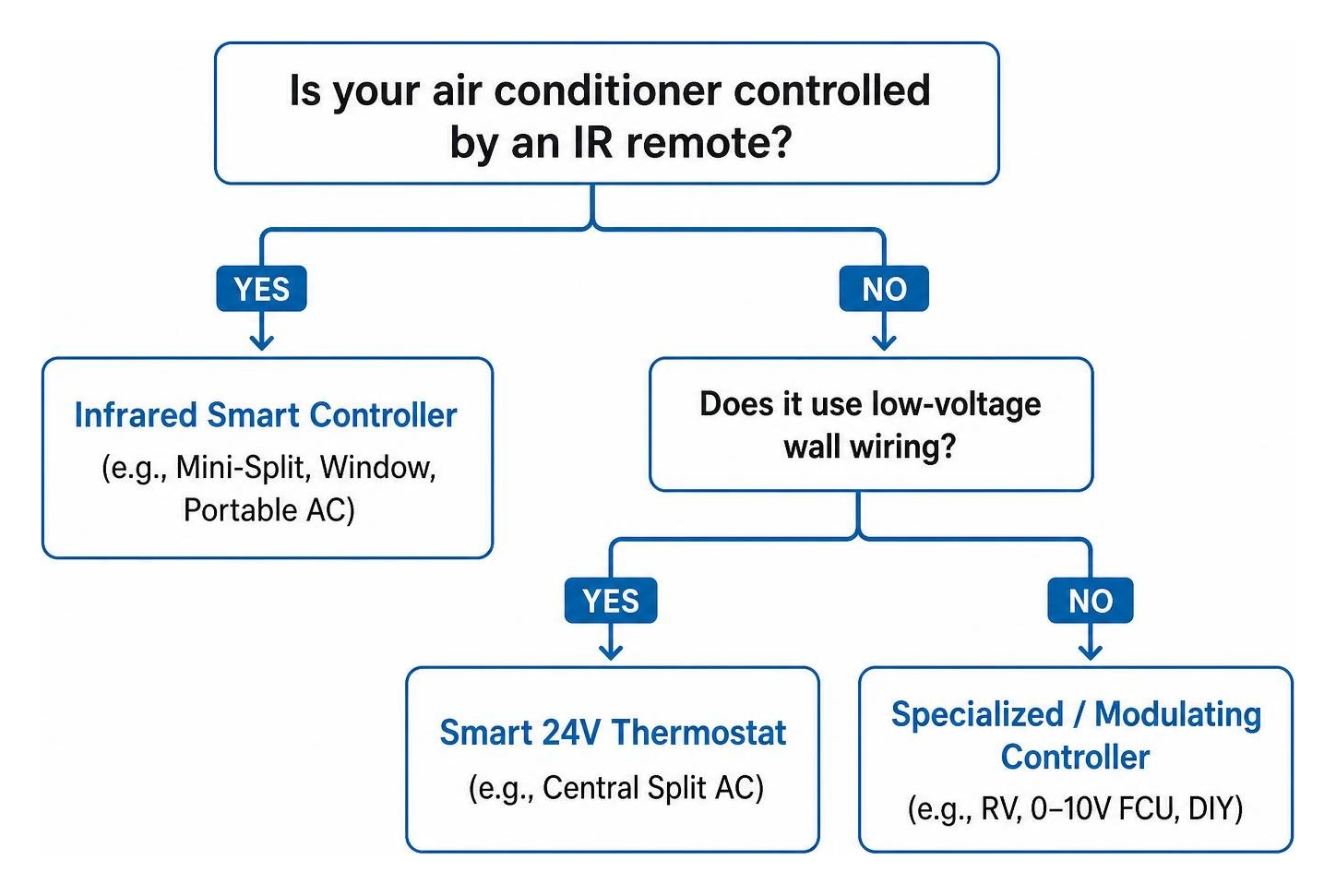
When selecting a temperature controller for air conditioner equipment, the first rule is that hardware compatibility dictates your options. Air conditioning systems communicate using different control signals, ranging from low-voltage electrical wiring to line-voltage relays and infrared wireless signals.
Understanding how your specific AC unit receives instructions ensures you select a temperature controller that operates seamlessly without causing operational faults or risking electrical damage.
Choosing an IR Smart Temperature Controller for Air Conditioner Remotes
If your home or facility relies on ductless mini-splits, window air conditioners, or portable cooling units, chances are your system is controlled using a handheld infrared (IR) remote. Standard wall-mounted smart thermostats cannot be directly wired into these units because they lack standard low-voltage terminal boards.
An IR-based smart temperature controller for air conditioner units bridges this gap. These smart devices, such as the Sensibo Sky – WiFi AC Controller to Make Your AC Smart or the Sensibo Air – Smart AC Controller for Any Air Conditioner, work by replicating the exact infrared signals sent by your original factory remote.
Key operational characteristics include:
- Line-of-Sight Placement: The smart controller must be mounted on a wall or placed on a table with an unobstructed view of the AC unit’s IR receiver.
- Wi-Fi Connectivity: The device connects to your 2.4GHz home or office Wi-Fi network, allowing you to control cooling setpoints via a smartphone app from anywhere.
- Universal Compatibility: IR smart controllers store open databases containing command protocols for over 10,000 air conditioner models.
By converting basic remote-controlled units into connected devices, you gain precise digital setpoint management, customized scheduling, and automated triggers without modifying internal equipment wiring.
Wall-Mounted Smart Thermostat vs Plug-In Temperature Controller for Air Conditioner
Central air conditioning split systems and packaged units rely on fixed wall thermostats. These controllers communicate through low-voltage physical wires running from the thermostat sub-base to the air handler control board.
When evaluating central air controllers, consider these technical differences:
- Low-Voltage 24V Smart Thermostats: Models like the Google Nest Learning Thermostat, Amazon Smart Thermostat, or Honeywell Home Wi-Fi Smart Color Thermostat require a 24-volt AC circuit. A constant C-wire (common wire) provides continuous electrical power to illuminate digital touchscreens and maintain active Wi-Fi connections. If you are updating an older control setup across Central Ohio, our technicians provide expert thermostat installation and repair in dublin ohio to ensure correct 24V wiring and transformer load protection.
- Line-Voltage Controllers: Used primarily for heavy-duty commercial portable units or direct-plug cooling equipment, line-voltage thermostats switch 120V or 208/230V electrical power directly to the unit’s compressor or blower motor.
- Plug-and-Play Digital Controllers: Simple digital temperature switches plug directly into a standard wall outlet, while the portable air conditioner plugs into the controller. A dedicated temperature probe monitors room air, cutting main power to the appliance when the target temperature is reached.
For standard central AC equipment, 24V smart thermostats offer superior comfort control by managing multi-stage cooling and variable fan speeds, preventing the sudden indoor temperature swings common with basic plug-in switches.
Advanced Modulating and Microcontroller AC Controllers
Commercial spaces, multi-tenant offices, and modern high-efficiency buildings frequently utilize specialized air conditioning equipment that requires proportional modulation rather than simple on/off switching.
For fan coil unit (FCU) systems, a device such as a 0-10V Modulating FCU Thermostat (FT-08) | 2/4-Pipe | Manufacturer & Wholesale sends a variable 0-10V DC analog signal to electronically commutated (EC) fan motors and proportional water valves. This continuous adjustment yields balanced ambient temperatures and tight humidity control by matching cooling output directly to thermal load. Additionally, these controllers support Building Management System (BMS) integration via Modbus RTU or BACnet protocols.
For open-source automation enthusiasts, hardware solutions like the Universal Air Conditioning Controller – ESP32-S3 – UNIAIRCON allow direct UART serial communications with internal AC control boards (including Mitsubishi, Daikin, and Haier mini-splits), bypassing proprietary cloud servers entirely for local smart home integration.
Essential Features and Energy Savings in Smart AC Control
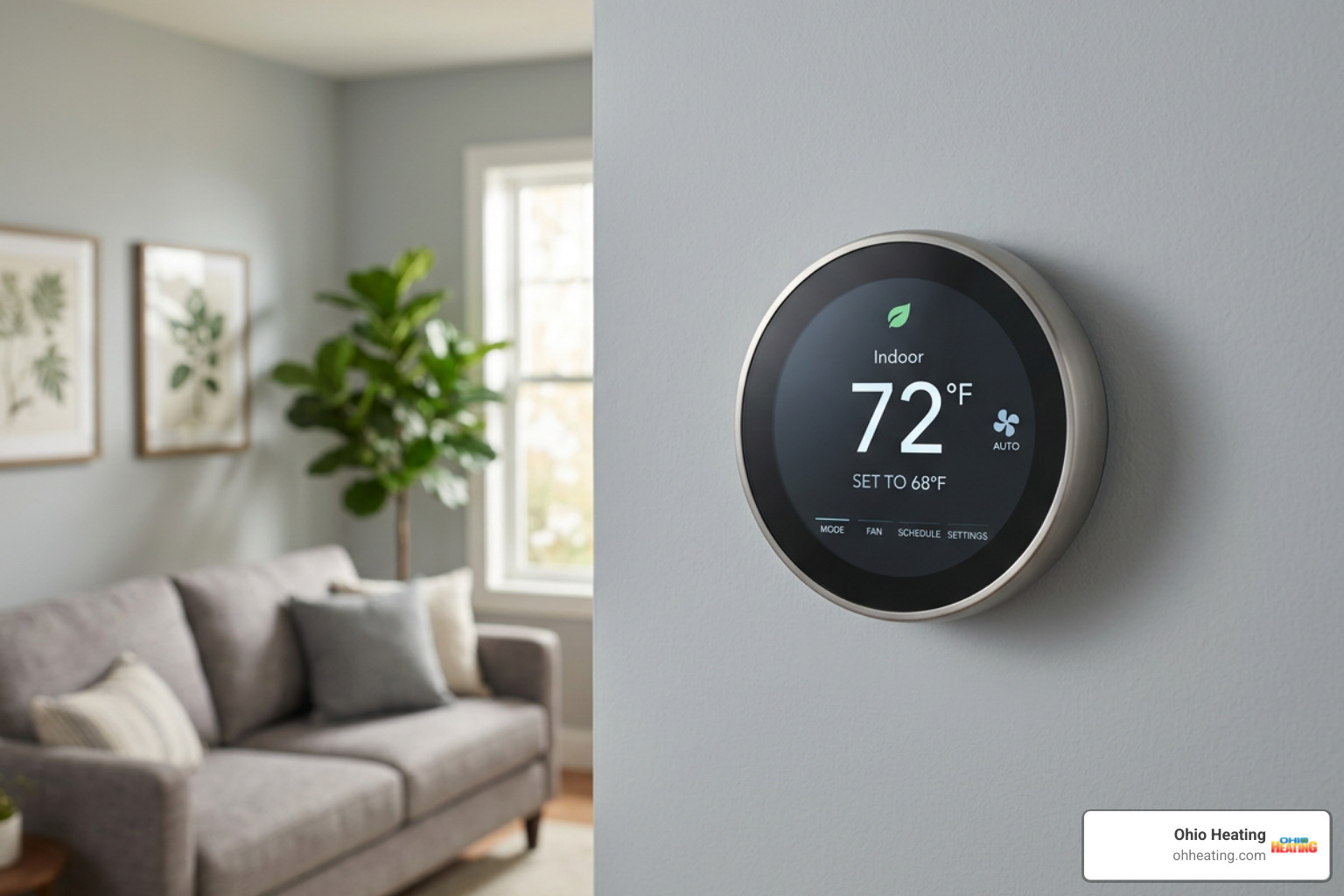
Upgrading to a smart temperature controller for air conditioner units delivers far more than local digital readouts. Modern smart controllers incorporate intelligent automation algorithms designed to curb unnecessary cooling runtimes, cut electricity costs, and optimize indoor comfort.
Air conditioning and air circulation account for 40% to 60% of an average building’s summer electric utility bill. Implementing intelligent controls mitigates wasteful operation through key automated features:
- Geofencing Proximity Triggers: Using your smartphone’s GPS location, the controller detects when the last occupant leaves the property, automatically raising the cooling setpoint to prevent cooling an empty space. As you return, the system triggers pre-cooling so you arrive home to optimal comfort.
- 7-Day Automated Scheduling: Program custom daily cooling profiles that automatically adjust setpoints during night hours or low-occupancy periods.
- Integrated Air Quality Sensing: Advanced models like the Sensibo Air Pro – Smart AC Controller + Air Quality Sensor incorporate TVOC (Total Volatile Organic Compounds) and carbon dioxide ($CO_2$) sensors. When indoor air pollutants or humidity levels rise, the system can automatically trigger fan circulation or ventilation modes.
- Filter Maintenance Alerts: Based on actual compressor runtime hours, smart controllers notify you when air filters require cleaning or replacement, keeping system static pressure low and cooling efficiency high.
To review holistic building optimization strategies, consult our comprehensive guide on hvac ultimate building energy management guide.
| Feature | Basic Non-Programmable Controller | Programmable Thermostat | Smart Wi-Fi AC Controller |
|---|---|---|---|
| Remote Access | None | None | Smartphone App / Voice Assistant |
| Schedule Control | Manual Setpoint Adjustment | Fixed 5-2 or 7-Day Timers | Dynamic Dynamic Smart Schedules |
| Occupancy Detection | None | None | Geofencing Proximity Triggers |
| Maintenance Tracking | None | Calendar Reminder | Runtime-Based Filter Alerts |
| Energy Bill Reduction | Baseline | 5% – 10% Savings | Up to 20% – 40% Savings |
Setup, Subscriptions, and Special RV Applications
Installing a smart temperature controller for air conditioner units varies considerably in complexity based on the format you choose:
- IR Smart Controllers: Feature a straightforward DIY setup. You plug the unit into a wall outlet near your mini-split or window AC, download the manufacturer app, scan a QR code, and select your AC brand from the built-in library. Setup takes under five minutes without tools.
- Hardwired 24V Wall Thermostats: Require shutting off power at the breaker panel, removing the existing faceplate, tagging low-voltage control wires (R, Y, G, C), and securing the new sub-base. When upgrading central AC systems in Central Ohio, scheduling professional installation ensures proper voltage checks and prevents blown fuses on main air handler circuit boards. Our team handles local service including thermostat installation and repair in westerville ohio.
- App Subscriptions: Most top-rated smart AC controllers function completely subscription-free for core features like manual adjustments, app control, scheduling, and voice integration with Amazon Alexa, Google Assistant, or Apple HomeKit. Premium optional plans may offer extended cloud data logs or automated efficiency reporting.
For mobile applications, specialized equipment is mandatory. Standard home thermostats cannot endure the constant road vibration or power fluctuations of a travel trailer or motorhome.
Products like the Furrion Chill® Standard Single-Zone RV Air Conditioner Controller – 2-Speed (R32) #FACC10ESSA2-BL- AM are specifically engineered with vibration-resistant circuit boards and broad operating temperature ranges. Furthermore, specialized RV controllers incorporate essential short-cycle protection—preventing the AC compressor from restarting immediately after shutting off to avoid severe electrical overloading—and auto-restart features that restore previous cooling setpoints following campsite power outages. RV refrigerant components must strictly match system design (e.g., R32 components cannot be mixed with R410A systems).
Frequently Asked Questions About Temperature Control
Do smart AC controllers require a hub or monthly subscription?
Most smart controllers connect directly to your local 2.4GHz Wi-Fi network without requiring a separate smart home hub. Primary app functions—such as remote temperature adjustments, custom cooling schedules, and voice commands—operate entirely subscription-free. Some manufacturers offer optional paid tiers for expanded analytical history, but standard operation requires no recurring monthly fees.
How much money can a smart AC controller save on cooling bills?
By preventing unnecessary cooling runtimes while buildings are unoccupied, utilizing geofencing setbacks, and reminding users to maintain clean air filters, smart air conditioner controllers can lower summer electric utility costs by up to 20% to 40%. Exact savings depend on your property’s insulation quality, local outdoor temperatures, and baseline usage habits.
Can I install a smart air conditioner controller myself?
If you are installing an IR-based controller for a ductless mini-split, window, or portable air conditioner, the setup is plug-and-play and easily completed in under five minutes. However, for central AC units requiring 24V low-voltage wiring, professional installation is recommended if your wall outlet lacks a dedicated common (C) wire or if you are unfamiliar with HVAC control circuitry.
Conclusion
Selecting the right temperature controller for air conditioner systems comes down to matching your specific cooling hardware with the level of automation, efficiency, and remote convenience you require. Whether retrofitting an IR smart controller onto a ductless mini-split, integrating a 0-10V modulating thermostat into a commercial fan coil system, or upgrading central AC equipment with a 24V smart thermostat, modern temperature controllers provide precise setpoint management that preserves compressor reliability and prevents costly electricity waste.
Since 1999, our HVAC team has provided dependable residential and commercial air conditioning installation, maintenance, and system repairs across Columbus and Central Ohio. If you need assistance selecting, wiring, or troubleshooting cooling control equipment for your property, explore our custom conventional controls or contact our certified cooling technicians today to ensure complete comfort and maximum energy efficiency all summer long.