
Why Wet Basements Are a Hidden Threat to Your Home’s Comfort Systems
French drain and sump pump installation is one of the most effective ways to protect your basement — and the cooling equipment inside it — from water damage. If you’re trying to decide whether you need one, the other, or both, here’s the short answer:
Quick Answer: French Drain vs. Sump Pump vs. Both
| Situation | What You Need |
|---|---|
| Water seeping through foundation walls or floor | French drain (relieves hydrostatic pressure) |
| Water pooling in a low spot with no gravity outlet | Sump pump (actively removes collected water) |
| Flat lot, finished basement, or high water table | Both — French drain feeds into sump pump |
| Sloped lot with clear gravity discharge path | French drain alone may be enough |
Here’s the core idea: a French drain is a passive system that collects groundwater and channels it to a single point. A sump pump is an active device that ejects that collected water out of your home. One gathers, one removes. Without both working together, you’re only solving half the problem.
Water in your basement doesn’t just damage walls and flooring. It raises humidity levels, forces your air conditioning system to work harder, and creates the exact conditions — moisture, warmth, darkness — where mold thrives. For property managers and business owners, that means higher energy bills, potential equipment failures, and costly disruptions.
I’m Jill Frattini, Service Coordinator at Ohio Heating in Columbus, OH, and through my years coordinating HVAC and plumbing projects across Central Ohio, I’ve seen how french drain and sump pump installation directly impacts the performance and longevity of cooling systems. In the sections below, I’ll walk you through everything you need to make a confident, informed decision for your property.
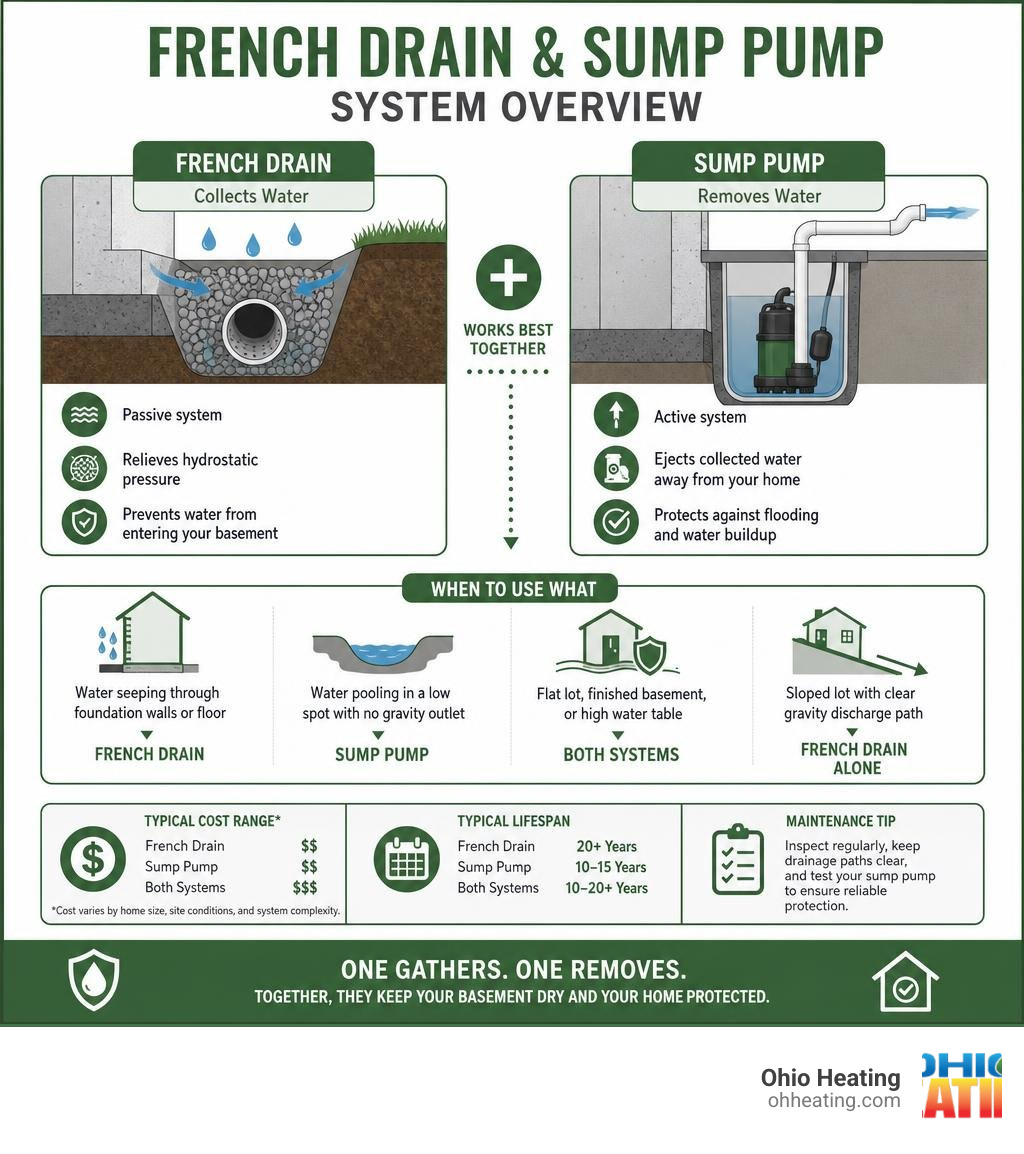
French drain and sump pump installation terms explained:
Protecting Your Cooling Infrastructure: French Drain and Sump Pump Installation
When we think about air conditioning, we usually think about the outdoor condenser unit or the thermostat on the wall. We rarely think about the basement floor. However, your home’s cooling infrastructure is deeply connected to your basement’s relative humidity.
If you have an indoor evaporator coil or an air handler located in a damp crawl space or basement, standing water is your enemy. Excess moisture in the air coats your cooling coils, limits heat transfer, and forces your AC compressor to run longer cycles to dehumidify the air. This extra strain leads to premature system wear and spikey summer utility bills.
By committing to a professional french drain and sump pump installation, you relieve the hydrostatic pressure pushing water through your foundation. This keeps the surrounding concrete dry, lowers the workload on your air conditioner, and prevents mold spores from colonizing your ductwork. To understand how these systems protect your investment, it helps to read up on Sump Pump 101: Shielding Your Basement with Reliable Pump Types and Maintenance.
Active vs. Passive Water Management
To keep your basement dry and your AC running efficiently, you need to understand how passive and active water management systems work together.
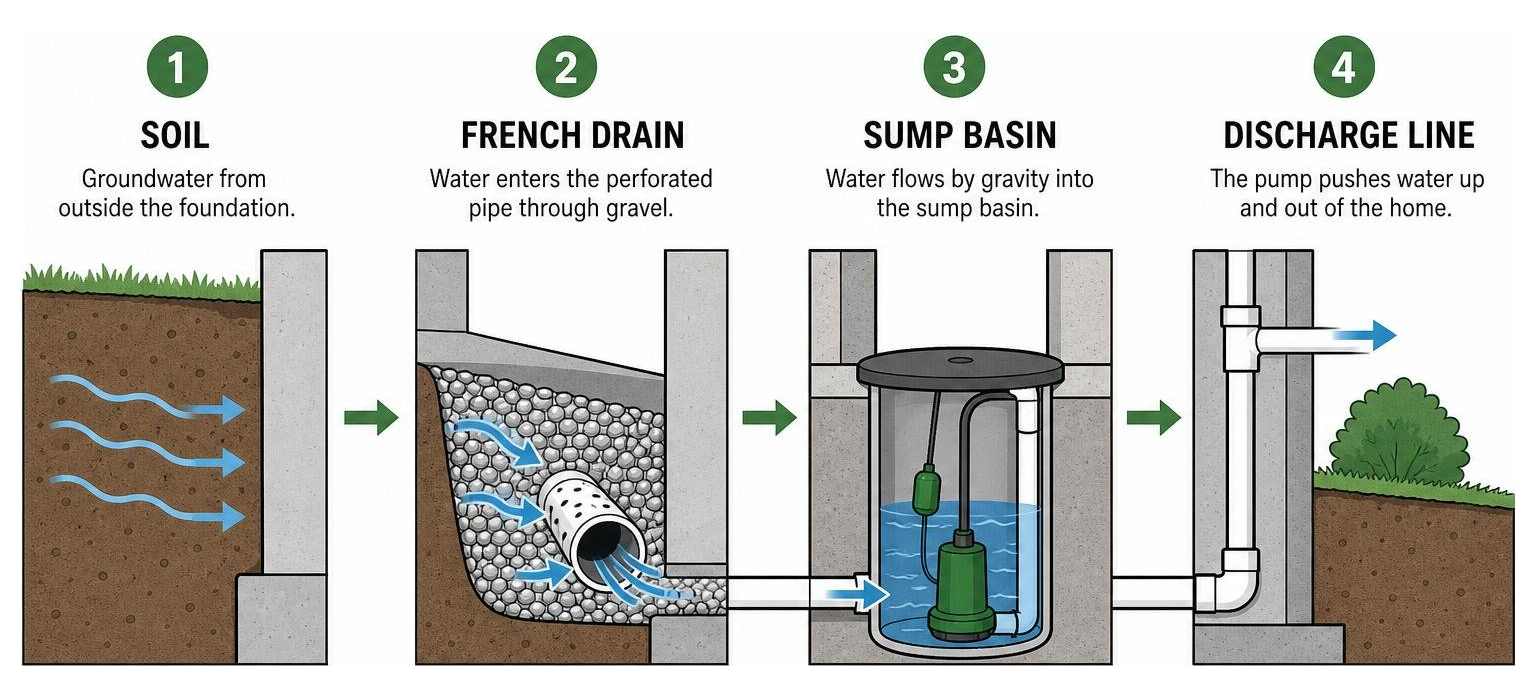
- Passive Water Management (The French Drain): This system relies on gravity. It consists of a sloped trench filled with gravel and a perforated pipe. Groundwater naturally flows into the gravel, enters the pipe through small holes, and travels down the slope. A French drain without a sump pump just collects water with nowhere to go, unless your property has a natural downhill slope where the pipe can “drain to daylight.”
- Active Water Management (The Sump Pump): This is an electromechanical device. Water flows into a basin (or pit) carved into your basement floor. Once the water level reaches a certain height, a float switch triggers the pump motor, actively pushing the water up and out of your home through a discharge line. However, a sump pump without a French drain only protects one spot while water enters elsewhere.
When combined, the French drain acts like roof gutters, collecting water from the perimeter of your basement slab, while the sump pump acts like the downspout, actively throwing that water far away from your foundation. This cooperative system keeps your indoor relative humidity low, reducing the latent cooling load on your air conditioning unit.
Cost Breakdown for Combined Systems
Investing in basement waterproofing is a major decision for any Central Ohio homeowner. In 2026, pricing for these systems depends heavily on the linear footage of your basement and whether you choose an interior or exterior setup.
A complete interior system (French drain + sump pump) typically runs $4,000 to $10,000 installed. If you are looking at individual components, here is what you can expect to pay:
- Interior French Drain Installation: Averages $3,000 to $8,000 (roughly $60 to $120 per linear foot) for a typical 1,000-square-foot basement perimeter.
- Sump Pump Installation: Averages $1,200 to $3,000. The pump unit itself costs $200 to $600, while professional labor, basin cutting, and pipe routing add $750 to $1,200.
- Battery Backup System: Highly recommended in Ohio due to summer storm power outages, adding $300 to $800 to the total installation.
While the upfront cost is notable, the financial return is clear. A dry basement protects your expensive cooling equipment and can boost your home’s resale value by 5% to 10%. Properties with documented, professional drainage systems also tend to sell 15% to 20% faster because buyers know they won’t have to deal with mold or foundation issues. For more details on budgeting, you can check out this French Drain System Cost Guide – Builds and Buys.
Interior vs. Exterior Drainage: Choosing the Right System for Your Home’s AC
When planning your drainage project, you must decide whether to intercept water before it reaches your foundation (exterior) or manage it once it gets underneath your floor slab (interior). Both options have distinct pros and cons regarding cost, installation disruption, and how they protect your indoor air quality.
Interior French Drains
An interior French drain is installed by cutting a channel through the concrete floor around the inside perimeter of your basement or crawl space. Technicians dig a trench, line it with filter fabric, lay a perforated pipe, cover it with clean washed stone, and patch the concrete back over.
- Pros: Much less expensive than exterior excavation ($40 to $85 per linear foot); highly effective at capturing water under the slab before it causes humidity issues; doesn’t ruin your outdoor landscaping; can be installed year-round.
- Cons: Requires clearing out your basement; does not prevent water from touching the outer foundation wall; requires a sump pump to lift the water out since it sits below grade.
For homes with sensitive indoor cooling equipment, an interior drain is often the best choice. It rapidly captures under-slab water, directly preventing high humidity from rising into your living spaces. To see how these systems compare to other waterproofing methods, read French Drain vs Sump Pump: Which Basement Waterproofing System Is Best? | The Basement Guide.
Exterior French Drains
An exterior French drain (often called a footing drain) is installed on the outside of your home. It requires excavating the soil all the way down to your foundation footings—typically 4 to 8 feet deep.
- Pros: Prevents water from ever touching your foundation walls; handles massive volumes of surface runoff and groundwater; can sometimes drain to daylight using gravity (no electricity required).
- Cons: Extremely expensive ($5,000 to $15,000 or more); requires heavy machinery that destroys yards, decks, and landscaping; high risk of future clogging from soil and tree roots.
If you are dealing with a wet crawl space, choosing between these systems can be tricky. You can read more about specific crawl space solutions in this guide: Sump Pump vs. French Drain: What’s the Best Fix for a Wet Washington Crawl Space?.
Step-by-Step Guide to Connecting a French Drain to a Sump Pump
Connecting an interior or exterior French drain directly to a sump pump is the gold standard for active groundwater control. This step-by-step process ensures water flows smoothly without pooling under your home.
Planning Your French Drain and Sump Pump Installation
Before you dig, you need a solid plan. A thoughtful layout is what makes the difference between a temporary fix and a robust, lifelong drainage solution.
- Mark the Route: Use spray paint to map out your trench. Keep the path 12 to 18 inches away from foundation walls to protect structural integrity.
- Call 811: Always call Ohio’s underground utility locator service before breaking ground. Striking a buried line can be dangerous and costly.
- Calculate the Slope: To keep water moving, your trench must slope downward toward the sump basin at a minimum grade of 1% (about 1/8 inch of drop per foot of run). If you have flat ground, you must dig progressively deeper as you approach the basin.
- Position the Sump Pit: Place the sump pit in the lowest spot of the basement, ideally close to an exterior wall where the discharge line can exit the home quickly.
For a detailed walkthrough of planning and executing this connection, refer to Connect a French Drain to a Sump Pump: Step-by-Step.
Selecting the Right Sump Pump and Discharge Line
Your sump pump is the heart of your drainage system. If it fails, your basement floods, and your air conditioning system’s electrical components could be ruined.
- Choose a Submersible Pump: Submersible pumps are quieter, safer, and last longer than pedestal pumps. Look for a model that can move 2,000 to 5,000 gallons per hour to handle heavy Ohio summer storms.
- Use Large Drainage Stone: Surround your sump basin with 3/4-inch clean washed stone. Avoid small pea gravel or crushed limestone, as small stone chips can enter the basin and destroy the pump’s impeller.
- Install a Check Valve: Always install a check valve (backflow preventer) on your vertical discharge line. This stops water from flowing back into the pit when the pump cycles off, preventing short-cycling.
- Keep Discharge Lines Short: Route your discharge line at least 10 feet away from your foundation. Keep the line under 50 feet if possible; lines longer than 50 feet force the pump motor to work twice as hard, shortening its lifespan.
To keep your system running during Columbus summer storms, always pair your primary pump with backup power. Learn how to set this up yourself in Keep Your Basement Dry with a DIY Battery Backup Sump Pump.
Professional vs. DIY French Drain and Sump Pump Installation
Can you install a French drain and sump pump yourself? Yes, but it depends on the depth and location of the project.
- DIY-Friendly: Shallow yard drains, simple outdoor curtain drains (18 to 24 inches deep), and replacing an existing sump pump are highly manageable DIY projects.
- Professional Required: Installing an interior basement French drain requires jackhammering concrete, digging heavy clay soil, grading a precise slope, and sealing the slab. If you dig below 3 feet within 5 feet of your foundation wall, you risk structural settling if done incorrectly.
Hiring a professional ensures proper permitting, structural safety, and warranty protection. For more guidance on when to call in the experts, check out How to Build a French Drain to Protect Your Foundation | FloodReady and French Drain Sump Pump Installation: When Your Home Needs Both – Crawl Space Champions.
Frequently Asked Questions about Basement Drainage and Cooling
How does basement moisture affect my air conditioning system?
When your basement is damp, that moisture evaporates into your indoor air, raising the relative humidity throughout your home. Your air conditioner has to work extra hard to remove this moisture from the air before it can lower the temperature. This process, known as latent cooling, consumes a massive amount of energy. Keeping your basement dry with a French drain and sump pump keeps indoor humidity low, allowing your AC to cool your home faster and more efficiently.
How long do French drains and sump pumps last?
A properly installed French drain using high-quality schedule 40 PVC pipe and durable geotextile fabric can last 20 to 30 years (and sometimes up to 40 years). The primary threat to its lifespan is root intrusion or soil clogging. On the other hand, a high-quality sump pump motor typically lasts 8 to 12 years. We recommend budgeting for a sump pump replacement every 7 to 10 years to avoid unexpected failures during heavy rains.
What maintenance is required for these drainage systems?
To prevent clogs and pump failures, we recommend following this quick maintenance checklist:
- Quarterly: Pour a bucket of water into your sump pit to ensure the float switch rises and the pump turns on.
- Annually: Clean out any dirt, gravel, or debris from the bottom of the sump basin. Check the discharge line outlet outside to ensure it isn’t blocked by leaves or pests.
- Every 3 to 5 years: Flush your French drain pipes with a garden hose through the system’s cleanout ports to wash away built-up silt.
If you ever notice your pump making strange noises or running constantly, consult The Ultimate Guide to Sump Pump Repair and Replacement to troubleshoot the issue before it leads to a flooded basement.
Conclusion
A dry, comfortable home relies on all of its systems working together. By investing in a professional french drain and sump pump installation, you aren’t just waterproofing your basement walls—you are protecting your air conditioning equipment, lowering your summer energy bills, and securing your indoor air quality.
Since 1999, Ohio Heating has been keeping Columbus Ohio homes comfortable and reliable. Whether you need to protect your basement cooling coils from high humidity or want to ensure your home is fully prepared for summer storms, our team is here to help.
Don’t wait for the next heavy rainfall to find out if your basement drainage can keep up. Schedule professional sump pump services with Ohio Heating today, and let us help you keep your home dry and your cooling systems running perfectly.