
What Does It Really Cost to Replace an Air Conditioner in 2026?
The cost to replace an air conditioner in 2026 typically falls between $3,500 and $11,000, with most homeowners landing around $5,500 to $7,500 fully installed. Here’s a quick snapshot:
| AC System Type | Typical Installed Cost (2026) |
|---|---|
| Central AC (standard efficiency) | $3,500 – $6,500 |
| Central AC (high efficiency, 18+ SEER2) | $6,000 – $11,000+ |
| Ductless Mini-Split (single zone) | $2,500 – $5,000 |
| Ductless Mini-Split (multi-zone) | $6,000 – $13,000 |
| Heat Pump (cooling & heating) | $5,500 – $12,500 |
Prices include equipment and labor. Final cost depends on home size, efficiency rating, system type, and local installation complexity.
Your air conditioner is one of the hardest-working systems in your building — and one of the most expensive to replace when it fails at the wrong moment. For property managers and business owners, an unexpected breakdown in July is not just uncomfortable. It can disrupt operations, displace occupants, and trigger emergency service rates that blow past any budget.
The frustrating part? Most people haven’t replaced an air conditioner in 15 to 20 years. Prices have shifted significantly — up roughly 17.8% since 2022 — and the range of options (efficiency tiers, staging systems, refrigerants) makes it hard to know what a fair quote even looks like. It’s easy to overpay, or to under-budget and get caught off guard by hidden costs like line set replacements or ductwork modifications.
This guide cuts through the noise with clear, current numbers so you can plan confidently — not reactively.
I’m Jill Frattini, Service Coordinator at Ohio Heating in Columbus, OH, and I’ve spent years helping homeowners and property managers navigate exactly this decision — weighing the real cost to replace an air conditioner against repair bills, efficiency upgrades, and long-term cooling goals. In this guide, I’ll walk you through everything you need to know before you get your first quote.
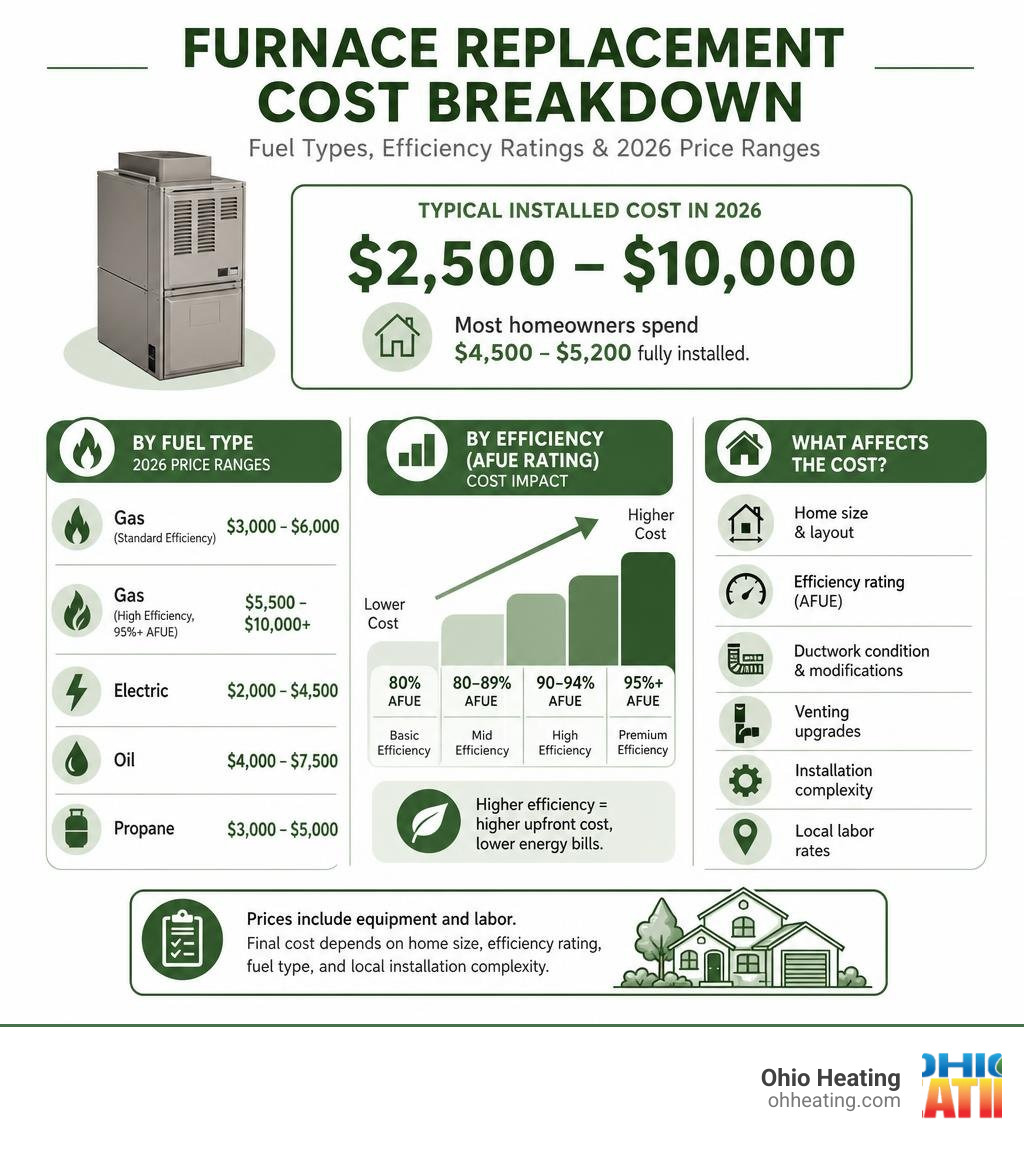
Quick look at Cost to replace air conditioner:
- Furnace tune up Columbus Ohio
- furnace heating services
- hvac routine maintenance
What is the Average Cost to Replace an Air Conditioner in 2026?
When planning for a major home improvement, the first number you want to know is the bottom line. In 2026, the national average cost for a complete air conditioner replacement is approximately $5,500 to $7,500, with most homeowners paying between $3,500 and $11,000 for a fully installed unit. If you are cooling a larger home or choosing a premium, ultra-high-efficiency system, that total can reach up to $13,000 or more.
It is helpful to understand that this total is split between two main categories: equipment costs and installation labor.
- Equipment Costs: The physical air conditioning unit itself typically accounts for 60% to 65% of the total bill. A basic condenser unit might cost between $2,000 and $4,000 wholesale, while advanced variable-capacity units can cost significantly more.
- Installation Labor: Professional labor typically accounts for 25% to 30% of the project cost, generally ranging from $1,200 to $3,500. This covers the technician’s time, specialized tools, licensing, and the expertise required to safely handle electrical and refrigerant connections.
For a realistic look at how these numbers break down across different system configurations, check out this comprehensive How Much Does Furnace Replacement Cost? (2026 Guide) | CostWhale. Additionally, if your heating unit is also nearing the end of its life, you might want to consider a combined upgrade. Doing both at once can save you thousands in labor fees. To see how these combined projects stack up, read our guide on the Cost to Replace Furnace and Air Conditioner: What to Expect.
Central AC vs. Ductless Mini-Splits: Comparing the Cost to Replace Air Conditioning Systems
The system type you choose has a massive impact on both your upfront installation invoice and your ongoing monthly utility bills.
Central air conditioners are the most popular cooling choice in Central Ohio, relying on a network of ducts to distribute crisp, dehumidified air during our humid summers. A standard-efficiency central AC installation ranges from $3,500 to $6,500, while high-efficiency models can go from $6,000 to $11,000+. Although central units are highly effective, they require existing ductwork in good condition. You can explore a detailed pricing breakdown by visiting this Gas Furnace Replacement Cost (2026) — Prices by Brand, Size & AFUE.
Ductless mini-split systems, on the other hand, do not require ductwork. They use individual air handlers mounted on the wall, connected to an outdoor condenser. Because they do not require duct installation, they are highly flexible and efficient, typically costing between $2,500 and $5,000 for a single zone, and up to $13,000 for multi-zone setups. Running a high-efficiency mini-split can lead to significant savings on your summer electric bills.
Heat Pumps: Alternative Cooling and Efficiency Options
For homes looking for an all-in-one cooling and heating solution, electric heat pumps are an increasingly popular alternative to traditional air conditioners.
- Air-Source Heat Pumps: These systems function exactly like an air conditioner in the summer, extracting heat from inside your home and pumping it outdoors. In the winter, they reverse the process. Installing a new heat pump typically ranges from $5,500 to $12,500 installed.
Because modern heat pumps are incredibly efficient, many homeowners choose to upgrade to them. To calculate the potential savings of making this switch, check out the Furnace Cost Calculator 2026 — Gas, Electric, Oil-to-Heat-Pump Conversion | HavenCostGuide.
Key Factors and Hidden Expenses Influencing Your Installation Price
No two homes are identical, which means no two air conditioner installations cost exactly the same. When an HVAC professional visits your property to provide an estimate, they look at several crucial variables.
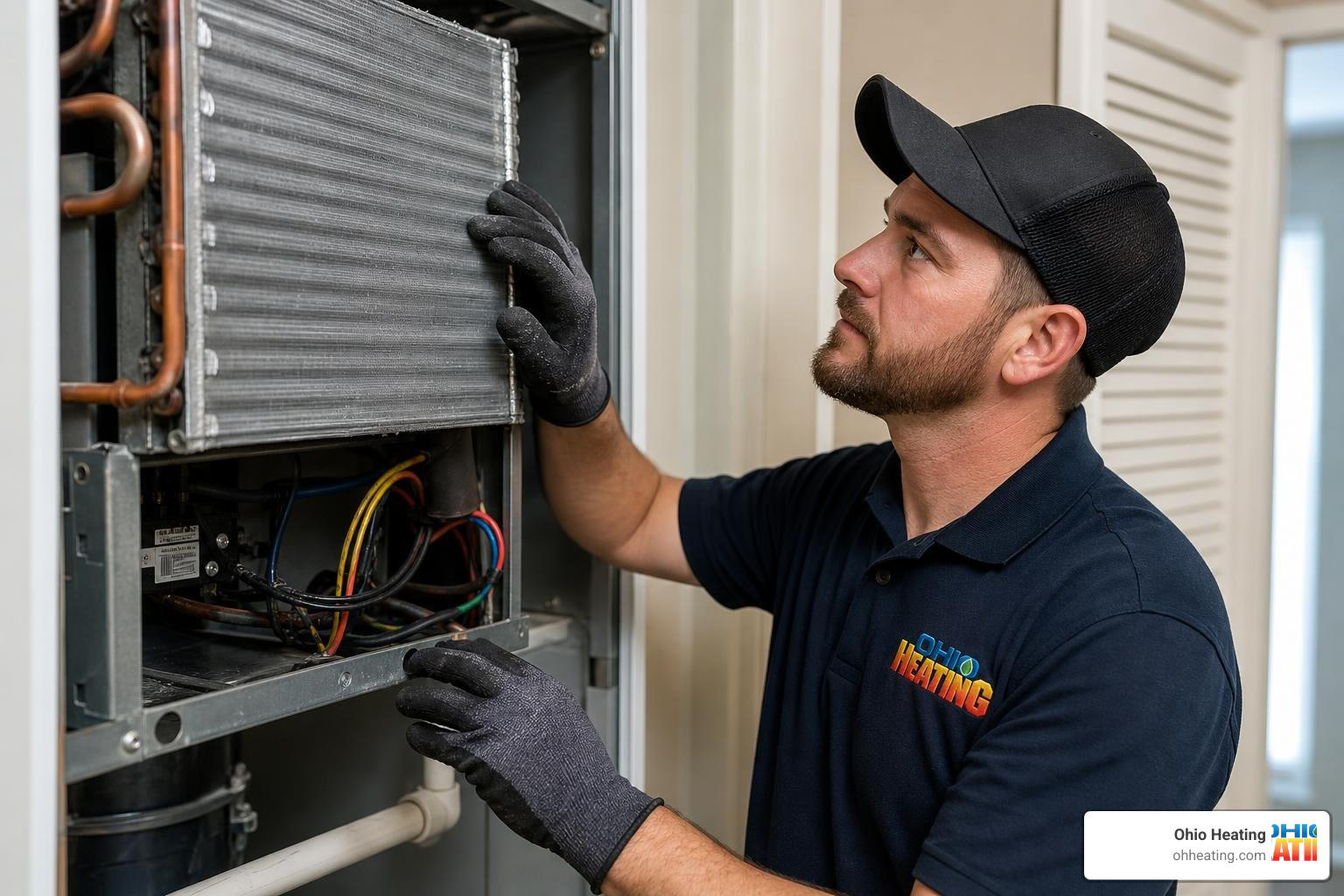
Understanding these variables helps you avoid “sticker shock” when you receive your official quote. If you are looking for ways to maximize your budget, our resource on How to Upgrade Your HVAC and Save Money offers excellent practical tips.
AC Sizing and Cooling Capacity (Tons)
One of the most common mistakes a homeowner can make is buying an air conditioner based on guesswork. An AC’s cooling capacity is measured in tons (or BTUs). As a general rule of thumb, homes require 1 ton of cooling capacity for every 500 to 600 square feet, depending on your home’s insulation, window quality, and layout.
- Undersized systems will run constantly without ever fully cooling your home, leading to premature wear and tear and high energy bills.
- Oversized systems will “short-cycle,” turning on and off rapidly. This prevents the system from dehumidifying the air properly, creates uncomfortable temperature swings, and shortens the air conditioner’s lifespan.
To get an accurate estimate of your home’s unique cooling load, professionals use an ACCA-approved Manual J calculation. You can also run your own preliminary numbers using this interactive Furnace Replacement Cost Calculator 2026 | CalcXi.
SEER2 Efficiency Ratings and Long-Term Savings
An air conditioner’s efficiency is represented by its Seasonal Energy Efficiency Ratio (SEER2) rating. This rating tells you how much electricity the system uses to cool your home.
- Standard Efficiency (13.4 to 15 SEER2): These units are cheaper upfront but cost more to operate during hot summer months.
- High Efficiency (16 to 22+ SEER2): These units use significantly less electricity. They cost more upfront but can save you $150 to $300 per year on your cooling bills.
For a candid look at whether the extra upfront cost of a high-efficiency unit is worth it for your budget, read How Much Does a New Gas Furnace Cost? The Honest 2026 Guide – Mason Jar Breakfast.
Single-Stage, Two-Stage, and Variable-Speed Compressors
The internal technology of your air conditioner determines how evenly it cools your home:
- Single-Stage: This system is either 100% “on” or completely “off.” It is the most affordable option upfront but can lead to temperature swings and less consistent humidity control.
- Two-Stage: This unit operates on a “low” setting (about 60% to 70% capacity) for roughly 80% of the time, saving energy. It kicks into “high” only when the outdoor temperatures spike severely.
- Variable-Speed / Inverter: The gold standard of comfort. These systems adjust their cooling output in tiny 1% increments to match your home’s exact needs, keeping your indoor temperature and humidity perfectly steady.
Line Set Replacements and Ductwork Modifications
When upgrading to a modern, high-efficiency air conditioner, your installation team must evaluate your existing refrigerant line set.
Modern systems use environmentally friendly refrigerants that operate at different pressures than older systems. If your old line set is contaminated or the wrong size, it must be replaced, which typically adds $300 to $800 to the installation cost.
Furthermore, if your existing ductwork is leaky, undersized, or dirty, your new air conditioner won’t perform efficiently. We always recommend inspecting your ducts and factoring in any potential maintenance, such as replacing old filters or sealing leaks. For context on routine upkeep costs, view our guide on Furnace Filter Replacement Cost.
Repair vs. Replace: The 50% Rule and Lifespan Guide
When your cooling system starts acting up on a sweltering summer afternoon, you are faced with a stressful question: Do you pay for another repair, or is it time to bite the bullet and replace the entire unit?

A standard residential central air conditioner has an expected lifespan of 15 to 20 years. If your system is well-maintained, it may last longer, but its efficiency will naturally decline over time. If you find yourself frequently calling for service, comparing your options is essential. For those with alternative systems, we also have a detailed guide on Is It Time for a New Boiler? Understanding the Costs and Benefits.
Understanding the 50% Rule for HVAC Repairs
A reliable industry standard for deciding between repairing and replacing is the 50% Rule.
The 50% Rule: If the cost of a single repair exceeds 50% of the value of a brand-new air conditioner—or if the age of your system multiplied by the repair cost is greater than $5,000—it is generally more financially sound to replace the unit.
For example, if your 16-year-old AC needs a new compressor that costs $2,200, and a brand-new system costs $6,000:
- Age (16) x Repair Cost ($2,200) = $35,200 (This is far above the $5,000 threshold).
- In this scenario, investing $2,200 into a system that is already at the end of its natural life is a risky gamble. That money is better spent as a down payment on a reliable, warrantied new system.
When to Choose Replacement Over Ongoing Repairs
You should seriously consider a full replacement if you notice any of these warning signs:
- Frequent Repairs: You have had more than two significant repairs in the last two years.
- Spiking Energy Bills: Your electric bills are rising steadily, even though your cooling habits haven’t changed.
- Poor Humidity Control: The air inside feels sticky and humid, even when the AC is running.
- Refrigerant Leaks: Older systems using phased-out R-22 refrigerant are extremely expensive to repair and recharge.
Federal Tax Credits, Rebates, and Off-Season Savings
Replacing your air conditioner is a significant investment, but you don’t have to pay full price if you plan ahead. Thanks to the federal Inflation Reduction Act, homeowners can claim the 25C Energy Efficient Home Improvement Credit. This federal tax credit allows you to deduct up to 30% of the cost of a qualified high-efficiency central AC, up to $600.
If you decide to upgrade to a highly efficient electric heat pump, that federal tax credit jumps up to $2,000. Additionally, local utility companies in Central Ohio frequently offer cash-back rebates for upgrading to energy-efficient cooling systems, which can save you hundreds more.
Frequently Asked Questions About Air Conditioner Replacement
How long does a typical air conditioner installation take?
A standard, like-for-like air conditioner replacement usually takes 4 to 8 hours and can easily be completed in a single day. However, if your project requires extensive modifications—such as installing new ductwork, running new electrical lines, or mounting ductless mini-splits—the installation can take 2 to 3 days.
What is the cheapest time of year to replace an air conditioner?
The most affordable time to replace an air conditioner is during the “shoulder seasons”—spring (March to May) and autumn (September to November). During these periods, HVAC contractors are less busy with emergency heating and cooling calls, making them more likely to offer promotional discounts, flexible scheduling, and manufacturer rebates.
Can I install a new air conditioner myself to save on labor?
No. Installing an air conditioner is not a DIY weekend project. It requires working with high-voltage electricity, handling chemical refrigerants (which requires EPA certification), and ensuring proper system charging. Improper installation can lead to refrigerant leaks, electrical fires, and will immediately void your manufacturer’s equipment warranty. Always hire a licensed, insured HVAC professional.
Conclusion
Replacing your air conditioner doesn’t have to be an overwhelming or financially draining process. By understanding the factors that drive the cost to replace an air conditioner—from system type and sizing to efficiency ratings and installation requirements—you can make an informed decision that keeps your home cool and comfortable for the next two decades.
At Ohio Heating, we have been serving the Columbus and Central Ohio community since 1999. Our priority is ensuring your home remains a safe, cool, and energy-efficient haven, no matter how hot the Ohio summers get.
If you are ready to explore your options or need a transparent, professional estimate tailored to your home, check out our Furnace and Heating Equipment Sales and Services page or contact our friendly team today!