
When an AC Breakdown Becomes an Emergency
Emergency air conditioner repair is needed when an AC failure creates an electrical, water-damage, health, or severe heat risk for people in your building. For property managers and business owners, a sudden loss of cooling can quickly affect occupants, equipment, inventory, and daily operations.
| If you notice this | Treat it as urgent? |
|---|---|
| Burning smell, smoke, sparks, or repeated breaker trips | Yes – turn the AC off and call for help |
| Complete cooling loss during extreme heat | Yes – especially with vulnerable occupants or sensitive assets |
| Heavy indoor water leak or overflowing drain pan | Yes – act quickly to limit property damage |
| Loud grinding, screeching, or electrical buzzing | Yes – shut the system down to prevent further damage |
| Weak cooling, higher bills, or minor noise without safety concerns | Usually can be scheduled soon, but should not be ignored |
A failed capacitor, frozen evaporator coil, clogged condensate drain, refrigerant issue, or electrical fault can stop cooling with little warning. The right response depends on the symptom, indoor temperature, and who or what depends on the space staying cool.
I’m Jill Frattini, a Service Coordinator at Ohio Heating in Columbus, where I help coordinate AC service, maintenance, and installation work. With several years in the HVAC field, including experience supporting emergency air conditioner repair calls, I have seen how clear early triage helps teams protect comfort, property, and operations.
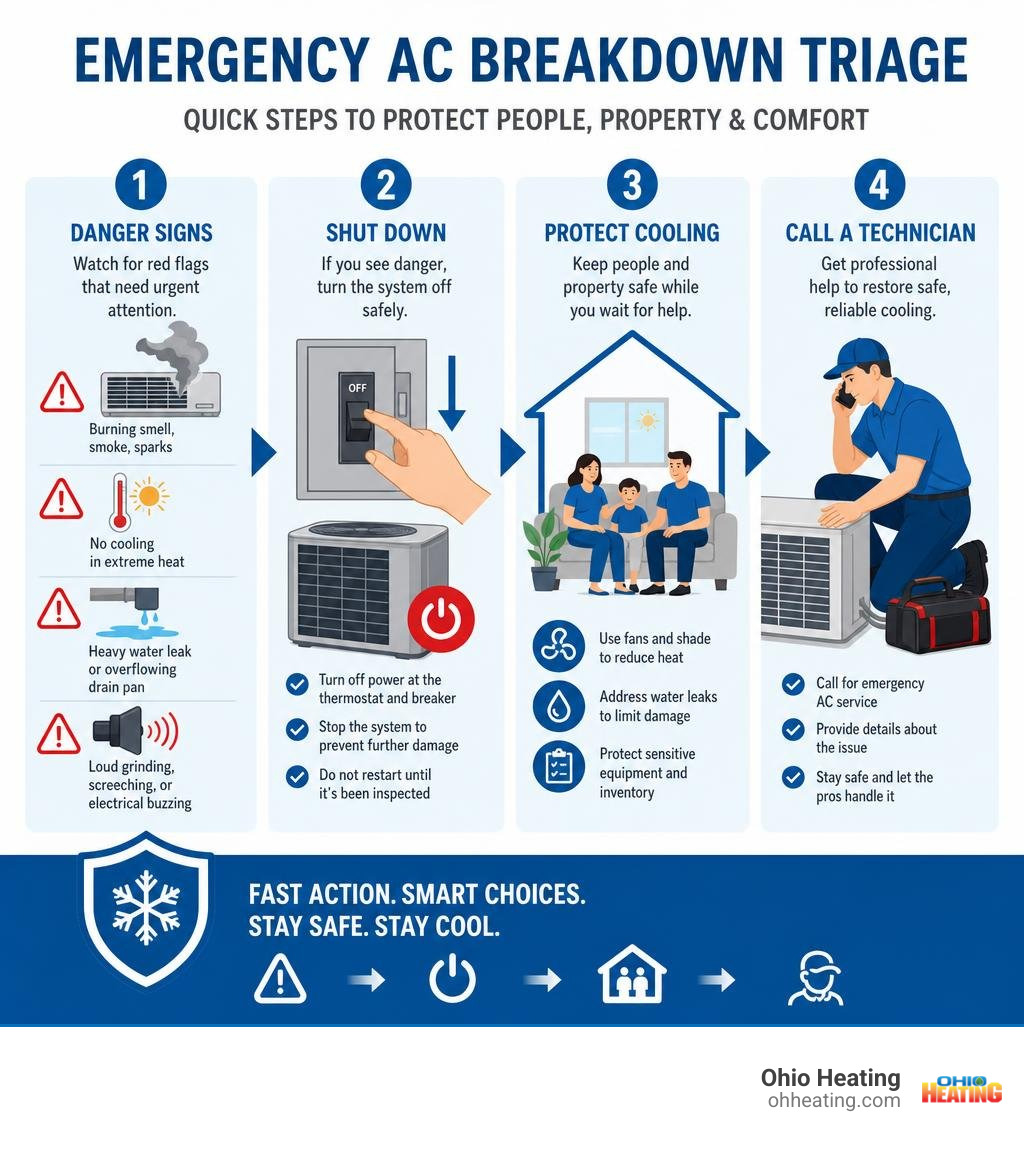
Simple emergency air conditioner repair word guide:
What Qualifies as an AC Emergency vs. Standard Service
When indoor temperatures start climbing during an August heatwave in Central Ohio, it is easy to view any cooling problem as an emergency. However, understanding the difference between an immediate safety crisis and a standard service call helps property owners act quickly when it matters most while avoiding unnecessary stress.
An air conditioning issue crosses into true emergency territory when it threatens the safety of your building’s occupants, risks major structural damage, or presents an immediate electrical hazard. Standard service issues, on the other hand, typically involve minor efficiency loss, slight temperature imbalances, or subtle noises that can safely wait for regular business hours without putting anyone or anything in harm’s way. Knowing how to assess your system can prevent small hiccups from escalating into costly disasters.
Urgent Safety Hazards and Extreme Temperatures
Certain air conditioner symptoms require immediate shutdown and an urgent call for emergency air conditioner repair. Electrical failures represent the most serious immediate hazard. If you smell burning plastic, singed wiring, or electrical smoke coming from your supply vents or outdoor unit, you are facing a potential fire risk. Similarly, visible electrical sparks or a circuit breaker that trips repeatedly whenever the compressor attempts to start indicate a severe power overload or short circuit. Never force a breaker to stay on after it trips, as this bypasses critical built-in safety mechanisms.
Extreme indoor temperatures during peak summer heat waves present severe health risks, particularly for vulnerable occupants such as infants, elderly residents, pets, or individuals with chronic respiratory and cardiovascular conditions. According to the U.S. Department of Energy, maintaining reliable indoor climate control during extreme summer conditions is essential for safety. When outdoor heat exceeds 90°F in Columbus, indoor temperatures in a building without functional cooling can spike rapidly into dangerous territory.
If your central air system completely dies during extreme weather, leaving indoor spaces uncomfortably or unsafely hot, immediate intervention is essential. Recognizing these 7 Crucial Signs Your HVAC System Needs Immediate Repair empowers you to act before health or property safety is compromised.
Signs Your System Needs Immediate Attention
Mechanical and drainage failures can also escalate into cooling emergencies if left unaddressed. Active indoor water leaks are among the most frequent calls we receive during peak summer operations. When a condensate drain line clogs or a float switch fails, condensate water overflows the drain pan and cascades through ceilings, walls, and flooring. Immediate response is required to limit costly property damage and prevent mold growth.
Another primary emergency indicator is a frozen evaporator coil. If you notice visible ice forming along the outdoor refrigerant copper lines or surrounding the indoor air handler, your cooling system cannot function. Operating an AC unit with a frozen coil places immense mechanical strain on the compressor, potentially leading to total system failure.
If you are experiencing sudden cooling losses or active water leaks, learning How to Handle a Sudden Breakdown with Local Emergency AC Repair will keep your property protected. Reviewing these Signs Your Air Conditioning Needs Repair What to Look For helps you catch issues before total breakdown occurs.
What to Do While Waiting for Emergency Air Conditioner Repair
Once you have contacted a qualified technician for emergency air conditioner repair, the actions you take while waiting for our service vehicle to arrive play a massive role in protecting your property and keeping your indoor space manageable. Taking proactive safety steps prevents further equipment damage and sets the stage for a smooth, swift repair process.
Immediate Steps: System Shutoff and Electrical Safety
If your air conditioner exhibits any burning odors, electrical buzzing, active indoor water pooling, or frozen refrigerant lines, the very first thing you should do is turn off the cooling system at your thermostat. After powering down the thermostat, navigate to your main electrical panel and turn off the dedicated circuit breaker powering the outdoor condensing unit and indoor air handler.
Shutting down power completely eliminates the risk of electrical fires, stops water from continuing to pump out of an overflowing condensate pan, and allows a frozen evaporator coil to begin melting safely. If ice has built up on the coil, turning the unit off early ensures the ice thaws before our technician arrives, making immediate diagnosis and repair possible.
While waiting for our arrival, close blinds, drapes, and window shades to block direct sunlight. Avoid using heat-generating indoor appliances like ovens or clothes dryers, run ceiling fans counterclockwise to create a wind-chill effect, stay well-hydrated, and keep exterior doors firmly shut. For detailed safety protocols, review How to Prepare for AC Emergencies Safety Measures to Take.
Understanding Fast Response Times for Emergency Air Conditioner Repair
When cooling fails unexpectedly, response speed is everything. Qualified local HVAC providers maintain dedicated 24/7 emergency dispatch operations throughout the summer season. On average, emergency service trucks arrive at your home or facility within an estimated 2-hour window from the moment your call is logged.
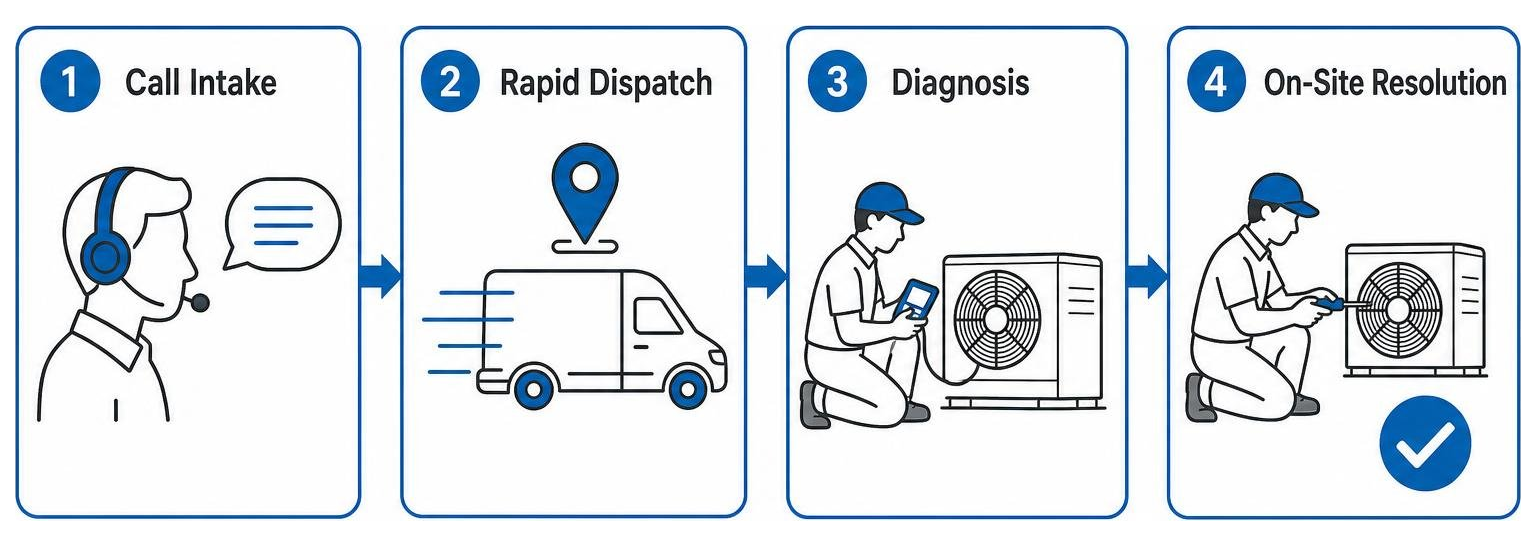
Industry statistics show that approximately 80% of emergency AC service calls are diagnosed and fully repaired during the initial visit. Fully stocked service trucks equipped with universal electrical capacitors, contactors, hard-start kits, fan motors, float switches, and standard refrigerants enable technicians to restore cool airflow without forcing property owners to wait days for simple replacement parts.
Service teams evaluate calls based on urgency—prioritizing active electrical risks, water leaks, and homes with vulnerable residents—to deliver fast, reliable cooling restoration when you need it most.
Common Causes Behind Sudden Cooling Emergencies
Air conditioners are complex electromechanical systems operating under high pressure and continuous electrical loads throughout hot Ohio summers. Understanding what triggers sudden system failures can help property owners recognize early warning signs and maintain realistic expectations during an emergency repair.
Root Causes: Frozen Coils, Leaks, and Electrical Failures
Emergency AC service calls generally stem from three primary mechanical and electrical failures:
- Airflow Restrictions and Frozen Evaporator Coils: Restricting airflow over the indoor evaporator coil prevents heat transfer. The coil temperature drops below freezing, causing moisture in the air to freeze into a solid block of ice. The most common trigger is a severely clogged, dirty air filter. Blocked supply vents, damaged blower motors, or crushed ductwork cause identical freeze-ups.
- Refrigerant Leaks: Air conditioners operate in a closed loop; they do not “use up” refrigerant like gas in a vehicle. If refrigerant levels are low, a leak exists in the copper tubing, flare fittings, or coil connections. Low refrigerant drops system pressure, causing coils to freeze over, forcing the compressor to run non-stop, and resulting in warm air blowing from vents. Hissing or bubbling noises near lines often accompany leaks.
- Electrical Component Failures: Outdoor cooling units rely on capacitors to provide startup torque and continuous power to the compressor and condenser fan motor. Extreme summer heat causes capacitors to bulge, leak fluid, or burn out. Contactor switches, which handle high electrical voltage, can pit, scorch, or weld shut. When a capacitor or contactor fails, the system may hum loudly without starting or trip circuit breakers immediately.
System Types and Compatibility
Emergency cooling technicians are trained and certified across all modern air conditioning configurations. Whether your building utilizes standard central split systems, ductless mini-split systems, or commercial packaged rooftop cooling units, diagnostic protocols prioritize rapid system restoration.
Our service teams handle equipment from all major cooling manufacturers, carrying universal replacement components compatible with residential and commercial cooling models alike.
What Costs to Expect for Emergency Air Conditioner Repair
Transparency in service costs is vital during an emergency breakdown. Homeowners and commercial facility operators deserve clear, upfront pricing before any repair work begins, preventing unexpected financial surprises during an already stressful situation.
Diagnostic Fees and After-Hours Rates
Standard emergency AC service includes an initial diagnostic fee covering the technician’s travel, full electrical inspection, refrigerant pressure check, and mechanical assessment. Because air conditioners break down without regard for normal business hours, emergency calls placed late at night, on weekends, or during holidays may involve standard dispatch or after-hours service rates.
Once the technician pinpoint the precise cause of the breakdown, you will receive an exact, flat-rate written quote for approval before any repair work starts.
| Repair Category | Common Component Replaced | Typical Cost Range |
|---|---|---|
| Basic Electrical | Run/Start Capacitor, Contactor Relay | $150 – $400 |
| Drain & Moisture | Condensate Line Flush, Float Switch | $150 – $350 |
| Refrigerant Issues | Leak Detection & Brazing Repair | $500 – $1,500 |
| Major Mechanical | Condenser Fan Motor, Blower Assembly | $400 – $900 |
| Core Replacement | Compressor Replacement | $1,500 – $3,000+ |
Financing Options for Major AC Replacements
In some cases, an emergency diagnostic reveals a catastrophic failure—such as a burned-out compressor or severely rusted evaporator coil—on a unit that is 12 to 15 years old. When repair costs approach or exceed the actual value of the cooling equipment, investing in a complete cooling system upgrade is often the smartest financial decision.
To support property owners facing sudden equipment replacements, flexible financing plans, promotional low-interest options, and local utility rebate guidance are available. Replacing an outdated, inefficient AC system with a modern high-SEER2 unit slashes monthly summer electric bills, provides long-term warranty coverage, and eliminates future emergency breakdown worries.
Local Service Coverage and Preventing Future Failures
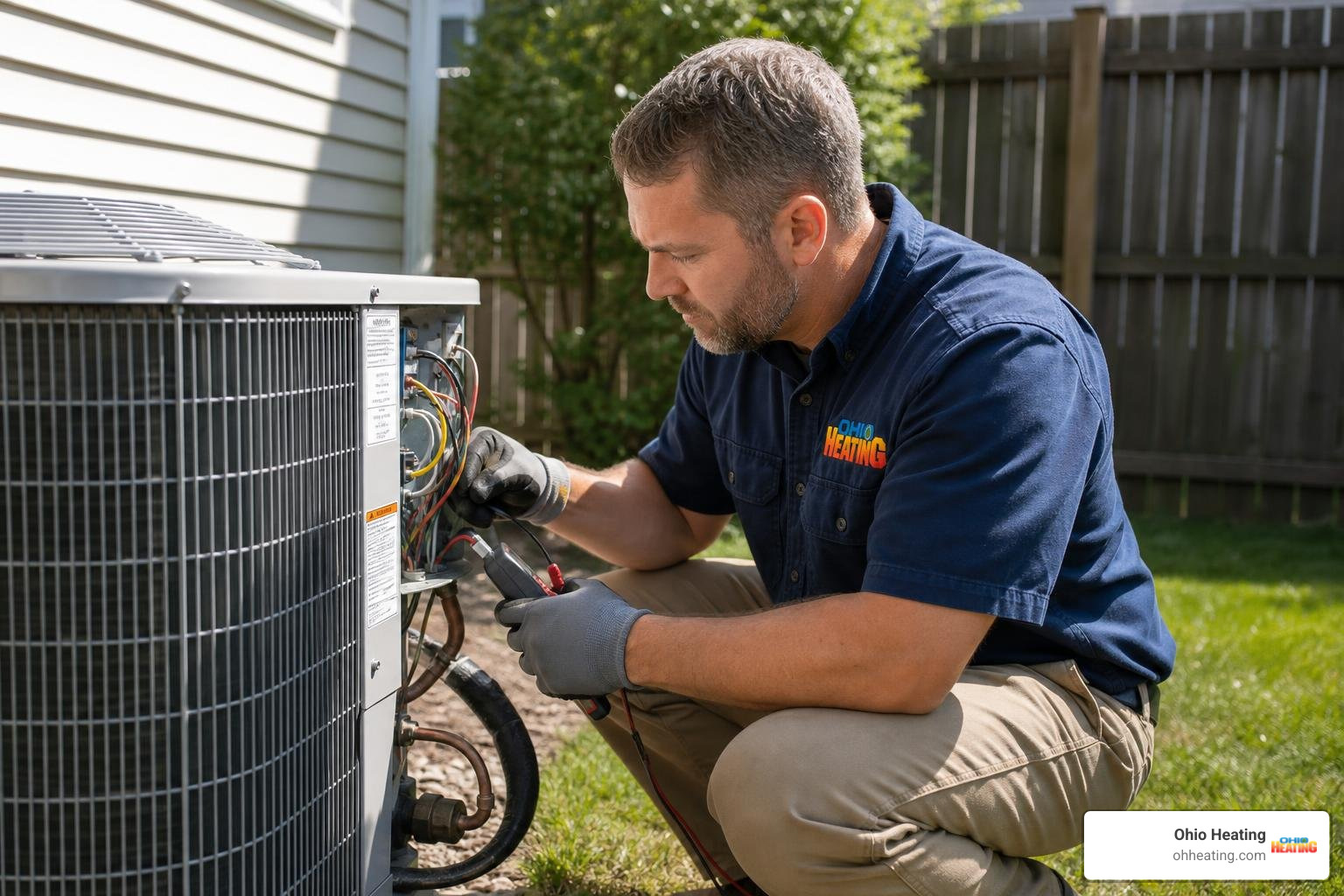
While rapid emergency response restores comfort when systems fail, taking preventative steps ensures your air conditioner operates reliably year after year throughout Central Ohio heatwaves.
How to Prevent Future Need for Emergency Air Conditioner Repair
The vast majority of summer cooling emergencies can be avoided through regular system care. Implementing these simple maintenance habits protects your equipment from sudden breakdown:
- Change Air Filters Regularly: Replace disposable pleated air filters every 30 to 60 days during peak summer use. Clean filters maintain optimal airflow, preventing frozen coils and protecting blower motors.
- Maintain Clearance Around Outdoor Units: Keep weeds, grass, leaves, and debris at least two feet clear of your outdoor condenser unit. Clean coils allow heat to dissipate efficiently.
- Schedule Annual Pre-Season Tune-Ups: Professional annual cooling maintenance involves inspecting electrical contactors, testing capacitor microfarads, checking refrigerant charges, cleaning condensate drain lines, and lubricating fan motors.
- Listen for Early Warning Signs: Never ignore new squealing, grinding, or rattling noises. Addressing minor mechanical wear early prevents catastrophic component breakdowns.
To choose a certified professional for ongoing care, review No Sweat How to Choose the Best Local AC Technician and learn how to secure rapid assistance through an Emergency AC Fix How to Get Same Day Service.
Serving Central Ohio Communities
Since 1999, Ohio Heating has provided expert commercial and residential air conditioning services across Columbus and the surrounding Central Ohio region. Our dedicated technicians deliver fast, dependable emergency support tailored to local weather demands.
We provide emergency cooling services throughout the region, including:
- Dedicated assistance through our Emergency Air Conditioning Repair in Dublin service team.
- Rapid local response via Emergency Air Conditioning Repair in Westerville.
- Fast technician dispatch through Emergency Air Conditioning Repair in Powell.
- Reliable local coverage via Emergency Air Conditioning Repair in Hilliard.
- Expert neighborhood cooling restoration with Emergency Air Conditioning Repair in Upper Arlington.
Whether you need quick neighborhood support or comprehensive regional coverage, exploring Emergency Air Conditioning Repair Columbus Ohio connects you with trusted local technicians. You can also explore options through How to Find Reliable Local AC Repair Near Me Right Now, locate top services using Top Air Conditioner Repair Services Near You, or learn How to Find Local Central Air Repair Fast.
Frequently Asked Questions About Emergency Cooling Services
Can emergency AC repairs be completed on the first visit?
Yes! Roughly 80% of emergency cooling repairs are completed during the initial visit. Emergency service trucks are stocked with standard replacement parts, including capacitors, fan motors, contactors, relays, float switches, and refrigerants, enabling technicians to resolve most issues on the spot.
Should I turn off my AC if it makes loud grinding noises or smells like burning?
Absolutly. Burning odors indicate electrical overheating, while loud grinding or screeching noises suggest severe mechanical failure within the motor bearings or compressor. Shutting the system down immediately prevents further internal destruction and eliminates fire hazards.
Are emergency AC repairs backed by satisfaction guarantees?
Yes. Reputable professional HVAC contractors back emergency repair work with clear warranties on replacement parts and labor. Additionally, diagnostic fees are often applied toward complete system upgrades if equipment is determined to be beyond repair.
Conclusion
A sudden air conditioner breakdown during severe summer heat can feel overwhelming, but knowing how to identify genuine cooling emergencies, taking immediate safety steps, and turning to proven local experts keeps your property safe and comfortable. At Ohio Heating, our certified technicians have served Columbus and Central Ohio since 1999, bringing fully stocked service trucks and rapid 24/7 dispatch to every call. Do not sweat through an AC emergency—Schedule Expert Air Conditioner Repairs and Sales with our friendly team today to restore reliable cooling to your home or business!